
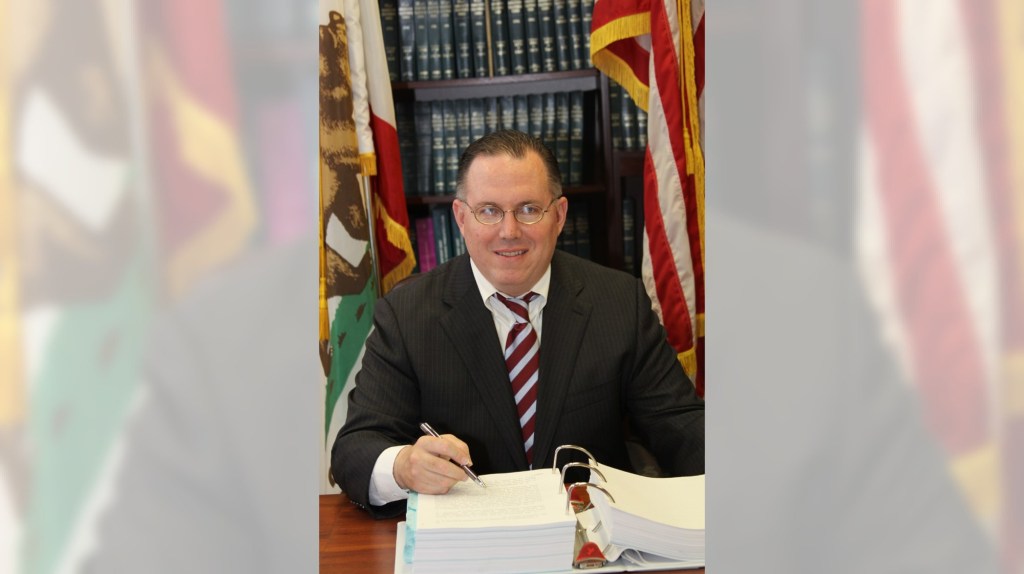
Ahead of the June primary election, the Southern California News Group compiled a list of questions to pose to the candidates who wish to represent you. You can find the full questionnaire below. Questionnaires may have been edited for spelling, grammar, length and, in some instances, to remove hate speech and offensive language.
Name: Charles E. Pell
Current job title: Retired Federal Criminal Prosecutor
Age: 55
Incumbent: No
Other political positions held: City Treasurer
City where you reside: Yorba Linda
Campaign website or social media: pell4judge.com
What do you consider to be your judicial philosophy? (Please answer in 200 words or less.)
My judicial philosophy is simple: apply the law fairly, treat every person with dignity, and decide each case with an open mind and without fear or favor.
That philosophy has been shaped by a lifetime of public service. As a public-school teacher, I learned patience, listening, and the importance of treating people with respect. My service in the U.S. Navy taught me discipline, responsibility, and duty. My 20 years as a federal prosecutor taught me that justice requires preparation, sound judgment, and the willingness to follow the facts and the law wherever they lead.
My experience also taught me that the law must be applied equally to everyone: to the powerful who abuse positions of trust, to the vulnerable who are preyed upon, and to elderly victims who deserve protection from fraud and exploitation.
A judge’s role is not to impose personal views or pursue a preferred outcome. It is to faithfully apply the law, evaluate the facts, and give every person a fair hearing. A good judge must also be impartial, patient, even-keeled, and respectful in every courtroom and every case.
If elected, I would bring fairness, preparation, humility, and a deep respect for the rule of law.
How do you think your personal experience — legal or otherwise — would inform your decisions as a judge? (Please answer in 200 words or less.)
My personal experience would inform my work as a judge by shaping how I listen, evaluate, and treat the people who come before the court. Before becoming a lawyer, I was a public-school teacher in a low-income community, which taught me patience and respect. My service in the U.S. Navy taught me discipline, accountability, and calm decision-making under pressure.
My 20 years as a federal prosecutor taught me to master difficult facts, make objective decisions, and follow the law wherever it leads. They also showed me the human impact of the justice system. While serving in the U.S. Attorney’s Office, I initiated and prevailed in litigation to protect minority women prosecutors from unfair treatment. I also fought for victims in underserved communities, including Latino victims in Orange County targeted in an ICE-impersonation fraud case.
Those experiences would not change the law, but they would inform how I carry out the role of judge: with fairness, preparation, patience, and respect for every person in the courtroom. They would help me be a thoughtful and steady judge who applies the law impartially while understanding the real-world consequences courts have for the people they serve.
How would you approach situations where you have judicial discretion within the law? (Please answer in 200 words or less.)
When the law gives a judge discretion, that discretion must be exercised carefully, thoughtfully, and within the bounds of the law. It is not a license to impose personal views. It is a responsibility to make a fair decision based on the facts, the governing law, and the purposes the law is meant to serve.
I would approach judicial discretion with preparation, humility, discipline, and independence. That means listening carefully to both sides, studying the record, considering the circumstances of the case and the people before the court, and explaining my reasoning clearly on the record. Discretion should be guided by fairness, consistency, and equal justice under law—not by emotion, pressure from within or outside the courthouse, political considerations, or public opinion.
My experience as a teacher, Navy officer, and federal prosecutor taught me the importance of sound judgment, accountability, and calm decision-making. Those lessons would guide me in exercising discretion in a way that is even-handed, principled, and faithful to the law.
In every case, my goal would be to use discretion deliberately and lawfully so the parties and the public can have confidence that the court’s decision was fair, reasoned, and grounded in the rule of law.
How would you weigh your own personal beliefs against the law, should they conflict? (Please answer in 200 words or less.)
If my personal beliefs ever conflicted with the law, my duty as a judge would be clear: I would follow the law. A judge takes an oath to uphold the Constitution and apply the law faithfully and impartially. The role of a judge is not to advance personal views, but to decide cases based on the facts, the governing law, and binding precedent.
That principle is essential to judicial integrity and public confidence in the courts. Litigants are entitled to know that their case will be decided fairly, not according to a judge’s personal preferences or ideology. A judge must therefore have the discipline and humility to set aside personal beliefs and do what the law requires.
My background in public service has reinforced that understanding. As a teacher, Navy officer, and federal prosecutor, I learned the importance of duty, accountability, and following established rules even when doing so is difficult.
And if I ever believed I could not be fair and impartial in a particular matter — whether because of a conflict, prior involvement, or any other reason — I would recuse myself. In short, my personal beliefs would not control my decisions. My oath, the law, and the facts would.
As an existing member of the legal community, how would you handle potential claims of misconduct against local attorneys, law firms or law enforcement organizations? (Please limit your answer to 200 words or less.)
I would handle misconduct allegations against attorneys, law firms, or law enforcement like any other matter: fairly, independently, and based on the facts and the law. The same rules must apply to everyone — whether the person before the court is an attorney, a law enforcement officer, a public official, or an ordinary citizen.
My record as a federal prosecutor reflects that principle. During 20 years as a federal prosecutor, I convicted approximately 10 attorneys, along with doctors and other professionals in positions of trust. My recent work included major Orange County public corruption cases involving former supervisor and attorney Andrew Do for bribery and former Anaheim Mayor Harry Sidhu in the Angels stadium corruption case. I also prosecuted an Orange County Sheriff’s Department employee who pleaded guilty to defrauding her elderly grandmother, and I prosecuted the fraud case in which Dr. Kevin Do pleaded guilty to conspiring with Judge Claustro; after my retirement, that matter resulted in Judge Claustro’s guilty plea and resignation.
Those cases reinforced a simple principle: accountability applies equally to everyone. If credible misconduct claims came before me, I would ensure due process, evaluate the evidence carefully, and rule without fear or favor.
What is your philosophy on judicial activism and a judge’s potential role in shaping or setting public policy? (Please limit your answer to 200 words or less.)
Judicial activism undermines public confidence in the courts because it substitutes a judge’s personal views for the law. A judge’s role is to interpret and apply the Constitution, statutes, and precedent faithfully — not to legislate from the bench or use judicial power to shape public policy based on personal preference.
Public policy should be made by the people and their elected representatives, within constitutional limits. Judges serve a different role. They must decide the cases before them fairly, neutrally, and with appropriate restraint.
Even recently, I have seen firsthand that when judges step beyond their proper role, the effects can extend well beyond the courtroom and into public life — and breed distrust in the judiciary. That is why a judge must be disciplined enough to follow the law, even when doing so does not produce the judge’s preferred result. A judge must also have the courage to resist pressure to protect colleagues, institutions, or special interests.
My philosophy is simple: Judges should call balls and strikes, not move the strike zone. If elected, I would approach every case with humility, independence, and fidelity to the law, while leaving policymaking to the elected branches and, ultimately, to the voters.
Hunter Garcia Miranda, CA-47 candidate, 2026 primary election questionnaire
Michael Maxsenti, CA-46 candidate, 2026 primary election questionnaire
Jenny Rae Le Roux, CA-47 candidate, 2026 primary election questionnaire
Christopher J. Gonzales, CA-47 candidate, 2026 primary election questionnaire
Bill Brough, CA-47 candidate, 2026 primary election questionnaire