
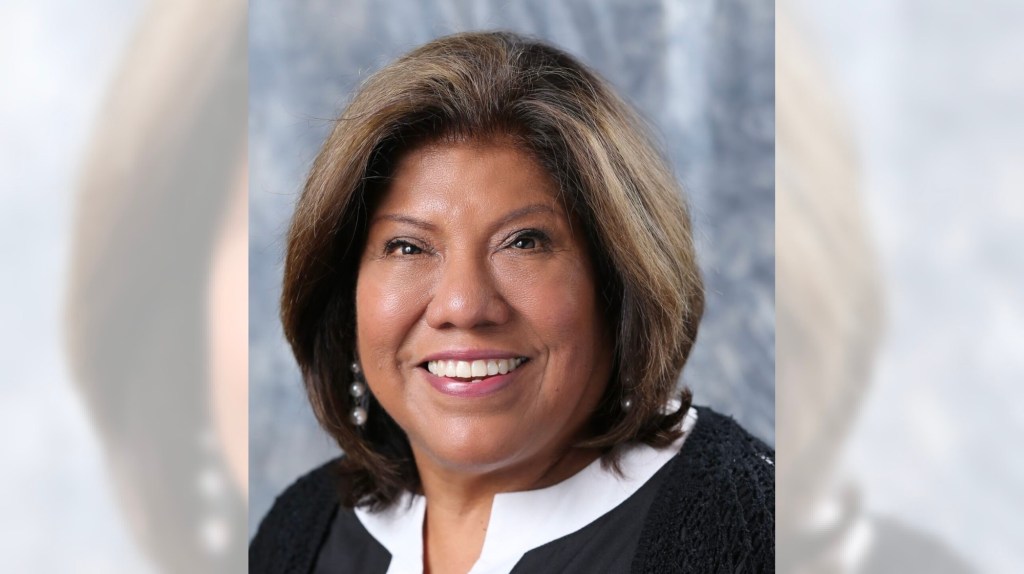
Ahead of the June primary election, the Southern California News Group compiled a list of questions to pose to the candidates who wish to represent you. You can find the full questionnaire below. Questionnaires may have been edited for spelling, grammar, length and, in some instances, to remove hate speech and offensive language.
Name: Rose Espinoza
Current job title: Founder/Executive Director
Age: 74
Incumbent: No
Other political positions held: Mayor – 6 times, City Council – 25 years
City where you reside: La Habra
Campaign website or social media: www.rosie4supervisor.com
In your opinion, what is the biggest need your district faces, and how would you address it through the Board of Supervisors? (Please limit your answer to 200 words or less.)
Housing: It is important that the county continue partnering with existing nonprofits that create new housing for low-income residents, veterans, and others who are out of reach of homeownership. The county should actively partner with the Kennedy Commission and establish a countywide affordable housing strategic plan.
At the March 5 SCAG (Southern California Association of Governments) CEHD (Community, Economic and Human Development) committee meeting, of which I have been an 18-year member, we approved the REAP 2.0 NOFA2 Funding Awards, with Orange County receiving $10 million of the $20 million available — $5 million was approved for the Anaheim Local Housing Trust, and $5 million was approved for the Orange County Housing Trust.
NWOC (NeighborWorks OC) is the sole member of Orange County Housing Trust. I am a 35-year board member of NWOC. Cities building for-sale affordable housing can apply through the Orange County Housing Trust.
Our first home was purchased with the help of the nonprofit NeighborWorks Orange County. I continue to serve as a board member to support the great services NWOC offers.
Continued county collaboration with long-running nonprofit housing organizations, along with trust fund grants, voucher programs, etc., can be more resourceful than one alone.
Where do you think the county is effectively spending to address the needs of unhoused residents, and what would you change about where money spent on homelessness is prioritized? (Please limit your answer to 200 words or less.)
In my opinion, District 4 has done better than the rest of Orange County in meeting the needs of the unhoused. I recall attending a mandated meeting with Federal Judge David O. Carter in his chambers, along with all the mayors of North Orange County, as he put federal pressure on cities and required them to do more. Through oversight of litigation against OC cities, Judge Carter made it clear that there needed to be regional cooperation, emphasizing that cities share responsibility for the local homeless issue.
The North Orange County Service Planning Area, North SPA, was approved in 2018, with proposed locations in Buena Park and Placentia. I have been a member of the county’s Bridges of Kramer advisory board for a number of years and continue as an alternate, where I have seen progress, but certainly more can be done.
I would recommend that we follow the OC Grand Jury’s recommendation and shift more funding toward prevention, including emergency rental assistance, eviction diversion, and housing retention programs for seniors and fixed-income residents. These programs cost a fraction of the cost of emergency shelter and crisis services.
Looking at the county’s annual budget, what would you like to change about how funds are allocated? Is there a department or project that has not received the funding it needs? (Please limit your answer to 200 words or less.)
Of the $10.8 billion budget, the largest share, 36%, is going to Community Services.
My concern is the BHS (Behavioral Health Services) budget, which is $750 million, with less than $5 million coming from the county’s general fund. The BHS budget depends largely on state and federal sources, which are on shaky ground with the present federal administration. Even a modest increase in the county’s general fund investment in behavioral health would reduce vulnerability to federal and state budgets.
The public expects transparency from public leaders in spending and governance. How can this be achieved? How can the county do better in this area? (Please limit your answer to 200 words or less.)
The county maintains a formal framework for transparency, but a recent major corruption scandal has demonstrated that more needs to be done to regain the public’s confidence. Regular, plain-language budget summaries, not just technical documents, help ordinary residents understand where money goes, being more inclusive, not exclusive.
Give citizens a real stake in governance through participatory budgeting, where they can participate in how budget allocations are made.
Social services providers say they expect to see a continued rise in food and housing insecurity this year. In addition, many low-income residents may lose health care as new eligibility requirements for Medi-Cal are implemented. What role do you think the county can play in supporting people who are falling through the cracks? (Please limit your answer to 200 words or less.)
Orange County has a network of food banks, such as Second Harvest Food Bank and OC Food Bank, which distribute food to hundreds of thousands of people each month through nonprofits, churches, and school pantries. There are smaller groups that are also distributing food in parallel without a formal coordination structure. Possibly looking at models that have moved from competition to collaboration, from scarcity to scalability, could amplify a collective impact.
Tenants in California are protected by just-cause eviction policies. The county can expand the voucher and shelter pipeline, rental assistance programs, and legal aid for tenants facing eviction.
CalOptima is a significant tool that many counties don’t have. The Board of Supervisors can direct resources toward enrollment assistance, multilingual outreach, and renewal support to prevent coverage lapses among those still eligible.
Why would you make a good leader, and how would you represent the diverse communities of your district? (Please limit your answer to 200 words or less.)
My entire life reflects service, commitment, and community investment.
I have been a lifelong resident of La Habra and the district. I understand the district’s challenges firsthand, not as a political outsider, but as a lifelong resident who lived them. With over two decades on the La Habra City Council and multiple terms as mayor, I bring real governing experience paired with community trust.
My 34-year career as a principal designer also demonstrates problem-solving skills. As the founder of Rosie’s Garage, I demonstrate proactive, solution-driven leadership. I didn’t wait for someone else to act; I built something lasting from the ground up. I have served on regional bodies, addressing housing, homelessness, and environmental issues.
My combination of lived experience in the district, grassroots nonprofit work, decades of elected service, and a focus on equity issues positions me to authentically represent the 4th District’s working class and underserved communities. I will represent businesses in the district effectively because I understand the connection between thriving local economies and healthy communities. My role on the St. Jude Healthy Committee further demonstrates my understanding that a healthy workforce is a productive one.
This is not just rhetoric; it is demonstrated through decades of action.
Claude Parrish, OC assessor candidate, 2026 primary election questionnaire
Robert LaCarra, SD-20 candidate, 2026 primary election questionnaire
Lucy Vellema, OC Board of Supervisors District 5, 2026 primary election questionnaire
Diane Dixon, OC Board of Supervisors District 5, 2026 primary election questionnaire
Katrina Foley, OC Board of Supervisors District 5, 2026 primary election questionnaire