
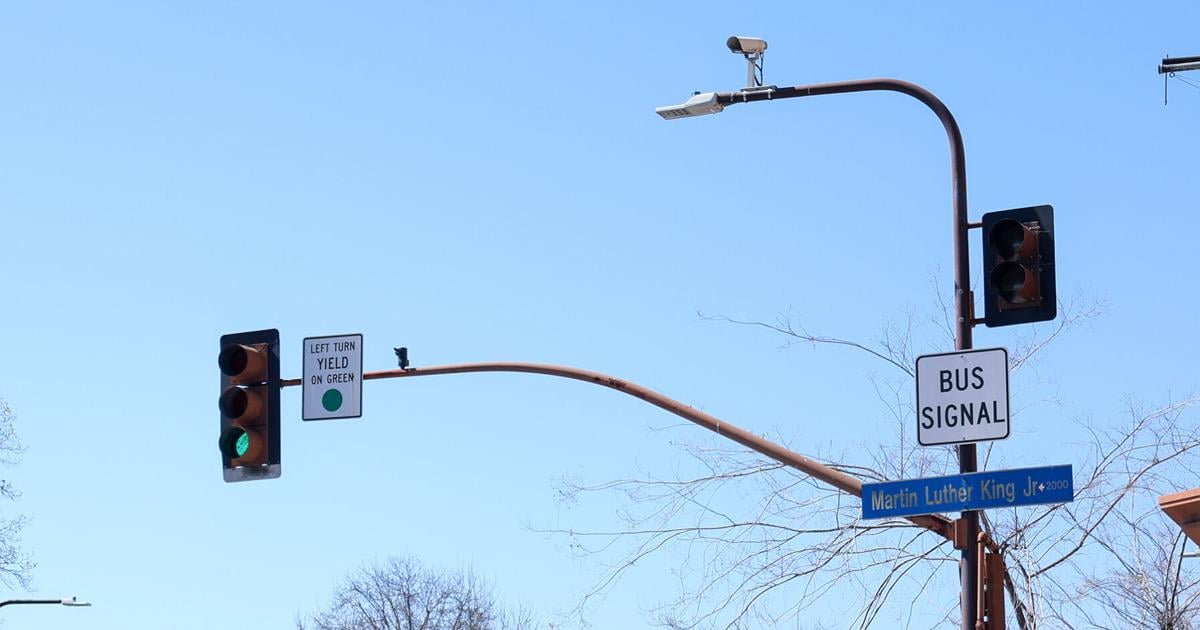
A leaked memorandum from the City of Berkeley’s Attorney’s Office about Flock Safety warned that Flock technology might be incapable of complying with city, state and federal unauthorized data sharing restrictions.
Consequently, it warned Berkeley could be liable for up to tens of millions of dollars from potential lawsuits. They warned of possible legal claims that Flock violated citizens’ Fourth Amendment privacy rights, California sanctuary law, state law regulating license plate data sharing and the California Public Records Act.
The City Attorney’s Office sent the memo to the City Council, the chief of police, the city manager, the director of Police Accountability and the Police Accountability Board on April 24.
City officials did not immediately respond to multiple requests for comment.
This Thursday, the City Council will vote on renewing Berkeley’s contract with Flock Safety for Automated License Plate Readers and adding first-responder drones, surveillance cameras and Flock Nova investigative software to the contract.
The memorandum notes that Oakland’s December 2025 Flock contract includes additional Oakland-specific protections against data sharing or access by out-of-state actors, whereas Berkeley’s proposed contract follows Flock’s standard terms and conditions.
Councilmembers Shoshana O’Keefe, Mark Humbert, Rashi Kesarwani and Terry Taplin authored an op-ed released in The Berkeley Scanner today defending their support for the renewed and expanded Flock contract, citing the benefits of Flock surveillance technology in making arrests. The four council members’ proposed supplemental prohibits data sharing without written permission from the City Council.
The city’s attorneys cited cases in Mountain View, Ventura County and Eugene, Oregon, of Flock’s alleged illegal reactivation of National Lookup granting out-of-state data access. According to confidential information shared by the Mountain View City Attorney’s Office in the memo, Mountain View experienced “issues with corrupt datasets and faulty programming, which cannot be fixed by any contract language even if Flock’s legal team makes every effort to ensure compliance.”
The memo then analyzes potential lawsuits the city could face if Flock shares residents’ data without city approval. Citing a previously threatened lawsuit by Secure Justice, the City Attorney’s Office wrote that the city could be liable for a $2,500 penalty “per camera and per image disclosed,” which could cumulatively cost $30 million to $60 million.
The City Attorney’s Office proposed additional amendments to the Flock contract to comply with Berkeley’s sanctuary city protections. Flock sent the city amendments overriding the city attorneys’ changes and enabling Flock to share data with third parties without the city’s consent. According to the memo, city attorneys are unsure if Flock intentionally or accidentally undercut Berkeley’s sanctuary city protections, but declare “either possibility is troubling.”
“There is also a risk the City could be sued under the Fourth Amendment simply for using Flock’s products, even if no data is shared,” the City Attorney’s Office stated in the memo.
According to the memo, the city cannot prosecute Flock in court for violations of state or federal law or force Flock to comply with its contractual obligations, but can likely only pursue monetary damages for unauthorized data sharing.
Mayor Adena Ishii and Councilmember Cecilia Lunaparra co-authored a supplemental rejecting any contract with Flock, co-sponsored by Councilmember Igor Tregub.
Berkeley Copwatch planned a rally before the City Council special meeting Thursday, at which Tregub will be speaking.
Juliette Damian contributed to this report.