
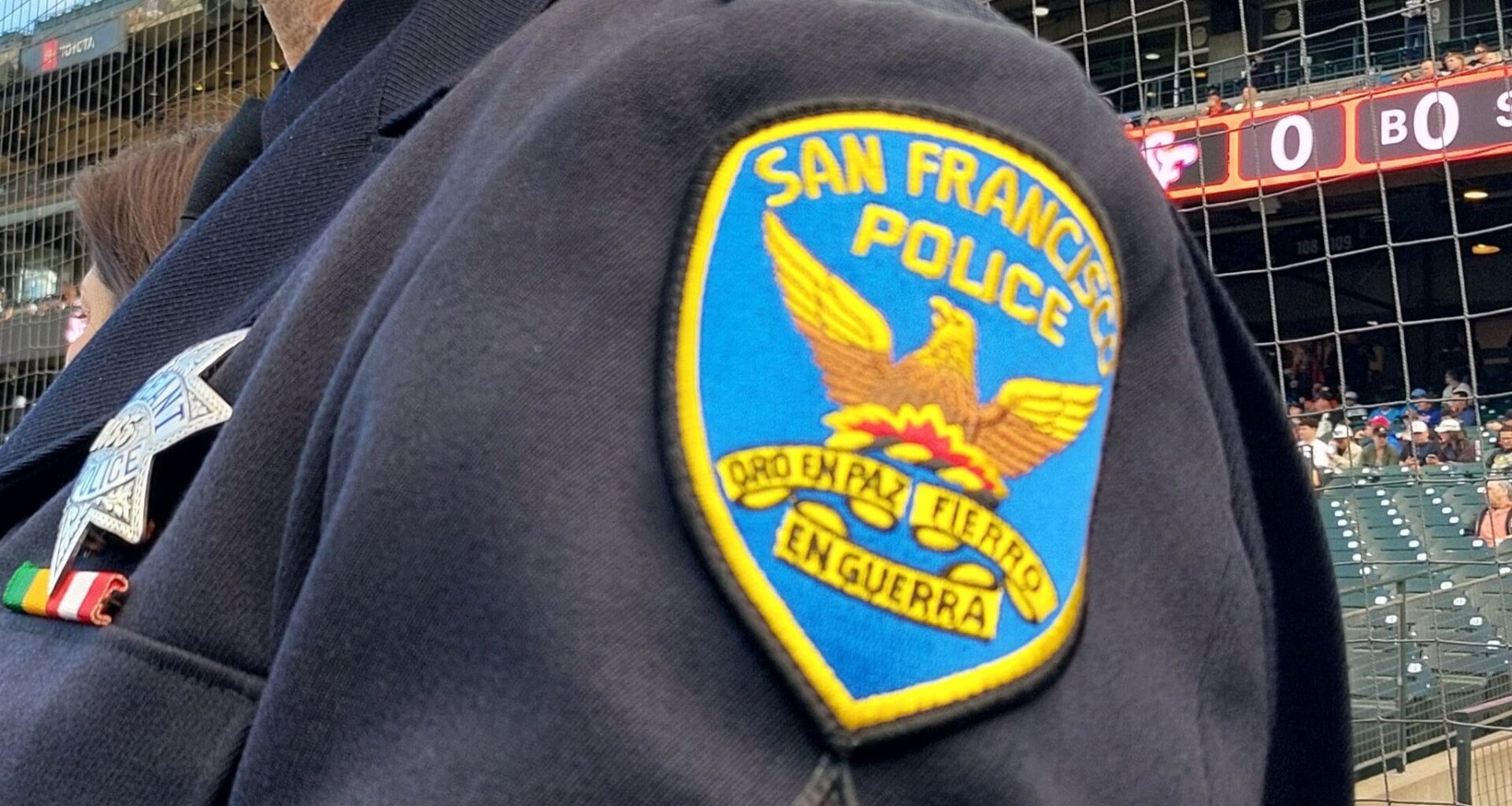
ShotSpotter alerts in San Francisco, which notify police officers of detected gunfire, are way down so far this year.
San Francisco Police Department
Gunfire in San Francisco has fallen significantly over the last decade, a Chronicle analysis found.
San Francisco police use a technology called ShotSpotter to detect where gunfire occurs, even when no one calls 911 to report it. Sensors, placed in locations throughout the city where police have historically focused on reducing violent crime, detect the “instantaneous and sharp” sound of gunshots. When a gunshot occurs, the sensors are able to map it to a location and generate a call for law enforcement.
ShotSpotter doesn’t provide comprehensive coverage across all neighborhoods, so claims can’t be made about gunfire in every corner of the city. But it does operate in the neighborhoods with the greatest history of gun violence, mainly in the eastern and southern parts of the city. SFPD shared a 2021 document that identified five focus zones for the technology: the Tenderloin and SoMa, Western Addition, the Mission, the Bayview and Visitacion Valley, an extent that seems largely unchanged since at least 2015.
Article continues below this ad
SFPD did not confirm whether the information in the 2021 document was still up to date, but the pattern of shootings suggests the area covered by ShotSpotter remains much the same. And that data shows that the amount of reported gunfire has fallen dramatically.
In the twelve months ending in March of this year, ShotSpotter alerts were 63% lower than they were between April 2020 and March 2021, when gunfire and gun violence spiked in the city. Compared to April 2024 to March 2025, it was down 24%.
Even compared to just the first three months of last year, ShotSpotter alerts so far this year are slightly lower than they were last year.
San Francisco Chronicle Logo
Make us a Preferred Source to get more of our news when you search.
Add Preferred Source
The drop in gunfire comes as San Francisco’s violent crime level has fallen to historic lows. But it’s also happened as homicides have surged early this year. As the data shows, SFPD Chief Derrick Lew told the Police Commission last month that the increase in homicides is not the result of increased gun violence. Instead, he explained, the rate of victims dying from their wounds has increased.
Article continues below this ad
“It indicates that the shootings are more, I guess, accurate… for lack of a better term,” Lew said in the police commission hearing.
SFPD prefers to measure gun violence in terms of the number of victims actually hit, both fatal and non-fatal, a measure that is common across police departments and is consistently well below the number of gunshots. In recent years, both gunshots and victims have fallen in tandem. So far this year, ShotSpotter alerts have continued their drop, while the number of gun violence victims has remained steady, though the number of victims is far smaller than the number of gunshots detected.
Among neighborhoods with ShotSpotter coverage, Visitacion Valley has seen the sharpest year over year drop, with 60% fewer alerts in the 12 months ending this March compared to the 12 months prior. The Tenderloin also saw a notable drop, decreasing by 32%.
The Bayview and Western Addition, however, didn’t see such declines: ShotSpotter alerts in the Bayview decreased by just 7% over that time period, while those in the Western Addition actually increased by 10%. Still, both areas remain well below their pandemic-era spikes.
Article continues below this ad
San Francisco’s plummeting gun violence rate is part of a statewide and nationwide decrease. A recent report from the California Department of Justice found that, as gun violence has dropped in the state after the pandemic-era spike, the gap between the rate of gun deaths in California versus the rest of the U.S. had reached its largest level on record as of 2024, with California’s gun homicide rate being 37% lower than that of the rest of the U.S. The numbers are stark change from the 1990s, when California had a higher firearm homicide rate than the rest of the country, according to the report.
The report pointed to community violence intervention groups as a large part of why gun violence has come down in recent years. Another report from researchers with the University of Pennsylvania found that San Francisco’s violence reduction initiative in District 10, which covers the Bayview and Visitacion Valley, among other neighborhoods, was associated with a 50% decrease in fatal and nonfatal shootings. SFPD and community members also credited community-based work as a reason behind the city’s historic reduction in homicides.
The Trump administration, however, has cut funding for many organizations doing such violence prevention work.
Article continues below this ad
“Declining state, local, and federal investment in these and other targeted gun violence prevention programs will mean that these sources of safety, shelter, and off-ramps from violence will disappear from too many communities and for too many people in danger,” the state report said.
The report also offered a theory as to why more gunshot wounds may be lethal: a rising prevalence of higher caliber guns, semiautomatic weapons and even illegal devices that convert some firearms into machine guns.