
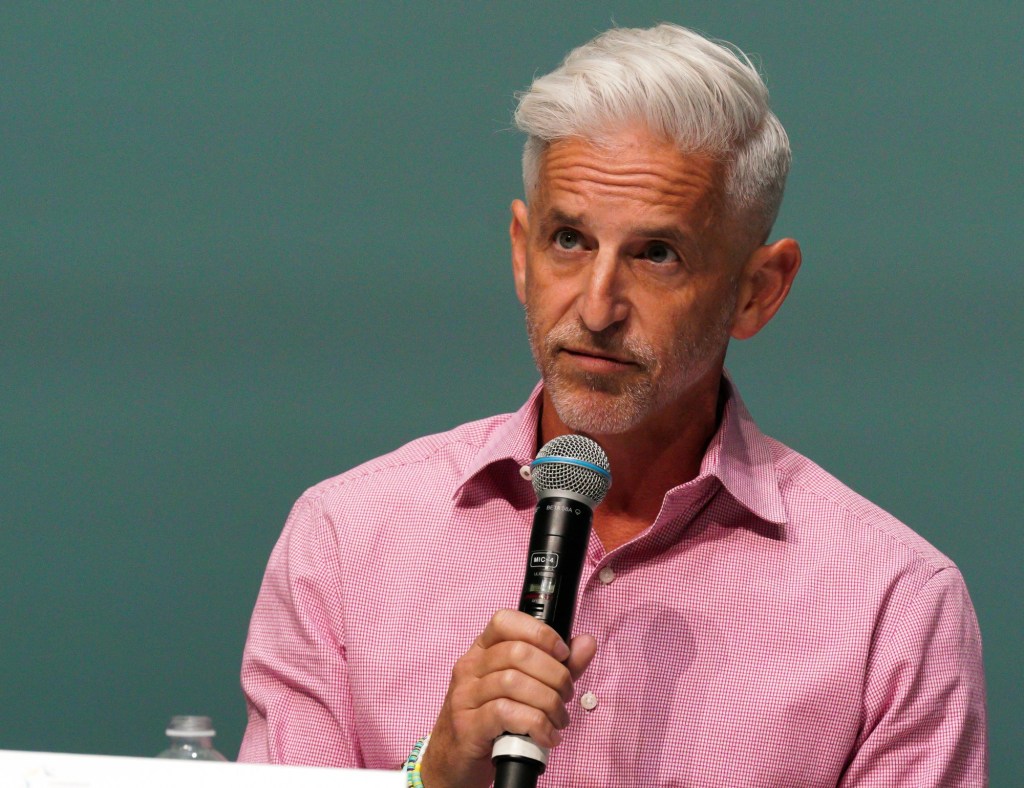
Ahead of the June primary election, the Southern California News Group compiled a list of questions to pose to the candidates who wish to represent you. You can find the full questionnaire below. Questionnaires may have been edited for spelling, grammar, length and, in some instances, to remove hate speech and offensive language.
Name: Josh Lowenthal
Current job title: Small Business Owner/State Assemblymember
Political party affiliation: Democratic
Incumbent: Yes
Other political positions held: State Assemblymember
City where you reside: Long Beach
Campaign website or social media: www.joshlowenthal.com
Do you believe balancing the state budget should rely more on spending cuts, new revenue streams or a combination? Tell us how you would propose tackling California’s projected budget deficit. (Please answer in 250 words or less.)
It must be both. With deep cuts from the federal government — my colleagues and I face difficult decisions. As we always do, we will meet the moment. We’ll do so by closing loopholes and passing legislation that continues to grow our state’s economy.
For you, what’s a non-starter when talking about budget cuts? Why? (Please answer in 250 words or less.)
Budgets are a statement of values. We must prioritize protecting our most vulnerable populations and our classrooms.
What are the top three most pressing issues facing the state, and what would you propose, as a state legislator, to address them? (Please answer in 250 words or less.)
Growing the state’s economy, tackling the affordability crisis — which includes access to health care and protecting our public education system.
What specific policy would you champion in the statehouse to improve the cost of living for residents? Would you see this having an immediate impact on Californians or would it take some time? (Please answer in 250 words or less.)
California has taken several important steps to address the cost of living, particularly on housing. We’ve passed laws to streamline housing approvals — and put more housing near our transit corridors. We’ve expanded tax credits for working families, and investments to help lower utility and energy costs. These incentives are helping everyday families now — and I’m committed to working with my colleagues to ensure they continue to work.
There have been numerous efforts made in the state legislature to curtail federal immigration enforcement in California, from prohibitions on agents wearing masks to banning federal officers from future employment in a public agency. Do you see any area where the state could better protect its residents from the federal government’s widespread immigration crackdown? Would you prefer the state work more hand-in-hand with the federal government on immigration? Where does the role as a state legislator fall into your beliefs here? (Please answer in 250 words or less.)
We’ve seen firsthand the negative impacts these crackdowns have had on our state and local economies. I’m proud to have joined colleagues both last year–and this year in calling these attacks out. We need action from our federal partners. We need comprehensive immigration reform that provides a pathway to citizenship so that individuals who work hard, pay taxes and help our communities and economy grow aren’t left behind.
Health care costs — like in many other areas — are continuing to rise. What policies, specifically, would you support or like to champion that could lower premiums or out-of-pocket expenses? (Please answer in 250 words or less.)
We have both an access and an affordability issue. Both must be addressed as they go hand in hand–however we need the president and Congress to do their job. HR-1 hasn’t and won’t help California and other states bring health care (or any other) costs down. In the meantime, California is exploring innovative solutions–such as our own prescription drug program to make health care just a little more affordable for Californians.
Would you support expanding state health care programs to ensure more residents — including those who are not citizens — are covered? How would you propose the state fund such an expansion? Or, how would you propose the people who cannot afford health care still get the necessary care they need without expanding state programs? (Please answer in 250 words or less.)
Our state and our health care system are better when more people are covered. More coverage means less strain on our emergency rooms, more access to preventative care and healthier communities. Healthcare alone isn’t cheap–but we need to do everything in our power to bring the costs down–including working with our federal partners to repeal their damaging cuts to services and programs
As part of combating homelessness, elected officials often talk about the need to prevent people from losing their homes in the first place. What policies or programs should the state adopt to make housing more affordable for renters and homeowners? What do you propose the state do to incentivize housing development and expedite such projects? (Please answer in 250 words or less.)
California has to tackle homelessness and affordability at both ends: keeping people housed and building more homes. As mentioned earlier, we’re doing that. Cutting red tape, prioritizing projects that are shovel-ready and do the most good.
Gov. Gavin Newsom signed a law in 2023 authorizing state energy regulators to penalize oil companies making excessive profits. But the California Energy Commission put off imposing the penalties last year after two oil refineries, which represent nearly a fifth of California’s refining capacity, said they would shut down operations. Those announcements prompted many to be concerned about soaring gas prices. What do you think of the commission’s decision? And how would you, as a state legislator, propose balancing California’s climate goals with protecting consumers from high gas prices at the pump? (Please answer in 250 words or less.)
As a legislator, I focus on a balanced path forward. First, ensuring strong market transparency and oversight so that price spikes are driven by real supply constraints—not market manipulation. Second, working with regulators to develop a predictable framework for enforcement that holds companies accountable without creating unnecessary volatility. The 69th District is home to oil refineries.
In 2024, voters approved Proposition 36 to increase penalties for certain drug and retail theft crimes and make available a drug treatment option for some who plead guilty to felony drug possession. Would you, as a legislator, demand that more funding for behavioral health treatments be included in the budget? How would you ensure that money is used properly? (Please answer in 250 words or less.)
Yes–and we’ve done that already, and I am committed to ensuring that we do our part. We’ve seen what success can look like and must do everything we can to deliver for our residents.
What role should the state play in ensuring hospitals and doctors are providing gender-affirming care to LGBTQ+ residents? Similarly, what role do you believe the state could play should other states adopt policies that restrict that care? (Please answer in 250 words or less.)
The state has a clear responsibility to ensure that all Californians—including LGBTQ+ residents—have access to safe, evidence-based, and medically necessary care. California, as a beacon of hope for so many– has an important role to play.
This role includes strengthening legal protections for patients and providers, ensuring that individuals who come to California for care are safe from out-of-state penalties, and working with health systems to expand capacity where and when possible.
Governments around the world are increasingly considering an age ban or other restrictions on social media use among young people, citing mental health and other concerns. Do you believe it’s the state’s responsibility to regulate social media use? Why or why not? And what specific restrictions or safeguards would you propose as a state lawmaker? (Please answer in 250 words or less.)
Yes. I’m the author of AB’s 1700 and 1709. In December, I went to Australia just as their ban on social media accounts for youth under 16 was taking effect. To say it was eye-opening would be an understatement. I’m proud to be leading a bipartisan group of legislators to bring their models here to our state. We’re seeing increased suicide rates, lack of socialization and withdrawal from typical youth activities. Our failure to act has resulted in consequences and harm to youth for far too long.
Visit socialmediadelay.com for more information and to get involved.
Artificial intelligence has become a ubiquitous part of our lives. Yet public concerns remain that there aren’t enough regulations governing when or how AI should be used, and that the technology would replace jobs and leave too many Californians unemployed. How specifically would you balance such concerns with the desire to foster innovation and have California remain a leader in this space? (Please answer in 250 words or less.)
California should lead on artificial intelligence by setting clear, responsible rules–while remaining a leader in innovation. Here in the 69th, it’s already transforming our ports and goods movement systems by creating opportunities to improve efficiency, reduce emissions, and strengthen supply chains. But we have to be intentional about how we deploy this technology so it benefits workers and communities—not just profits.
Statistically, violent crime rates in California is on the decline, but still, residents are not feeling safe or at ease in their communities. How do you see your role in the state legislature in addressing the underlying issues that make Californians feel unsafe in their own neighborhoods? (Please answer in 250 words or less.)
As a legislator, my role is to address both the reality of crime and the underlying factors that drive fear and instability. We must invest in prevention—expanding mental health and substance use treatment, addressing homelessness, and creating pathways to economic stability so fewer people fall into cycles of crime.
What’s a hidden talent you have? (Please answer in 250 words or less.)
Parking Karma.
Paul Seo, AD-66 candidate, 2026 primary election questionnaire
Shannon Ruiz-Ross, AD-66 candidate, 2026 primary election questionnaire
Jessica Zonia Maldonado, AD-66 candidate, 2026 primary election questionnaire
Scott Houston, AD-66 candidate, 2026 primary election questionnaire
Sara Deen, AD-66 candidate, 2026 primary election questionnaire