
Both the city of San Diego and San Diego County are facing budget cliffs.
Faced with a $146 million budget gap, Mayor Todd Gloria has proposed cutting arts funding from $13.8 million to just about $2 million.
At the county, a coalition of labor unions and nonprofits are gunning for a $360 million sales tax hike to plug holes in the county’s budget.
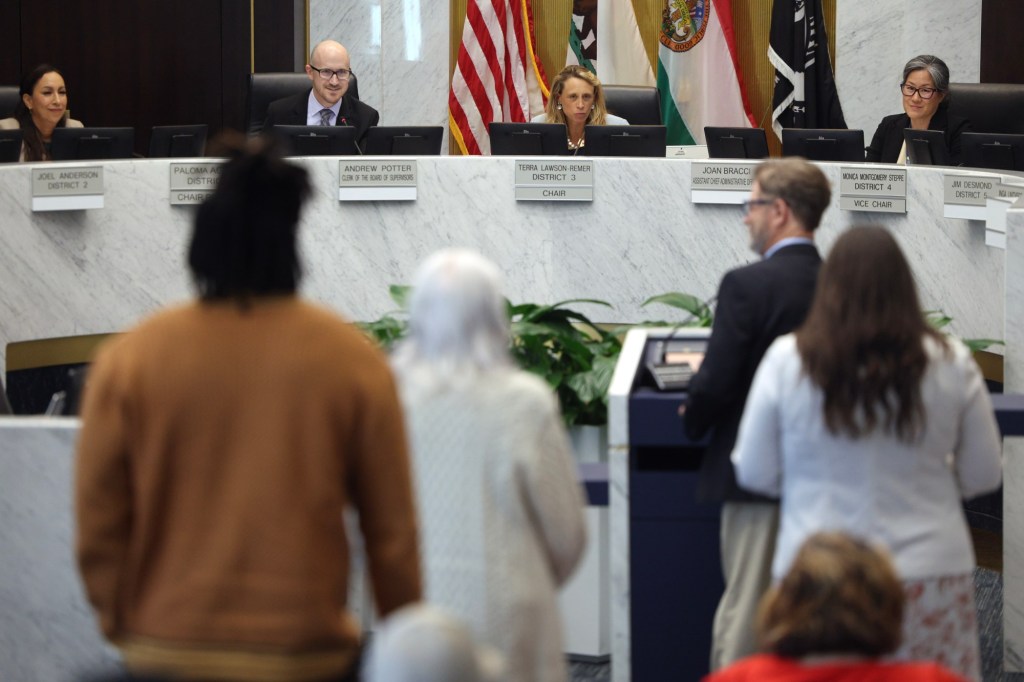
But those fiscal problems aside, supervisors still approved Tuesday an effort to steer $2.75 million to grants and other programs for the arts.
The package would create a series of new county arts programs, including direct grants to artists, a county artist-in-residence program and money to support spaces that showcase artists and their work. The legislation requests that the county’s top bureaucrat work to include the money in next year’s budget.
Included in that money would be funding for San Diego and Tijuana’s binational arts economy and San Diego’s Black Arts and Culture District in the Encanto neighborhood.
Supervisor Terra Lawson-Remer called the package a “historic investment” in the arts that supervisors started to explore months ago.
“Arts and culture is not an extra,” she said. “It is part of what makes a community alive.”
In the city, the future of arts funding has become a leading controversy as officials begin annual budget talks.
Under Gloria’s proposed budget, the city would eliminate its two grant-making arms for the arts, the Organizational Support Program and Creative Communities San Diego. A remaining $2 million for the arts in the city’s budget would fund its Cultural Affairs Department.
Artists and arts organizations have derided Gloria’s cuts, calling them a catastrophic blow to communities and the city’s culture.
Despite the timing of the county’s new proposed arts spending on the heels of the city’s controversial cuts, Democratic supervisors insist the two are unrelated.
“This is a regional approach,” said Supervisor Monica Montgomery Steppe. “This is not a response or reaction to anything else that’s going on.”
Republican Supervisor Jim Desmond was not convinced.
“I don’t believe the county should come in and rescue what the city of San Diego is dropping,” Desmond said.
The potential spending passed on Tuesday with all three Democratic supervisors voting in support and Desmond voting no. Supervisor Joel Anderson was not in attendance.
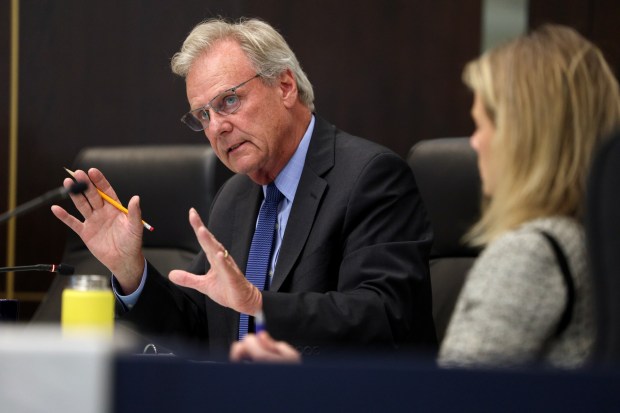 Supervisor Jim Desmond speaks on the subject of funding arts and culture during a Board of Supervisors at the County Administration Building in San Diego on Wednesday, May 6, 2026. (Hayne Palmour IV / For The San Diego Union-Tribune)
What the supervisors passed directs the county’s top bureaucrats to free up $2.75 million for new arts programs in the county’s budget for the upcoming fiscal year.
The county’s chief administrative officer, Ebony Shelton, is expected to release next year’s budget on May 18.
Of the $2.75 million in the new package, $1 million would fund direct grants to artists. Another $250,000 would be for the artist-in-residence program, which calls to embed artists in county agencies “to develop artist-led and community-informed solutions to social challenges faced by county departments.”
Desmond took particular umbrage with that program. “What’s county fire going to do with an artist?” the Republican said.
Another $500,000 would support art facilities and spaces, and $250,000 would go to binational art programs. A one-time appropriation of $500,000 would go to the Black Arts and Culture District. A remaining $250,000 would fund county staff to implement the new programs.
In all, the legislation calls for $2.25 million of the spending to be ongoing, meaning that it would also be included in future county budgets.
Desmond warned the package’s language was overly vague and didn’t explain how the money would be doled out or what metrics for success the county plans to track.
“This is how fraud starts,” he said. “Government dollars go out the door, and we don’t have guardrails or metrics or something to be able to say where or how the money’s being spent.”
Lawson-Remer responded that the legislation requires county staff to report back every year to supervisors with thorough details on how the program’s being implemented.
“You can disagree about the deliverable,” Lawson-Remer said to Desmond. “You can believe that artists are not important to invest in. But please do not make false charges that there are no program guidelines.”
Before supervisors voted on the package, members of the region’s arts community thanked them for the support.
Jim Gilliam, chair of the San Diego County Arts and Culture Commission, said his group has been studying what the county needs to do to better invest in and support local artists.
“The need for individual artists came to the top of the forefront,” Gilliam said. “Your legislation today meets that need in a significant and robust way.”
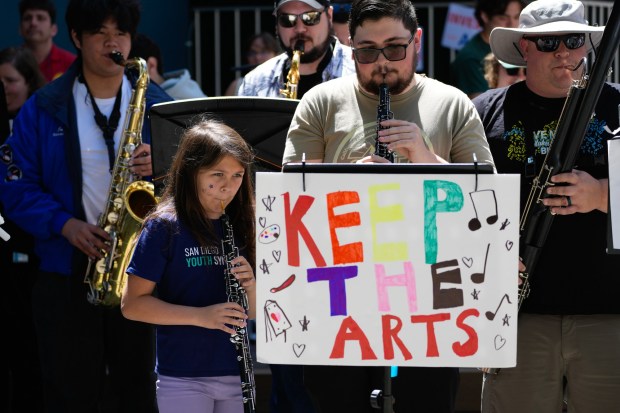 At the Civic Center Plaza on Monday, April 20, 2026, in San Diego, musicians taking part in a demonstration performed with others protesting the proposed budget cut by Mayor Todd Gloria to the arts. (Nelvin C. Cepeda / The San Diego Union-Tribune)
In San Diego, City Council members spent Tuesday voicing frustration with Gloria’s proposed cuts to arts funding.
During a meeting of the Budget Review Committee, Councilmember Raul Campillo argued the cuts bucked years of City Council direction to boost arts funding. If anything, Campillo argued, more such funding could reduce the city’s budget gap by boosting the local economy.
“We need to take the burden off of the arts and culture community and our community-centered departments,” Campillo said.
Councilmember Vivian Moreno called the arts a key lifeline for low-income communities and said the cuts proposed would amount to a “dismantling” of city support for the arts.
“We cannot say that we value equity, community investment and cultural preservation while proposing cuts that will disproportionately impact the very communities that have historically received the least investment,” she said.