
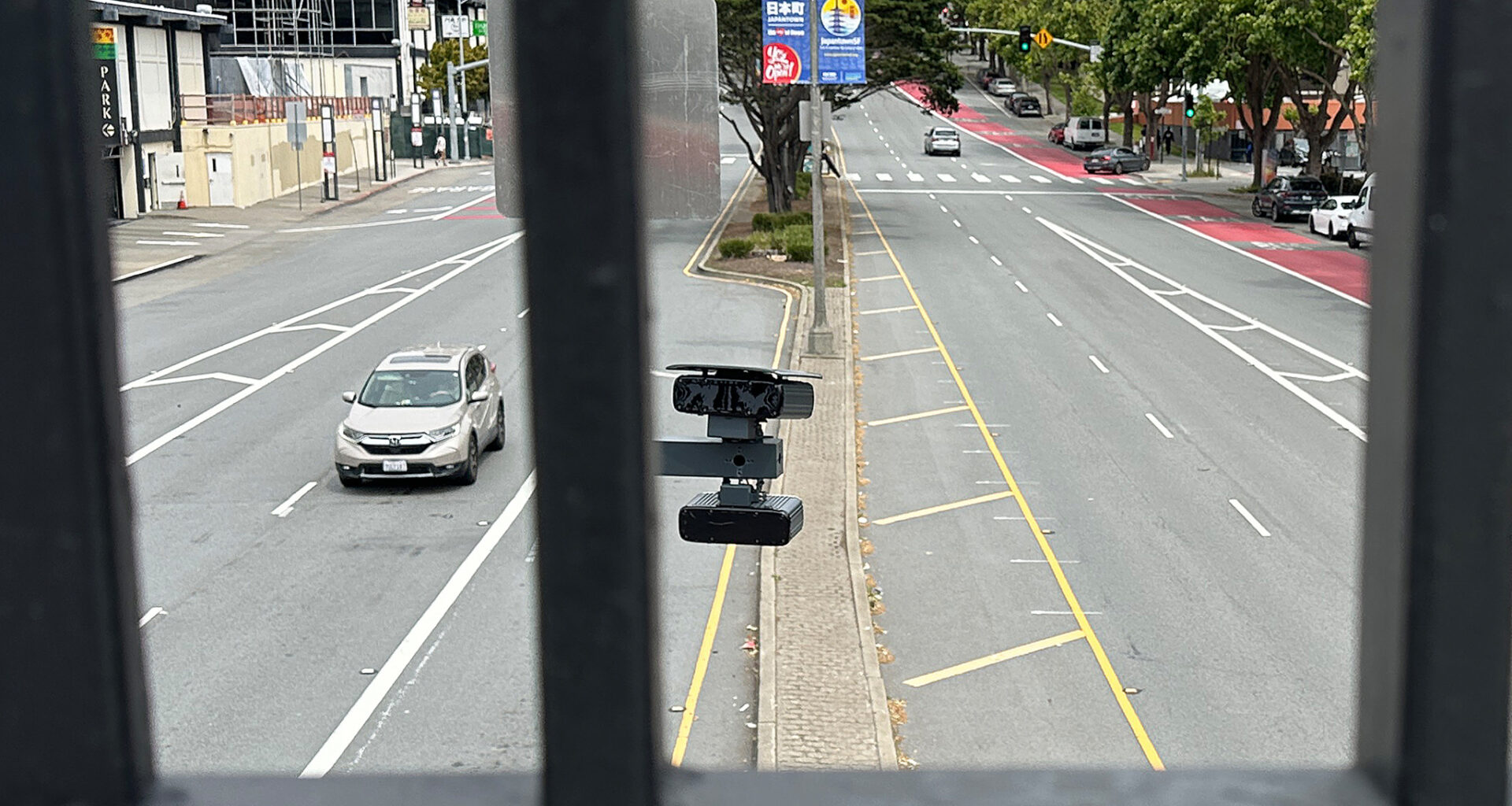
Derek Wiseth has lived by the bottom of an incline on Fulton Street for decades and while he cherishes the proximity to Golden Gate Park, the location has had its adverse effects — like the time he woke up to find a car had blown past Arguello Boulevard to launch off a parked vehicle and gotten lodged in a treetop. “People have always sped,” Wiseth told SFGATE on Monday.

Since the intersection of Fulton and Arguello is prone to reckless driver behavior, the site was one of 33 locations that San Francisco Municipal Transportation Agency chose to install speed cameras at last year. The intersection then recorded the highest number of speeding violations — almost half of the average daily total violations — but that’s starting to drastically change.
SFMTA released its latest batch of data from the cameras to the public May 1 and its leaders were delighted by the results. “The new data shows that cameras have been very effective in getting people to change their behavior and slow down in the corridors where we’ve installed them,” Julie Kirschbaum, SFMTA’s director of transportation, said during a board of directors meeting on Tuesday.
Article continues below this ad
A speed camera on the corner of Fulton Street and Second Avenue near Arguello Boulevard in San Francisco on May 4, 2026.
Silas Valentino/SFGATE
Before the cameras started issuing warnings and fines, the agency said it logged over 45,500 counts of speeding across the 33 locations. That’s been cut down to under 6,000 — a nearly 80% decrease in the number of vehicles speeding 10 mph or more.
“I honestly think this has helped,” Wiseth said, speaking from the sidewalk beneath a jet-black automated camera that’s pointed at Fulton day and night. “It’s a little calmer and I’m glad they did it.”
Make SFGATE a preferred source so your search results prioritize writing by actual people, not AI.
Add Preferred Source
California Assembly Bill 645, passed in 2023, permitted the city to pilot the program and install 56 cameras across 33 locations, the maximum allowed under the law. Since the initial response from the cameras has shown such a dramatic decrease in speeding, advocates and Supervisor Matt Dorsey are moving fast with hopes of expanding onto more streets across the city.
Article continues below this ad
Meanwhile, other California municipalities are following San Francisco’s lead. Almost 20 cameras appeared in Oakland earlier this year and San Jose has been preparing for a pilot program. At the end of April, Los Angeles started rolling out a planned125 automated speed cameras.
Speed cameras are proving successful at slowing people down, but for some in San Francisco, their presence is an infringement on privacy. “I teeter back and forth — it’s positive for safety, but, Jesus, can’t I drive my car without Nazi Germany?” Dan El said outside the Japantown mall, close to another speed camera observing Geary Boulevard.
A couple of blocks east, near the Chinese Consulate, a man named Rick who didn’t share his last name was leery of how advanced technology is pervading across the city right now in the name of safety, mentioning how SFPD made an arrest last week after tracking the suspect using a drone. “It’s a slippery slope with surveillance,” he said. “It worries me how much this gets normalized.”
Article continues below this ad
A car beneath a speed camera on Geary Boulevard near Japantown in San Francisco on May 4, 2026.
Silas Valentino/SFGATE
Proponents of speed cameras are aware of these concerns and worked to ensure that the law approving them was narrowly restricted to a single purpose: documenting speeding vehicles and nothing more.
AB 645 authorized the use of speed cameras with those strict parameters. The cameras only read the rear license plate of a speeding vehicle and the data is only stored for up to 120 days, according to SFMTA. SFMTA said there is no facial recognition and it will not share information with other agencies unless “court ordered to do so.”
A spokesperson for Walk San Francisco, Marta Lindsey, explained how long the safety advocacy group worked on the legislation. Privacy was baked in. “That was the challenge passing the bill,” she said. “It’s airtight on privacy. It’s so limited to just the license plate.”
Article continues below this ad
A Muni bus passes by a speed camera near the corner of Fulton Street and Arguello Boulevard in San Francisco on May 4, 2026.
Silas Valentino/SFGATE
Susan Zhang, who also lives along Fulton, shrugged off worries over surveillance. “It’s the norm in other countries and it’s not an issue,” she said. Instead, the mother of a young child said she’d rather see speed cameras appearing in more parts of San Francisco.
A spokesperson for Dorsey, of District 6, said they’re drafting a resolution to begin urging the state legislature to expand and strengthen the program. The supervisor is expected to speak about it during the May 12 Board of Supervisors meeting, alongside public comment.
Article continues below this ad
Lindsey said 33 locations is “a drop in the bucket” and they’re hoping to see further support from Sacramento in next year’s legislative session. “It took us eight years and it cannot take that long to expand the program. People’s lives are at stake,” she said. “How do we get this state bill way faster? We’re going to need everyone to be all in.”
A car beneath a speed camera on Geary Boulevard near Japantown in San Francisco on May 4, 2026.
Silas Valentino/SFGATE
Along with a drastic cut in vehicles found speeding over 10 mph, another data point that SFMTA was excited to trumpet in its latest report was how the cameras were altering behaviors in San Francisco.
A driver caught traveling 11 to 15 mph or more over the limit by the cameras is issued a $50 ticket in the mail; the agency found that roughly two-thirds of drivers who have received a warning or citation did not get another one.
Article continues below this ad
Jimmy Holway was one of those drivers. From the sidewalk on Geary, Holway said he course-corrected after receiving a warning for speeding past the camera on Fulton. Holway said the cameras are merely a “speed bump” for slowing people down.
During the SFMTA meeting on Tuesday, Kirschbaum said this was the ultimate goal of the program. “I want to thank San Franciscans for really embracing this program, for having really great conversations around the dinner table that sometimes these warnings or these tickets inspired,” she said.
While penalties may have added up to over $1 million in tickets last August, the first month the agency started issuing fines, SFMTA insists the goal is to slow people down and not to generate revenue. “I’m okay with the city making money from bad offenders,” Lorraine Luna said while walking on Geary. “If you’re going to be bad, you’re going to pay for it.”
Article continues below this ad