
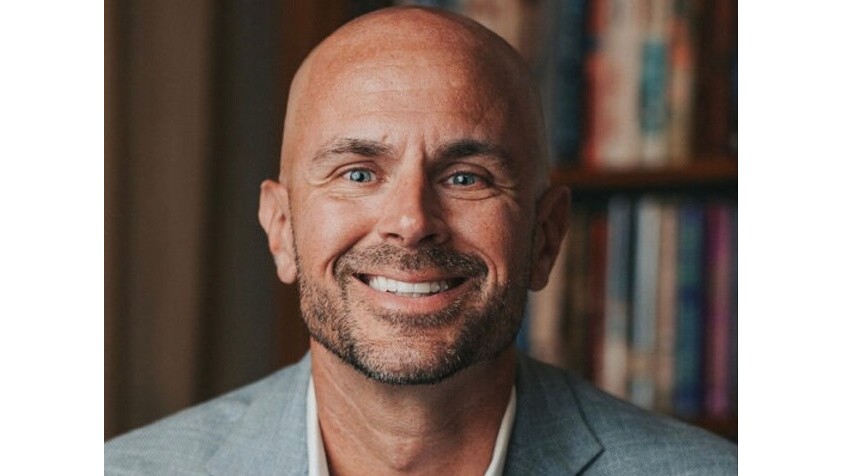
Richard Bailey, 39, is a former Republican mayor of Coronado who is no longer registered with a political party, and he is running for San Diego City Council representing District 2.
Originally from La Mesa, Bailey now lives in Point Loma and owns local boat rental and bike rental businesses.
The San Diego Union-Tribune emailed a series of questions to Bailey and other candidates to help inform voters about their positions, priorities and plans if elected.
Bailey said he did not use AI in responding to the Union-Tribune’s questions.
1.) Why are you running, and what makes you the best candidate? (150 words max)
San Diego is one of the best locations to call home. However, from the structural deficit to the condition of our roads and parks to slow public-safety response times, San Diego is a city in decline by nearly every objective measure.
I’m running because I love San Diego and want to bring a results-driven, common-sense, policy-focused approach to City Hall. I have an education in finance and economics and real-world experience in the private sector at a Fortune 500 company, and I own two businesses operating in the district. As a former two-term mayor of Coronado, I know what good governance looks like and have the experience to deliver measurable results.
The current city council is out of touch with everyday San Diegans. Our city needs experienced and responsive leadership focused on results, not rhetoric.
2.) What are the top 3 issues facing this district and the city generally? (150 words max)
The three biggest issues are fiscal mismanagement, declining basic services and a loss of public trust.
First, the city’s budget. Despite record high revenues, spending and staffing, performance across all departments has declined over the past decade. These trends suggest the city does not have a revenue problem, it has a spending and management problem.
Second, the city is failing at its core responsibilities: maintaining roads and infrastructure, keeping public spaces clean and ensuring timely public safety response. These are the basics residents expect, and performance has continued to fall without any meaningful changes in policy or accountability.
Third, there is a growing disconnect between City Hall and everyday San Diegans. Residents see rising costs, new fees and misplaced priorities while fundamental services decline.
San Diego doesn’t need more programs or promises; it needs a return to competent, accountable governance focused on getting the basics right.
3.) What are the first 3 things you would do in office if elected? (150 words max)
My top three priorities are repealing the fees, restructuring City Hall and reprioritizing the basics.
First, I would repeal the new trash fees, Balboa Park and downtown parking fees, recreation league fees and the numerous other fee increases that are making San Diego more expensive for families and businesses.
Next, I would restructure City Hall to improve performance. Since 2015, the city’s population increased just 1%, but city staffing increased by 27%, driven largely by middle manager growth of 471%. The increasing layers of bureaucracy and lack of accountability is why performance continues to decline. City Hall must be restructured to cut the fat and change the model for delivering services to improve results for taxpayers.
Third, the city must prioritize the basics: fixing roads, maintaining parks and ensuring timely public safety response. A leaner organization with a new delivery model can improve the quality of services while reducing costs.
4.) What are your plans for addressing homelessness? (150 words max)
The first step is to recognize that the current approach to homeless programs, policies and enforcement is not working. Despite spending hundreds of millions of tax dollars locally and billions at the state level, homelessness is still near all-time highs.
We must make saying “yes” to getting help and off the streets the only option.
This can be accomplished by offering temporary assistance with qualified providers combined with zero-tolerance enforcement of existing anti-camping laws.
San Diego should lead the way to establish a new continuum of care with elected officials from every local jurisdiction who are accountable to voters for how tax dollars are spent and enforcement is conducted across the region.
Today, there is little oversight of outcomes and inconsistent enforcement of laws. This approach is unfair to homeless individuals who need help to get off the streets and the general public who want clean, safe public spaces.
5.) What should the city do to combat its shortage of affordable homes, and what priorities should guide its housing plans? How would you assess the city’s progress? (150 words max)
San Diego’s housing supply has increased about 10% over the past decade while population grew just 1%, and yet home prices have nearly doubled. This trend mirrors other major cities, suggesting national fiscal and monetary policy plays a larger role than local housing policy alone.
That said, local policies still matter. As the economy and lifestyle preferences change, so too should zoning, especially in underutilized commercial areas while ensuring sufficient parking and traffic mitigation.
However, San Diego’s density bonus and ADU programs, which often exceed state requirements, have reduced quality of life in many neighborhoods. From the Turquoise Tower in the coastal zone to the 17-unit mega-ADU project without parking in Clairemont, there are clear examples of bad housing policy.
So yes, there has been progress, but it’s been uneven and, in many cases, has come at the expense of neighborhood quality of life.
6.) Do you support or oppose the Trump administration’s immigration crackdown, and would you support or oppose the use of aggressive enforcement seen elsewhere here in San Diego? What is your message to immigrants in this district? (150 words max)
Immigration enforcement should be fair and professional. In some instances, the Trump administration’s approach was unnecessarily heavy-handed, which undermined otherwise legitimate efforts to prioritize the removal of individuals who committed serious crimes.
At the same time, it is a failure of responsibility when local or state agencies refuse to cooperate with federal authorities in removing individuals convicted of crimes. We are a nation of laws, and coordination between agencies is essential to public safety. When that coordination breaks down, enforcement shifts into neighborhoods, which is worse for both communities and law enforcement.
It was not considered controversial when the Obama administration placed immigration enforcement officials in county jails to coordinate the removal of individuals convicted of serious crimes, so that same level of cooperation should not be controversial today. We can and should support a legal immigration system while also ensuring laws are enforced in a professional and responsible way.
7.) San Diegans are struggling with rising costs of water, transportation and other basic expenses, and cuts to federal safety-net programs threaten to impose new costs on many. What should the city do to keep San Diego affordable and struggling families afloat? (150 words max)
If the city wants to make San Diego more affordable, it should start by repealing recent taxes and fees that are driving up the cost of living for families and local businesses.
But affordability isn’t just about taxes, it’s about daily costs. It’s the alignment or tires you need because roads are poorly maintained, the ticket for parking near an unmarked intersection or the cost of replacing a car window after a preventable crime. These are the hidden costs of bad governance and policies.
While many cost pressures are driven by broader economic factors, the city has made affordability worse through its own policy and management decisions.
The solution is simple: Focus on the basics. Well-maintained infrastructure, consistent enforcement and disciplined budgeting reduce costs for residents. If City Hall gets those fundamentals right, San Diego becomes more affordable.
8.) San Diego faces bigger budget gaps than ever. How would you close these? Would you support a city sales tax increase? (150 words max)
No, I would not support a sales tax increase, because the city does not have a revenue problem, it has a spending and management problem.
Over the past decade, staffing has grown by 27%, and middle managers have grown by 461% while service levels have declined. Right-sizing the organization can help close the deficit, eliminate wasteful bureaucracy and restore efficiency.
Next, I would transition the city from an operational to an oversight model by expanding managed competition, delivering higher-quality services at lower costs.
We should also better leverage underutilized city-owned real estate to generate revenue and reform homeless services to reduce strain on public safety resources.
The current structural deficit is the result of years of irresponsible financial and management decisions. It’s time to restore fiscal discipline and accountability at City Hall, rather than have taxpayers pay an even higher bill for lower performance.
9.) San Diego is vulnerable to climate change impacts in the form of wildfires, rising seas and extreme heat and to the health effects of climate-warming emissions. What should the city do to improve climate resilience and reduce emissions? (100 words max)
We should all be good stewards of the environment, however, many state and local policies have added unsustainable costs to the city and residents with negligible environmental benefits. San Diego should focus on practical solutions like maintaining stormwater systems to prevent future flooding. Until the city can fix a pothole and keep the lights on while balancing the budget, voters will be skeptical of additional environmental regulations and programs.
10.) Voters will be asked in June whether to levy a new tax on owners of empty second homes. How will you vote on this? (50 words max)
I will be voting no on any new taxes and fees, including the second home tax. Before asking taxpayers for more money, the city must show it can deliver better results, control costs and responsibly manage existing tax dollars.