
California residents were among those on board a cruise ship that has been linked to three deaths after several passengers fell ill with a type of hantavirus that can spread from person to person, state health officials said on Thursday.The California Department of Public Health told KCRA 3 there was no information that the California residents fell ill or were infected with the disease, which is linked to rodent droppings. “We are coordinating with local health officials, as needed, to monitor returning travelers,” CDPH said in a statement. The agency did not say how many Californians were onboard the MV Hondius, which departed from Ushuaia in Argentina on April 1 and is now sailing toward the Canary Islands, where it is expected to arrive in the coming days. CDPH said it could not disclose the travelers’ residences or other information to protect their privacy. Tests have confirmed that at least five people on the cruise ship were infected with a hantavirus found in South America, called the Andes virus.Still, CDPH described the risk to public health in California as low. The U.S. Centers for Disease Control and Prevention also said the risk to the American public is “extremely low.” Below is more on what we know about hantavirus and who has been infected so far. What is hantavirus and the Andes virus? People can become infected by hantavirus from contact with rodents like rats and mice, especially when exposed to their urine, droppings and saliva, according to the CDC. The Andes virus is the only type of hantavirus that is known to spread person-to-person. Argentina’s health ministry said there were 28 deaths from hantavirus last year, up from an average mortality rate of 15 in the five years before that. Nearly a third of cases last year were fatal, it said.Symptoms for Hantavirus Pulmonary Syndrome can show up one to eight weeks after contact with an infected rodent. According to the CDC, early symptoms include fatigue, fever and muscle aches. About half of patients also experience headaches, dizziness, chills and abdominal problems. The CDC says that 38% of people who develop respiratory symptoms may die from the disease. What we know about the hantavirus-stricken cruise ship and its casesThe MV Hondius was carrying 147 people, including 88 passengers and 59 crew members, from 23 countries, according to the World Health Organization. The ship has sailed across the South Atlantic with stops that included: Antarctica, South Georgia, Nightingale Island, Tristan da Cunha, Saint Helena, and Ascension Island.As of May 7, there were five confirmed cases of hantavirus, including three deaths, according to the WHO. The first two deathsA Dutch man and his wife, the first two people to die, had traveled together in South America, including Argentina before they boarded the ship.The man died on April 11 and his body was removed to Saint Helena on April 24.The woman went ashore on Saint Helena with gastrointestinal symptoms on April 24. She deteriorated during a flight to Johannesburg, South Africa, the next day and died at the hospital there on April 26.The third death A woman presented with pneumonia and died on May 2. Her first symptoms presented on April 28. The AP reported that a flight attendant who was showing symptoms of hantavirus could be the first case of someone who was not on the ship being infected. She was on the same plane as the woman who died in South Africa. Some passengers departed the ship without contact tracingThe Associated Press reported on Thursday that more than two dozen people from at least 12 countries left the ship on April 24 at Saint Helena, two weeks after the first passenger died on board. Health officials are trying to trace their contacts. WHO downplays the risk of a pandemicThe WHO said the risk to the wider public is still low because the virus isn’t easily transmitted between people. “This is not coronavirus,” Dr. Maria Van Kerkhove with the WHO said on Thursday. “This is not the start of a COVID pandemic. This is an outbreak that we see on a ship.”–The AP contributed to this story.
California residents were among those on board a cruise ship that has been linked to three deaths after several passengers fell ill with a type of hantavirus that can spread from person to person, state health officials said on Thursday.
The California Department of Public Health told KCRA 3 there was no information that the California residents fell ill or were infected with the disease, which is linked to rodent droppings.
“We are coordinating with local health officials, as needed, to monitor returning travelers,” CDPH said in a statement.
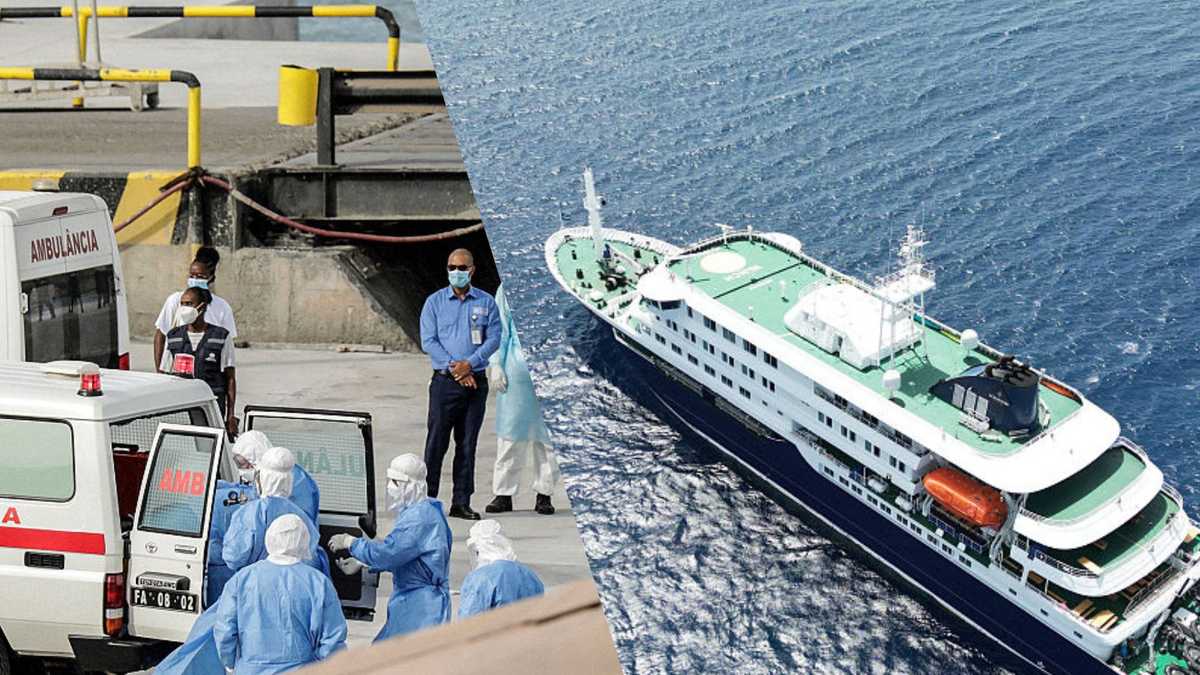
The agency did not say how many Californians were onboard the MV Hondius, which departed from Ushuaia in Argentina on April 1 and is now sailing toward the Canary Islands, where it is expected to arrive in the coming days.
CDPH said it could not disclose the travelers’ residences or other information to protect their privacy.
Tests have confirmed that at least five people on the cruise ship were infected with a hantavirus found in South America, called the Andes virus.
Still, CDPH described the risk to public health in California as low. The U.S. Centers for Disease Control and Prevention also said the risk to the American public is “extremely low.”
Below is more on what we know about hantavirus and who has been infected so far.
What is hantavirus and the Andes virus?
People can become infected by hantavirus from contact with rodents like rats and mice, especially when exposed to their urine, droppings and saliva, according to the CDC.
The Andes virus is the only type of hantavirus that is known to spread person-to-person. Argentina’s health ministry said there were 28 deaths from hantavirus last year, up from an average mortality rate of 15 in the five years before that. Nearly a third of cases last year were fatal, it said.
Symptoms for Hantavirus Pulmonary Syndrome can show up one to eight weeks after contact with an infected rodent.
According to the CDC, early symptoms include fatigue, fever and muscle aches. About half of patients also experience headaches, dizziness, chills and abdominal problems.
The CDC says that 38% of people who develop respiratory symptoms may die from the disease.
What we know about the hantavirus-stricken cruise ship and its cases
The MV Hondius was carrying 147 people, including 88 passengers and 59 crew members, from 23 countries, according to the World Health Organization.
The ship has sailed across the South Atlantic with stops that included: Antarctica, South Georgia, Nightingale Island, Tristan da Cunha, Saint Helena, and Ascension Island.
As of May 7, there were five confirmed cases of hantavirus, including three deaths, according to the WHO.
The first two deaths
A Dutch man and his wife, the first two people to die, had traveled together in South America, including Argentina before they boarded the ship.
The man died on April 11 and his body was removed to Saint Helena on April 24.The woman went ashore on Saint Helena with gastrointestinal symptoms on April 24. She deteriorated during a flight to Johannesburg, South Africa, the next day and died at the hospital there on April 26.
The third death
A woman presented with pneumonia and died on May 2. Her first symptoms presented on April 28.
The AP reported that a flight attendant who was showing symptoms of hantavirus could be the first case of someone who was not on the ship being infected. She was on the same plane as the woman who died in South Africa.
Some passengers departed the ship without contact tracing
The Associated Press reported on Thursday that more than two dozen people from at least 12 countries left the ship on April 24 at Saint Helena, two weeks after the first passenger died on board. Health officials are trying to trace their contacts.
WHO downplays the risk of a pandemic
The WHO said the risk to the wider public is still low because the virus isn’t easily transmitted between people.
“This is not coronavirus,” Dr. Maria Van Kerkhove with the WHO said on Thursday. “This is not the start of a COVID pandemic. This is an outbreak that we see on a ship.”
–The AP contributed to this story.