
While digging through the LexisNexis CourtLink database — a repository that houses court cases and documents — investigative and data reporter Susie Neilson stumbled across the kind of information that gives a journalist pause.
It’s also the kind of information that would lead to an investigation so comprehensive and consequential that it would earn the San Francisco Chronicle the 2026 Pulitzer Prize for Explanatory Reporting.
A month or so earlier, she’d read an investigative story about Hurricane Helene survivors who had been underpaid by their insurance companies and left struggling to rebuild their lives. She thought that kind of thing might be happening to Californians, too, given the state’s track record with devastating wildfires. She walked over to the desk of insurance reporter Megan Fan Munce to ask.
“She had within a day contacted some sources and unearthed this obscure database of investigations into California-based insurance companies,” Neilson said.
The two reporters sat on newsroom couches for a full workday, digging into the investigations, and found that the major insurers were all using the same algorithm, 360Value, to set coverage limits for policyholders.
“We realized that there might be a much bigger problem, which is that the widespread use of 360Value was causing this epidemic of underinsurance in California, where after every major wildfire, we had seen these photos and heard these stories of communities struggling to recover and rebuild for years and years,” Neilson said.
That revelation led Neilson to CourtLink. The court case she’d excavated was between Farmers Insurance Company, one of the state’s largest insurance providers, and a California homeowner. Neilson knew she was on to something, so she reached out to the lawyers.
“I asked whether they would be down to chat with me and they refused to talk, but they gave us a huge folder of documents,” Neilson said. “And then when we followed up, we learned that it is extremely unusual to get access to this kind of documentation from behind the scenes.”
The internal company emails, studies and homeowner complaints revealed that Farmers was relying on 360Value even though the company was fully aware the algorithm was faulty.
This wasn’t the first lawsuit that she’d come across, but it would prove to be a defining moment in the reporting. The files took Neilson, Munce, and eventually, politics reporter Sara DiNatale on a yearlong journey up into the Santa Cruz Mountains and down to the Sierra Nevada foothills community of Grizzly Flats.
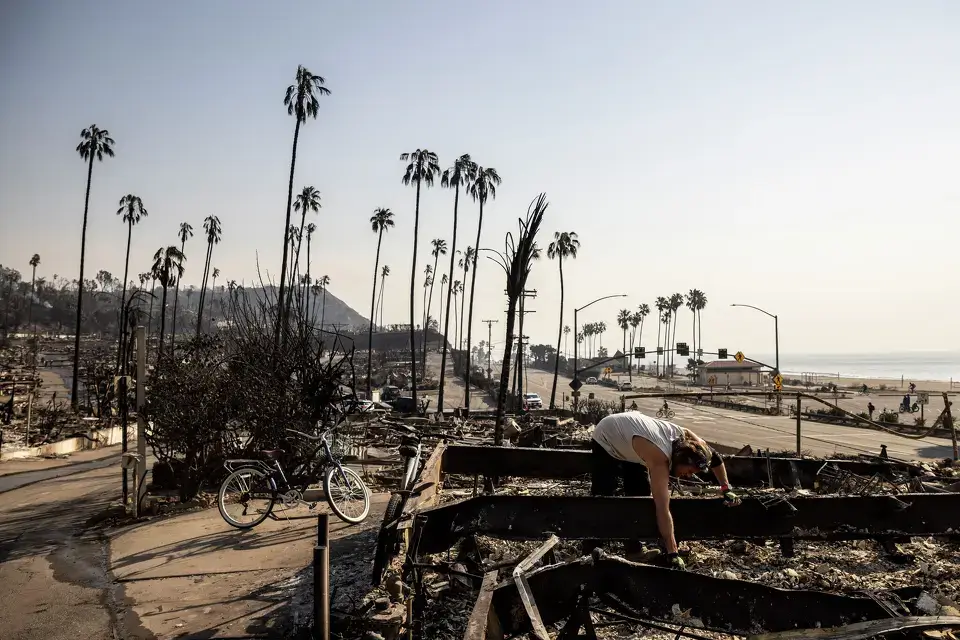
Roger Cohn looks for items amid the ruins of his girlfriend Lisa Anderson’s home, destroyed by the Palisades Fire, in January 2025. (Stephen Lam/S.F. Chronicle)
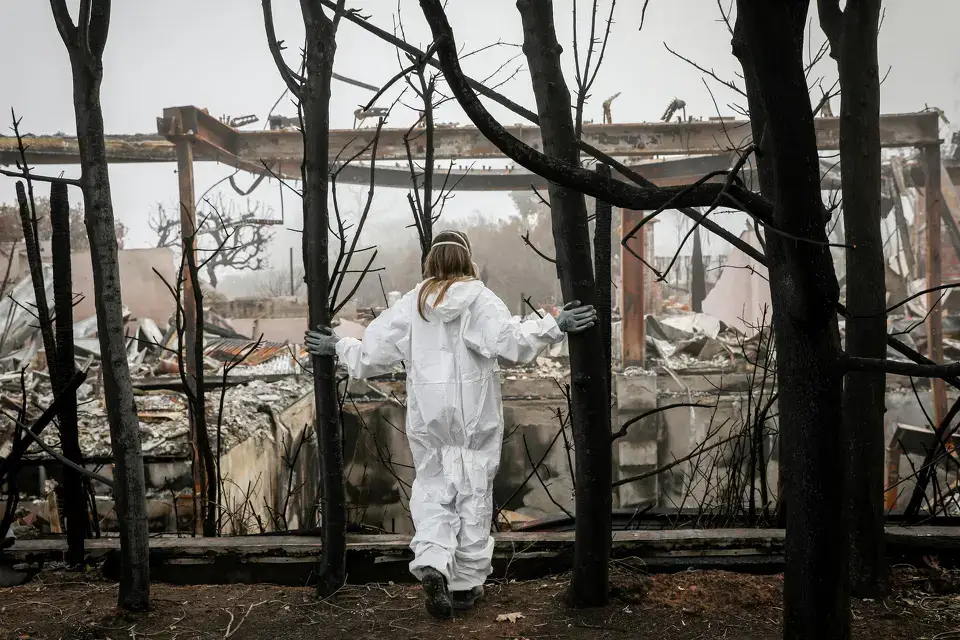
Neilson and Munce, along with a team of visual journalists, spent months with families and community members who had lost everything in California’s sweeping wildfires. Even though some of the fires had been years ago, many lots stood empty. In some cases, families were living in trailers on their properties, never able to rebuild because insurance paid a fraction of what their homes were worth. It all made Munce emotional.
“How devastating it was as a Californian who didn’t really grasp that scale of permanent devastation before being physically in those places and talking to those people,” she recalled. “And (we were) saying to ourselves, wow, the next time this happens, it’s going to be really devastating again.”
They knew they had to get the story out, Munce said, so that consumers would have what they needed to make informed decisions about their insurance policies before the next fire ravaged another California community.
The two reporters broke for the holidays, and when they came back in January 2025, the inevitable happened. On an early morning breaking news shift, Munce learned from an editor that a large wildfire had broken out in the Palisades and Eaton communities of Los Angeles.
It was time to tell the story, and Neilson and Munce knew they had what they needed to show how underinsurance was blighting California homeowners in a way that the insurance companies couldn’t easily dispute.
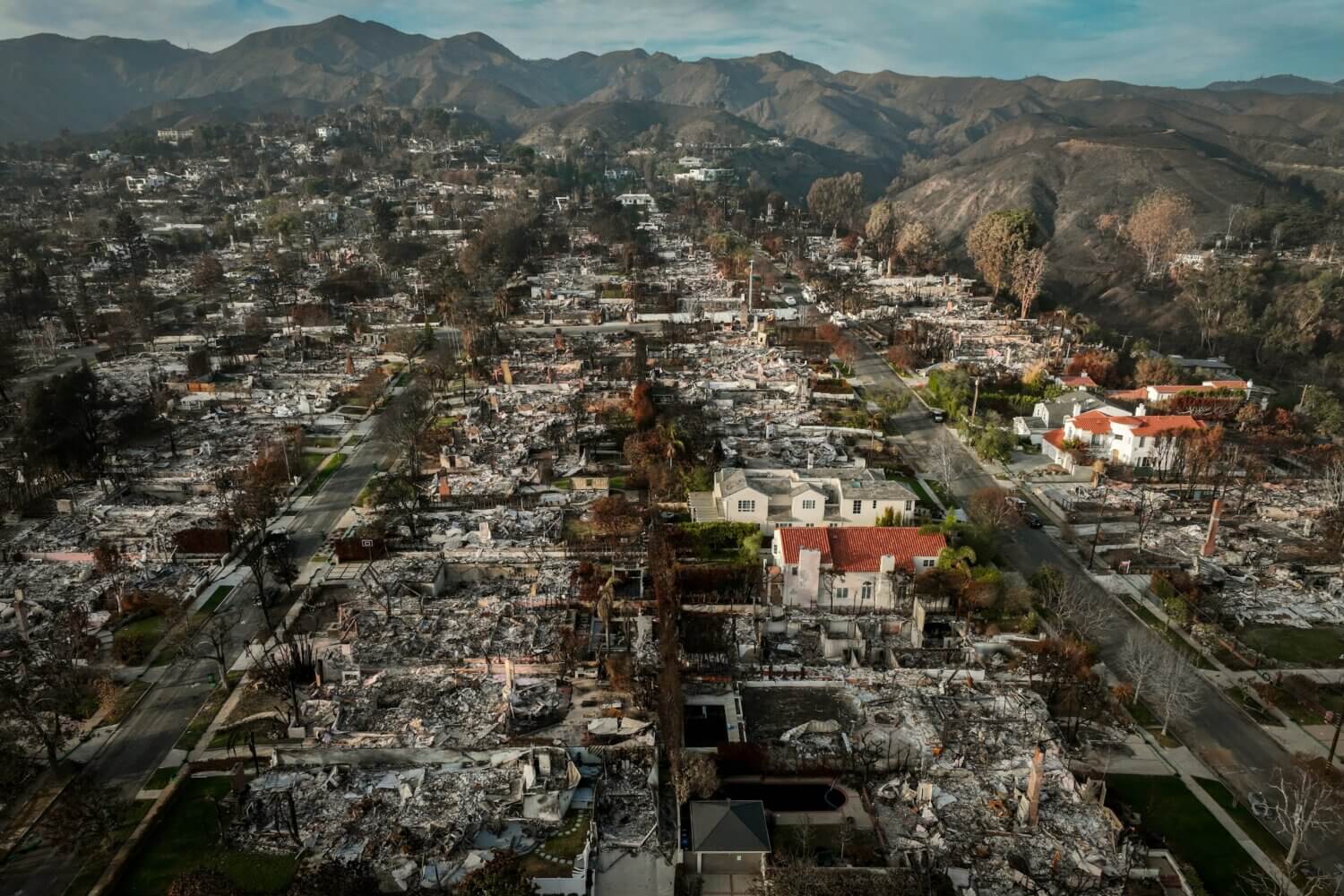
Brontë Wittpenn / San Francisco Chronicle staff photographer
But as the months wore on, they found there was more reporting and more stories to tell — an overwhelming amount.
“We knew we wouldn’t be able to tell them by the end of the year,” Neilson said, so they “cried out for help” to their managing editor. It was at that time that DiNatale joined the investigation.
DiNatale was in Texas before moving to San Francisco and joining The Chronicle, where she’d reported a four-part series on the state’s unregulated solar industry and how its practices harmed homeowners. The series won the 2024 George Polk award.
Her experience reporting on a large, powerful and unregulated industry was exactly what the team needed to keep telling the stories of the consequences of underinsurance. Her approach was to embody the mind of an insurance company employee known as an “industrial hygienist” — the representatives who visit damaged homes to make recommendations to the insurance companies on needed repairs and cost.
She figured out the qualifications needed to get that job and the training necessary to do it. She gained access to the manuals provided to industrial hygienists. She learned about the tools they used to make their assessments and the paperwork they required of homeowners.
It was the knowledge the team needed to round out their reporting. DiNatale’s comprehensive understanding of the inner workings of the industry meant that the team could go to homeowners and ask for forms and documentation that related to their insurance claims by name. It meant they could get more specific and confident that they were asking the right questions. And because DiNatale had already done major reporting in Texas on homeowners who had been disenfranchised in a similar way, she was versed in approaching them with empathy and garnering their trust.
This knowledge also made it much easier to hold the insurance companies accountable.
“When you’re starting to pick apart the parts of what they’re doing that don’t make sense, I could predict what they were going to say because I read the manual that they use as their Bible,” DiNatale said.
Munce said DiNatale’s unflinching understanding of the industry made it possible to do the accountability reporting without severing the relationships Munce had cultivated with the insurance companies over the years.

Brontë Wittpenn, seated from left, Susie Neilson, Sara DiNatale and Megan Munce react to winning the Pulitzer Prize in explanatory reporting for their series “Burned,” which showed how insurance companies using algorithmic tools have failed Californians who lost their homes to fire. (Jessica Christian/S.F. Chronicle)
“This was my beat. It’s still my beat,” Munce said, noting that she couldn’t do her job if insurance company representatives would no longer speak with her. She knew that if a company reached out and said that the team’s reporting was unfair, she had to have the receipts to prove otherwise. She also knew that they needed to report in a way that exposed the convoluted nature of the system.
“We wanted to make sure that people understood that this wasn’t a clear-cut issue of there’s an evil guy behind a curtain and controlling your insurance, but there’s a complex market with extreme regulation, more regulation than any other state in the country, and it is just an entangled web of misincentives, of lack of information, of misinformation, and of, at times, faulty software.”
The series accomplished all of the things great journalism strives for: it provided consumers with information they needed to make informed decisions and held power to account by exposing the harmful systems at play.
“We’ve gotten congratulations from consumer advocates and from homeowners, but also from the insurance industry. And I know, as you probably know, very hard to do,” Munce said. “And so it really pleases me because it feels like this story created new knowledge for everyone involved in this. And we hope that that is the essential reason why it will not just be another documentation of this issue, but just something that pushes people to change it.”
That change may be on the way. To date, Munce said five bills directly related to the Chronicle’s reporting are making their way through the California legislature.