
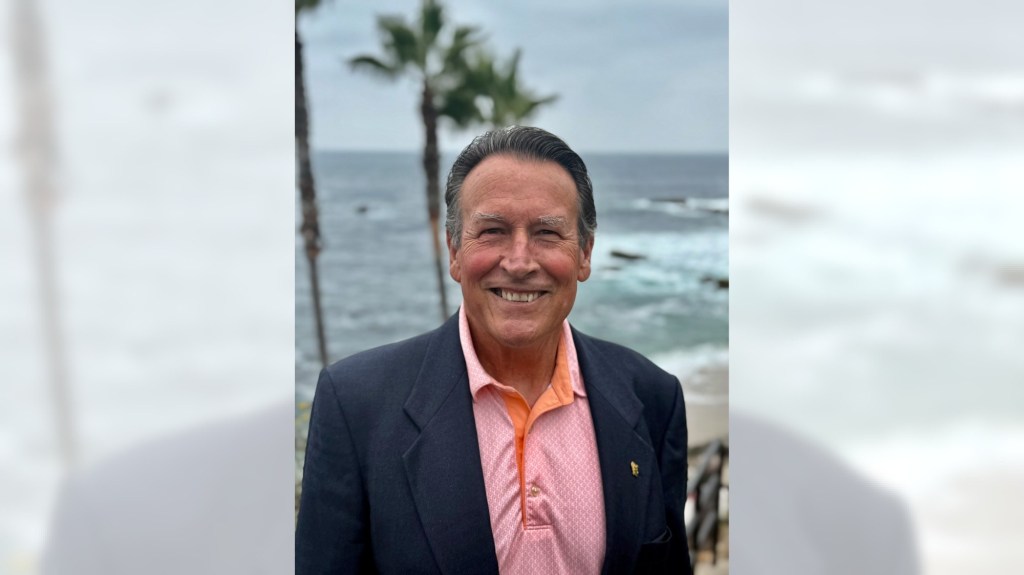
Ahead of the June primary election, the Southern California News Group compiled a list of questions to pose to the candidates who wish to represent you. You can find the full questionnaire below. Questionnaires may have been edited for spelling, grammar, length and, in some instances, to remove hate speech and offensive language.
Name: Michael Maxsenti
Current job title: Candidate
Age: 70
Political party affiliation: Republican
Incumbent: No
Other political positions held: None
City where you reside: Irvine
Campaign website or social media: maxsentiforcongress.com
From voter ID to war powers and from immigration to tariffs, Congress has tackled many issues over the past year. What do you, though, see as the top three issues impacting Californians, and what specifically could you do as a lawmaker to address these issues? (Please answer in 250 words or less, and keep your response to future proposals.)
Californians are being squeezed from every direction, but three issues rise above the rest: cost of living, healthcare, and trust in government.
First, the cost of living is out of control. Families are struggling with housing, energy, and everyday expenses. In Congress, I would push to limit excessive corporate ownership of single-family homes so more Californians can compete to buy where they live. I would also expand housing supply by restoring local control, streamlining permitting, incentivizing redevelopment of underutilized land, and aligning federal infrastructure support with new housing. And most importantly, rein in federal spending that fuels inflation. We also need to unleash domestic energy production to lower costs across the board.
Second, we are facing a chronic disease crisis. Healthcare is too expensive and too reactive. I will advocate for a shift from a “sick care” system to true healthcare, expanding access to preventative care, increasing price transparency, empowering individuals with portable, tax-advantaged health accounts, and introducing policies that ensure medical freedom for every American.
Third, there is a growing loss of trust in government. People feel decisions are being made without them, not for them. We must return to a simple principle: put people over policy. I will work to increase transparency, strengthen oversight of federal agencies, and ensure that laws are written and enforced in ways that are accountable to the people, not special interests.
These challenges are deeply connected. Lowering costs, improving health, and restoring trust requires common-sense leadership focused on people, not politics.
Speaking of voter ID, the president has implored Congress to approve legislation that would require people to show proof of citizenship in order to vote. What role do you believe the federal government plays in telling states how to conduct their own elections, as dictated by the U.S. Constitution? (Please answer in 250 words or less.)
The Constitution is clear that states have primary responsibility for administering elections, but it also gives Congress a defined role to ensure the integrity of federal elections.
I believe the federal government’s role should be limited, targeted, and constitutional. It must be focused on setting baseline standards for federal elections, while preserving state flexibility in how those standards are implemented.
Requiring proof of citizenship when someone first registers to vote in a federal election is consistent with that role. Voting in federal elections is a right of U.S. citizens, and ensuring that eligibility at the point of registration is a reasonable, commonsense safeguard. But that does not mean imposing unnecessary or duplicative burdens on voters.
Once someone is properly registered, the process should remain straightforward. When a voter goes to cast a ballot, they should present a valid, government-issued ID, something that confirms they are the same individual who registered. That’s about maintaining trust in the system, not creating barriers.
This approach respects both principles: protecting the integrity of our elections while preserving access for eligible voters. It also honors federalism by allowing states to design systems that work best for their populations, as long as they meet clear, constitutional standards for federal races.
At the end of the day, this isn’t about Washington taking over elections; it’s about ensuring that every legal vote counts, and that the public can have confidence in the outcome.
What, in your opinion, should the federal government focus on when it comes to immigration policy? For example, do you place a priority on border security, visas for high-skilled workers, refuge for asylum seekers, etc., and why? (Please answer in 250 words or less.)
Immigration policy should be grounded in a simple principle: put people first while upholding the rule of law. That means balancing security, fairness, and economic reality, rather than treating these priorities as mutually exclusive.
First, secure the border. A nation must know who is entering and enforce its laws consistently. Without credible enforcement, we undermine public trust and create incentives for dangerous, unlawful crossings that fuel human trafficking and exploitation.
Second, put American workers first. Our immigration system should not be used to undercut wages or replace domestic talent. Instead of relying on temporary visa programs that can distort labor markets, we should invest in our own people, aligning education, vocational training, and industry partnerships to develop a strong American workforce and create real career pathways here at home.
Third, create a clear and fair legal pathway. Individuals who enter legally and demonstrate they are law-abiding, contributing members of society should have a transparent opportunity to transition from temporary status to permanent residency and, ultimately, citizenship. That process should include background checks and civic education, ensuring new citizens understand and embrace America’s constitutional values.
Fourth, restore integrity to asylum. America should remain a refuge for those fleeing genuine persecution, but the system must be efficient and credible, quickly distinguishing valid claims from abuse so compassion is preserved.
The goal isn’t open borders or closed doors; it’s a system that is secure, lawful, humane, and aligned with the needs of the American people.
It’s been over a year since Gov. Gavin Newsom asked the federal government for supplemental disaster aid to help Southern California communities rebuild after the devastating Palisades and Eaton wildfires, but neither President Donald Trump nor Congress has acted. What would you do to push for the funding, besides writing letters to the Trump administration or the leaders of Congress? (Please answer in 250 words or less.)
Southern California families shouldn’t wait a year for help after losing homes and livelihoods. When the government fails to act, it’s a breakdown in responsibility.
In Congress, I would take a hands-on, results-driven approach to force action:
First, before the next disaster, Congress must urgently build a bipartisan coalition of members from disaster-affected states because this isn’t a California issue; it’s a national one. When disasters hit anywhere in America, we stand together. A unified bloc has far more leverage than one voice.
Second, disaster relief funding should stand on its own. It should not be used as leverage inside unrelated must-pass bills. Congress must act on this with urgency and transparency. If it fails to do so, members should be held publicly accountable for that inaction.
Third, I would work directly with local officials, FEMA, and appropriators to ensure every requirement is met and no bureaucratic excuse is used to stall aid. If there are holdups, I will expose them publicly and demand accountability through hearings and oversight.
Fourth, Congress must also exercise proper oversight of how federal funds are used by requiring states to fulfill their regulatory responsibilities. That means holding state and local officials accountable where policy failures, mismanagement, or poor preparation contributed to the severity of a disaster or hindered the response.
This is about people over politics. Californians pay into the federal system like every American. When disaster strikes, our communities deserve timely support, not delays or excuses.
Do you support a ban or restriction on congressional lawmakers and their families from buying or selling individual stocks? Why or why not? And what would you propose to ensure lawmakers aren’t using their positions to engage in insider trading? (Please answer in 250 words or less.)
Yes and with clear, enforceable guardrails.
Members of Congress should not be trading individual stocks while making policy that can directly move markets. Even the appearance of insider advantage erodes public trust. This isn’t about punishing success; it’s about restoring confidence that decisions are made for the public, not personal portfolios.
My approach:
– Ban individual stock trading for lawmakers and their immediate families while in office.
– Require blind trusts or broad-based investments (index funds, ETFs, Treasuries) to separate personal finances from legislative influence.
– Real-time transparency by modernizing disclosure requirements.
– Strict enforcement with real penalties, including fines, profit forfeiture, and loss of committee roles.
– Independent oversight so Congress is not policing itself.
Finally, we need to address incentives. If we want experienced, qualified citizens to serve, we can’t rely on a system that quietly rewards conflicts of interest. We should examine compensation, ethics structures, and accountability standards so that public service is sustainable without creating temptation. The goal is simple: make it easier to do the right thing and harder to do the wrong thing.
Public service should never be confused with private gain.
Do you support stronger regulations on pollution and carbon emissions? If so, how would you ensure those regulations aren’t overly burdensome on small businesses or lower-income families? And if not, how do you propose lawmakers protect the environment and curtail the impacts of climate change? (Please answer in 250 words or less.)
Yes, protecting our environment is essential, and it must go hand-in-hand with a strong, affordable economy. But we need to be honest: pollution, not carbon alone, is the immediate threat to our health, water, and communities.
My approach starts with a simple principle: energy independence and environmental stewardship are not in conflict; they must be pursued together. California’s coastline, ecosystems, and natural beauty are among our greatest assets, and we must protect them while ensuring reliable, affordable, resilient energy for families and businesses.
First, we must directly tackle real pollution, harmful chemicals in our air, water, and soil. This includes addressing chemicals used in food production and manufacturing that end up in our bodies and environment. A “Make America Healthy Again” approach means prioritizing clean water, safer food systems, and reducing harmful exposures at their source.
Second, we need smart, balanced regulation, not extreme mandates that raise costs. Regulations should target measurable harm while protecting small businesses and working families.
Third, we should invest in practical solutions: clean energy innovation, modernized infrastructure, desalination, drought resilience, and coastal restoration, strengthening both environment and economy.
Fourth, we must ensure local flexibility, so communities can meet environmental goals in ways that reflect their realities.
We don’t need to choose between affordability and a healthy environment. By focusing on real pollution, responsible energy policy, and common-sense solutions, we can protect both our natural resources and our quality of life.
President Donald Trump has significantly increased spending for the U.S. Department of Defense. Would you, as a member of Congress, approve additional dollars for the military if the president were to ask for more funding? How would you ensure that any military spending does not end up putting the American people or national security in harm’s way? (Please answer in 250 words or less.)
Yes. If additional funding is requested, I would consider it carefully, but it would never be automatic. In moments requiring immediate action, the President must have the ability to respond swiftly to protect the nation. But that immediacy does not replace Congress’s duty, any funding must still be clearly justified, aligned with a defined national security strategy, and subject to rigorous, independent congressional oversight.
National defense is one of the six core, enumerated responsibilities of the federal government under the Constitution. But strength today is not measured by how much we spend, it’s measured by how wisely we spend and how effectively we protect the American people.
To ensure military spending does not put Americans or our security at risk, Congress must lead with oversight, not follow it. The Pentagon must demonstrate real progress toward full financial accountability after repeated failed audits. We must eliminate waste, duplication, and outdated programs, and ensure defense contractors serve national security, not drive excess spending.
Resources should be focused on real, modern threats: cybersecurity, advanced technologies, and emerging warfare, while fully supporting our servicemembers with readiness, training, and care.
Finally, military strength must be guided by a clear long-term vision rooted in our founding principles: America as a beacon of freedom, not the world’s policeman. The President must be able to act decisively, but those actions must ultimately align with constitutional requirements and congressional oversight.
I support a strong military, but one that is accountable, strategic, and worthy of the American people it serves.
Under what specific circumstances do you believe the U.S. should engage in a war? (Please answer in 250 words or less.)
The decision to go to war is the most serious responsibility our government holds, and it must meet a clear constitutional and moral threshold.
First, the United States should engage in war only when there is a direct and imminent threat to our nation, our citizens, or our treaty allies. Self-defense remains the clearest justification.
Second, there is a distinction between full-scale war and limited, strategic military action. A President must be able to act swiftly in emergencies or when a narrow, high-impact opportunity exists to disrupt an escalating regional conflict threatening U.S. interests, our citizens, or our allies. However, any sustained engagement must be authorized by Congress, ensuring accountability.
Third, before moving beyond limited actions, we must have clearly defined objectives, a realistic strategy, and a path to success. Open-ended conflicts without measurable goals have cost lives, resources, and trust.
Fourth, war must remain a last resort. Diplomacy, economic pressure, and coordination with directly affected regional partners should be pursued before broader military engagement.
Finally, when force is used, it should be precise and focused on achievable outcomes. In cases where regimes brutalize their people, threaten regional stability, and endanger U.S. interests, limited military action, using advanced capabilities, not large troop deployments, may be justified to neutralize those threats, creating conditions for people to determine their own future.
War should never be entered lightly, but when necessary, it must be justified, decisive, and grounded in our national interests and constitutional principles.
Do you believe a president should seek congressional approval before engaging in military action overseas? Why, or why not? (Please answer in 250 words or less.)
Yes, except in true emergencies, a president should seek congressional approval before engaging in military action overseas.
The Constitution is clear: Congress has the authority to declare war, while the president serves as Commander in Chief. That division was intentional. It ensures that the decision to send Americans into harm’s way reflects the will of the people, not the judgment of a single individual.
However, the world moves quickly. There are moments, such as an imminent attack, the need to protect American lives, or a narrow strategic opportunity to prevent a greater threat, when a president must act immediately. In those cases, limited, targeted military action may be necessary without prior approval. But that authority is narrow and temporary.
If military action is to expand or continue, Congress must be brought in promptly. That means a clear objective, defined scope, and a formal authorization for the use of military force. No open-ended conflicts, no vague missions, and no blank checks.
This is not just about process; it’s about accountability. When Congress votes, the American people know who is responsible for the decision.
And when force is used, it must follow the same principles I’ve outlined: clear objectives, decisive execution, and a defined end state.
War should always be a last resort, used only when necessary, with a clear mission, and with the unified backing of both Congress and the American people.
Congress, in theory, is supposed to serve as a check on the president through budgetary, legislative and oversight powers. Do you believe Congress has fulfilled that obligation during the past two administrations, with one being a Democrat and the other a Republican? Why or why not? (Please answer in 250 words or less.)
Congress is meant to be a coequal branch of government, a check on executive power through the power of the purse, lawmaking, and oversight. In practice, over the past two administrations, one Republican and one Democrat, it has too often fallen short of that responsibility.
The core problem is not one party or one president. It’s a systemic breakdown driven by hyper-partisanship and political incentives. When Congress is controlled by the same party as the president, oversight tends to weaken. When it’s divided, oversight often becomes political theater rather than a serious effort to ensure accountability.
We saw this inconsistency clearly. Under both administrations, Congress at times deferred too much on major spending decisions, emergency authorities, and military engagements. Oversight hearings were often reactive, selective, or designed for messaging rather than meaningful reform. At the same time, critical issues, like long-term fiscal responsibility and restoring trust in institutions, were often completely ignored and almost always neglected.
This isn’t how the system was designed to work. The Founders expected ambition to counter ambition, not align with it for political convenience.
As a member of Congress, I would take that duty seriously regardless of who holds the presidency. That means establishing clear oversight procedures and responsibilities that demand accountability and enforce adherence to the laws Congress passes, laws written with real-world understanding, common sense and a commitment to results that put people over policy.
The American people deserve a Congress that puts truth, accountability, and ethical governance over party, and always people over politics.
Governments around the world are increasingly considering an age ban or other restrictions on social media use among young people, citing mental health and other concerns. Should Congress adopt such restrictions? If so, what specific restrictions do you propose? (Please answer in 250 words or less.)
Yes, but extremely carefully, and with a focus on protecting young people without undermining parental authority or constitutional freedoms.
This is also an ideal case for citizens’ assemblies — bringing together everyday Americans, not just industry voices or so-called experts, to hear evidence, weigh tradeoffs, and help shape recommendations. Social media is deeply embedded in our culture, especially in the age of AI. Decisions this consequential should rise from the people, bottom up, not just top down, because those with the most at stake, including platform owners, should not be the ones shaping the rules.
We can’t ignore the growing evidence linking excessive use to anxiety, depression, and addiction among children and teens. But a one-size-fits-all federal ban would be heavy-handed and likely ineffective. Instead, Congress should act on the recommendations of these citizens’ assemblies to establish clear, targeted guardrails:
-First, set a minimum age, such as 13, with real enforcement through privacy-protective verification.
-Second, require strong default protections for minors: limits on addictive design features, reduced data collection, and transparency around algorithms.
-Third, empower parents, not the government, with tools and resources to monitor usage, set limits, and guide content.
-Fourth, hold companies accountable with enforceable standards and meaningful penalties.
-Finally, invest in digital literacy and mental health education.
This is about balance: protecting our kids, respecting families, and ensuring technology serves people, not the other way around.
Statistically, violent crime rates in California are on the decline, yet residents still don’t feel safe or at ease in their communities. How do you see your role in Congress in addressing the underlying issues that make Californians feel unsafe in their own neighborhoods? (Please answer in 250 words or less.)
You’re right, statistics may show declines in certain categories of violent crime, but if people don’t feel safe, then something deeper is broken. Public safety isn’t just about numbers; it’s about trust, order, and quality of life.
In Congress, my role would be to address both the reality of crime and the perception of disorder by focusing on root causes and restoring accountability.
First, we must support local law enforcement, not just with funding, but with clear policies that allow them to do their jobs effectively, while holding them to high standards. When laws are inconsistently enforced or constantly shifting, it erodes public confidence.
Second, we need to confront the broader breakdown of order that people experience every day: retail theft, open drug use, homelessness, and repeat offenders cycling through the system. These may not always show up as “violent crime,” but they deeply impact how safe people feel. That means encouraging coordination between federal, state, and local systems to ensure consequences are real and rehabilitation is meaningful.
Third, we must invest upstream. Mental health, addiction treatment, and economic opportunity are public safety issues. A “Make America Healthy Again” approach means reducing the conditions that lead to crime in the first place.
Finally, we need to rebuild trust between communities and institutions. That requires transparency, consistent enforcement, and policies that put people over politics.
Because at the end of the day, safety isn’t just measured by statistics, it’s measured by whether families feel secure walking in their own neighborhoods.
There are term limits to serve in the California Legislature, but none to serve in Congress. Would you advocate for term limits for House members? Why or why not? If you support term limits, how many years maximum should a House member be allowed to serve? (Please answer in 250 words or less.)
Yes, I support term limits for members of Congress, but they must be part of a broader effort to fix the incentives that drive behavior in Washington.
The real problem isn’t just how long someone serves, it’s what the system rewards. Today, it too often rewards seniority, fundraising, and relationships with special interests over results for the American people. If we don’t change those incentives, term limits alone won’t deliver the accountability we’re looking for.
That said, public service was never meant to be a lifelong career. We need a healthy balance, a Congress that includes new voices with fresh perspectives, alongside leaders who bring wisdom, institutional knowledge, and real-life experience. That kind of generational balance leads to better decision-making and more grounded policy.
I would support a limit of 12 years in the House, about six terms. That provides enough time to learn, lead, and deliver meaningful results, while ensuring regular opportunities for new citizen leaders to step forward.
But we also need to rethink how we support those who serve, so people with real-world experience can afford to step into public service without sacrificing everything. If we want better outcomes, we need a system that attracts and rewards integrity, accountability, and a commitment to putting people over policy.
Term limits are one step, but restoring a citizen-led government is the real goal.
What’s a hidden talent you have? (Please answer in 250 words or less.)
One of my more unexpected talents is listening—really listening.
Over the years, whether in business, community leadership, coaching, or now on the campaign trail, I’ve developed the ability to sit with people from very different backgrounds and perspectives and help them feel truly heard. Not just politely, but deeply. I can often hear what’s behind what someone is saying, the concern, the frustration, the hope.
Part of what makes that meaningful is a responsibility I feel to share what I’ve learned, not to lecture, but to serve. Like a wisdom teacher, I try to translate lived experience into language others can hear on their terms. I’ve learned that if you lead with passion alone, people may resist. But when you pair that passion with understanding, you can spark curiosity and connection.
That’s something I work on every day. I often reflect, and pray, that I can harness my passion in a way that invites people in, rather than pushes them away.
A more surprising side of this is pattern recognition. I naturally connect dots across issues, people, and systems, seeing the bigger picture and translating it into practical action.
In a time when so much of our politics is driven by talking past one another, the ability to listen, learn, and share in a way others can truly hear isn’t just a hidden talent; it’s a necessary one.