
California health officials are monitoring a returned passenger exposed to an Andes hantavirus outbreak aboard the MV Hondius, but say the risk to the public is extremely low.
Peter Dejong/AP
Crew members of the hantavirus-stricken cruise ship, MV Hondius, wait their turns for a first interview with epidemiologists, during the voyage to Spain’s port of Tenerife, May 6, 2026.
Associated Press
San Francisco health officials said Friday there are no known city residents aboard a cruise ship at the center of a rare hantavirus outbreak, while California officials monitor one returned resident for possible exposure.
Health officials said the risk to the public remains “extremely low,” but the unusual outbreak has drawn international attention because hantavirus is usually spread by rodents, not people.
Federal officials notified the state that California residents had been aboard the MV Hondius, the Dutch-flagged expedition ship at the center of an international outbreak of Andes hantavirus.
Article continues below this ad
One California resident has returned home and is in contact with local public health officials, according to the California Department of Public Health. The person is being monitored daily for symptoms, including temperature checks.
At least one other California resident remains aboard the ship, state officials said.
This aerial view shows a boat heading towards the port from the cruise ship MV Hondius, stationary off the port of Praia, the capital of Cape Verde, on May 6, 2026. Evacuations were taking place on May 6, 2026 from a cruise ship stricken with a deadly outbreak of hantavirus, the World Health Organization said, as experts confirmed a rare strain that can be transmitted between humans. (AFP/Getty Images/TNS)
AFP/TNS
CDPH said it would not release more identifying information about the returned passenger to protect the person’s privacy.
San Francisco Chronicle Logo
Make us a Preferred Source to get more of our news when you search.
Add Preferred Source
The San Francisco Department of Public Health said it was monitoring the outbreak with CDPH, the Centers for Disease Control and Prevention and other local health departments and would update residents if there were public health impacts in San Francisco.
Article continues below this ad
“We understand that news of an unusual outbreak can be concerning,” Dr. Erica Pan, California’s state public health officer and public health director, said in a statement. “At this time, local, state, national and global public health partners are working together to assess and care for people who may have been exposed and prevent spread of the virus. Unlike influenza and COVID-19, years of experience in South America have shown that this Andes hantavirus rarely spreads between people.”
How this hantavirus outbreak differs from California cases
Passengers on the hantavirus-stricken cruise ship, MV Hondius, scan the horizon with binoculars during their voyage to Spain’s port of Tenerife, May 6, 2026.
Associated Press
The outbreak has renewed interest in a virus that made national headlines in March, when authorities said Betsy Arakawa, Gene Hackman’s wife, died of hantavirus pulmonary syndrome at the couple’s home in New Mexico.
But health officials said the cruise ship outbreak involves the Andes strain, which is different from the Sin Nombre virus that circulates in California and other parts of North America.
Article continues below this ad
Sin Nombre virus has caused rare but sometimes deadly infections in California, including in Yosemite and the Eastern Sierra. It is not known to spread from person to person.
What happened on the MV Hondius cruise ship
Health workers get off the Dutch-flagged MV Hondius, a cruise ship carrying nearly 150 people as it remains off Cape Verde on Monday, May 4, 2026 after three passengers died and several others fell seriously ill in a suspected hantavirus outbreak. (Qasem Elhato via AP)
Qasem Elhato/Associated Press
The MV Hondius outbreak was reported to the World Health Organization on May 2 after passengers developed severe respiratory illness during a South Atlantic voyage.
As of WHO’s May 4 notice, seven confirmed or suspected cases had been identified. Three people had died, one person was critically ill and three others had mild symptoms.
Article continues below this ad
The illnesses began between April 6 and April 28, according to WHO. Symptoms included fever, gastrointestinal problems and rapid progression to pneumonia, acute respiratory distress and shock.
By Friday, Spanish authorities were preparing to receive more than 140 passengers and crew members when the ship reached Tenerife in the Canary Islands, according to the Associated Press.
The U.S. and U.K. had agreed to send planes to evacuate their citizens. Oceanwide Expeditions, the ship’s operator, said no one still aboard had symptoms of possible infection.ha.
The CDC said Friday that American passengers were expected to be evacuated on a U.S. government medical repatriation flight to Offutt Air Force Base in Omaha, Neb., then transported to the National Quarantine Center at the University of Nebraska, Omaha.
The agency said it had deployed a team of epidemiologists and medical professionals to the Canary Islands, where the ship is expected to dock, to assess each American passenger’s exposure risk and recommend how closely they should be monitored. Another CDC team is expected to deploy to Offutt Air Force Base to support public health assessments of returning passengers.
Article continues below this ad
CDC also said it had developed health guidance for affected American passengers, delivered through the State Department, and was distributing monitoring guidance and resources to state and local health departments.
What Californians should know about hantavirus symptoms and prevention
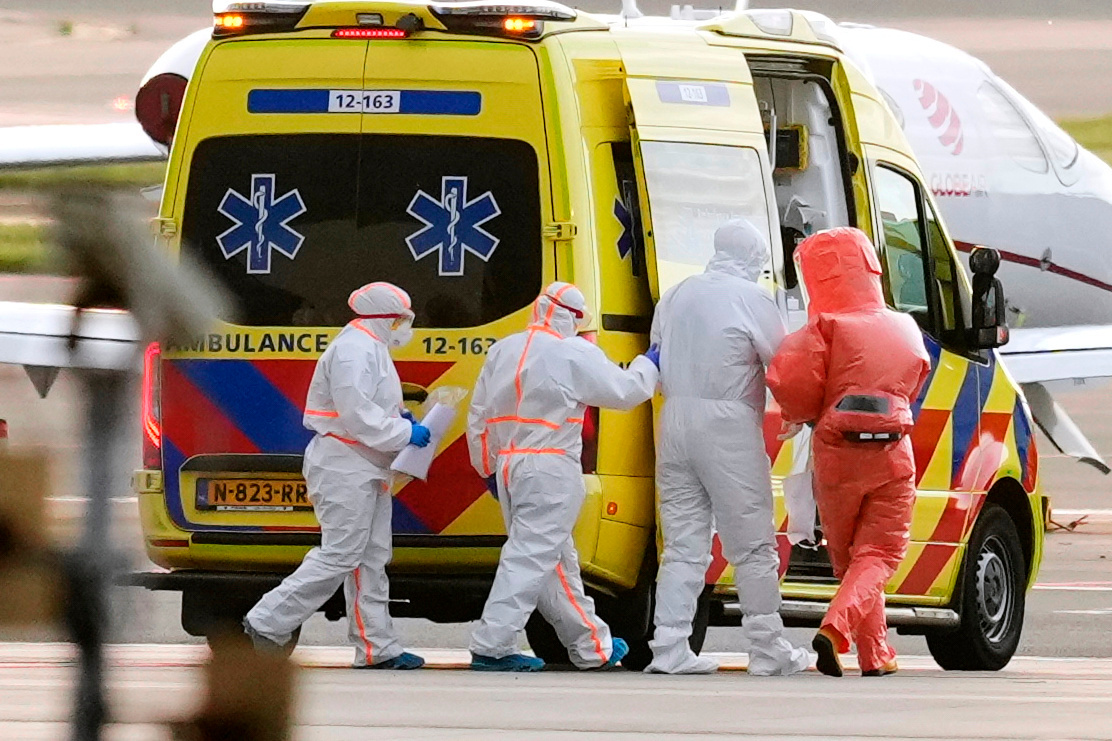
Medics escort a patient, second left, evacuated from the MV Hondius cruise ship with suspected hantavirus infection, to an ambulance after being flown to Schiphol airport, Amsterdam, Netherlands, Wednesday, May 6, 2026. (AP Photo/Peter Dejong)
Peter Dejong/Associated Press
Hantaviruses can cause serious illness and death. People usually become infected by breathing air contaminated with virus particles from the urine, droppings or saliva of infected rodents, according to CDPH.
In California, deer mice are a common carrier. Risk can increase when people open or clean cabins, sheds or other closed spaces where mice have been present.
Andes virus is unusual because it has been linked to rare person-to-person spread after close, prolonged contact with someone who is sick.
CDPH said there are no known cases of Andes hantavirus infection in people who do not have symptoms. When spread does happen, the agency said, it is usually limited to people with prolonged close contact with an ill person.
Health officials emphasized that the cruise ship outbreak is not comparable to COVID-19 or influenza, which spread much more easily.
Health workers in protective gear evacuate patients from the MV Hondius cruise ship into an ambulance at a port in Praia, Cape Verde, Wednesday, May 6, 2026.
Misper Apawu/Associated Press
The CDC said Friday that the risk to the American public remains “extremely low.”
CDPH said California is also supporting the federal response through its Viral and Rickettsial Disease Laboratory, which is fast-tracking clinical testing capacity for Andes hantavirus samples and advising other state public health laboratories.
For Californians not connected to the cruise ship, health guidance remains focused on avoiding rodent exposure.
People should seal openings where mice can enter, store food in rodent-proof containers and ventilate closed spaces before cleaning. Health officials warn against sweeping or vacuuming rodent droppings because that can stir contaminated particles into the air.
People who develop fever, difficulty breathing or other symptoms after possible hantavirus exposure should seek medical care and describe their exposure history, health officials said.
There is no specific antiviral treatment for hantavirus infection, but early supportive medical care can improve outcomes.