

As awareness and concern over natural disasters like wildfires, floods and earthquakes rises, Berkeley homebuyers are weighing these risks more heavily than ever in their hunt for a new home. Agents say this reflects a shift in how homebuyers assess the true cost of homeownership.
“People still start with bedrooms, bathrooms and price,” says Megan Micco, a Compass broker associate who has specialized in Berkeley real estate for over a decade. “But more buyers are now asking earlier about fire zones, insurance availability, retrofitting and what long-term costs might look like.”
In a city where natural hazard conditions can change significantly from one neighborhood to the next, these questions are reshaping how buyers compare homes. Is one in a high severity fire zone? Another near a creek or on land that’s vulnerable to liquefaction during a major earthquake? Some buyers are ruling out entire neighborhoods based on fire exposure or insurance concerns. Others are simply budgeting more realistically for post-closing improvements.
The shift comes as California’s property insurance market remains under strain, climate-related risks become harder for residents to ignore, and Berkeley begins enforcing two new ordinances that require hazard-related upgrades at some properties. For Berkeley buyers and sellers alike, these concerns are layered onto an already complex and competitive housing market.
Micco encourages buyers to evaluate hazard exposure early, before forming an emotional attachment to a particular neighborhood or property. Sellers, meanwhile, may benefit from anticipating those concerns. Homes with clear documentation of upgrades, compliance with new regulations, and other improvements can give buyers greater confidence and reduce uncertainty during negotiations.
Berkeley’s risk landscape
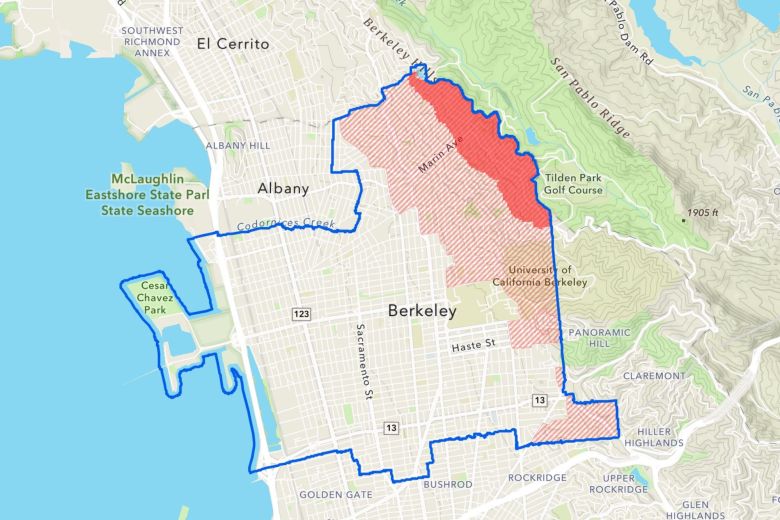 The Berkeley fire risk map shows the very high fire risk area in red and the high risk area shaded. Credit: CalFire ArcGis
Like much of the state, some parts of Berkeley are at particular risk for a variety of natural hazards, many of which are worsening as a result of climate change.
Fire is one perennial concern, especially in the Berkeley Hills: The state classifies many of these neighborhoods as “Very High Fire Hazard Severity Zone.”
Flooding risk affects certain lower-lying corridors, including properties near Strawberry Creek, Codornices Creek and other watersheds identified on FEMA flood maps.
And Berkeley’s position along the Hayward Fault makes seismic risk a citywide concern, but the nature of that risk varies sharply by neighborhood. In the flatlands, particularly areas built on fill, liquefaction can be a serious issue during a major earthquake. In the hills, buyers more commonly consider slope conditions and evacuation routes.
Between the landscape itself and Berkeley’s pronounced microclimates, hazard risk profiles can vary dramatically by block. The result is a city where two homes that appear similar in price and condition may vary dramatically in terms of insurance availability, maintenance obligations, future upgrade needs, and how buyers evaluate affordability over time.
Affordale insurance now key
Access to affordable insurance is playing a larger role than ever in buyer decision-making statewide. Some insurers, including State Farm and Allstate, have stopped issuing new policies statewide due to rising wildfire and climate-related risk.
“A property’s insurability is no longer a secondary issue addressed late in the transaction, but a threshold question that can shape whether a deal makes sense at all,” Micco says. “It’s become as important as mortgage qualification for some buyers. It changes how people think about what they can afford.”
In Berkeley, this is especially relevant in hillside neighborhoods within higher-risk fire zones. Properties there may face limited coverage options and higher premiums, and may require California FAIR Plan coverage at costs two to three times higher than standard policies and with less comprehensive protection.
How hazards may impact resale value
It can be tricky to calculate how hazard exposure might limit property value appreciation over time.
In a city like Berkeley, where home values are supported by many factors such as strong schools, high demand and limited supply, hazard-related costs may affect the future size of the prospective buyer pool.
“I’m always advising buyers to think about exit strategy,” Micco says. “They shouldn’t just ask, ‘Can I afford to live here now?’ but also, ‘How will the next buyer evaluate this property five or ten years from now?’ “
Over time, these factors may create a widening premium for homes that offer not only location and condition, but also stronger insurability, better documentation, and evidence of resilience-related improvements.
This is particularly true in Berkeley, where there is a long-standing convention in which sellers, instead of buyers, pay to provide detailed inspection reports and due diligence materials up front, including about hazard-related factors like known drainage issues.
“Berkeley buyers often receive a lot of information before they write an offer,” Micco says. “The challenge is making sense of what matters most and understanding how natural hazard issues fit into the bigger picture.”
Berkeley’s new regulations
Two significant Berkeley ordinances took effect Jan. 1, 2026, and together represent a new layer of property evaluation for buyers and sellers alike.
The Building Emissions Saving Ordinance (BESO) focuses on energy performance and emissions reduction, and requires various energy assessments and upgrades based on a home’s size.
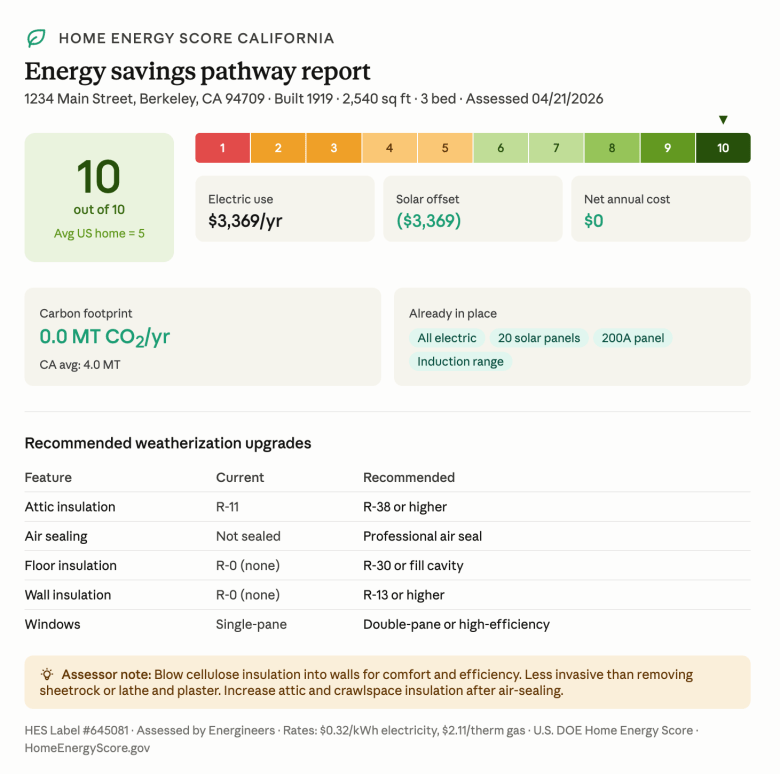 An edited version of an actual home energy report summary for a recent listing by Megan Micco in North Berkeley. Courtesy of Megan Micco
The Effective Mitigations for Berkeley’s Ember Resilience (EMBER) initiative addresses wildfire risk directly and has been described as among the strictest fire mitigation standards in the state. In its initial phase, it requires home hardening measures in the highest fire hazard zones, concentrated around Panoramic Hill, the Grizzly Peak area, and neighborhoods bordering Tilden Regional Park. The city has indicated that requirements will likely expand over time. Enforcement begins in June 2026.
For buyers, evaluating to what extent a property has already complied with these ordinances is becoming a meaningful due-diligence item. For sellers in affected zones, proactively documenting compliance, or getting ahead of it before listing, can reduce buyer uncertainty and support a cleaner transaction.
“A home in the hills might need BESO energy upgrades, EMBER Zone Zero compliance, fire-hardening exterior improvements, and backup power systems,” Micco says. “Understanding the full scope of what a property requires helps buyers budget accurately and helps sellers present their home in the strongest possible light.”
Properties that have already completed comprehensive upgrades, such as seismic retrofitting, HVAC system upgrades, and EMBER-related remediation, are now seen by buyers as premium offerings that command higher prices with lower total ownership costs.
“Real estate has always been about location, location, location,” Micco says. “But today, understanding what that location means for natural hazards, insurance costs and long-term resilience is just as important as the neighborhood’s school ratings or proximity to amenities.”
“*” indicates required fields