
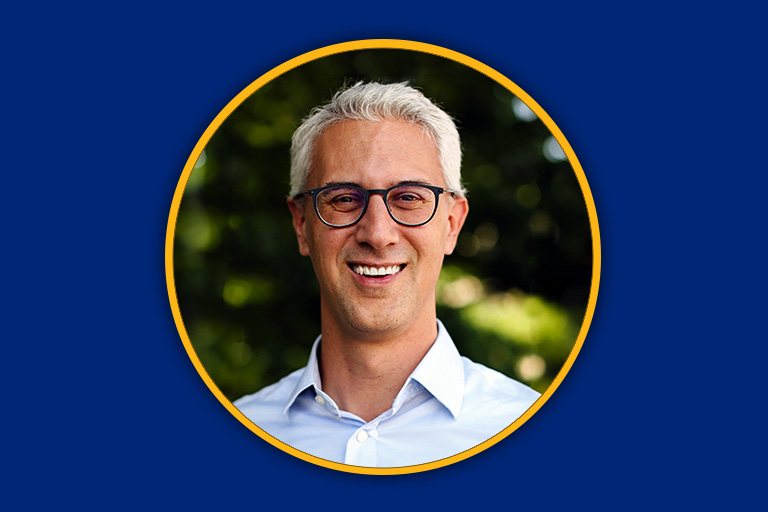
His laboratory has used these stem cell platforms to make several important discoveries. They showed that neurons use lysosomes as vehicles to transport RNA long distances, a process that is disrupted in ALS. With collaborators in the United Kingdom, his group discovered that neurons with clumps of a protein known as TDP-43 don’t properly splice UNC13A, a key synaptic gene. Therapeutics that reduce UNC13A mis-splicing and improve synaptic function are now moving into clinical trials for ALS, and biomarkers of TDP-43 dysfunction are being developed based on this breakthrough and related discoveries. Most recently, he and collaborators showed that common genetic variants linked to dementia cause the buildup of toxic proteins within lysosomes, ultimately damaging these critical organelles.
These discoveries established Dr. Ward as a leading physician-scientist who converts genetic and cell biological insight into therapeutic opportunities.
“We are delighted to welcome Dr. Michael Ward to the Molecular Therapeutics Division in the Department of Molecular and Cell Biology,” said Matt Welch and Greg Barton, co-chairs of the department, in a joint statement. “Dr. Ward’s innovative research, which uses induced pluripotent stem cells to study neurodegenerative diseases and develop therapeutics, exemplifies the spirit of discovery that defines UC Berkeley, advancing bold basic and translational research at the forefront of science.”
Ward is a co-founder of two companies, Trace Neuroscience and In Vivo Scientific, working to translate discoveries from his laboratory into new treatments. His appointment marks a return to the Bay Area: he completed his neurology residency at UCSF and postdoctoral training at the Gladstone Institutes.
The endowed chair that supports Ward’s position was established through a gift from two generous donors. That same gift will also fund an additional faculty hire in neurodegenerative disease, expanding Berkeley’s depth in one of biomedical science’s most pressing research areas.
“Ward’s recruitment strengthens the role of UC Berkeley’s academic research environment in the application of basic science to biomedicine,” said Randy Schekman, professor of molecular and cell biology and Nobel Laureate.