
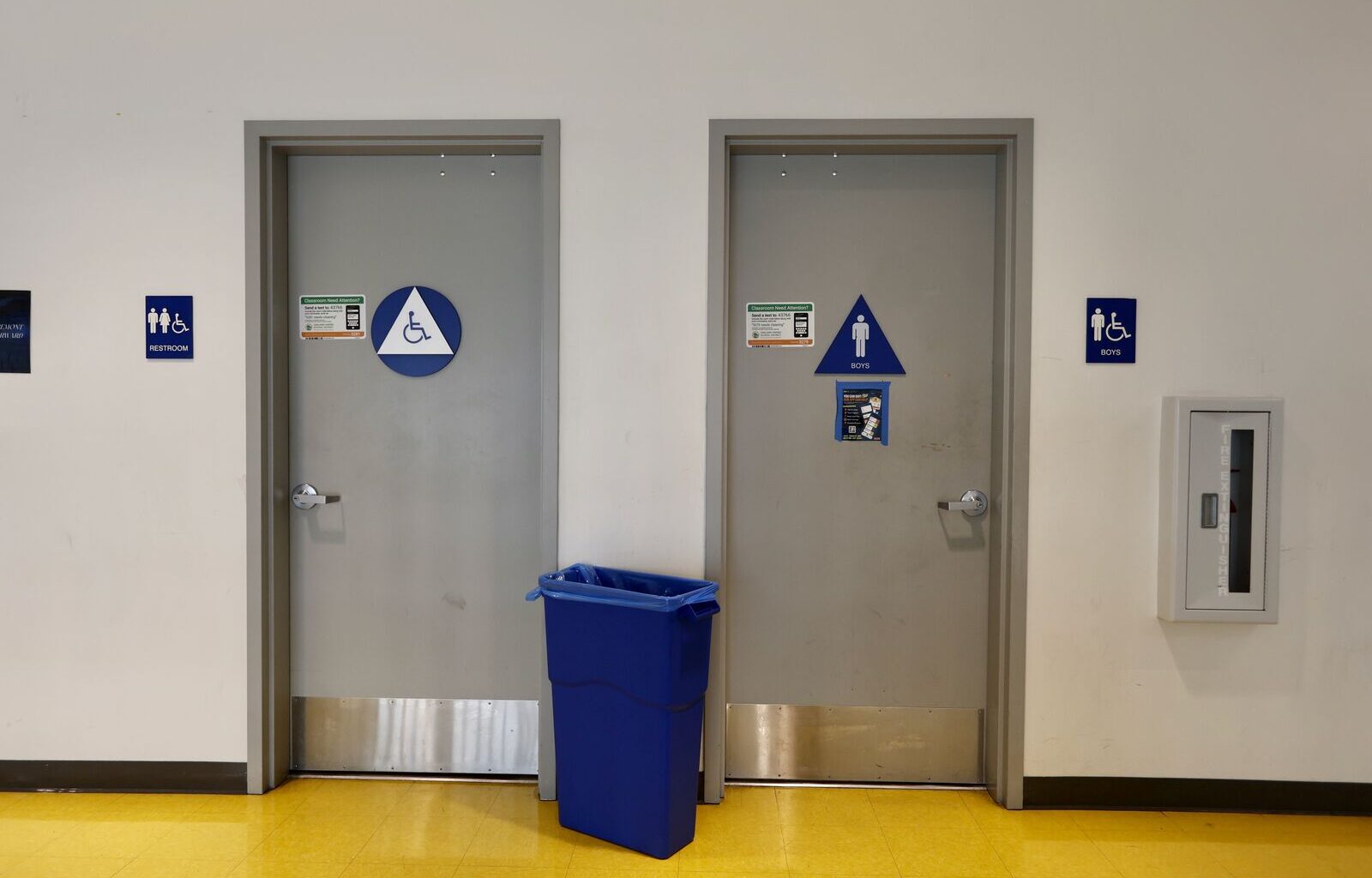
The high school bathroom is a fraught place.
For some, it’s a refuge — a place for taking care of their most personal needs and stepping away from the crowded chaos in the hallway for a brief moment of peace. For others, it’s a site of health and safety hazards — a place where some students go to vape or to brawl, away from the watchful eyes of the adults at school.
But there is no district-wide policy governing when kids get to go. Individual principals and teachers are left to come up with their own rules, and the result is a patchwork of wildly different systems.
Fremont High School in East Oakland, for example, contracts with the software company Minga. Students use the app to check out digital bathroom passes, which have timers that go off after about seven minutes, when it’s time to return to class.
“Every student should have it downloaded,” senior Gabriella Ponce Pindea said. “Like, you need to have it.”
Several schools institute a ban on bathroom use during the first or last 15 minutes of a class. This leaves about 20 minutes for a classroom of teens to use the restroom during a typical period. Students are generally encouraged to wait until the brief passing periods between classes instead.
At Oakland High School, there are different systems depending on students’ academic pathways, the career-themed cohorts in OUSD high schools. Students in one of the pathways there get a finite number of paper bathroom passes at the beginning of each semester. Boys get five passes for each class, while girls — who may need more bathroom time when menstruating — get seven.
Pick any two of OUSD’s 16 brick-and-mortar high schools and you’ll probably come up with two totally different policies, or sometimes none at all.
John Sasaki, a spokesperson for OUSD, said the district gives each campus the freedom to come up with a system that works for its own needs.
“Schools develop site-specific procedures for student use and monitoring based on their staffing model and respective facility layout,” he said by email.
Speaking with students, teachers, and staff across schools, we heard that a lack of consistency in bathroom policies can lead to frustration and risks for both the youth and adults on campus.
And the haphazard nature of these rules raises questions about what prompted the restrictions in the first place.
Students want independence. Teachers want them in class
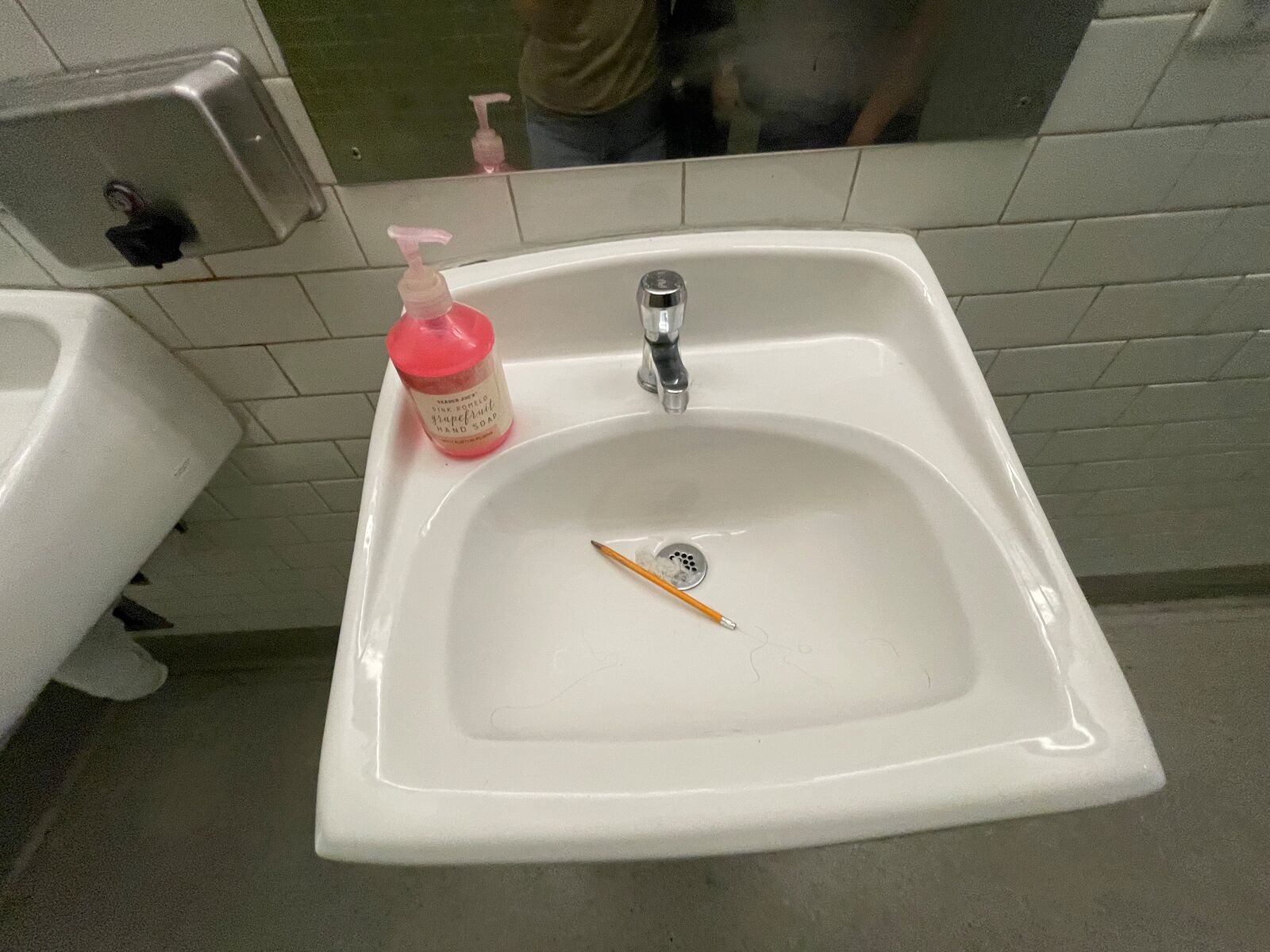 Students recalled classmates vaping, kissing, and giving a haircut in their school bathrooms. Credit: Deisy Camacho-Lopez for The Oaklandside
Fremont High senior Emily Sanchez has asked to go to the restroom and been told no by teachers “several times” because of her school’s prohibition on bathroom trips during the first and last 15 minutes of class.
“I personally get a little awkward when I can’t go to the bathroom; when I’m asking, I need to go,” Sanchez said. “If I really have to go, I just tell them it’s an emergency. It feels kind of wrong to have to specify how important my bathroom needs are.”
Fremont High art teacher Brian Wilson said teachers there aren’t given much guidance around letting students use the restroom. These decisions, which he has to make multiple times during a period, can weigh on him, he said.
He said he was aware that students have minimal time between classes — five minutes, at Fremont — to avail themselves of the facilities, and emphasized that he always lets students go when it’s an emergency.
“But we also see patterns as teachers,” Wilson said. “When students are constantly asking to use the bathroom and they’re gone for 25 to 30 minutes, they struggle in class.”
He said it’s common for students to use restrooms as “scapehavens,” essentially taking an opportunity to skip class. Doing this “not only affects you and your learning, but it could also affect the people around you,” Wilson said.
When some students abuse their freedom, it can make teachers more wary of letting others go, he said. Lingerers can also prevent teachers from letting more students use the restroom, since they don’t want to have several students out and missing lessons at once.
Sometimes when a student asks to use the bathroom, Wilson will tell them to finish their work and ask him again in 10 minutes. Often they’ll forget, which he reads as a sign they didn’t really have to go, he said.
Students we spoke with said their classmates don’t always use the restroom for its intended purpose. Students have witnessed vaping, kissing, and even someone giving a classmate a haircut in high school bathrooms.
Several high schoolers blamed a few classmates’ bad behavior for giving students a poor reputation and making it more difficult for rule-followers to use the facilities.
Others said the adults should simply trust them more. Limitations on when they can take care of their needs make them feel worried and embarrassed.
“Most of the time they don’t let you do it because you’ll miss out on instruction. But that should be on me,” said JP Cruz, 17, a Fremont High junior. “There are times when teachers will say, ‘I’ll mark you down as absent.’ I don’t think that should be allowed. If I need to use the bathroom, I need to use the bathroom.”
These feelings arose especially among students who’ve been barred from going to the bathroom when they were on their periods. For some high schoolers, the experience of navigating menstruation is still a fairly new one.
Oakland High sophomore Maegan Hoang said she doesn’t give much thought to restroom rules typically.
“But then when I’m on my period, I definitely think about it a lot,” she said. “And I feel really uncomfortable not being able to use the bathroom, so I feel like I’m limited. That really disturbs me a lot.”
As her classmate Eloise Perkins said, “As someone who menstruates, there’s times you really gotta get out of there!”
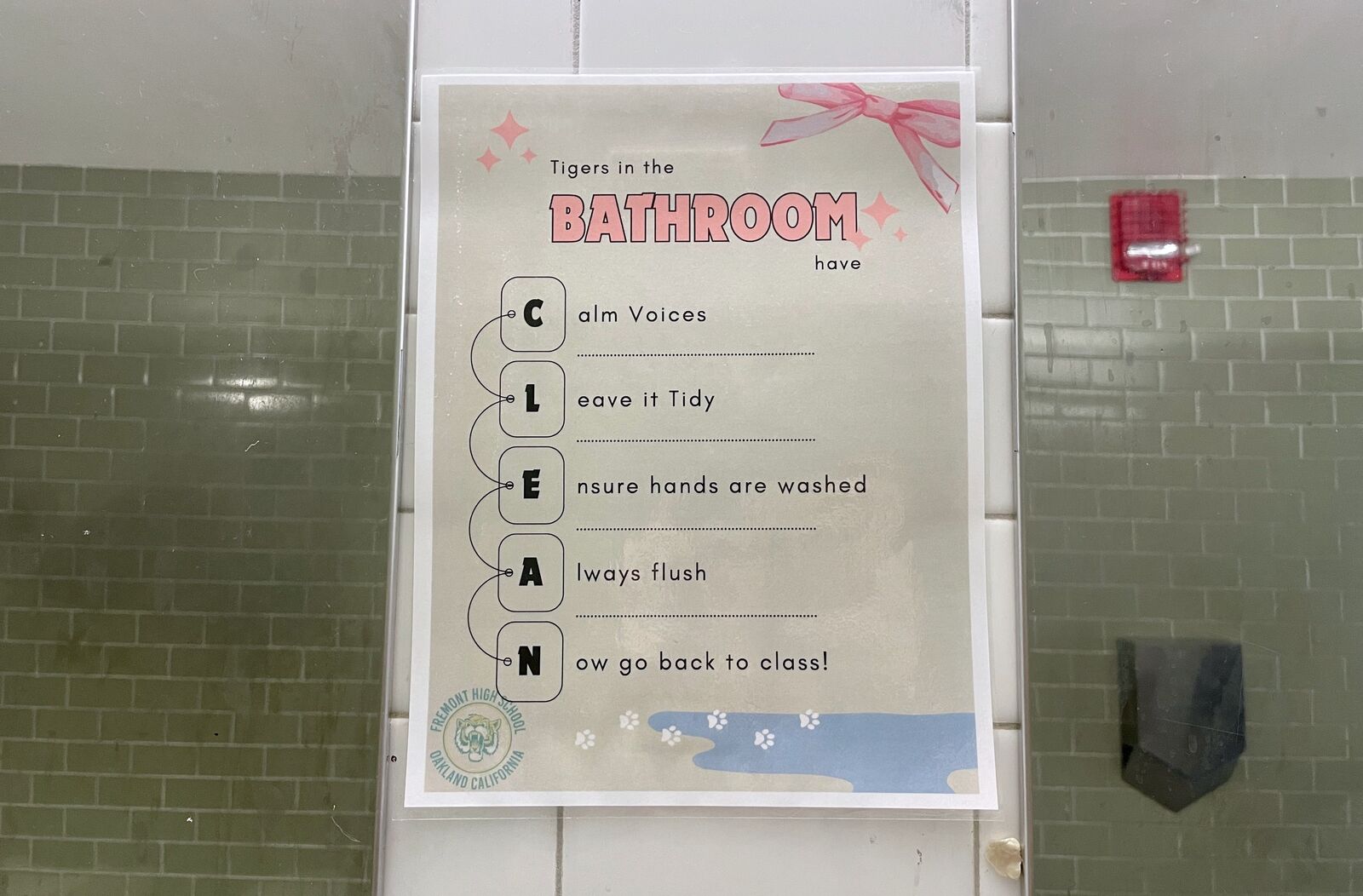 Rules for good bathroom behavior at Fremont High School. Credit: Deisy Camacho-Lopez for The Oaklandside
Pamela Moy, Oakland High’s principal, said the lack of standardized policies is by design at her school, because there’s no one-size-fits-all when it comes to restroom trips.
“We serve so many unique individuals,” she told us. “The only ask we have at Oakland High School is that you please send your scholar out with a pass. That way we know they’re out for specific business and a purpose, and not just wandering the hallways.” She does advise teachers to follow the 15-minute rule so after the bell rings “we can clear the hallways and make sure everyone’s in place and all things are good.”
Her school distributed laminated passes to classrooms at the start of the year, she said, and some teachers simply had students write their name on the board if they grabbed a pass on their own time. This system worked for some students, but “some of our scholars can’t self-moderate so well,” Moy said. “And the pass disappears for half the period and then they come back and all the kids are angry at them.”
There’s room in these instances for “positive peer-pressure,” she said, where students hold each other accountable.
We sent a short survey to principals at all 15 other high schools about their policies. Only one, Staci Ross-Morrison of Dewey Academy, responded. She said her school doesn’t allow bathroom passes during the first and last 10 minutes of each class, but she didn’t respond to a question asking about the reasoning behind her school’s policies.
After a shooting in a Skyline bathroom, strict new policies
Last Nov. 12, around 1:30 p.m., students and staff at Skyline High School heard the distinct sound of gunshots.
“Bang, bang, bang,” a sophomore in a digital arts class remembered hearing. The sound came from a bathroom near the school’s arts classrooms. One junior on her way to use that facility turned around and sped back to class when the shots rang out.
Police would later charge two juvenile suspects in the shooting of a 15-year-old student, who survived. Police said the suspects had used ghost guns, which are untraceable and often hand-made weapons.
In response, the school held a town hall, offered counseling, and boosted security — particularly in the restrooms.
“Since the incident, we’ve tightened our bathroom policies,” Principal Rebecca Huang told The Oaklandside in December. She explained that students would now have to show ID before entering a restroom during class time, and said the school had introduced written sign-ins for bathrooms in addition to digital passes — “adding extra layers of accountability on everyone’s parts: students’ parts, teachers’ parts, and the supervision team’s parts.”
In a recent newsletter to Skyline families, the school further clarified that only one person per class can leave to use the restroom at a time.
 Skyline students walked out of school after the shooting in the restroom last November, protesting gun violence. Credit: Estefany Gonzalez for The Oaklandside
For the adults on campus, it’s a no-brainer to add extra bathroom surveillance after a violent incident in one shook the whole school community. But students don’t all agree that it’s the right move to constrict such a basic activity.
Now, staff called “culture keepers” — previously known as school safety officers — will stop students who are entering a bathroom. They’ll “tell you to write your name and the time you went in and when you came out — it’s like a whole big deal,” said Miles Washington, a Skyline sophomore. “It’s made it difficult for some kids to go to the bathroom, whether it’s an emergency or not.”
Lisa Pham, a junior at Skyline, said she’s skeptical the rules are improving bathroom behavior. The facilities are still a mess and kids still smoke weed inside them, she said.
For Skyline senior Woodrow Stritzel, inconsistency in the implementation of the rules undermines their usefulness.
“Some teachers really fully adopt it, and no matter what, you can’t leave the classroom without a pass,” he said. “And other teachers just don’t give a crap. So they’ll never write you passes — they’ll just tell you to go.”
Some school bathrooms lack required tampons and pads
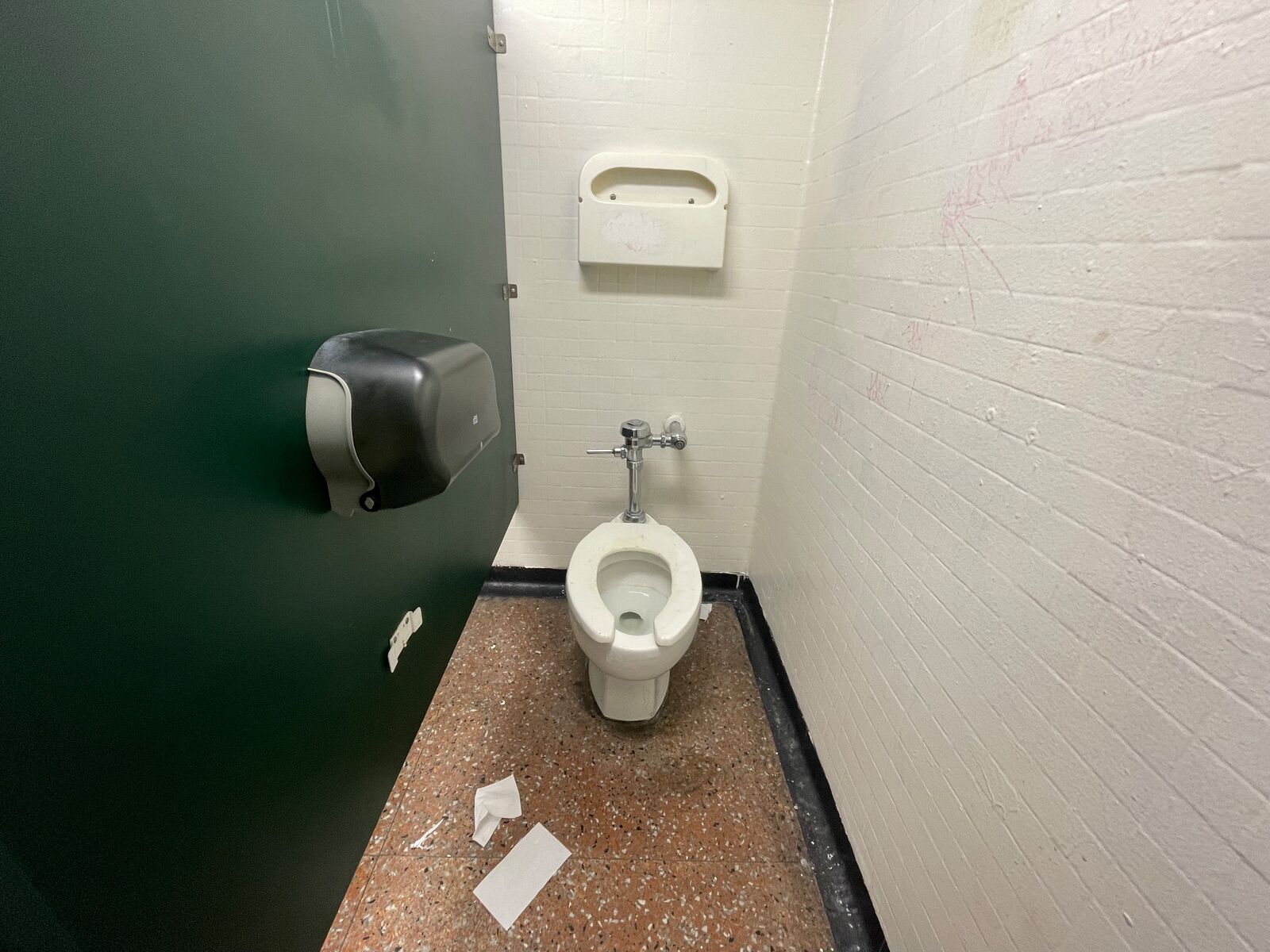 A girls’ restroom stall at Fremont High lacks a waste receptacle for menstrual products. Credit: Deisy Camacho-Lopez for The Oaklandside
OUSD’s handbook for students and families doesn’t address bathroom use at all, though it does include rules for the physical condition of the facilities.
According to the handbook, which is based on the California Education Code, all school bathrooms should be unlocked during times when students are not in class, and a sufficient number should be unlocked during class hours. All bathrooms should be cleaned and stocked with toilet paper, soap, and paper towels. At middle and high schools, female and all-gender restrooms, plus one male restroom, must be stocked with free menstrual products.
Our reporting found a number of violations of these policies, including girls’ restrooms with no menstrual products — and in some cases, no waste baskets inside stalls to dispose of them. Photos of some girls’ bathrooms at Fremont High show this to be the case. Students said the same was true at Oakland High.
“It often feels embarrassing because some bathrooms don’t have the little trashes for your pads, so you have to take it out of the stall to throw it away,” Kiziah Dickson, a junior at Fremont, said.
At Oakland Tech, the bathrooms have product dispensers, but they’re often not stocked, according to a student there. Principal Martel Price confirmed this, attributing the issue to a combination of a “lack of custodial oversight” and students not always making use of a phone number posted for reporting missing supplies.
Oakland High custodian Nakia Gage told The Oaklandside that the staff restrooms she cleans during her nightshift are stocked with menstrual products, but the students’ aren’t.
“That would be good for young ladies to have,” she said. Overall, Gage said she enjoys her job and finds that students respect her work — but said some bathrooms can get particularly messy.
Moy, the Oakland High principal, explained that every teacher there is given a supply of menstrual products for their students — which in some classrooms are “grab and go” and in others are available by request. Or the high schoolers can get them from the main office or wellness center.
Sasaki, the OUSD spokesperson, referred us to the district’s facilities director for an interview about bathroom conditions and policies. That director, Preston Thomas, did not respond to follow-up requests.
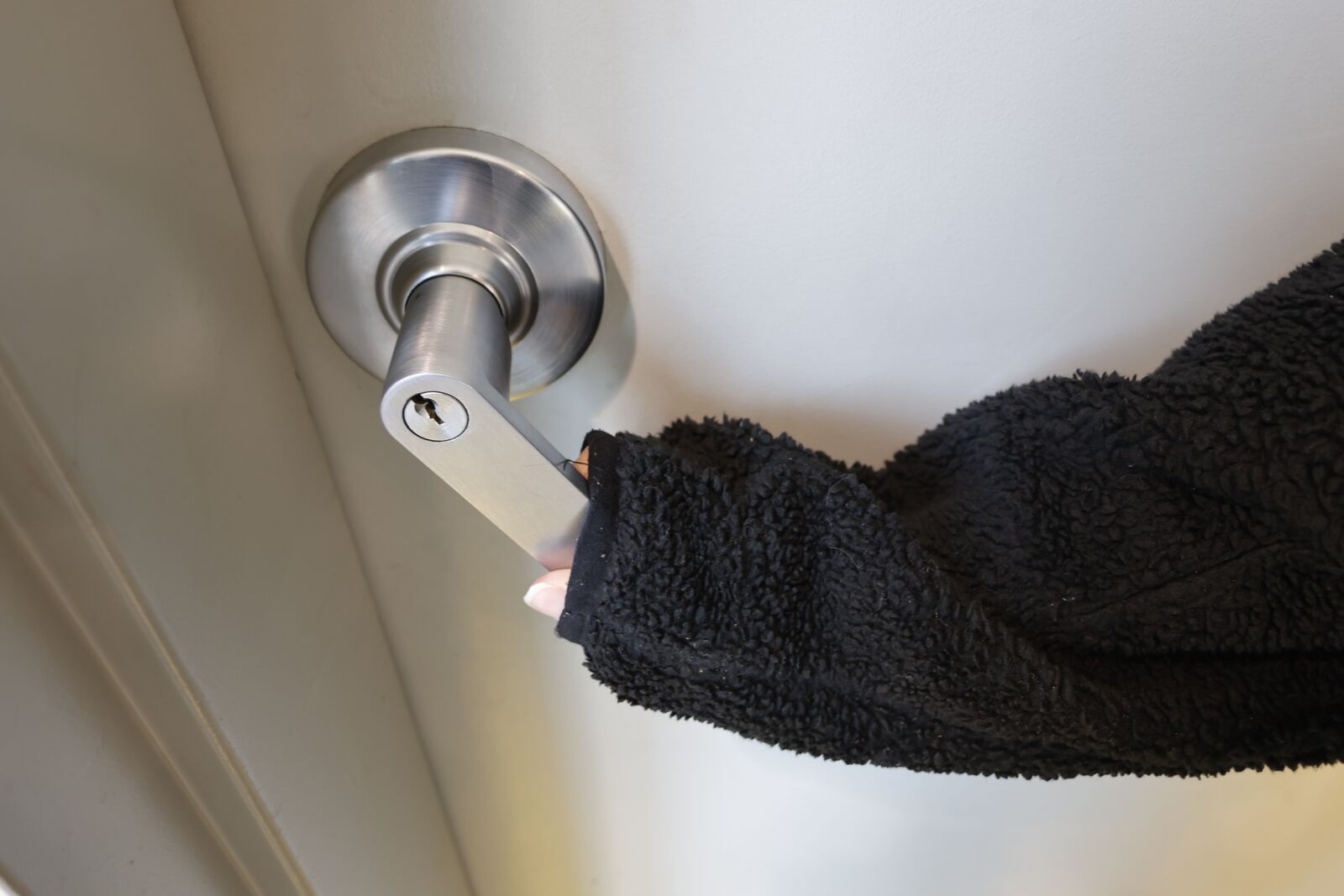 Students at various campuses said restrooms are often locked when they shouldn’t be. Credit: Deisy Camacho-Lopez for The Oaklandside
Many, many students at different schools reported finding bathrooms locked at inopportune times.
“They have the 15-minute policy, but at my school site they have been locking the bathroom for the entire class period,” said Marianna Smith, a senior at Oakland Tech and one of two student representatives on the school board. Her impression is that the bathrooms get locked when students are discovered smoking inside.
Students at various schools told us they were encouraged to use the restroom during the brief passing period, typically five or six minutes, depending on the school, but when they try to, they’ll find it’s locked — or has a big line snaking out of it.
Price, the principal at Oakland Tech, said his school has 10-minute passing periods — enough time for students to take care of their needs, but “many take the first five to socialize instead.”
Smith said there have been a couple cases when she’s advocated for a culture keeper to open a bathroom for a desperate student.
She suggested that OUSD or its schools should launch informational campaigns encouraging students to take care of the facilities. Introducing students to the culture keepers on campus would also help, she said, so there aren’t unfamiliar adults telling kids to get out of the bathroom.
From Smith’s perspective, taking care of restrooms is a responsibility teens and adults should share.
“A lot of students aren’t considerate when it comes to bathrooms,” she said — throwing trash on the ground, occupying a stall for ages, going so far in one case as bringing in their own vanity mirror and acting like they own the place. But adults will make rash decisions, closing up a bathroom for the better part of a year because of one incident involving a few kids, she said.
“Really trying to figure out a system that works — that’s a missing aspect,” Smith said.
This article was reported in collaboration with two Oakland high school student reporters, Deisy Camacho Lopez and Julia Magar, who are participating in an Oaklandside high-school fellowship program made possible by a grant from the Stuart Foundation.
“*” indicates required fields