

Four former students, three teachers and a staff member spoke on Agan’s behalf. The former students described Agan as a supportive mentor and caring teacher and said they felt at home in his classroom. All four students said he squeezed, rubbed or touched their shoulders, but that his actions did not make them uncomfortable.
One of those students told KQED and ProPublica that her opinion about the teacher’s behavior has changed in recent years. She said she had considered his physical contact normal while in high school. But her perspective shifted as she got older, she said.
“I went to college and talked to people and realized it wasn’t normal,” said the former student, now in her 20s. “Looking back at it, I would have jumped to the other side, to be quite honest.”
During the hearing, Agan testified that he would have stopped touching students’ shoulders if he had been clearly warned, according to a summary included in the panel’s decision. He said he became comfortable with his leadership students, and his actions carried over to math students even though he wasn’t as close with them. He denied massaging students’ shoulders and said students misinterpreted “squeezes or shakes” as massages. He said he did not intend to make students feel uncomfortable and regretted that some students did not feel safe in his class.
One of the administrators, former director of human resources Mike Minahen, told the panel that the details students shared with him during his investigation “weighed heavy” on him. He said it was unusual for high school students to “break the code” and come forward to make a complaint about a teacher, “especially a leadership teacher who has influence over student activities throughout the entire school.” Minahen, who has retired, declined to comment.
In November 2019, the panel unanimously decided Agan should lose his job. Even the teacher chosen by Agan agreed.
“The likelihood of recurrence is high,” the panel wrote in its decision. “Over time, he has shown that he cannot or will not exercise good judgment.”
One of the panelists told KQED and ProPublica that she voted to terminate Agan’s employment in part because his alleged behavior continued even after administrators issued warnings.
“His actions were making students, particularly young women, want to not take advanced math classes. They didn’t want to be touched,” said the panelist, who spoke on the condition of anonymity so as not to jeopardize her job in education. “All that directly impacts their access to good colleges because he was a calculus teacher.”
In December 2019, school district officials sent documentation of Agan’s firing, along with details of their investigation, to the Commission on Teacher Credentialing, California’s educator licensing agency, as state law requires for public school teachers who resign or are fired for misconduct. The educator licensing agency would decide whether Agan would be disciplined further, such as receiving a public warning, facing a suspension or losing his license to teach in a California public school.
The disciplinary process typically takes one year, according to the agency.
It would take the state licensing board nearly 500 days to decide what to do in Agan’s case.
How Agan returned to the classroom
As the state considered the matter, Agan applied for a job at a Sacramento middle school about an hour away from Rodriguez High in May 2020. It was a time of heightened teacher shortages, especially in subjects like math, during the COVID-19 pandemic.
Agan provided stellar letters of recommendation from former teaching colleagues in his application, which school representatives provided to KQED and ProPublica in response to a public records request.
Any school searching Agan’s name on California’s credentialing database would have seen a clean record and valid credentials indicating he was legally fit to teach. That’s because while the state licensing agency knew Agan had been fired for what the district described as sexually harassing students, California law prevented the agency from disclosing information about the case. Nowhere in the online public records did it say that Agan remained under investigation by the agency — let alone any details of his employment record.
In his application for the middle school job, Agan acknowledged that he had been fired after being “accused of inappropriately touching students on the shoulders during class.” He wrote that he disagreed with the dismissal and explained that he would often place his hands on students’ shoulders while helping them.
“Math is a difficult subject for many and my actions were meant as a means of encouragement; a way to say, ‘It’s OK that you’re having trouble, keep trying,’” Agan wrote, adding that he recognized his actions “made some students feel uncomfortable.”
Agan started teaching at Ephraim Williams College Prep Middle School that fall. The 175-person school is part of the Fortune network of charter schools. Administrators at Ephraim Williams at the time of Agan’s hiring did not respond to questions about how the school vetted him.
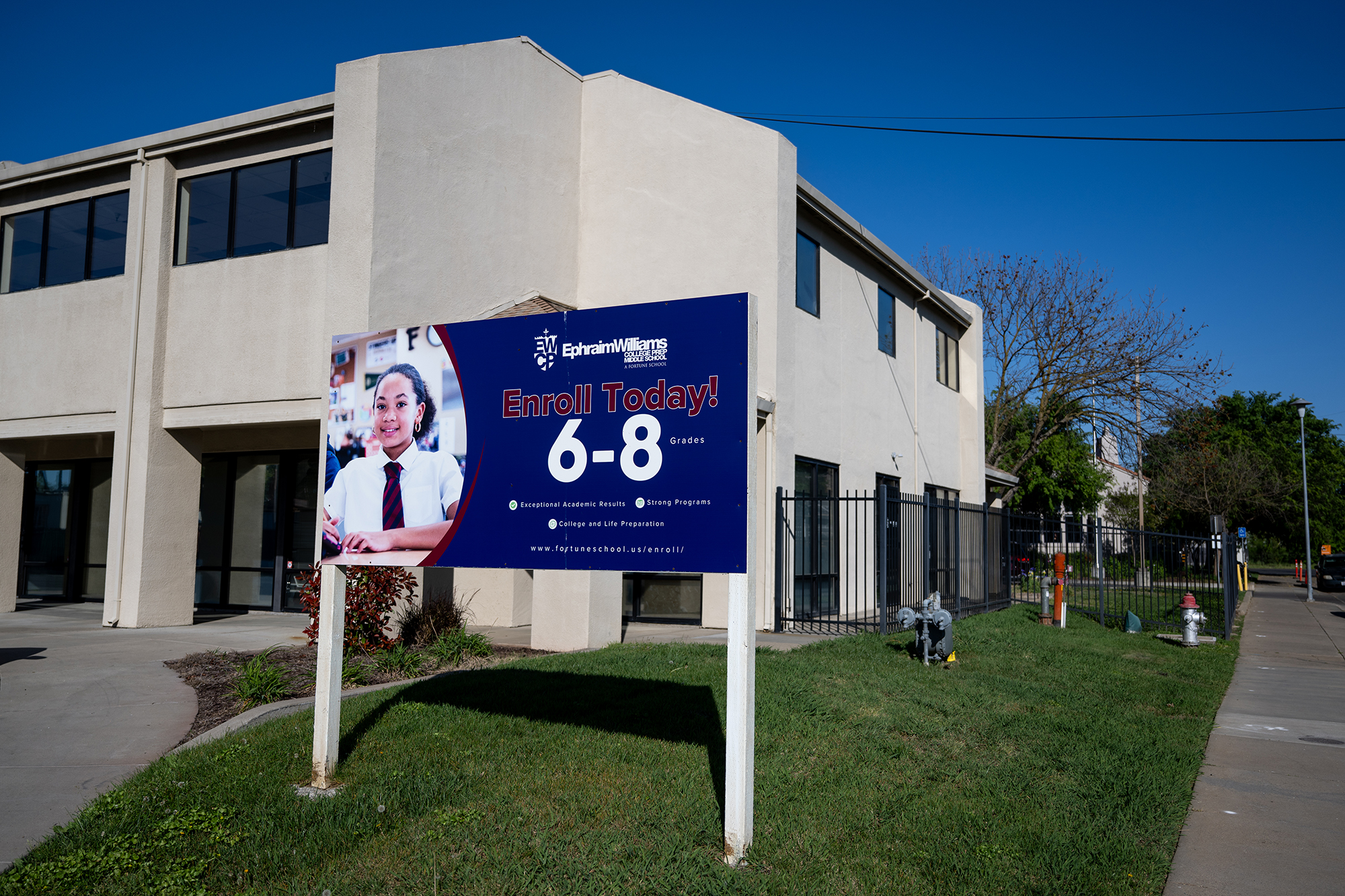 Ephraim Williams College Prep Middle School, a charter school in Sacramento. (Beth LaBerge/KQED)
Former Fortune human resources consultant Rick Rubino, who helped the middle school recruit, interview and hire candidates at the time Agan was applying, said the school was not aware that Agan’s former employer concluded that he had sexually harassed multiple students. “Do you think any reasonable school district or principal would hire that person?” Rubino said. “No. So clearly, Fortune School did not get that information.”
Rubino said he “would guarantee that somebody at Fortune called the principal at the school where Jason Agan was teaching in Fairfield and got a good report.” He said he does not remember making that call himself.
The former principal at Rodriguez High did not respond to questions about a reference check. But a Fortune School spokesperson, Tiffany Moffatt, said school officials follow “all state guidelines and regulations and conduct thorough vetting, making decisions based on the information available to us.”
It wasn’t until near the end of Agan’s first school year at Ephraim Williams that the state licensing agency issued its decision regarding his actions at his first school. In May 2021, the state suspended Agan’s license for seven days; two of those days fell on a weekend. The sanction — along with a red flag icon — appeared in the state’s public database of credentialed educators. This would be the only visible clue schools would have of anything amiss in Agan’s work history.
Corey, the former superintendent of Fairfield-Suisun Unified, told KQED and ProPublica that she was “flabbergasted” that he had only been suspended for seven days.
“It was a real mismatch of what happened,” Corey said. “What a disservice it was to those girls.”
Steed, one of Agan’s accusers, said students had done the right thing and shared their concerns about Agan with their school, only for adults at the state level to give him the opportunity to teach elsewhere.
“What’s even the point of going through this whole process?” she said.
A middle school student details unwanted touching
In September 2021, a month after Fortune students returned to in-person learning, an eighth grader at Agan’s second school complained about his conduct.
The student told her doctor during a routine physical that Agan had touched her lower back, according to a summary of the complaint.
The girl’s mother told KQED and ProPublica that she reported the incident to the principal, who connected mother and daughter with Rubino, Fortune’s human resources consultant. The mother told Rubino that Agan was giving her daughter a disproportionate amount of attention.
The girl, who is now 17, spoke to KQED and ProPublica on the condition that only her middle name, Sherelle, be used because she is a minor. Leslie, the student’s mother, is also being identified by her middle name to protect her daughter’s identity.
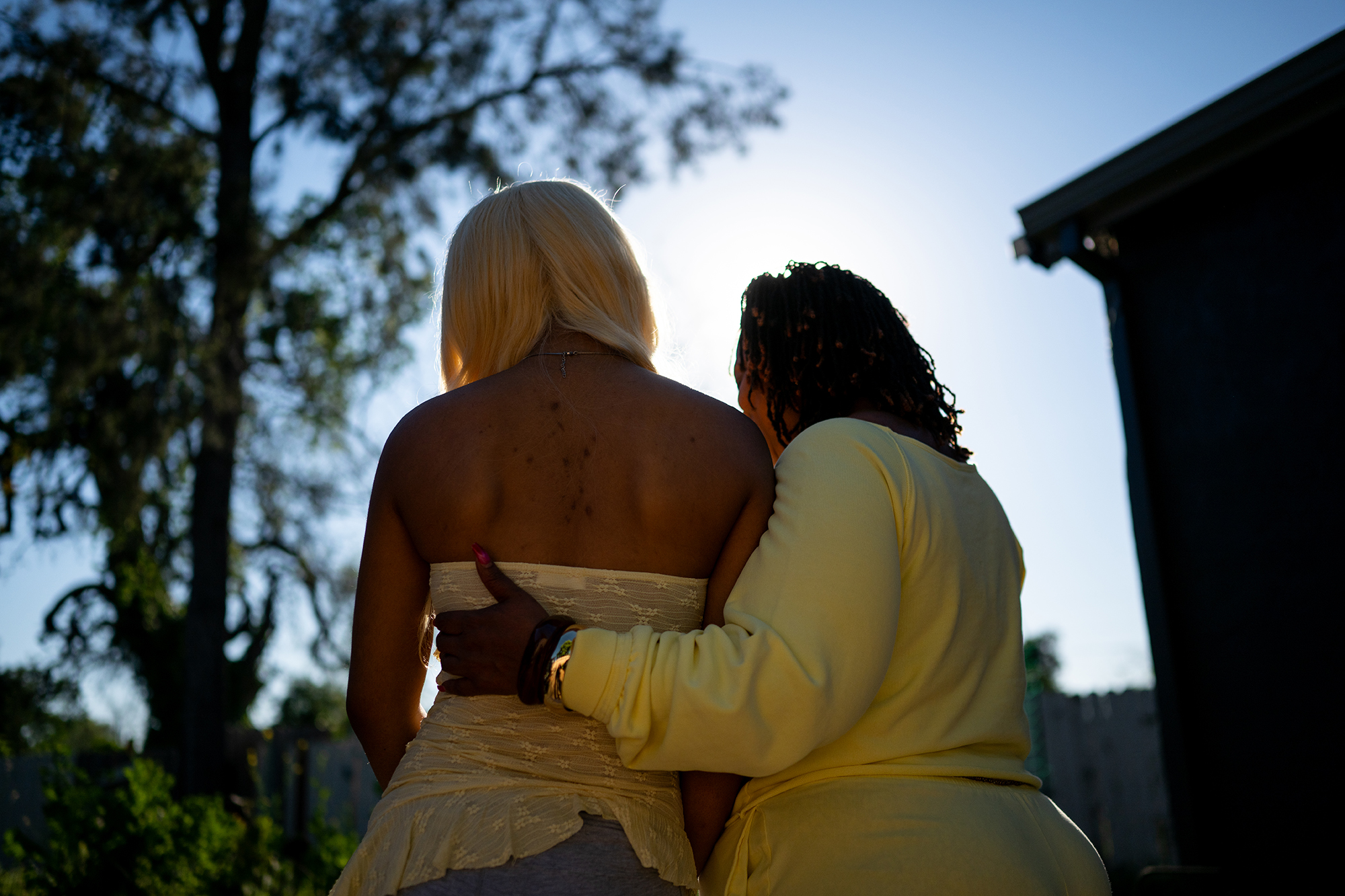 Sherelle, left, and her mother, Leslie, at their home. (Beth LaBerge/KQED)
In that same meeting, Sherelle told Rubino that Agan removed his hand from her lower back after she asked him to stop, and he returned to the front of the classroom. But he came back moments later and placed his hand on her shoulder, according to a letter of warning Rubino wrote to Agan after interviewing the girl.
“I felt disrespected. I felt uncomfortable. I felt mad,” Sherelle told the news outlets about the incident. “I felt like even speaking up didn’t matter.”
In his letter, Rubino directed Agan to stop touching students and “dial back” his praise for the girl. Rubino also cautioned that failure to comply could result in further disciplinary action, up to suspension or termination.
Agan denied the allegations in a written response to Rubino obtained by KQED and ProPublica. “I would like to be on record that I dispute it being listed as a ‘fact’ that I touched [the student] on the lower back,” Agan wrote. “I have been extremely diligent in avoiding personal contact with scholars due to my previous experience.”
Leslie had texted Rubino expressing concern about how Agan was vetted for the job after she said she saw online posts by students at his former school alleging that he had touched them inappropriately.