
CENIC AIR takes a page from the cloud provider playbook: centralize the expensive, expertise-intensive operations while decentralizing the hardware investments. Colleges own their equipment and install their own data centers, while CENIC and SDSC handle operations, security and support across all sites. This approach achieves economies of scale without sacrificing institutional ownership.
Case Study: Data-Driven Agriculture in Action
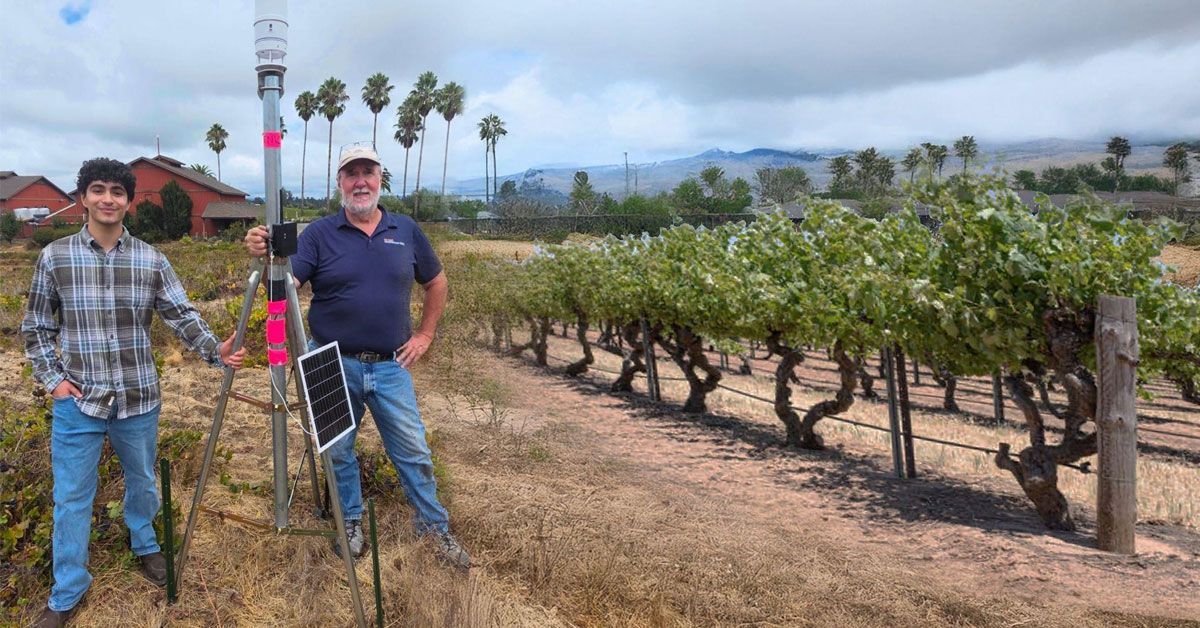
One of the most creative demonstrations of SDSC and CENIC partnering their expertise in the real world is the Iron Horse Vineyards project. A data-driven agriculture testbed near Sebastopol, California, the project uses soil, air and vine sensors connected via LoRaWAN low-power networks, drone-based multi-spectral imaging and a 10-Gigabit CENIC router to generate continuous, actionable data about crop health and harvest timing.
The project is led by Thomas DeFanti, a research scientist at UC San Diego’s Qualcomm Institute and a distinguished professor emeritus of computer science at the University of Illinois at Chicago, in collaboration with Iron Horse owner Joy Sterling. The team includes partners and students from Santa Rosa Junior College, Sonoma State University, UC San Diego, UC Agriculture and Natural Resources and industry partners including AT&T.
“The Iron Horse project achieved multiple technical milestones in 2025, including completion of a last-mile fiber connection and initial sensor deployments, making data transmission from vineyard to researchers a reality,” DeFanti said. “The challenge now being addressed: collating diverse data streams into a coherent precision agriculture intelligence platform.”
Projects like Iron Horse point to a broader opportunity: SDSC’s model can support similar place-based, data-intensive collaborations across sectors — from agriculture to climate monitoring to smart infrastructure — while simultaneously creating hands-on learning opportunities for students across California’s higher education system.
What’s Next?