

“That’s not our intent. We really want to do everything we can to bring a subsidized program to this county, and that involves the state,” she said.
Advocates are hoping the slots will be spared when Newsom presents his update to the proposed 2026-2027 state budget, known as the “May Revision,” on Thursday. The plan will set off a busy period of negotiations leading to a final budget that the Legislature must pass by June 15.
State Senate leaders have indicated they would not only reject cutting child care slots, but that they’d rather increase funding to subsidize 44,000 spaces.
In 2021, Newsom pledged to add more than 200,000 subsidized child care slots, both in contracted centers and in the form of vouchers for low-income families. His administration has funded 130,000 of those slots while making other huge investments in early childhood education and care, like expanding access to transitional kindergarten for all 4-year-old children and allowing in-home child care providers who receive the subsidies to unionize. The move has led to health care and retirement funds for a workforce that has historically been underpaid, and the state is slowly working toward improving their wages.
“We’ve had the most significant child care expansion subsidies in the United States. Should be better known. It’s not,” Newsom told MSN in a January interview.
Between 2019 and 2024, enrollment in subsidized child care programs grew by 63%, according to an analysis by the California Budget & Policy Center.
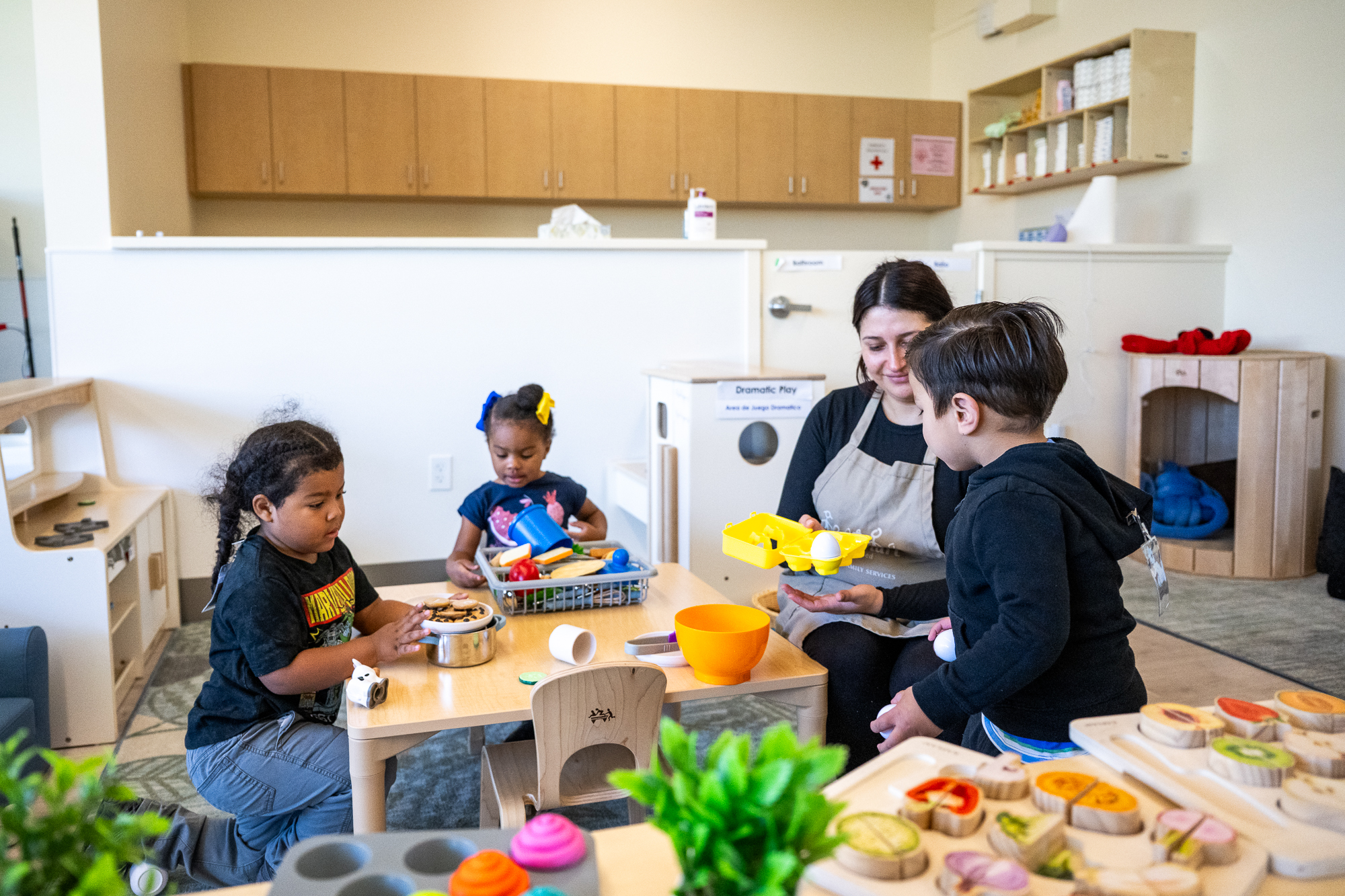 Teacher Brianda Casillas works with children in a classroom at Rise Vallejo, an early education center, in Vallejo, on April 28, 2026. (Beth LaBerge/KQED)
Laura Pryor, a research director at the center, said while the Newsom administration deserves credit for making unprecedented investments in early childhood education, it has fallen short in some areas — like the slots.
She estimates that about 1.77 million children qualify for subsidized child care, but are not enrolled in these programs.
“For every individual that gets access to a space, it’s thousands and thousands of dollars saved that expands their budget,” Pryor said. “If our goal is to fund all children that are eligible, we are moving in the right direction.”
“If there’s this additional cut, we’re not only walking back on the progress, but walking back on this positive trend that we’ve been seeing in the past several years,” she said.