
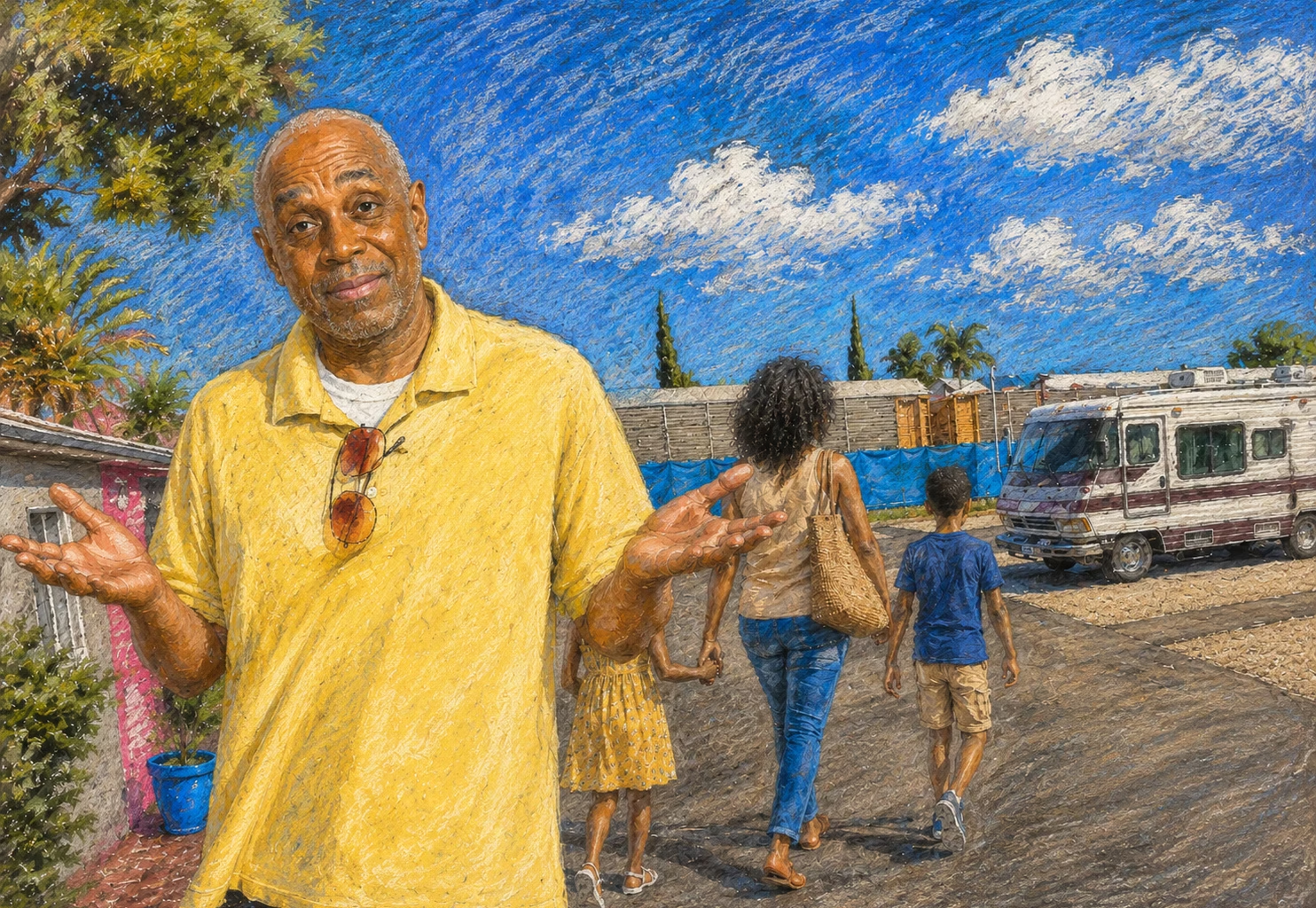
 Graphic of Rick Thomas in front of Silver RV park. By Terelle Jerricks
By Rick Thomas, Columnist
Harbor City’s controversial RV park opens, dividing neighbors while offering stability to those who need it most
Well…we’ve officially reached the end.
I think.
After years of fighting, court dates, neighborhood meetings, and a whole lot of frustration, Silver RV Park in Harbor City is open.
Like, actually open.
The Certificate of Occupancy was issued on April 22. RVs are already parked on-site, and more are on the way.
Stewart Silver won.
Not quietly, not cleanly…but clearly.
Drive past the place, and you’ll see it for yourself: a handful of RVs already set up, people starting to move in, and the reality that this project everyone argued about for three years is no longer hypothetical.
“This has been a long, hard fight,” Silver said, which might be the understatement of the entire drama.
Standing there as people started moving in, he added, “They’re actually starting to move in.”
Yes.
That tends to happen when something opens.
Meanwhile, over in Green Meadows West, this is being treated less like a ribbon-cutting and more like the beginning of the apocalypse. On the Save Green Meadows West website, residents have made it very clear how they feel:
“This is not a temporary Luxury RV park…it’s really for permanent low-income.”
Translation: this is exactly what they didn’t want.
Walk around the neighborhood, and you can feel it. One resident, out walking his dog, pointed across the street like he was presenting evidence in a trial.
“Over here you have this,” he said, gesturing toward the RV park, “and over there?”
Over there, of course, there are million-dollar homes.
Because nothing fuels outrage quite like proximity.
The resistance isn’t completely dead, either.
According to him, neighbors are still trying to raise $40,000 to hire an attorney to shut the park down. At this point, it’s hard to tell if that’s a strategy or just sheer determination to not let go.
Because here’s the thing: the park is open. That part isn’t up for debate anymore.
And then you get a completely different perspective.
A single mom touring the site with her two kids had a very different reaction. Big smile, noticeably relieved, clearly seeing something others aren’t.
“This is a nice neighborhood,” she said.
Same place.
A totally different reality.
She’s been going through a rough time—marriage fell apart, trying to figure things out—and this park, controversial as it is, might actually give her and her two kids some stability.
While one side sees a threat, she sees a chance.
And that contrast?
That’s the whole story.
For Stewart Silver, though, the fight isn’t entirely over—it’s just changing form. Because now comes the part where he goes after the City of Los Angeles for $20 million.
Yes, twenty million.
“My legal fees are over $600,000 and I am suing for $20,000,000,” he said. “We’re going after millions of dollars.”
He also made it clear he’s not just frustrated—he’s furious.
“Seven actual cases,” he said. “They don’t have a defense.”
He won…every…single…one.
So now the city gets to deal with the aftermath.
And by “the city,” we mean taxpayers—because if this lawsuit goes badly, guess who’s paying?
Yeah.
We are.
The City Attorney is already preparing for the fight, asking for outside legal help.
The first bill?
$160,000.
Just to get started.
Because apparently, the only thing more expensive than stopping a project is failing to stop it and then getting sued for trying.
The lawsuit—Oceans 11 RV Park LLC et al v. City of Los Angeles—is now sitting in federal court.
Silver went big.
And he seems very confident.
“They don’t have a defense,” he said again, just in case anyone missed it the first time.
A lot of this chaos ties back to the city’s Public Benefits program. In simple terms, projects like this can move forward without notifying neighbors. No heads-up, no community input, just…surprise.
As you can imagine, that went over really well.
City Councilmember Tim McOsker fought the project, but it didn’t matter. The rules are the rules, and in this case, they didn’t work in the neighborhood’s favor. Now, with an active lawsuit hanging over everything, his office isn’t saying much beyond the usual: they’re “awaiting additional information” and will keep pursuing “every available legal option.”
Which is political speak for: this isn’t over, even though it kind of is.
Others are more direct.
15th City Council candidate Jordan Rivers didn’t hold back, especially about the repeated legal battles.
“We can’t sue someone six times with taxpayer dollars that could be used to build more homes and address social services,” he said.
Hard to argue with that math.
He also supports the project itself:
“This allows residents who do not have a place to stay to actually have accessibility to housing…I’m in favor of this.”
At the same time, even though he agrees the process is flawed, there should probably be some level of neighborhood input before something like this gets dropped into the middle of a community.
Right now, the system doesn’t require it. And this situation is what happens when you skip that step.
So yeah—this has been a mess.
For everyone.
Stewart Silver, who spent years fighting to build this and is now spending even more time suing the city.
Tim McOsker, who fought it and lost repeatedly, is now stuck dealing with the legal fallout.
The residents, who feel ignored and are still trying to figure out what, if anything, they can do next.
And the City of Los Angeles, which might end up writing a very large check when all of this is done.
At this point, the idea of everyone sitting down together and working it out over a drink—maybe a Lagavulin on the rocks isn’t just unlikely.
It’s basically impossible.
But despite all of that…
The park is open.
People are moving in.
Life continues, whether anyone likes it or not.
And in the middle of all the noise, the lawsuits, the politics, and the bitterness, there’s still that one simple, inconvenient fact:
A mom and her two kids found a place to live.
Say what you want about everything else—that part’s real.
Related