
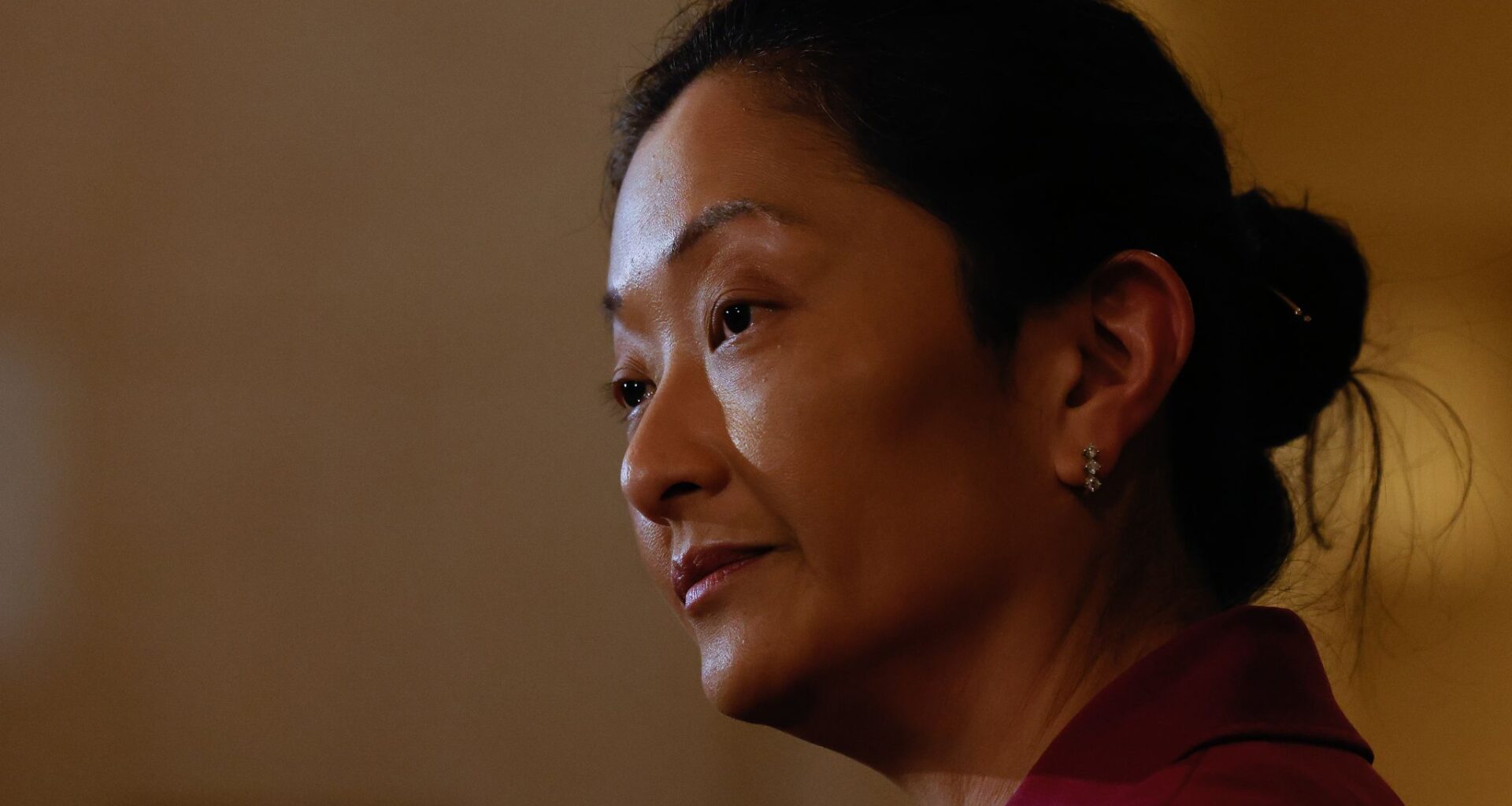
Maria Su, superintendent SFUSD, is expected to testify before a congressional committee on June 10, regarding parental rights and other issues related to federal education law.
Lea Suzuki/S.F. Chronicle
San Francisco’s superintendent of schools has agreed to testify before Congress in June at the request of a Republican-led committee leading a charge in the culture wars and targeting parental rights, indoctrination and the sexualization of children in public education.
The invitation to Superintendent Maria Su, however, did not appear to be voluntary. Chicago public schools CEO Macquline King was also invited to appear. She declined and will now appear with Su under a subpoena.
The June 10 hearing, called “Breaking Trust: Attacks on Parental Rights, Inappropriate Content, and Legal Abuses in America’s Schools,” is before the House Committee on Education and the Workforce.
Article continues below this ad
The superintendent of the Loudoun County Public Schools in Virginia, which has policies for gender inclusive bathrooms and the use of children’s preferred pronouns, is also expected to testify.
In an April 16 letter to Su, Rep. Tim Walberg, R-Mich. the committee chair, said the hearing would be part of an investigation into the districts’ compliance with federal civil rights and education laws and “whether any legislative reforms are necessary.”
San Francisco Chronicle Logo
Make us a Preferred Source to get more of our news when you search.
Add Preferred Source
The hearing is expected to pitch San Francisco’s schools into the hot seat of the culture wars that have intensified under President Donald Trump’s second term , likely requiring Su to defend the district’s liberal policies and curriculum.
That includes LGBTQ-inclusive social studies, history and comprehensive sexual health education, gender neutral restrooms and gender-identity access to locker rooms and activities and required ethnic studies courses.
Article continues below this ad
While the hearing itself is unlikely to have any immediate consequences for the district, it will connect San Francisco with Loudoun County, which has become a conservative punching bag for so-called woke education.
In addition, some called into congressional hearings amid the culture wars have seen their committee moments go viral on social media, leading to career consequences, as was the case with the Harvard University president in 2023, who subsequently resigned over her testimony on whether calling for the genocide of Jews violated the college’s code of conduct, as well as claims of plagiarism.
At the same time, the hearing could have long-term consequences given the Trump administration’s repeated threats to withhold funding from schools or districts that violate federal education laws related to discrimination based on sex, race, color or national origin.
That has included battles over gender ideology instruction, trans sports, diversity programs and more.
Su did not respond to requests to address the implications of the hearing or how she planned to respond to the congressional members who would likely attack the district’s policies.
Article continues below this ad
“Every day, my top priority is making sure that our students are learning, building meaningful connections with their peers, and receiving the support they need to thrive,” she said in a statement acknowledging she would appear on June 10, adding the core focus is on the success of students. “Parents play an essential role in this work, and as dedicated partners in their children’s education, their collaboration is invaluable to helping every student succeed.”
Walberg noted in the letter that the committee supports pending congressional bills, including the “Say No to Indoctrination Act,” and “Stop the Sexualization of Children Act.”
“As a large urban school district, San Francisco Unified School District plays a significant role in federal, state, and local conversations about education policy,” Walberg wrote in his letter. “As earlier noted, the Committee is reviewing the district’s compliance with civil rights and education records privacy laws, and whether any further changes in law may be needed to help ensure that children are protected and federal funds are spent responsibly.”