
“I just sat there, and I closed my eyes, and I listened,” he said. “I saw what it was they were doing as a system to try to break us down, to kidnap us off the streets and profit off of us.”
Melbourne spent time getting educated in prison and learned that it costs California nearly $128,000 annually to incarcerate a person. That realization stayed with him. “I couldn’t allow that to happen,” he said. “Not to me any longer, or to anybody I knew or anybody in my community.”
When Melbourne was released, he returned to West Sacramento with a different sense of purpose — thinking about how to intervene with young people, before they ended up where he had.
“We know that if you feed a kid better, they’ll perform better,” he said. “Test scores go up, behavior problems go down.”
Since 2018, he has built the nonprofit Three Sisters Gardens, spanning four farms across West Sacramento. But, not without some challenges.
The model remains susceptible to fluctuations in federal funding priorities.
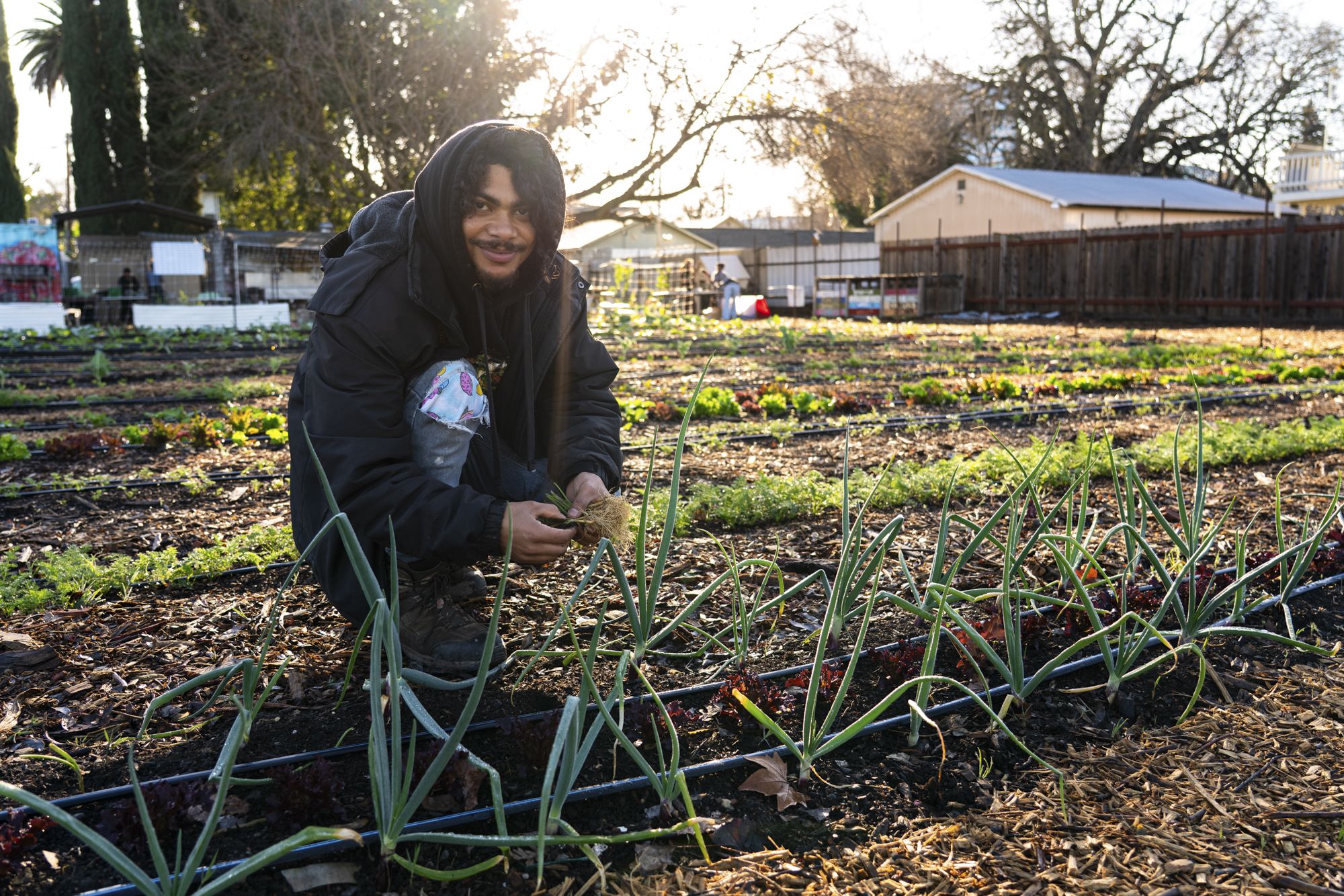 Kenny McDowell plants microgreen onions at Three Sisters Garden in West Sacramento on Feb. 12, 2026. (Louis Bryant III for KQED)
Melbourne had set his sights on a $21 million grant from the US Environmental Protection Agency, a program that was discontinued by the Trump administration.
Currently, the organization depends on a mix of local and state funding, with land leased from the city at a subsidized rate of $1 per month.
“It took a lot of learning to know that I can transform what used to be an illegal business into a legal business,” said Melbourne. “And use our hustle mentality to support our youth and ourselves into a future that’s brighter for everyone.”
Melbourne sees access to food as one entry point. But the work extends beyond nutrition — into job training, workforce development and life skills.
“I want to use the lived experience that I have for all the pain and suffering that I went through to be able to change these youngsters, to divert them,” he said about being a mentor, educator and a resource for the young people in West Sacramento.
Cultivating community
Nancy Long, 18, found the Three Sisters Gardens nearly two years ago, at a time when she felt unmoored.
Now, between packing produce for distribution and tending the soil, she said she has found a sense of purpose — in both the work itself and in giving food away.
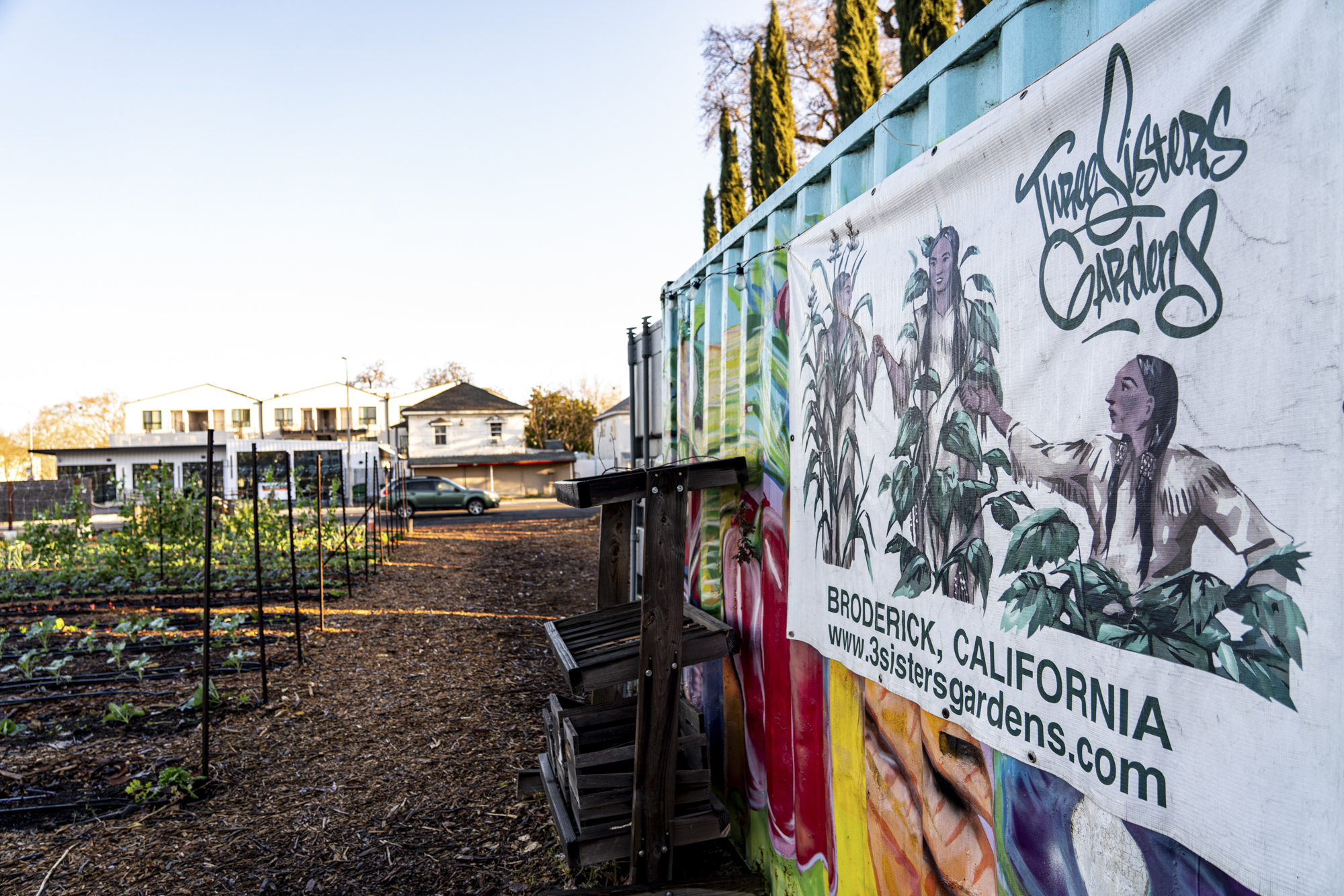 Three Sisters Garden in West Sacramento on Feb. 12, 2026. (Louis Bryant III for KQED)
“I grew up very poor, and I feel like this is actually helping a lot of people because not a lot of people get food,” she said.
Long, who is Cambodian American, now brings produce home for her family, who use it in soups. Before joining the garden, she said she struggled in school and often kept to herself.
“I was really in a bad place in my life,” she said. “When I got this job, I changed a lot, and it also helped me with my mental health issues.”
Working at the garden, she said, has changed how she sees herself and how she interacts with others.
“I feel like this garden has made me a better person,” she said. “I really am glad, and I appreciate that I have Alfred in this.”
Many of the young people who come through the gardens are looking for stability — a steady job, guidance, a place where they feel seen.
Melbourne’s role often extends beyond supervision.
He checks in on the young people working with him and, at times, helps them navigate challenges outside of work.
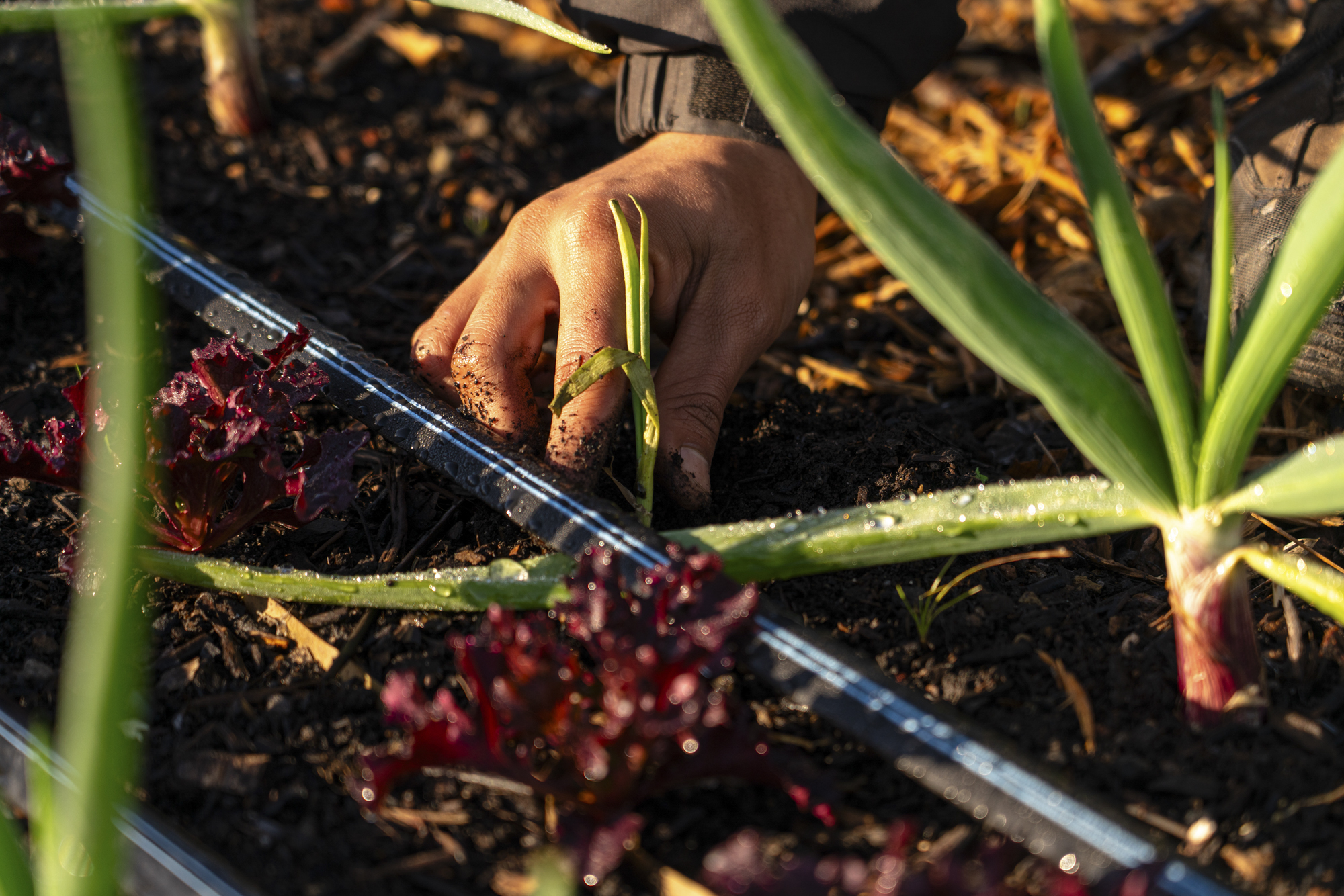 Kenny McDowell plants onion microgreens at Three Sisters Garden in West Sacramento on Feb. 12, 2026. (Louis Bryant III for KQED)
For 21-year-old Dominitt Henderson, that meant straightforward advice.
“He will tell you the truth straight up to your face,” Henderson said. “He won’t hide nothing from you — that’s what I like.”
Other youth described more tangible forms of support.
“He helps me a lot,” Amari Sullivan said. “He gives me jackets — whatever I need.”
Kenny McDowell said that support has made a difference during difficult moments.
“There’ll be times where I miss a couple of car payments,” McDowell said. “He’ll help me out. Little things like that, it counts.”
Over time, the work begins to take root in other ways.
McDowell said being part of the garden gave him a sense of direction and something to build toward.
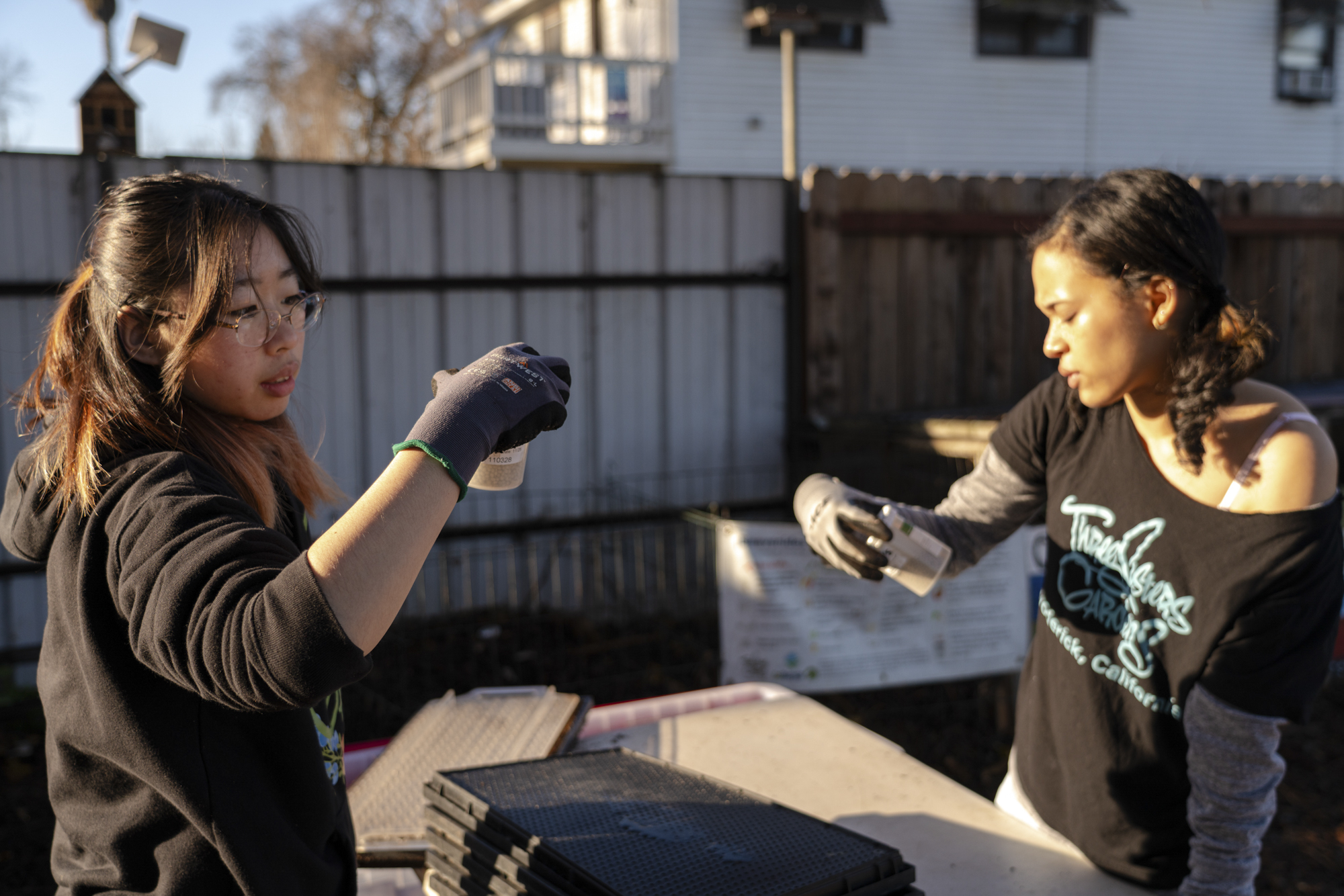 Interns Damia Zhang and Leilania Tian inspect seed containers at Three Sisters Garden in West Sacramento on Feb. 12, 2026. (Louis Bryant III for KQED)
“This was a purpose,” he said. “I want to see a brighter future.”
Melbourne described the work as reciprocal — something built alongside the young people, not just for them.
“It’s them coming to me and us just feeding off of each other,” he said.
“What I really, truthfully, in the end want to build is community.”