
In California, educators who take leave while pregnant or after giving birth must use their sick time to cover missed work days. If they’ve used up that time off, teachers then receive “differential pay” — their wage minus the cost of a substitute teacher.
Newsom vetoed a past attempt to address pregnancy leave in 2019, and another bill that would have granted 14 weeks of paid leave, introduced by Assemblymember Cecilia Aguiar-Curry, D–Winters, in 2024, which died on the state Senate floor.
“Thousands of CTA members shared their story, signed petitions, showed up to the Capitol to fight for pregnancy leave — and now our sponsored legislation alongside Assemblymember Aguiar Curry is now in the May Revise,” said Erika Jones, CTA’s secretary-treasurer. “Fourteen weeks of paid pregnancy leave will be transformational for California educators and families.”
In addition to the targeted investments, May’s revision also includes billions in new discretionary dollars for districts.
Schools will benefit from an increased cost of living adjustment, up to 2.87% from 2.41% in Newsom’s January budget plan. They’ll also get a special boost thanks to what’s called a “super” cost of living adjustment, applied specifically to the local control funding formula, the system for how much of California’s education funding is allocated.
Barrett Snider, a partner with education lobbying firm Capitol Advisors, said the governor deserves credit for trying to keep pace with rising costs.
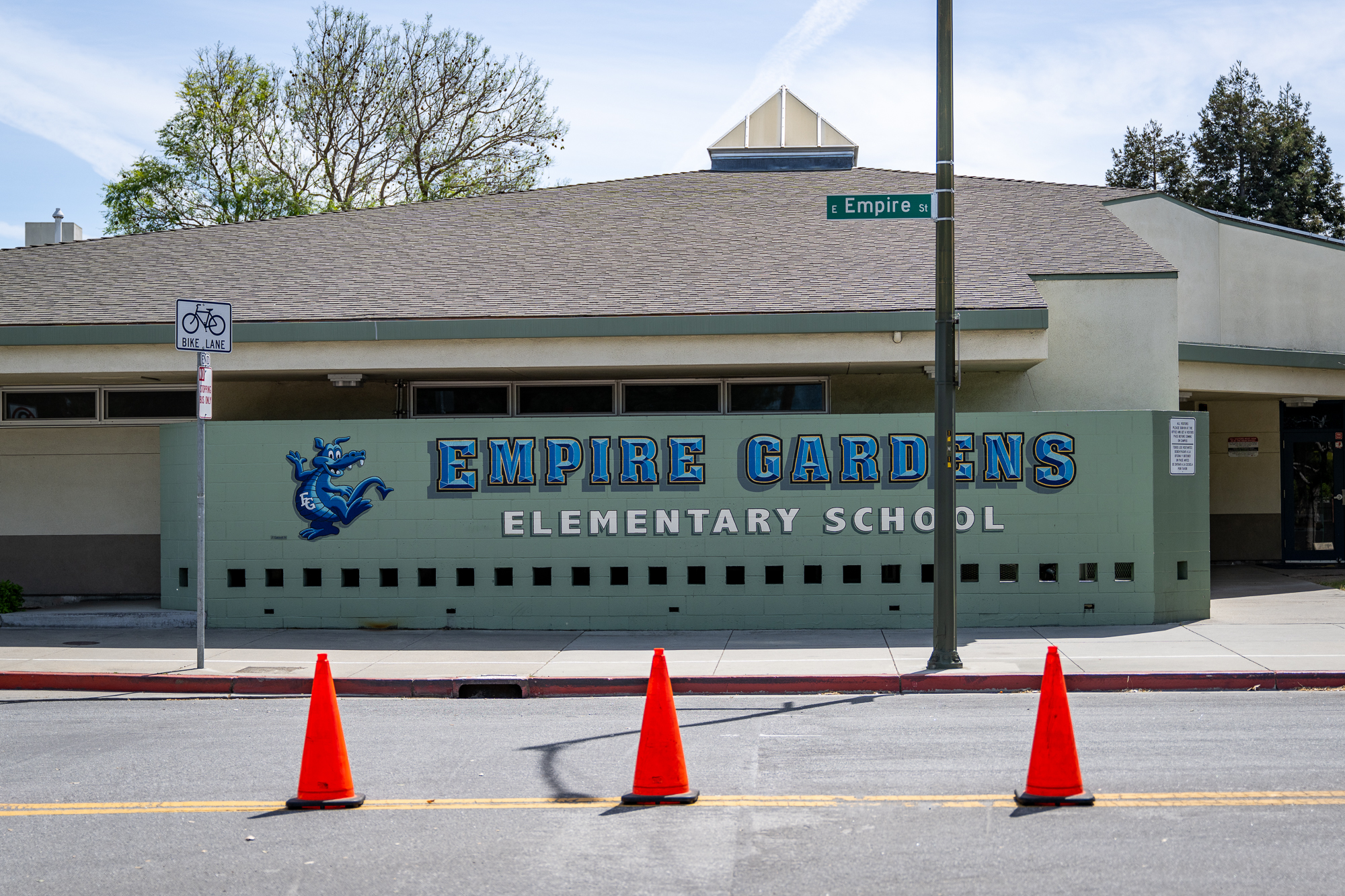 Empire Gardens Elementary School in San José on March 26, 2026. The school is among those proposed for closure as part of San José Unified School District’s “Schools of Tomorrow” plan. (Beth LaBerge/KQED)
“It’s all going up and it’s going up more than 2.87%,” Snider said. “The ed[ucation] community for years has been saying we ought to find a new index to track for actual costs because what we see in the field doesn’t track.”
Snider said Newsom might get pushback, though, for earmarking a portion of that adjustment to pay for the new paid pregnancy leave mandate.
“It’d be like your boss saying, ‘We’re giving you a raise,’ but then telling you that a portion of that raise has to be spent on a company-mandated expense,” he said.
Some advocates bemoaned a lack of funding for subsidized child care spaces, calling the cuts an “unfulfilled promise” from a governor who has long touted his expansion of transitional kindergarten.
Educators are also gearing up to fight a plan to defer paying $3.9 billion from the largest pool of education money, Proposition 98 funding, which Newsom could shift to other sectors of the budget. The state’s constitution requires an annual minimum guarantee equivalent to about 40% of the state’s general fund be directed to K-12 schools and community colleges that can be spent however districts see fit.
Last year, Newsom withheld $1.9 billion of these funds, which will be repaid this year.
Though less than the $5.6 billion deferral proposed in the January draft budget, school boards, district officials and unions across the state have said delaying any funding violates the state constitution, and perpetuates a dangerous precedent.
“If they continue to sort of cleverly manipulate the Prop. 98 guarantee and underfund it, it ceases to have its intended effect that voters expected when they passed it in 1988,” Snider said. He said many school districts have already factored the proposed withholding into their budget planning, since they began months ago.
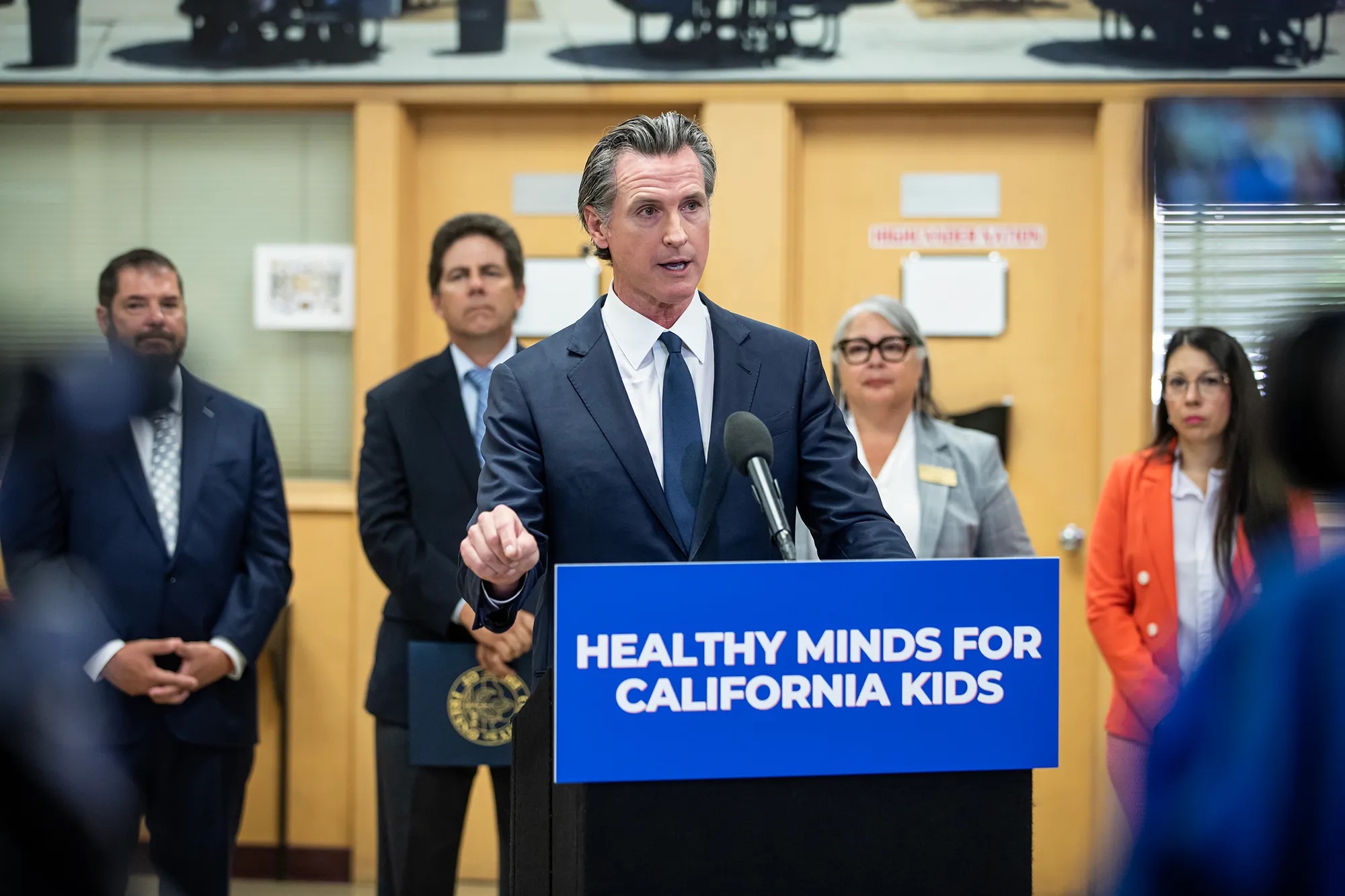 Gov. Gavin Newsom outlined new efforts to support the mental health of students at McLane High School in Fresno on Aug. 18, 2022. (Larry Valenzuela, CalMatters/CatchLight Local)
“You end up manipulating the school budgeting process because the January proposal is what schools use to build their budgets for the year,” Snider continued.
CTA president Goldberg said this week, more than 2,000 educators across the state who received preliminary layoff notices in March will find out if those are permanent. State law requires public school districts to issue pink slips for the coming year by May 15.
“These are public school educators who have devoted their entire career to educating California students, and their future is in jeopardy with threats to withhold vital funds from our local school districts,” Goldberg said.