
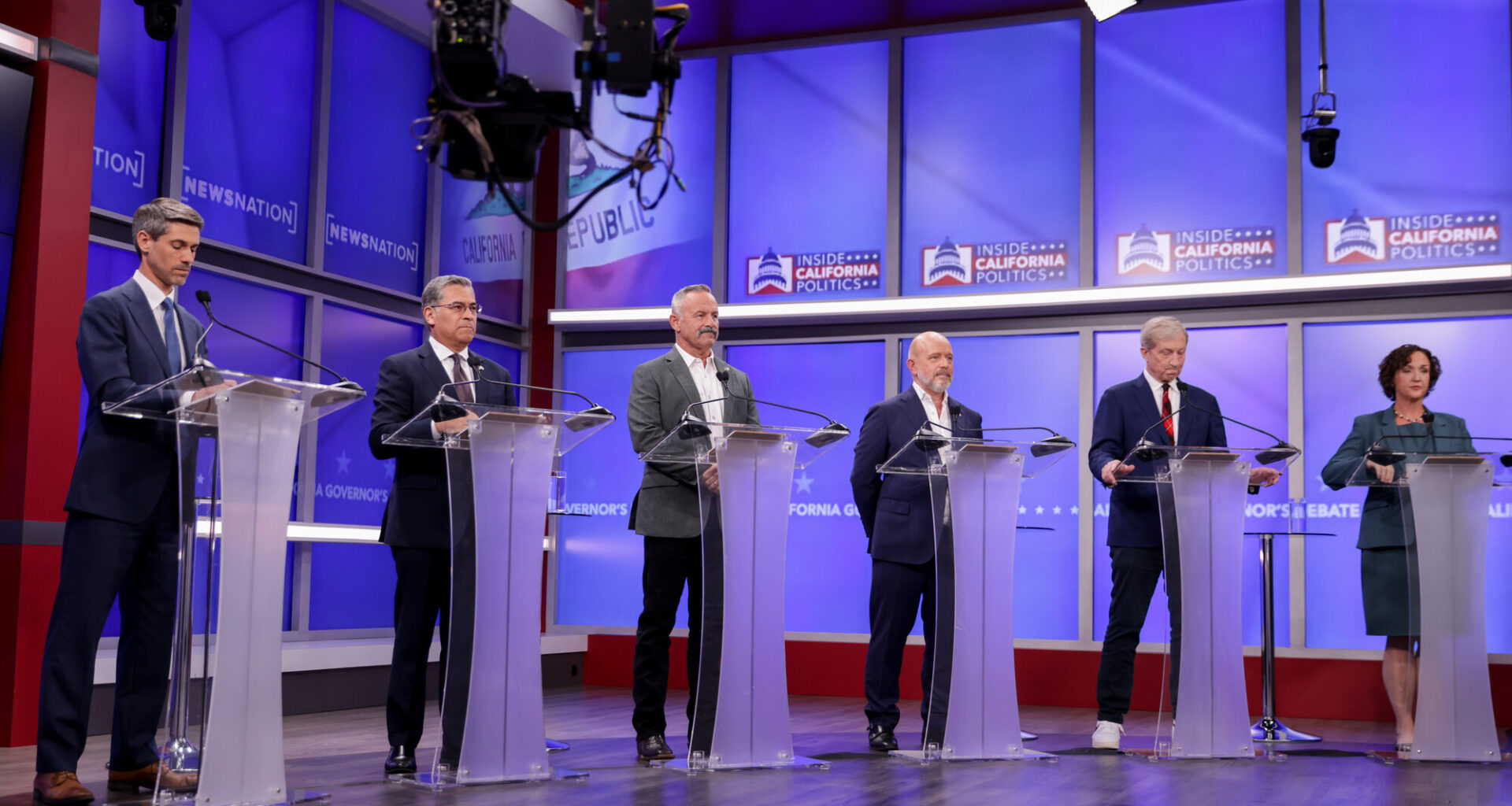
Driven in part by these concerns, critics of the top-two primary have now filed a ballot initiative that would repeal this system and return California to party-based primaries, potentially as early as 2030.
But how does this top-two arrangement work? Why does California do things this way? And what are the chances of voters choosing between two GOP candidates for governor in November?
How does California’s top-two primary system work?
In a traditional closed primary, such as in presidential races, voters can only choose among candidates from their own party: That is, say, registered Democrats could only vote for Democratic candidates.
But in a top-two primary, all candidates from all parties appear on a single ballot open to any registered voter. The two candidates with the most votes in that primary then move on to the general election, even if they’re from the same party.
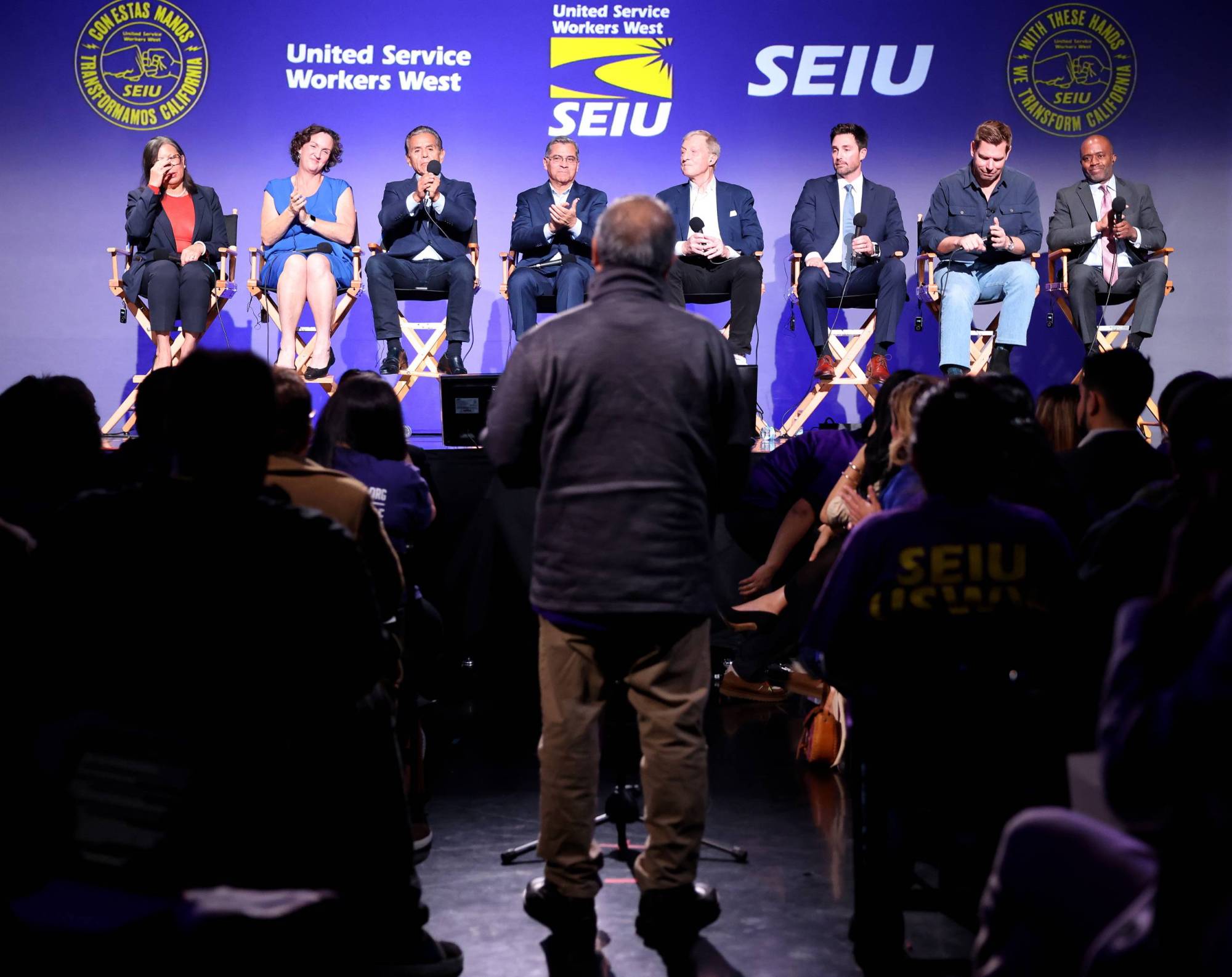 Candidates for California’s next governor listen to a question from a union worker during the 2026 Gubernatorial Candidate Forum in Los Angeles on Jan. 10, 2026. (Christina House/Los Angeles Times via Getty Images)
Kim Alexander, president and founder of the California Voter Foundation, said this is an even bigger concern for third parties in the state.
“One of the unfortunate byproducts” of California’s jungle primary system, Alexander said, is how “it’s really shut out a lot of minor parties from the general election and they run the risk of being kicked off the ballot altogether.”
“Because if you don’t have candidates appearing on ballots at a certain pace, then you can’t remain an official party,” she said.
Does this really mean Californians might not get a Republican vs. Democrat race for governor in November?
That’s correct: Under the top-two primary system, the November contest could be an intraparty fight.
That scenario has worried many California Democrats. With seven top Democrats crowding the field, there’s a risk of fracturing their party’s vote. Meanwhile, if enough Republican voters back both Hilton and Bianco to push them both into the top two, California could be locked into an all-Republican general election for governor.
 Steve Hilton, Republican gubernatorial candidate for California, left, and Tom Steyer, Democratic gubernatorial candidate for California, fist-bump prior to a gubernatorial debate at KRON Studios in San Francisco, California, on April 22, 2026. California will hold its primary election on June 2, where the top two finishers advance to the general election in November regardless of party affiliation. (Jason Henry/Nexstar via Bloomberg)
In March, state Democratic Party Chair Rusty Hicks urged politicians in his party to take a hard look at the viability of their campaigns and drop out before the filing deadline.
“California’s leadership on the world stage is significantly harder if a Democrat is not elected as our next Governor,” Hicks wrote in an open letter.
None of the contenders heeded his plea.
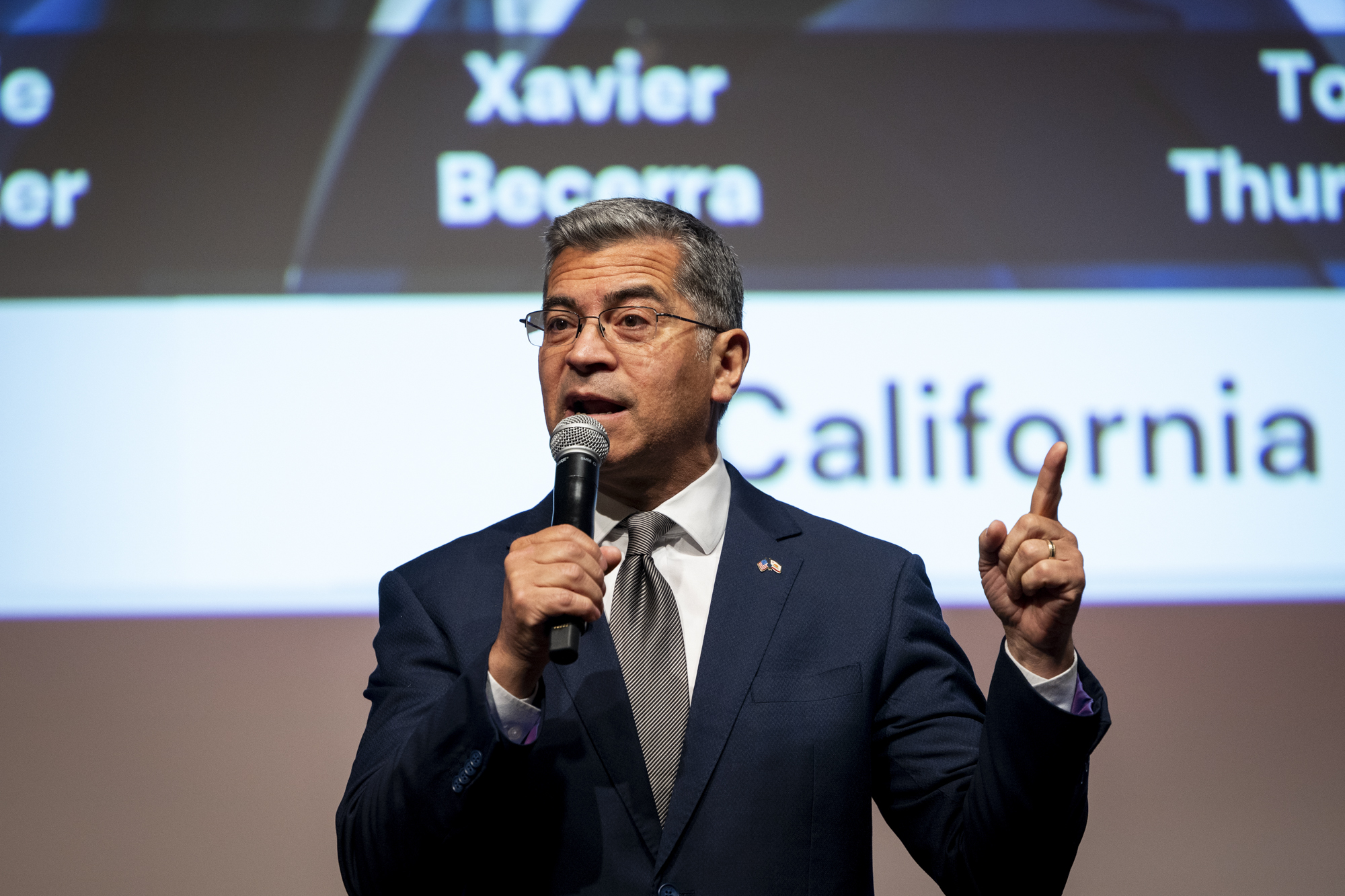 Former U.S. Secretary of Health and Human Services Xavier Becerra speaks during a gubernatorial candidate forum at the UCSF Mission Bay campus in San Francisco on Jan. 26, 2026. (Beth LaBerge/KQED)
However, the likelihood of Republicans shutting Democrats out of the November election has decreased since President Donald Trump endorsed Hilton in April. A clear front-runner could unify Republican voters behind Hilton and open the door for a Democrat to claim the second spot in the runoff.
Plus, the most recent Emerson poll now shows former Health and Human Services Secretary Xavier Becerra in the lead with 19% of likely voters for the first time in the race. Hilton and Democrat Tom Steyer are tied for second with 17%.
Becerra’s surge came after former East Bay Rep. Eric Swalwell — who was regarded as a front-runner for the gubernatorial primary — exited the race last month amid sexual assault and misconduct allegations.
Why does California have this top-two system?
Historically, California required a two-thirds vote in the Legislature to pass the state budget instead of a simple majority vote.