
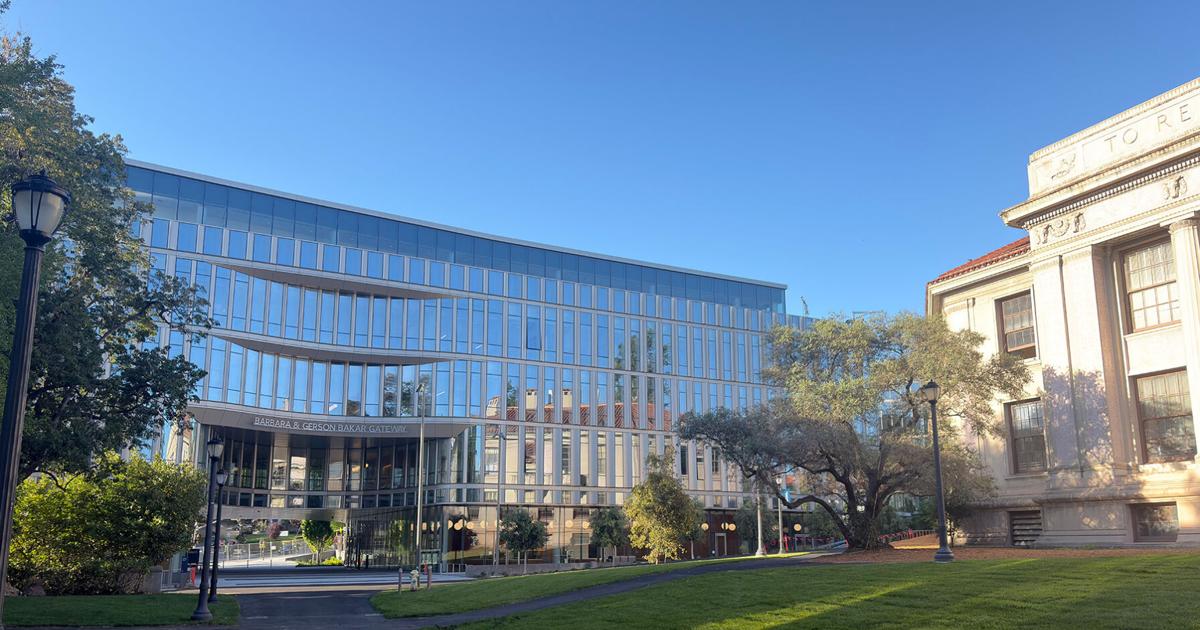
The grand crystalline structure peaking through the lush trees located behind the Rausser College of Natural Resources is the nearly completed construction project, the Barbara and Gerson Bakar Gateway building.
The Gateway cost $557 million to build and is the new physical home of the College of Computing, Data Science, and Society. The ribbon-cutting ceremony was held May 13 with faculty and key benefactors.
The building is set to become a new space for CDSS faculty, students and researchers to connect, collaborate and learn.
“CDSS has supported a diverse array of researchers and scholars who are not only developing cutting-edge new computing and AI technologies, but also harnessing the power of these technologies to provide ethical solutions to the world’s most pressing challenges,” said CDSS assistant dean of communications Tiffany Lohwater in an email. “The Gateway will bring these efforts together in a beautiful and functional new space, creating a dedicated campus hub for AI-driven discovery and interdisciplinary collaboration.”
The Gateway will house 11 spaces for undergraduate instruction on the first and lower floors, with two lecture halls and nine classrooms. There will also be dedicated spaces for student tutoring, office hours, study spaces and major advising.
The building will support the data science department by hosting more than 150 sections of required courses, such as statistics and computer science, in the fall.
According to Lohwater, the building’s certification as LEED Gold, the most widely used green building certification, will be finalized once it’s fully completed. Research labs and meeting spaces have been specifically designed for collaboration across configurations, in person and remote.
“In creating CDSS, we recognized how much computing and generative AI was going to permeate all these other fields … and conceived of the college as the place where we could seize opportunities and mitigate potential harms,” said CDSS Dean Jennifer Chayes. “We have created the intellectual infrastructure to support this work, and now we have a stunning new physical space to support it as well.”