
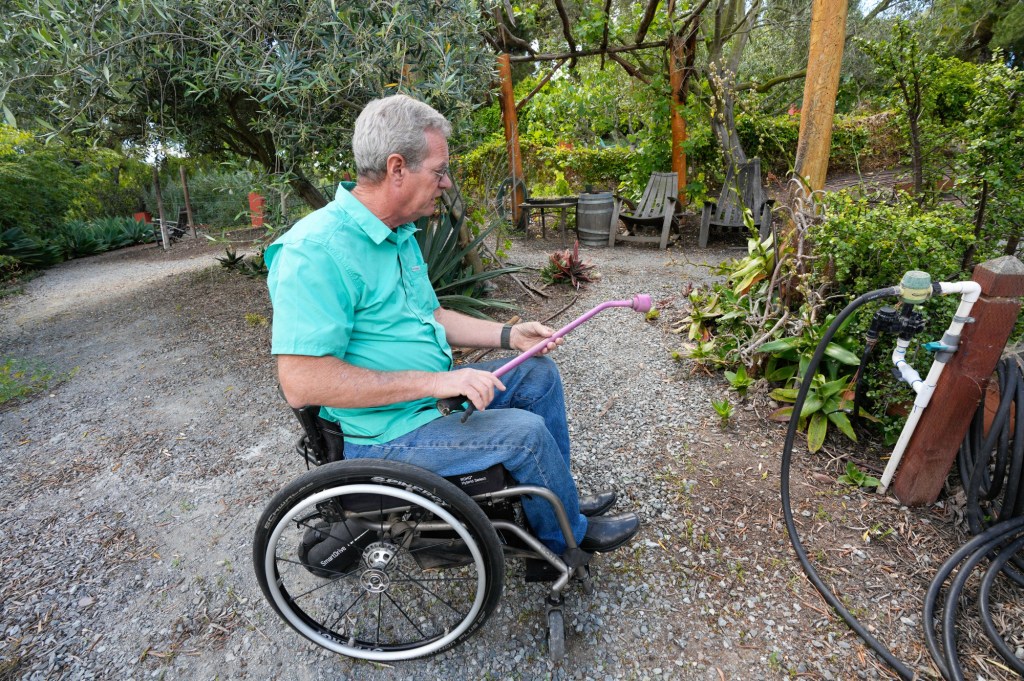
For The Union-Tribune
If you’re a gardener, chances are you’re not just into it for the food you grow or the beauty you’re creating. The benefits, both emotional and physical, are many: gardening reduces stress, it gets you outdoors (exposing you to vitamin D) and away from your screens, it gives you a pleasurable workout — strengthening muscles, improving balance and even providing some aerobic activity. You can enjoy the satisfaction of accomplishing tasks and seeing the results of your efforts. That boosts self-esteem.
I could go on, but you get it.
So what happens when time and/or disease or an accident messes with your body? Maybe you’ve developed arthritis or are having problems with your knees or other joints. Maybe your vision isn’t that great anymore. Or you’ve had a stroke or been diagnosed with a disease that is diminishing your strength or mobility — or memory. Or you’ve been in an accident that’s immobilized you. Maybe it’s just the effects of getting older.
As devastating as this can be, it doesn’t mean you have to give up gardening. Even if you haven’t been a gardener, it may be the perfect opportunity to improve your mental and physical health by taking it up.
Over the years, avid gardeners as well as people who are engaged in design and community work have been identifying practical ways to rethink garden design — and tools — that enable people to enjoy time outside in a garden.
There are many names for this: universal design, accessible gardening, adaptive gardening. Whatever the name, the bottom line is that even tinkering around the edges of traditional gardening is yielding adaptations that can make all the difference between feeling stuck indoors, sitting in a chair watching TV, and getting outside in fresh air to make your part of the world more beautiful.
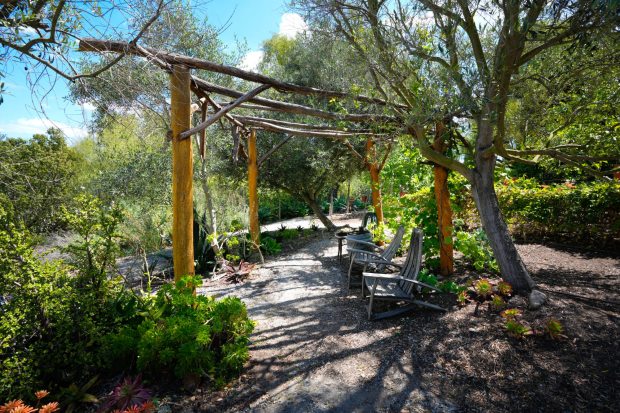 Generously sized sitting areas and wide trails make it manageable for Cantu to navigate throughout his garden. Cantu made a number of changes to give himself control and help prevent injury, including adding switchbacks on hilly portions. (Nelvin C. Cepeda / The San Diego Union-Tribune)
Making garden design inclusive
In San Diego, master gardener Stephen Cantu has been dedicated to developing a program called Friendly Inclusive Gardening, or FIG, for people with mobility issues or other physical disabilities. Now in his 70s, Cantu was injured working construction.
“When I was in the trades, I was in high and heavy construction,” he recalled. “I fell a few stories off a bridge project in San Jose and broke a bunch of bones. I was 26, married and I had a young daughter. She was a year old.”
The accident resulted in his living life in a wheelchair, getting involved in wheelchair sports and becoming a Paralympian in pistol and rifle. Cantu bought a 2-acre property in Bonita and has been gardening ever since. He also has been advocating for universal garden design after discovering just how oblivious many able-bodied people were to even the most obvious challenges to navigating a public space or garden — from narrow walkways or tripping hazards to portable toilets placed on the far end of parking lots.
Cantu started studying the Americans with Disabilities Act to create accessible gardens but found that while some ideas were smart, he needed more practical approaches. More efficient ways to work in a garden. And FIG was born.
“I like to focus on the idea of inclusiveness,” said Cantu, who often goes to community or school gardens in his FIG role and advises them on setting up for people who need some sort of help. “It particularly bugged me when I would see that raised garden bed set up for a guy in a wheelchair or a woman or girl or whatever, off to the side. Everything was done right, but it wasn’t inclusive with the rest of the group.
“I think that’s the root of gardening: people working together for an end product.”
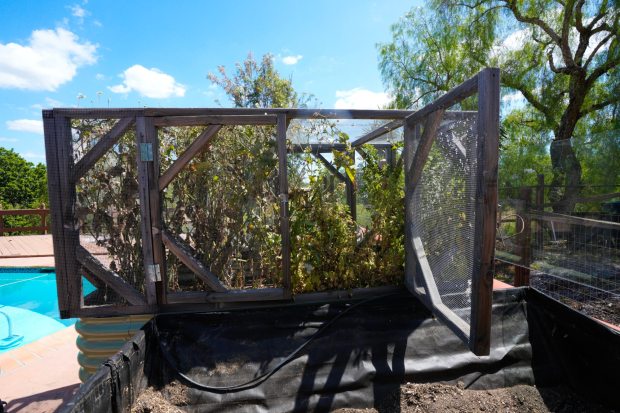 Cantu built frames for covered raised beds with chicken wire and hinged double doors that open outwards on both sides of the beds. The beds are spaced to provide access all the way around. (Nelvin C. Cepeda / The San Diego Union-Tribune)
When it came to his own garden, Cantu made a number of changes to give himself control and help prevent injury. He began with wide paths packed hard with decomposed granite. The property is hilly, so he created switchbacks down to the bottom of the property to help him control traveling in the wheelchair.
His garden is filled with citrus trees pruned low, with some espaliered horizontally to give him access to fruit. Cantu can pick the fruit with a very cool cut-and-hold pruner that allows him to cut the stem of, say, a plum; the tool also grabs by the stem so the fruit won’t drop to the ground.
Reaching one of the many watering faucets on the property to hook up a hose was made easier by elevating the hose bib.
Up by the house, Cantu has raised beds, and he gave these a lot of thought. The beds, of course, allow him to grow vegetables and flowers, but he elevated them a bit so his wife wouldn’t strain her back bending down. Because critters can ruin a beautiful crop of tomatoes or other food, Cantu, a talented carpenter, built a frame with chicken wire set on the beds. He and his wife can access the plants by opening horizontally hung hinged double doors on both sides of the beds that open outwards. In addition, the beds are spaced so Cantu and his wife have access all around.
Rethinking garden-to-table after a stroke
Patty Ericson-Taylor is a former restaurant chef who had a hemorrhagic stroke in September 2021. She and her wife live on Cape Cod in Massachusetts with a garden she took very little interest in until after her stroke, which left her left side weakened.
“I was always the chef, you know,” she explained. “And I always was the weeder on the ground. And loved what my spouse was growing. And I like how it looked, but I never was a gardener myself, period.”
As Ericson-Taylor recovered, she did miss working as a chef but decided to grow vegetables that she could cook with at home. She received a raised bed as an Easter gift and the first thing she did was to figure out where to place it in the yard so she could easily work in it — giving it the same criteria as she had when she set up her kitchens.
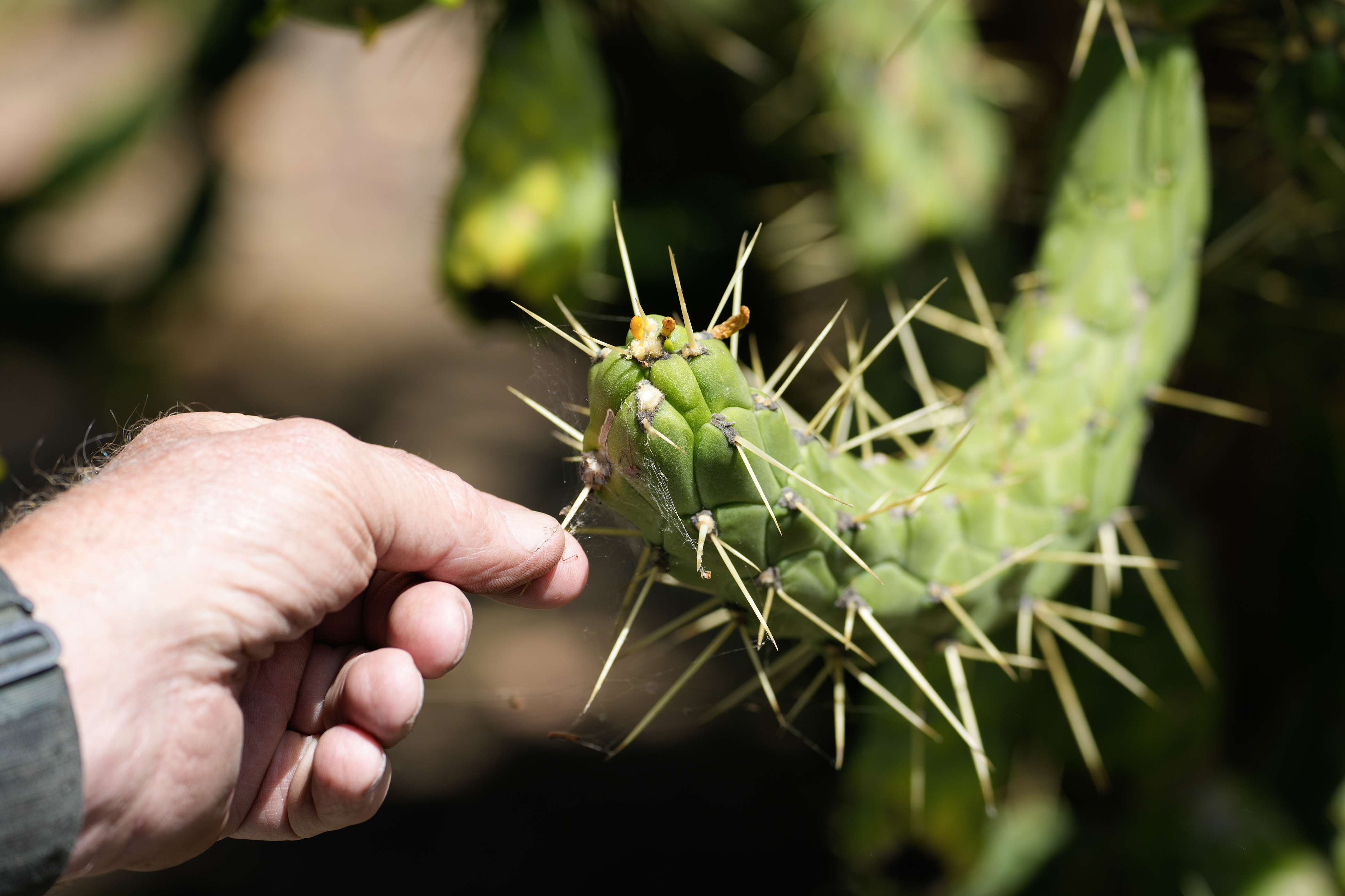
Cantu points out barbed spines in a stand of cholla cacti on his propery. The plants’ spines will easily stick to clothing and fur. (Nelvin C. Cepeda / The San Diego Union-Tribune)

A bloom from a jumping cholla cactus in Cantu’s garden catches the sunlight. (Nelvin C. Cepeda / The San Diego Union-Tribune)
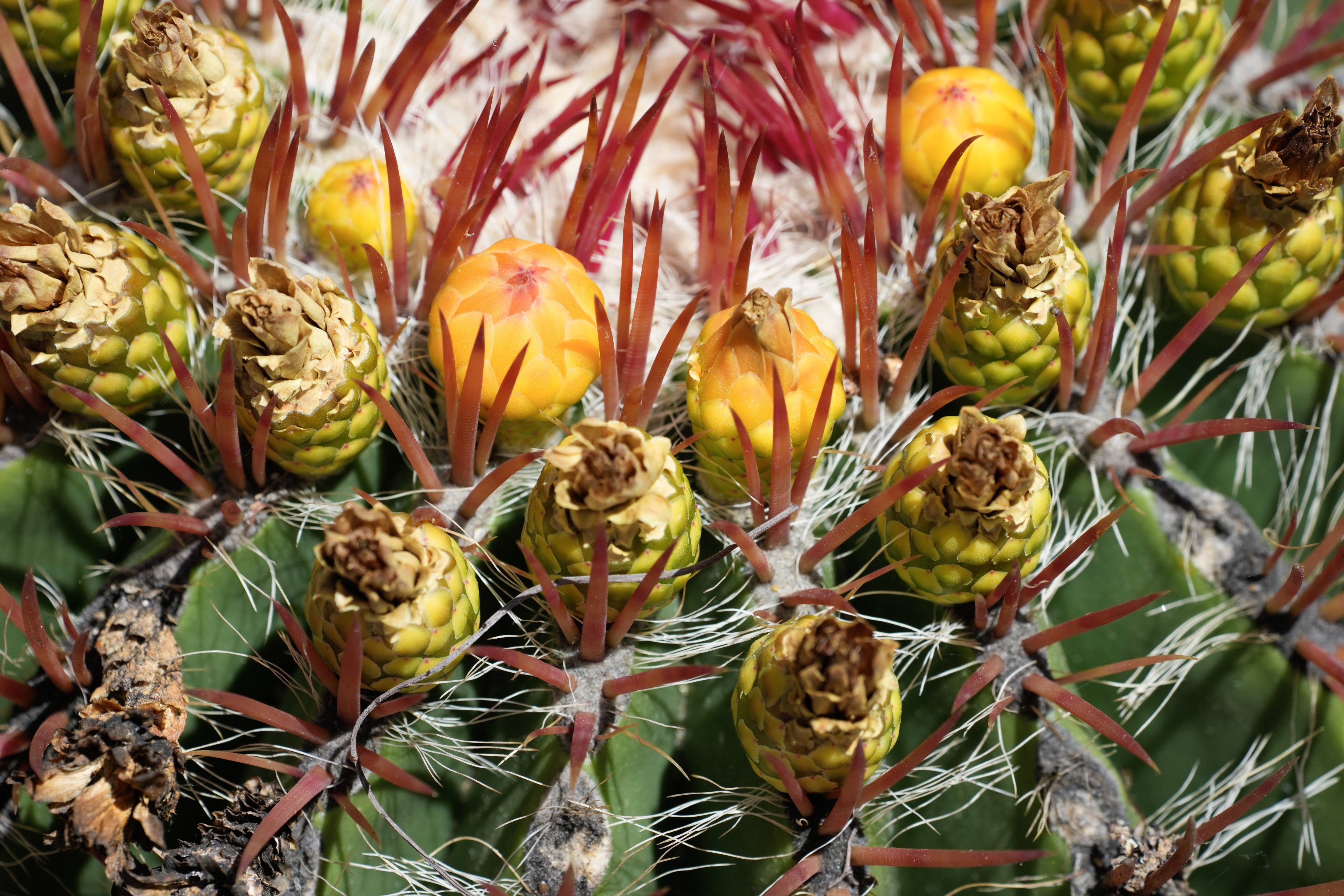
Cantu’s large home garden includes an array of mature cacti, including this red barrel cactus. (Nelvin C. Cepeda / The San Diego Union-Tribune)
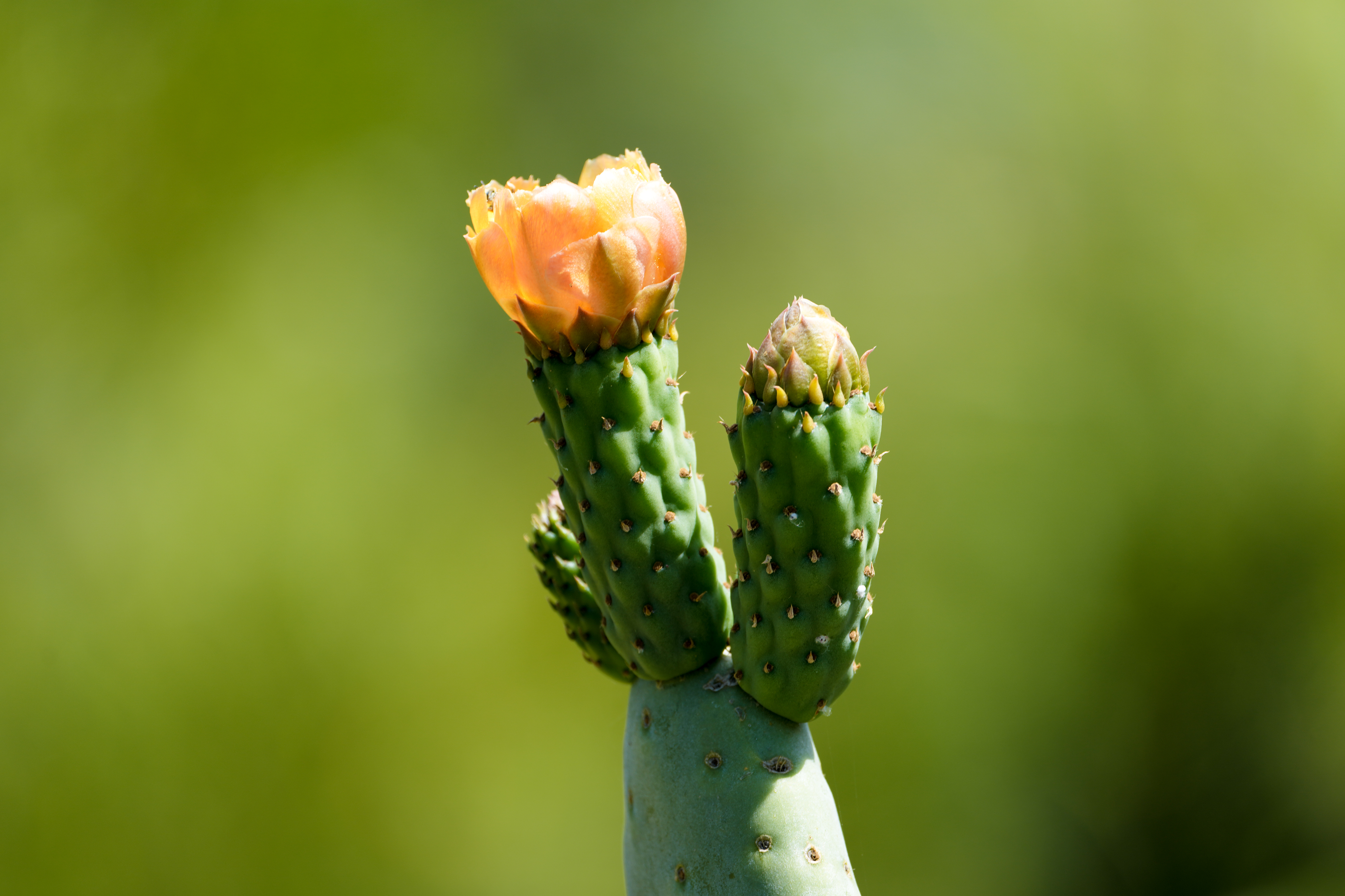
A flower emerges from the tip of a prickly pear cactus on the north side of the garden. (Nelvin C. Cepeda / The San Diego Union-Tribune)
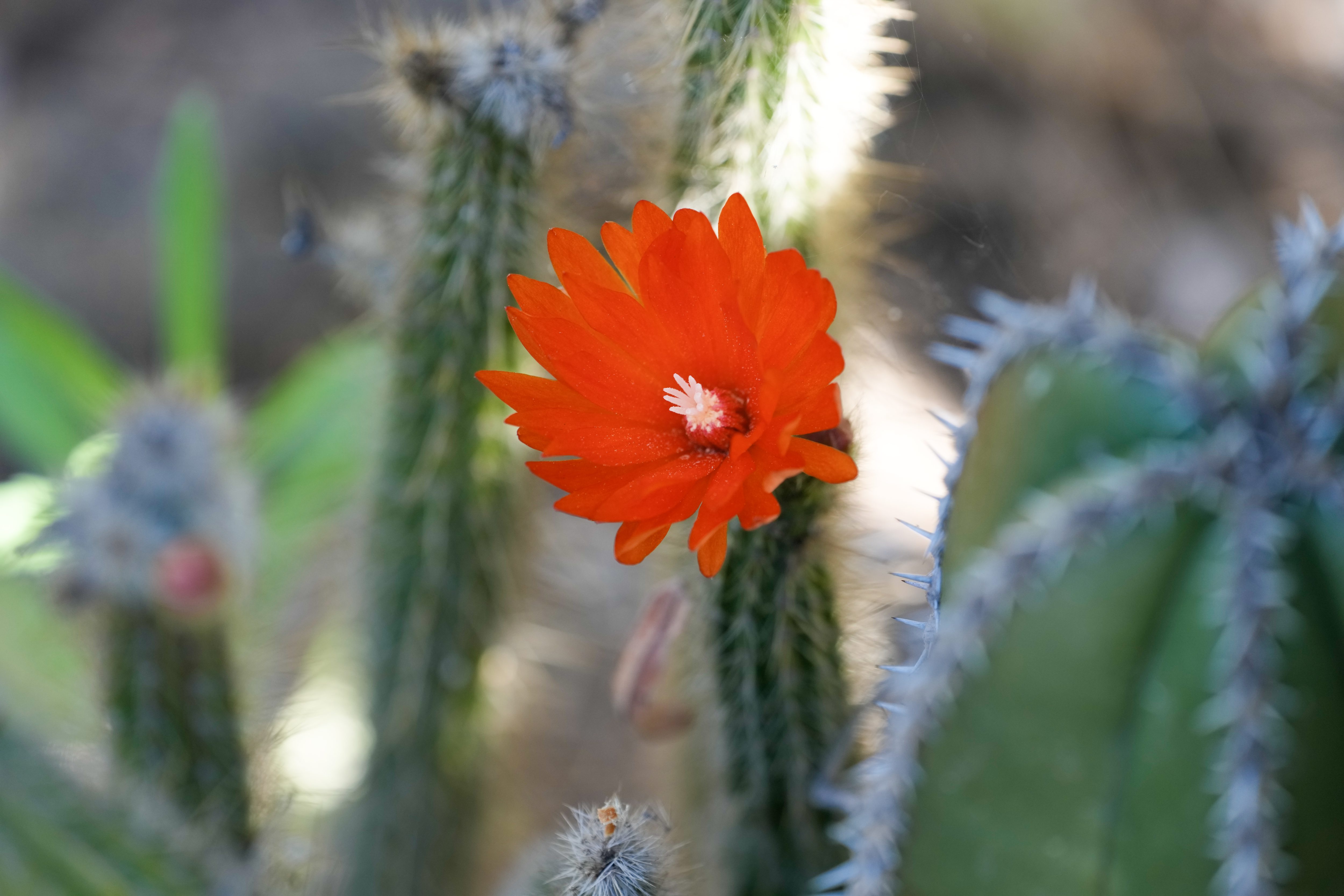
A vivid bloom from a jumping cholla in Cantu’s garden. (Nelvin C. Cepeda / The San Diego Union-Tribune)
Show Caption
1 of 5
Cantu points out barbed spines in a stand of cholla cacti on his propery. The plants’ spines will easily stick to clothing and fur. (Nelvin C. Cepeda / The San Diego Union-Tribune)
“Learning that as a chef is the same thing with gardening,” she said. “You’ve got to make it easy access.”
Ericson-Taylor uses a long watering wand to better direct water flow. Farmers gloves with protective sleeves and a good grip have helped her. And seed tape is a boon for her and, she said, for those who want to plant seeds but have limited dexterity.
“Seeds are separated in the tape, you dig a little trench with your finger and put the tape seed side down, then cover it up lightly,” she explained. “And a light mist with one of my wands. That’s been amazing. I got radishes!”
Seed tape, which is biodegradable, is available on Amazon, Burpee Gardening, Park Seed and other companies.
Ericson-Taylor is now developing a website with her wife that identifies products that can be ordered from different stores to help make gardening more feasible for people with disabilities.
In the meantime, the National Center on Health, Physical Activity and Disability (NCHPAD), which is headquartered at the University of Alabama at Birmingham, has adaptive gardening resources on its website: nchpad.org/news-updates/adaptive-gardening-series. The organization even has a video featuring Ericson-Taylor in her garden, along with resources, including a list of adaptive gardening tools.
Gardening’s therapeutic benefits
In Linda Vista, Amy Zink has been working on adaptive gardening as the director of the Bayside Environmental Learning Center, part of the Bayside Community Center. She’s an urban farmer and a horticultural therapist.
“I would say the main definition is it’s people that are using plants in therapeutic programming,” she explained. The benefits can be social, emotional, physical or cognitive.
The programs at Bayside, she explained, involve working with people of all ages, from young students to seniors. While she started out volunteering at her kids’ school developing school garden programs, she found herself at Bayside Community Center 12 years later, starting the environmental learning center programs, where she was exposed to seniors, some of whom had disabilities. What she was doing was therapeutic horticulture without realizing it — and she then found an education program that matched her needs.
When the center went through the process of establishing a community garden, Zink was 60.
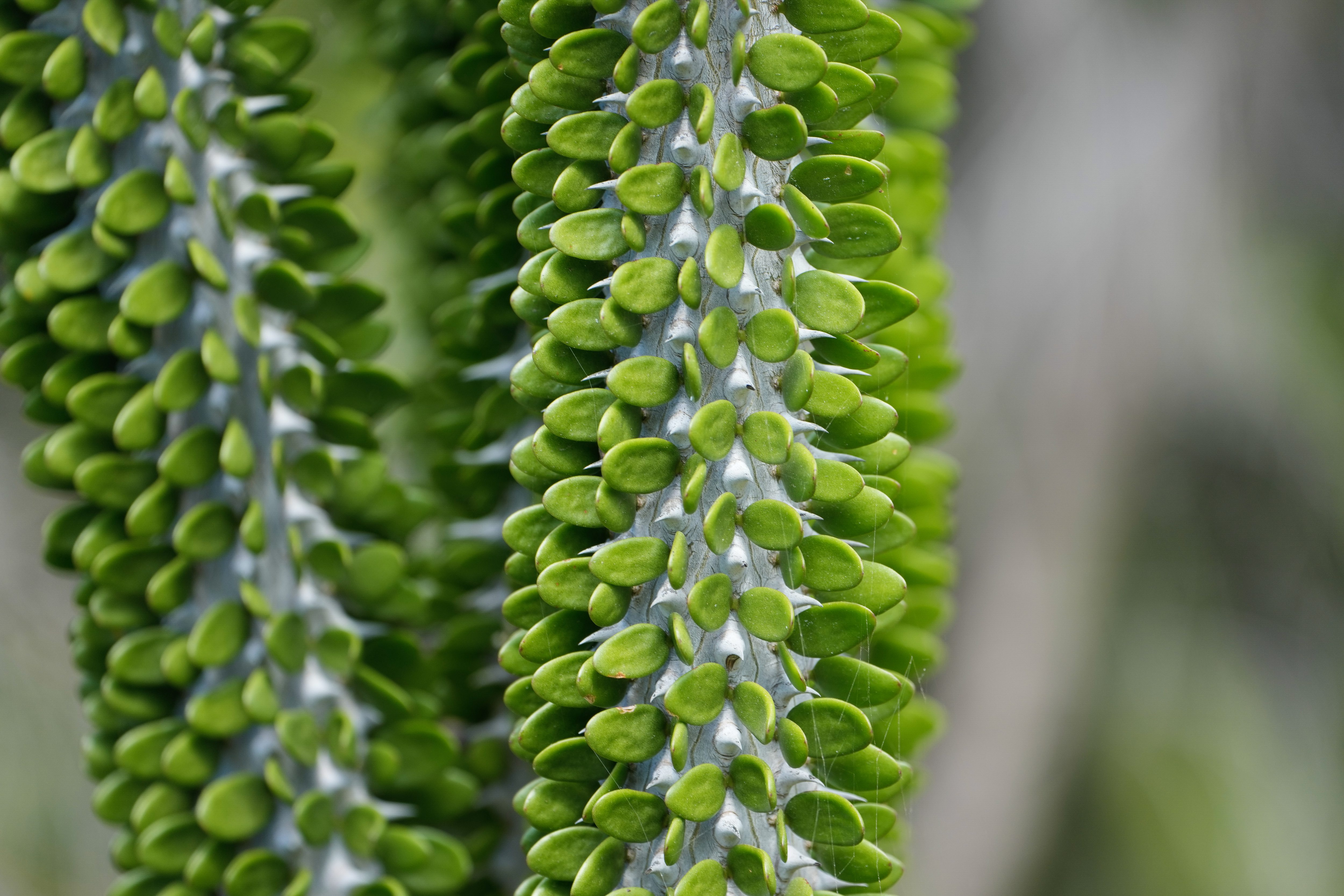
Small, thickly spaced leaves line the stalks of a large Madagascar ocotollo in the Bonita garden. (Nelvin C. Cepeda / The San Diego Union-Tribune)
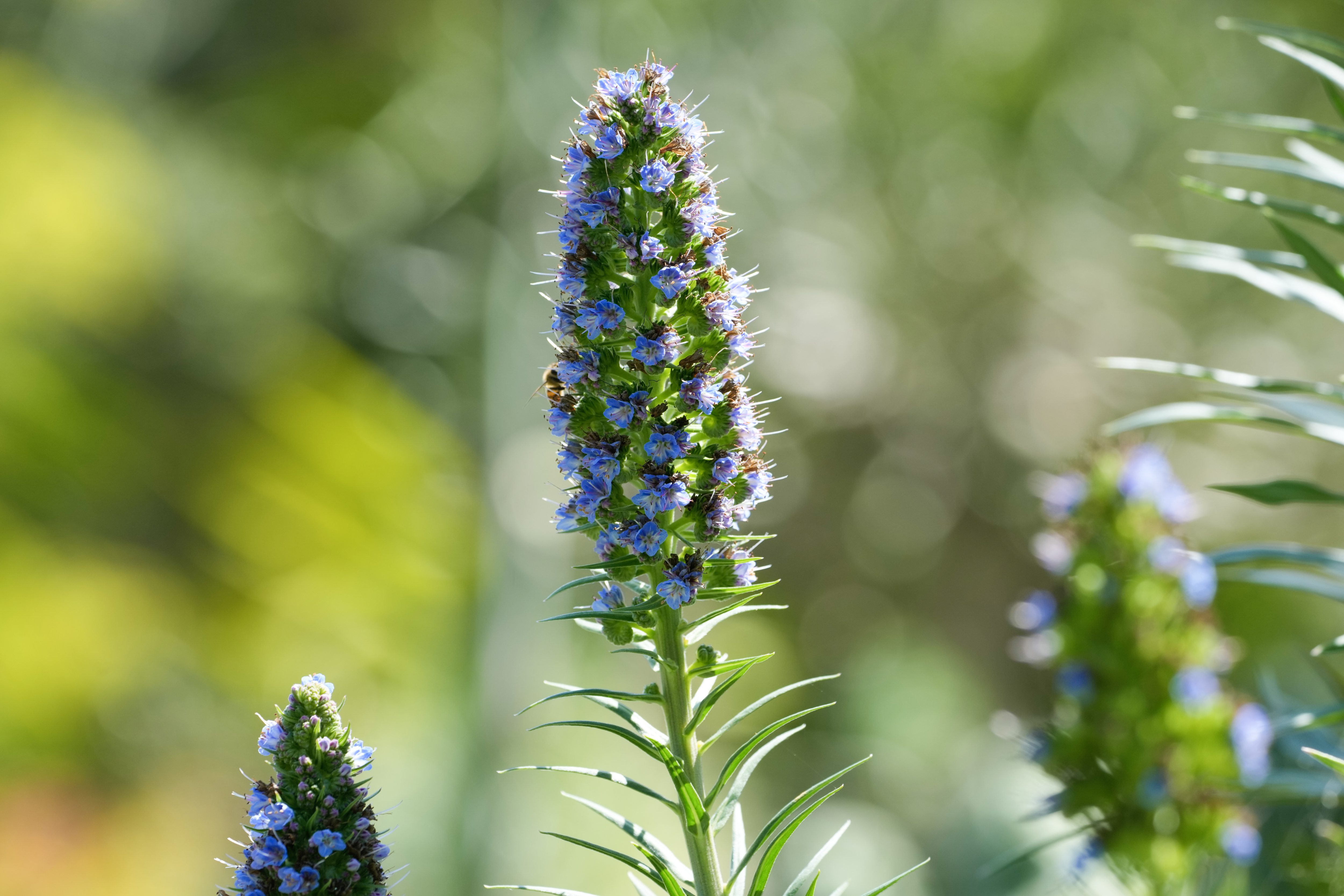
Purple blooming stalks rise from a Pride of Madeira plant in Cantu’s garden. (Nelvin C. Cepeda / The San Diego Union-Tribune)

Large Euphorbia tetragona, commonly known as the honey Euphorbia, are among the succulents in Cantu’s garden in Bonita. (Nelvin C. Cepeda / The San Diego Union-Tribune)
Show Caption
1 of 3
Small, thickly spaced leaves line the stalks of a large Madagascar ocotollo in the Bonita garden. (Nelvin C. Cepeda / The San Diego Union-Tribune)
“I can’t do what I could do 20 years ago, gardeningwise,” she acknowledged. “So that was the first framework that I had with designing and then deciding what kinds of tools, what kinds of picnic benches, what kinds of stuff we were going to outfit this garden with. And with the garden on city land you have to follow the guidelines for the Americans with Disability Act.”
Zink consulted with Cantu, learning about pathways, creating shading — especially for older people — and picnic tables with extensions to fit wheelchairs, raised hose bibs and creating 32-inch-high raised beds.
“We also have big trash cans we fill with water so somebody in a wheelchair could just dip a watering can in it and water with 1-gallon watering cans,” she said.
Zink added that there are tools with extensions that people who have had a stroke can strap on their wrists, like a small hoe. They can also be helpful to people with arthritis, so they don’t have to grip hard to control the tool.
One suggestion Zink has for gardeners: Get some smaller beach umbrellas when they’re on sale.
“You need the sun to grow vegetables, but if it’s really hot, you need to work in shade. If you don’t have the physical capability to move around those big heavy umbrella bases, buy a beach umbrella and stick it in the garden bed for shade while you’re working, then pull it out when you’re done so the plants can get the sun they need.”
And while raised beds are a practical solution for accessibility, filling them with soil is a challenge. Zink’s solution? Finding people through companies like Task Rabbit — or get in touch with a Scout group for help.
And if you don’t have space for a raised bed, set up a container garden, find a community garden or, Zink suggested, go as simple as growing microgreens in the kitchen. They’re just seedlings and don’t require much space or light, she said.
There are a lot of great resources with specific details for how to create safe and accessible spaces for gardening, all of the experts said.
“Your priority should be first of all your health,” said Cantu. “The second thing you look at is, how do I go about that without injuring myself? Or what can I do to make this easier for me? Lot of people don’t even know how to ask those questions. The bottom line is, you break things down into steps.”
And start small, he said.
“I made the mistake as most people do, they’ll put in too big of a garden first or have it too far from their house. So start out something close to the house, something that’s easy, like an herb garden, or maybe a couple tomato plants. If you like doing it, if you’ve got the time to do it, expand.”
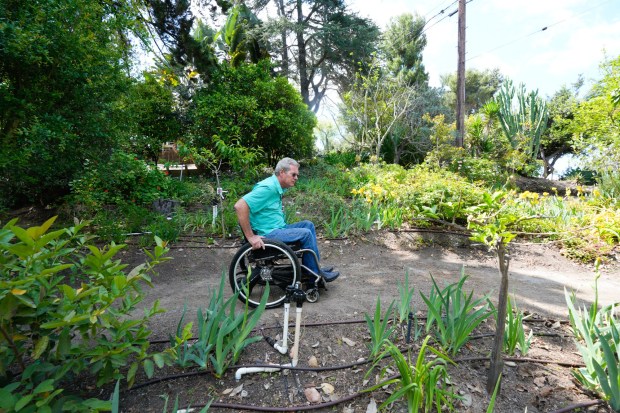 Cantu, who developed the Friendly Inclusive Gardening (FIG) program that’s offered through the Master Gardener Association of San Diego County, regularly advises groups on how to make it workable for people with mobility issues or physical disabilities. (Nelvin C. Cepeda / The San Diego Union-Tribune)
Resources
Find ideas and details on how to create safe and accessible spaces for gardening at the following sites:
• National Center on Health, Physical Activity and Disability (NCHPAD): nchpad.org/news-updates/adaptive-gardening-series
• Oregon State University’s Extension Service: extension.oregonstate.edu/catalog/em-9403-gardens-are-everyone
• Friendly Inclusive Gardening (FIG) program through the Master Gardener Association of San Diego County: mastergardenersd.org/friendly-inclusive-gardening
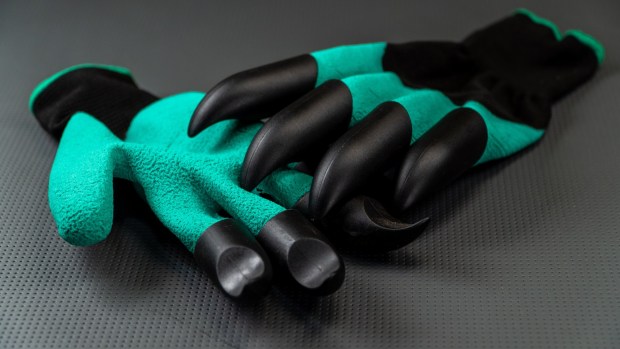 Claw gloves make digging in soil easier. (Adobe Stock)
Tool recommendations:
Patty Ericson-Taylor, a former chef, outfitted her gardening area after her stroke. She created a list of adaptive garden accessories to look into:
• Rachet pruner
• Long watering wands
• Quick-release hose connector
• Adjustable rake
• Satellite hose holder
• Drip hose
• Tractor seat with wheels
• Soft tip reachers
• Long-head watering cans
• Knee cushions
• Easy grip gloves
• Claw gloves
• Protective clothing
• Long reach hoe, rake