
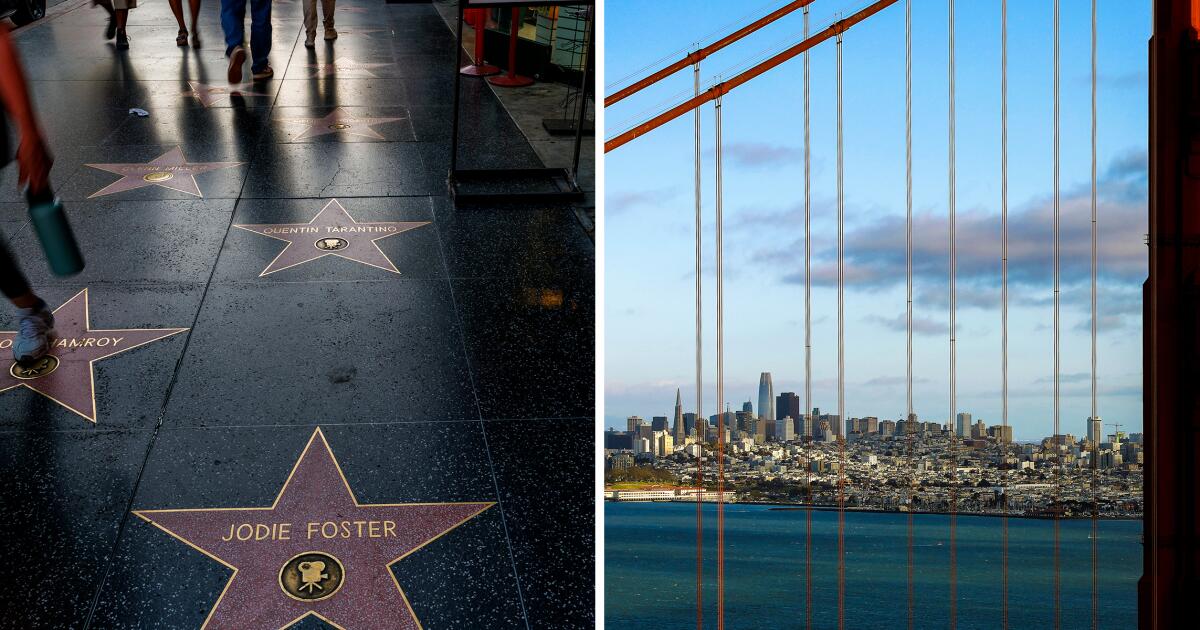
One of the byproducts from a year that included ICE raids and destructive fires throughout Los Angeles County, captured nightly on national news, was a tourism dip.
Nonprofit Visit California released its 2025 economic impact report, which showed direct travel spending in Los Angeles dropped .1% in 2025. My colleague Cerys Davies documented tourism struggles in September due, in part, to negative perceptions of the city.
My colleague Caroline Petrow-Cohen wrote an updated report on the drop in Los Angeles last month.
Conversely, nearly every other county in the state saw upswings as tourism continues its recovery from pandemic setbacks.
San Francisco enjoyed a 2.9% increase in direct travel spending from 2024 to 2025 as the city has battled its own negative perceptions.
Let’s dive into their reporting to get an idea of the struggle and look at how San Francisco is successfully fighting its image issues.
What ails Los Angeles County
Foot traffic took a hit last summer. Tour buses carried fewer people, and souvenir shops sold fewer goods.
International air arrivals to Los Angeles County fell more than 30% from August to November 2025. In Los Angeles, current international arrivals are fewer than in previous months, though the state saw an overall 3% increase last year.
Overall travel spending, which usually rises more than 2.5% a year, was down 0.1% in Los Angeles in 2025, according to the data. The decrease could have been sharper if not for inflation, which is bumping up the prices of lodging, food and goods.
An 8% decline in visitor air spending — around $188 million — contributed to the county’s overall slump. The number of tourism jobs also shrank by around 1,000 last year.
You’re reading the Essential California newsletter
Sign up to start every day with California’s most important stories.
By continuing, you agree to our Terms of Service, which include arbitration and a class action waiver. You agree that we and our third-party vendors may collect and use your information, including through cookies, pixels and similar technologies, for the purposes set forth in our Privacy Policy such as personalizing your experience and ads.
A Bay Area revival
Unlike L.A., San Francisco is enjoying a tourism renaissance.
San Francisco earned its second straight year of tourism gains, according to results released last week from the San Francisco Travel Assn.
Projections for 2026 have San Francisco expecting to welcome 24.2 million visitors this year, with spending reaching $9.9 billion. If met, that total will surpass the city’s 2019 record of $9.6 billion.
Those estimates were based on 2025 totals showing that 23.7 million visitors spent $9.4 billion, generating $655 million in tax revenue and supporting 63,900 jobs across hotels, restaurants, retail and cultural institutions, according to the travel association.
“Nationally, I think people are saying that San Francisco is on the rise,” San Francisco Mayor Daniel Lurie said in a phone conversation with The Times.
Tackling some of the biggest problems for locals, tourists
Frequent headlines, particularly for right-leaning sites, painted San Francisco as a “‘terrifying’ ‘nightmare,’” a city “mired in crime” or a place “rampant” with drugs and homelessness only a few years ago.
Lurie said the tourism revival centered around issues that mattered to locals and visitors: crime and homelessness.
San Francisco’s biannual homeless count showed the city’s total dropped 4% to 7,973 people from two years earlier. More impressive, however, was the reported 85% decrease in people living in tents.
Lurie also pointed to crime figures that showed improvements across the board, with decreases in robbery with a firearm (45%), motor vehicle thefts (44%), property crime (27%), homicides (20%) and shootings (16%).
San Francisco is also enjoying a 43% decrease in car break-ins, with the fewest incidents in 22 years, Lurie said.
“I ran for mayor because of car break-ins, because some of the [right-wing] hits on us were true,” Lurie said. “Now you drive down the streets and you don’t see the broken glass on the street like you used to.”
Changing the conversation
Difficult lessons and triumphs for San Francisco officials revolved around improving the city’s image with skeptics from around the country.
“It didn’t matter what was happening here, their perception was our reality,” said Anna Marie Presutti, president and chief executive of the travel association.
Presutti said the association flew out business, civic and community leaders from several cities, including Washington, D.C., and Chicago, to show them a revamped Bay Area.
Presutti also reveled in the media attention on how February’s Super Bowl changed perceptions about the Bay Area for many national visitors.
“Once people got to San Francisco, they realized it was nothing like what they thought or had seen,” she said. “They saw what made this place special.”
The week’s biggest stories  California’s proposed budgetTrump presidencyMedia and entertainment newsAnimals in actionCrime, courts and policingWhat else is going onMust readsOther meaty readsFor your downtime
(Illustrations by Lindsey Made This; photograph by Gabe Ginsberg / Getty Images)
Going outStaying inL.A. Affairs
Get wrapped up in tantalizing stories about dating, relationships and marriage.
Have a great day, from the Essential California team
Jim Rainey, staff reporter
Hugo Martín, assistant editor, fast break desk
Kevinisha Walker, multiplatform editor
Andrew J. Campa, weekend writer
Karim Doumar, head of newsletters
How can we make this newsletter more useful? Send comments to essentialcalifornia@latimes.com. Check our top stories, topics and the latest articles on latimes.com.