
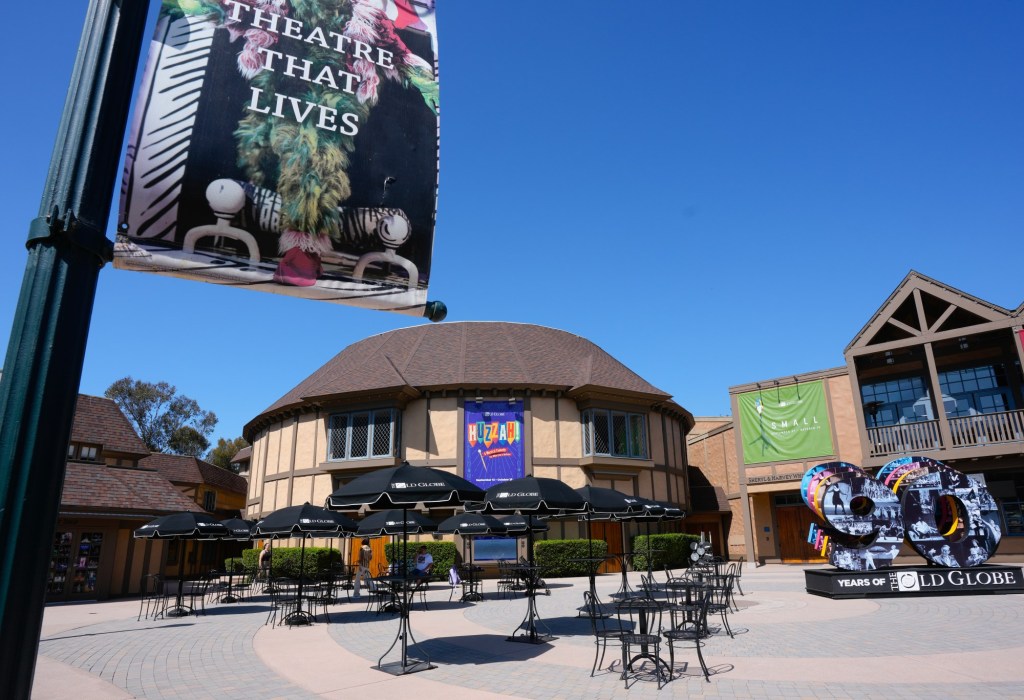
San Diego Mayor Todd Gloria has proposed eliminating all arts funding that go directly to local arts organizations. That would cut $11.8 million from the city budget for fiscal year 2027. Arts leaders and arts supporters have emailed dozens of letters to the Union-Tribune. We are publishing some of them today.
San Diego is a national leader. Why is it walking away from the arts?
We traveled to San Diego just weeks ago to launch California’s eighth annual Arts, Culture & Creativity Month for a very specific reason: this city is a national North Star for what it looks like to truly center artists within the community. From the Black Arts & Culture District to Barrio Logan, the border region and Liberty Station, San Diego has proven that arts and culture isn’t just about the architecture of a city — it’s about the people who animate them and the infrastructure that makes their work possible.
But right now, that infrastructure is under attack.
Mayor Gloria’s proposed budget virtually eliminates $11.8 million in essential annual funding for the arts. Specifically, it will completely eliminate two grant programs — the Organizational Support Program (OSP) and Creative Communities San Diego (CCSD) — that provide the general operating and program support necessary for the creative workforce to exist.
In a $6.4 billion total budget, this cut is a drop in the bucket. Yet it threatens the livelihoods of 170,000 creative workers who drive $11 billion in local economic activity every year. The Mayor must restore this funding or face admitting that the city is no longer interested in being a major artistic and cultural hub recognized worldwide.
For over 40 years, San Diego has never proposed eliminating these grants — not during the Great Recession and not during the height of COVID-19. To do so now is to retreat from the steady presence of the creative workforce and the dynamic programming that arts organizations provide in neighborhoods that need them most.
This is not an issue of means; it is an issue of priorities.
As leaders of national and statewide arts advocacy organizations — Americans for the Arts and California for the Arts — we are at the forefront of navigating today’s turbulent arts landscape. The work we do, grounded in creativity and community, is being questioned and politicized in new and rapidly evolving ways.
We see it at the federal level, where the administration has proposed dismantling our national cultural infrastructure by closing the agencies responsible for supporting artists nationwide, including the National Endowment for the Arts (NEA). These agencies are not mere line items. They are the connective tissue of our country, supporting a $1.2 trillion sector and 5.4 million jobs. Thankfully, bipartisan majorities in Congress reaffirmed the importance of these federal agencies by fully funding the NEA for fiscal year 2026.
A similar battle is happening at the state level. While the arts account for 7.5% of California’s economy — more than agriculture and transportation — state investment has historically remained low. However, a shift is occurring: bipartisan support has emerged to double the California Arts Council’s budget to $50 million in its 50th year.
The state and national partners have sent a clear message: arts funding is essential. Now, San Diego’s leaders face the same choice.
To protect the fabric of our neighborhoods and the multitudes who gather to benefit from these cultural offerings, we must continue to reinforce that San Diego’s arts are not optional. They are essential. They are jobs, mental health support and community infrastructure.
For too long, the creative field has operated in a state of scarcity, but that is not sustainable. We must not only maintain our support for the arts but increase our support for the entire cultural sector, the creative workers who call San Diego home and the millions of audiences they serve. If teaching artists, curators and creators can no longer afford to stay in San Diego — and organizations no longer have funding to deliver their programs — the work stops. The signal will be clear, and the workforce will move to cities that intentionally prioritize creativity, leaving San Diego behind.
San Diego has spent decades evolving into a national model for how culture improves quality of life and sustains a modern economy. If the city turns its back on its artists now, it will lose its competitive edge. It is time for our leaders to show up for artists and reaffirm support for the sector that both generates real economic impact and gives San Diego its soul.
Erin Harkey, CEO of Americans for the Arts
Julie Baker, CEO of California for the Arts
A former insider remains hopeful
I am no longer an insider, but I was working for the Commission for Arts and Culture in the late ’80s, the last time a zero-out of organizational support was on the budget agenda as it is now.
In those days, we worked together providing technical assistance and creating new opportunities to distribute money more equitably. My job was to help applicants understand their art as a form of service to the community and to spread our message that arts can make a difference in situations where other solutions have failed.
The arts leaders were in close communication with board and staff of the Commission for Arts and Culture, as they are now. It was also quite clear that the tourist tax funding the arts was dependent on the vibrancy and excitement that brings the tourists in the first place.
The city operated under the “strong City Manager” model, rather than the “strong Mayor” model used now. And most definitely, the political climate was different then, although the same old tired arguments about pitting the arts against every other human need were made. But back in the day, the arts won out and the funding was restored. Will that happen this time? I can’t say.
I am concerned yet hopeful.
Cindy Zimmerman
San Diego
Junior Theatre creates ‘a sense of belonging’
For generations, San Diego Junior Theatre has been part of the lives of thousands of families in San Diego and beyond. A longtime staple in Balboa Park, the organization is proudly gearing up to commemorate its 80th anniversary serving the community.
As a mom of three and a JT board member, I’ve watched it become a second home not only for my own kids, but for so many kids and teens across the county.
I’ve watched shy kids come out of their shell and teens grow into confident leaders who learn teamwork, resilience, empathy, accountability and how to collaborate and communicate. Many kids come to JT for theater but stay because they finally found a place where they belong. That sense of belonging is a direct reflection of the dedicated staff and compassionate teaching artists who support them every day.
JT works hard to make theatre arts accessible through tuition assistance and scholarships, offering opportunities both onstage and behind the scenes through classes, camps, productions and technical theater.
At a time when so many kids and teens are struggling with isolation and disconnection, spaces like JT can make a lifesaving difference. The arts are part of what makes San Diego vibrant, connected and worth visiting. I hope the Mayor and City Council understand that investing in arts programs is also an investment in young people, in belonging, in community, and in the heart of this city.
Allison Harris-Turk, Parent and board member
San Diego Junior Theatre
‘Arts are the heartbeat of the city’
San Diego is a city that is a cultural mosaic. I have lived downtown for two decades and have seen our arts and music scene grow from the Civic Center to other myriad venues — from the Rady Shell, the Jacobs Symphony Hall to the Digital Cinema at Park & Market. There is something for everyone.
The culture and art scene give exposure to people of all ages to understand each other — via cinema, silent movies, concerts, opera, Broadway shows. They represent our unique perspectives on this planet. As a leading city in the country, we also bring global entertainers — concert pianists, such as Lang Lang, singers like Angélique Kidjo or legendary entertainers like John Cleese.
The entertainment here has really grown to be something we, as citizens of America’s Finest City, should be proud of. Exposure to the arts, and especially music, shape the minds of youth. Maybe they will become musicians or artists — or maybe they will weave that into the fabric of their general life experience.
Music and the arts also attract tourists here. Our weather is enviable, but what brings people here is having something to do, something to see, something to make you wanting to come back again and again.
A budget must be met, but this is simply not the means to the end. The arts are the heartbeat of the city, the heartbeats of its citizens. Without the city’s funding of the arts, the city dies.
Kasey Moctezuma
Sherman Heights
Plan to ‘defund the arts should be rejected’
The La Jolla Symphony & Chorus is of inestimable value to San Diego. For 70 years, its talented amateur musicians have provided San Diego with professional quality concerts at affordable prices.
Through its affiliation with UCSD, it offers students the opportunity to play and sing with, and to learn from, more experienced musicians. It has served as a goodwill ambassador for San Diego. Its ensembles have performed in Carnegie Hall, throughout Europe and Mexico and even in Bhutan, where members of the chorus were invited to perform by the Bhutanese government.
It is committed to including within its concerts modern and contemporary works seldom performed by professional ensembles. I am not aware of any other organization in the country that combines all of these qualities.
I first performed with the LJSC in 1977 but am by no means its longest tenured musician. The commitment and loyalty it inspires have seen it through many travails. However, the city of San Diego currently provides the LJSC with approximately 8% of its annual revenues, and the termination of that support could very well have significant and adverse consequences for the organization and indirectly for the city.
The Mayor’s proposal to defund the arts should be rejected.
Otto Sorensen
La Jolla Symphony & Chorus
‘This is the wrong kind of austerity’
A city does not become fiscally responsible by making itself smaller, poorer and less interesting.
That is what San Diego risks doing with the proposed 85% cut to arts and culture funding. This is not ordinary belt-tightening. It is a panic cut, and a remarkably shortsighted one.
Arts and culture are often treated as if they sit at the decorative edge of civic life. They do not. They are part of what makes a city livable, memorable, economically active and worthy of civic pride. They bring students into theaters, families into museums, veterans into programs, visitors into hotels, diners into restaurants, and residents into shared public experiences that are increasingly rare.
San Diego has a real budget problem. No serious person can ignore that. But a serious budget process should distinguish between trimming excessive spending and damaging assets. Arts organizations are not merely asking to be spared pain. They are warning that this level of reduction will break programs, weaken smaller organizations, reduce access in neighborhoods, and diminish the city’s cultural identity.
This is the wrong kind of austerity. It saves money on paper while eroding value in the real world.
The mayor and City Council should restore arts and culture funding and find a more balanced solution.
Leland Phillips
San Diego
‘This would be a serious mistake’
It appears that the proposed city of San Diego FY27 budget includes an 85% reduction in arts and culture funding. If confirmed, this would be a serious mistake, given its predictable consequences, including fewer opportunities for arts learning and engagement for young people, reduced cultural tourism and visitor activity, strain on restaurants, hotels and small businesses that depend on a flourishing cultural sector, fewer jobs across both creative and supporting industries, and, over time, a weakening of the cultural infrastructure that helps define San Diego’s identity.
Roberto Gherzi
San Diego
‘Please … restore full funding for the arts’
I am a San Diego native who has enjoyed activities and plays at the Globe since 1972 when I volunteered there while in high school. Since then, I have gone to countless numbers of plays and have enjoyed the superior production that has been involved.
I truly love The Old Globe, and I believe that a prosperous San Diego includes investing in the arts. Please do everything possible to restore full funding for the arts in San Diego in the 2027 budget for the city of San Diego.
Gloria Green
El Cajon
‘Defunding the arts isn’t a savings’
For 40 years, Westwind Brass has shown up in school gymnasiums in San Ysidro, veterans’ wards at the VA, and senior centers where residents haven’t left the building in months. We bring live music. We never charge a dime.
The city of San Diego is now considering eliminating the arts and culture funding that makes this possible. Before that decision is made, consider what it actually costs.
It costs the children of San Ysidro — one of San Diego’s most underserved communities, where the majority of students qualify for free or reduced meals — the only professional music they will ever see. It costs veterans with PTSD a program designed specifically for them. It costs isolated seniors the musicians who sit with them and play the songs of their lives.
Westwind Brass runs on $57,426 a year — a spartan budget that sends 67 cents of every dollar directly to artists and community programming. Nothing to the administration. Nothing to overhead.
Defunding the arts isn’t a savings. It’s a cost paid by those least able to absorb it.
Barry Toombs, Executive Director
Westwind Brass
‘Arts and culture bind us together’
Mayor Gloria’s proposed budget fails to appreciate the multiplying benefits of city funding of arts and culture, and this proposed budget likewise fails to appreciate the multiplying costs of virtually eliminating city funding of arts and culture.
Arts and culture bind us together as one city, as a city where we are open to learning with and from each other, to growing together, and to caring for each other, for the common good.
Arts and culture funding helps insure public safety by decreasing alienation, isolation, loneliness, apathy, indifference, selfishness, marginalization and exclusion.
If we care about public safety, we need to engage proactively. Arts and culture are indispensable in enabling us to do exactly that.
When the city passes a budget, this is not simply the Mayor’s and the City Council’s budget, it is our budget, a budget representative of all the people of San Diego. It is a manifestation of what we collectively value and how much.
If the Mayor’s budget is passed, as proposed, cuts in arts and culture funding will hurt us all, but especially those already most marginalized and excluded. Low-cost and no-cost offerings will be the first to go.
I chose to live here because of the diverse, vibrant array of arts and culture organizations, venues, programs and events this city offers. I recommend people visit our city, and I recommend people consider moving to and investing in our city because of arts and culture. Weather and climate is not enough.
Bob Nowlan
San Diego
The arts bring ‘magic and healing’
I’m San Diego born and raised, and had it not been for the San Diego theater community, I would not be who I am today.
I am a stage manager in New York City working at all levels of theater from small new works to Broadway shows. Had it not been for the exposure to theater I got in high school — from watching classic plays and new musicals at The Old Globe and La Jolla Playhouse — I would not have pursued this career that means so much to me. So much so that it led me back to those institutions to teach and stage manage and give back to the community that gave so much to me when I was younger.
I’ve seen the magic and healing that the arts bring to others. I’ve seen it in myself. This is why it is so crucial to invest in the arts to keep them alive.
Vanessa Rebeil
New York and San Diego
Cuts ‘seem disproportionately high’
As a recent arrival to the area, I have been surprised by the size of the ax being taken to the arts and cultural institutions in San Diego since I’ve moved here.
The museums in Balboa Park have been threatened by the new parking fees and now the proposed cuts to arts and culture funding in the Mayor’s proposed budget seem disproportionately high. These cuts are aimed at programs that make San Diego what it is but also at an economic engine that fuels many jobs and tourism.
I’m not a resident of the city but a user of these programs and willing to pay for them. I would certainly not want to see a significant part of what brought me here crippled by the city. City Council members, please think this through carefully.
Kenneth Schechet
Coronado
‘Disinvesting in the arts is a short-sighted economic mistake’
It is deeply disappointing to see Mayor Todd Gloria propose cutting arts and culture funding by over 85%. While the city faces a significant deficit, disinvesting in the arts is a short-sighted economic mistake.
Arts and culture organizations are a proven economic driver, generating over $1.2 billion in annual activity and supporting thousands of local jobs. These venues bring foot traffic, tourism and tax revenue.
Arts organizations are what make our community an interesting and desirable place to live. Without them, we lose the competitive edge that brings investment and talent to our county. The City Council must find a more balanced approach that doesn’t sacrifice our cultural infrastructure for a temporary fix.
Justine Hamlin
Escondido
In the arts, ‘communities make meaning together’
Mayor Gloria’s proposed budget names what this city considers expendable when money is tight: imagination, expression and the cultural infrastructure through which communities make meaning together.
I have spent my career in creative youth development and arts education in this region. I have watched what happens when young people are told, through institutional abandonment, that their creativity was never legitimate. The wound accumulates across generations, in the children who never get access, in the adults who stopped believing they had anything worth making.
Arts and culture are the conditions under which democratic life becomes possible. They are how communities process grief, name injustice and sustain the capacity to imagine futures different from the present.
A city expanding surveillance while eliminating funding for arts and youth is making a statement about whose voices it intends to amplify and whose it is willing to let go quiet.
Kaitlyn Korogy
San Diego
City ‘should focus on prevention instead of reaction’
The proposed budget focuses on things going wrong when in fact, we should focus on prevention instead of reaction.
Public safety: The arts and libraries maintain public safety just as essentially as law enforcement. The arts and libraries bring order and equality; youth delinquency and social neglect are reduced. People are healthier because the arts reduce stress and associative diseases.
Homelessness services: Libraries and arts programs enhance job training, skill-building, education, housing. These programs reduce trauma, build community and help individuals transition out of homelessness.
Infrastructure repairs: Arts activities increase residents’ interest in getting involved in local issues and projects; people are willing and able to volunteer to build and repair.
Elected officials must understand the absolute necessity for strong arts programs and robust library services. Supporting all the arts and libraries will absolutely reduce crime and homelessness, reducing needs for infrastructure repair.
Officials are as wrong as they can be if they approve this destructive budget. It’s vital to prioritize the proactive part of how we can live peacefully together.
Stephanie Mood
San Diego
‘Junior theater has changed their lives’
My twin daughters have been taking San Diego Junior Theatre classes and participated in seven productions in the past two years. Junior theater has changed their lives! They went from being insecure middle-schoolers to confident teenagers with a huge group of theater friends that they see often.
We have gotten the scholarship for my one daughter and financial aid for the other for the past two years. This has helped us finance their classes and productions greatly.
Cutting funding for San Diego Junior Theatre would make classes and productions more difficult financially for us and a lot of others that receive financial aid. The community is amazing at JT and the productions are such a great experience for so many kids, including my own.
Mari Susami
Chula Vista
‘Think of San Diego as an innovation farm’
At the Timken Museum in Balboa Park, a 10-year-old plays piano with the gift of a prodigy. He is also a star on his robotics team. He embodies San Diego’s future: STEM and arts, creativity and innovation, fused. Einstein played the violin to think. Degas studied Isaac Newton. Da Vinci studied anatomy. Art and STEM are one.
San Diego is ranked the 14th most innovative cluster in the world. Our future is innovation. Nvidia’s Jensen Huang says the future belongs to the creative and curious — those with imagination and vision “who see around corners.”
Steve Jobs called Apple a tech and liberal arts company and hired technologists who were also musicians, poets and artists.
Think of San Diego as an innovation farm. The crops are our innovators. The soil is our arts organizations. The seeds are our youth. Everyone knows what happens when you stop watering the seeds.
To attract, retain and grow the talent that will feed San Diego’s economy for decades, the arts must be supported.
Michael Hayes
Golden Hill
Cuts a ‘dangerous long-term tradeoff’
Mayor Gloria’s proposed arts and culture cuts are not simply reductions to programming. They are reductions to the city’s social infrastructure.
As the Arts and Culture Commissioner representing District 6, I have seen firsthand how arts, libraries, recreation and community-based cultural organizations keep neighborhoods connected across Convoy, Mira Mesa, Clairemont and Kearny Mesa. These spaces create belonging, mentorship, opportunity and stability long before intervention becomes necessary. They are also essential to the sharing and preservation of culture in some of San Diego’s most diverse communities.
The city’s draft budget preserves enforcement systems while reducing investment in the very systems that prevent harm in the first place. That is not balance. It is a dangerous long-term tradeoff.
We would never defer maintenance on roads, bridges or utilities and expect the city to function properly. Our social infrastructure deserves the same level of urgency and protection.
These cuts will disproportionately impact smaller, community-rooted organizations serving underserved neighborhoods throughout District 6, creating further barriers to cultural preservation, access and community engagement. Once those programs disappear, that trust and connection are not easily rebuilt.
If public safety is truly the priority, then prevention cannot be treated as expendable.
Dennis Doan, Arts Commissioner
District 6
‘Impact extends far beyond the arts’
This issue is deeply personal to our family. Our daughter has been profoundly shaped by her experience with the San Diego Children’s Choir.
Through the choir, she has not only developed musically, but has also gained confidence, discipline, empathy, leadership skills and a strong sense of belonging within the community. (We moved here just as she was starting high school from the UK).
Programs like this give young people meaningful opportunities to connect across backgrounds, contribute to their communities, and grow into engaged, compassionate adults.
The impact extends far beyond the arts themselves, and it is imperative that these programs continue to be protected.
Daniela Matson
Del Mar Heights