
Are lawmakers or unelected staff making decisions on the Capitol Annex Project? | California Politics 360
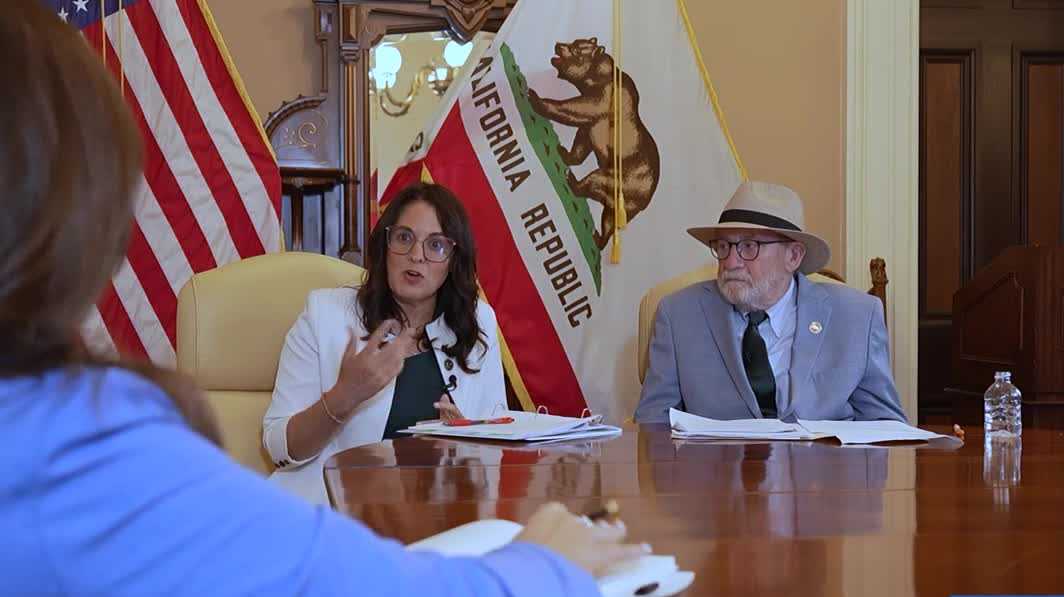
All right, thank you both so much for making time for us. Uh, thank you. Uh, would you like for me to start with the opening statement? Yeah, OK. Uh, so thank you, thank you for being here. Thank you for this opportunity. Uh, I’m sure we don’t, I don’t need to introduce myself, but I am Assembly Member Blanca Pacheco, and I am the chair of the Joint Rules Committee. Uh, and we’re here because I, we wanted to provide an update on the Capital annex project now that Gil Bain. Our owner’s representative has completed *** fiscal review of the project. As *** reminder, this is *** large, complex public project that has been underway for more than *** decade. The project has faced significant challenges, including pandemic era inflation, supply chain disruptions, and litigation delays. Those challenges created significant cost pressures, with construction costs up about 27% after the pandemic. Gilbanin estimates *** project of this size could have seen roughly $300 million in additional costs. However, the project team reduced that forecasted impact to 98 million. We do not intend to request additional funding from the legislature. The plan is to cover the forecasted impact through existing resources, including funds previously allocated for the visitor center, reducing landscape scope, and additional project efficiencies. The project remains targeted for completion in October 2027 and will continue to provide updates as additional information becomes available, and I’ll hand it over to Senator Laird. Yeah, I’m Senator John Laird. I’m the vice chair of the Rules Committee. I agree with what the chair just said, and let me add *** couple of points and, and agree with what the chair said that we will bring this in, uh, without asking additional dollars from the $1.1 billion appropriation and that we hope to, uh, have it delivered in October of 2027. The two things I wanted to add is one is that the chair listed. Uh, some of the ways that we can achieve efficiencies going forward, an additional one is design sequencing because if we went in the normal order of things, you would construct each floor one by one at *** time. We’ll try to work on. Uh, uh, all the floors together and, uh, *** similar situation usually exists in transportation projects and the perfect example was in my district in 2017 when the highway was out in Big Sur for 41 miles and *** bridge went down. Normally it would take 5 years from the planning to the construction to replace that bridge. The Caltrans took 5 months and they ordered the steel before, uh, the plans were finally done. And we want to have the same design sequencing uh applied to this project as *** way to make up costs because if you move up the date that’s additional fixed costs that won’t be there and will contribute to the uh making the budget. The second thing I wanted to mention is just that it gets lost in this that this is *** major construction project in downtown Sacramento. Uh, this week we will celebrate the millionth hour. Of union labor on this project in construction and it’s estimated that there’s $2 of economic benefit for every $1 expended and so this is *** big boom to the downtown Sacramento economy and we just want to make sure everybody knows that knows that but with that we look forward to your questions. Thank you. So just to confirm, so the price tag is now about $1.2 billion for the project. The allocated amount that the amount that was allocated for this project is $1.1 billion but another $9800 billion equals $1.2 billion. Yes, but that’s *** projection if we don’t work to reduce costs and even the additional $98 million includes *** $30 million contingency that we don’t know that will actually be used. So with the 27% increase then from pandemic supply chain construction labor, that would have been *** 27% increase and you’re saying that the way you got down to basically *** 10% increase was through design sequence. Are there any other cuts or any other augmentations that you’ve made? Well, first, in your question. 300 million to 98 million is actually *** different percentage, but that’s what we’re trying to down, and I mentioned design sequencing, but there’s also, uh, uh, economies that can be made in the finishing, the landscaping, in aligning the contracts, and by making sure that. When we deliver this on the original schedule, we’re not paying the additional costs for the extra months in fixed costs and overhead. Those will be ways that we believe we can save on the project. Do you have documentation to prove all of this, because as you know, I’ve been asking for monthly forecasts, the reports that I know that all of you are receiving. And obviously neither one of you are willing to give them to me until the project is over. So what proof do you have to really lay all of this out year to year and then what you’re saying now? We’ve actually provided an update that was prepared by Gil Bain. OK, um, that, but that’s it. That’s the only record you’re going to provide to, to prove all of this. We’re gonna be providing quarterly updates to provide information. These will be updates, uh, that we will be prepared, I’m sorry, preparing for, uh, the public so that way they’re aware as to this. Status of the project and the update of the budget, but the, the monthly reports that you were getting before Gil Bain completed this financial analysis, you’re still not going to give up until the project is over be clear this is an ask and answer because we’ve talked about it, but let me do it again because we’re in this interview. And that is, it is the standard practice of the Department of General Services not to release those reports until the project is over, and the reasons are clear. It is that there is *** high potential for lawsuits among Governor Gavin Newsom, who oversees the Department of General Services, has said he does not agree there. I asked him if we should have to wait until the end of the year to get basic records on this project, and he said no. You’re interviewing us now. And what we’re saying is it is that standard practice and if in fact we release them, if in fact there were lawsuits, if in fact there were major claims against the project, then people would say why didn’t you protect the taxpayers in that we are doing that. It is standard practice for that to release it so there aren’t the lawsuits and we are here today with Gil Bain having reviewed all the documents that were in hand since they took over. And making this assessment based on all those documents and as part of their making assessments they made sure that certain change orders were resolved, certain outstanding issues were resolved, and they were the trusted partner on both the swing space and the resources rebuild, and we trust them in this as we’ve established and I do want to point out that I know you’re fixated on these reports, but we are providing updates. We provided, but you haven’t been providing updates for the last few years. Sorry, we have provided an update prepared by Gilbanin. It was gonna be provided on *** quarterly basis. We’ve provided you with an interview in December. We provided an additional update in February, and this would be our 3rd update. So we’re about transparency. We’re about providing the information that is needed, and that is why we are here. But as we’ve established, there are nondisclosure agreements that are, I mean, forcing thousands of people to keep quiet about this project, and you all did not provide an update. Update for the last few years, almost 4 years on this project. I mean, can you understand at least why I’m asking you for proof that you are actually saving money and that the costs are and the numbers are adding up because you haven’t been transparent for years. Why should people trust you now? Neither one of us was here 4 years ago and we both moved into this. We have gotten on top of it and we are releasing the fiscal information and we have done it. For 3 different times, the nondisclosure issues in my view is not what it’s being represented. We have both signed nondisclosure agreements and we are here revealing exactly how much has been spent, exactly what the projection is, exactly what we think the date will land this, and exactly the steps we will take to get there. And nondisclosure agreements are traditional in these projects and have been all the way along for both security reasons. But also for business proprietary reasons because when contractors make bids if you start disclosing exactly what into those bids it’s *** competitive disadvantage to other people in the same industry that is why it’s *** standard practice. But now I mean you’ve created an environment where people who are afraid to speak out publicly are giving us information about this project in an unauthorized way in *** way that could legally jeopardize them. And those sources who are very close to this project are telling me that the figure you’re providing today is impossible, that there is no way that you could be saving this amount of money only expecting to spend about $98 billion and finding it from somewhere that’s not asking taxpayers to put more money. How would you respond to that? The information that we provided is the information that we have. This is the information that was provided by Gil Bain, our owner’s representative. So what we are giving you is the information that we have. OK, um, also, I mean, let me just add to answer that question, we believe. That what we are saying is right, that we will not go to the taxpayers for an additional dollar over the $1.1 billion authorization, and we will take the different steps that will allow us to do that and to have the project be delivered by October 2027. Who ultimately is making the day to day decisions on this project? We are both making these decisions, uh, with the help of our team. By your team do you mean the chief administrative officers of the Senate and the assembly? We have the Senate and we have the assembly, and we’re both working together. So with this $98 million ad in figure. Um, one of our sources on this project has said that Erica Contreras in 2022 demanded *** major alteration to this project so that the Senate would have more space in comparison to the assembly. Can you confirm that? It’s *** $70 million ad is what I’m hearing from my sources on this project. That doesn’t seem right to me. I wasn’t, well, let me finish. I, I wasn’t on the project then, but that doesn’t seem right to me. There have always been issues between what the allocation of space is between the assembly and the Senate. And it’s, it’s always an issue where we represent the same amount of people. There’s twice as many assembly members as there are senators, and that always leads to sort of animated discussions about how that division will happen. But that decision, that $70 million decision, was not flagged for either one of you, neither Contreras or. One of us was on this project. I know 202, isn’t that problematic though if you’re giving the unelected staff all the power to make these decisions, isn’t it incumbent upon the two of you to step up and understand what happened before? It’s your, it’s your framing that it is the unelected people doing it. Our predecessors were there and were making the decision. You’ve also blamed the unelected. For the NDAs though you’ve said that the attorneys they wanted this and so but you as elected officials who are supposed to stand up for taxpayers and their money, couldn’t you have stood up and said, oh, these, these seem strange. OK, we are not, we never said we were blaming anybody so in our last interview I never said it was the attorneys. I said it was the advice of counsel, so we’re not blaming attorneys. How much Erica Contreras and Leo Lopez are the highest paid. People in this building, taxpayers spend more than half *** million dollars on the two of them combined to make these decisions that are important, but who ultimately is going to be held accountable for this project once it’s built? If you don’t and if you end up spending more money, who, who does it fall on? Well, we’re, we’re here to provide transparency. We’re here to answer all your questions. Who makes the decision? Who’s who makes the decisions? We both make the decisions in consultation with staff. Are you proud of all the decisions that have been made leading up to this point? We inherited this project. I can’t say what decisions were made in the past, but what decisions are being made moving forward and all the transparency we are providing, that’s what’s important to us. And at the end of the day we are building *** beautiful building. We are building the annex building. We have *** number of factors to take into account in our decision making. We get lots of advice. We know this is *** unique building with millions of people that will pass through it. We also know that there are just costs that are outside of our control given wars and pandemics and other things. We try to balance the costs. We try to balance the fact that this is *** public building. We try to balance all the advice we get and make the best decisions we can. OK, my last one for you, are you going to have regular hearings on this project? We are gonna be providing updates as they become available hearings to like any other project in this state that is funded by state taxpayers, there are typically hearings and before the two of you took over the project, there were hearings on this, on this building. So will you have regular hearings to hear public comment, to hear from project officials, any of that planned? We will have regular briefings. I was, I was, yeah, we will make sure that there is public disclosure of what we know when we know it, and, and that to us is the important thing. It also these updates, uh, there will be updates on the website. There’ll be. Uh, information provided to the public, I think that is more important, making sure that we’re transparent as possible and doing these interviews with yourself and with other media. I think it’s important to be transparent and I think that’s what we should focus on and I think that is what the public needs. OK. Thank you both. Thank you, appreciate it, thank you.
Are lawmakers or unelected staff making decisions on the Capitol Annex Project? | California Politics 360

Updated: 8:25 AM PDT May 17, 2026
Since the Capitol Annex Project began in 2018, there has not been a single lawmaker consistently overseeing the construction. What has been consistent is the unelected staff that have been involved, and the power state lawmakers have given them to make decisions on the new office building for the legislature and governor. That includes some expensive decisions that have led to the building’s latest $1.2 billion price tag. The two lawmakers who have been overseeing the project since 2022, Assemblywoman Blanca Pacheco and State Sen. John Laird, were pressed about the power they’ve given staff on California Politics 360. “It is your framing that it is the unelected people doing it,” Laird said. “Our predecessors were there.” The original visionary of the project, Democratic Sacramento County Assemblyman Ken Cooley, lost his seat in 2022. Assemblyman James Ramos briefly took over before Pacheco. On the Senate side, the project was overseen by Democratic State Sen. Bob Hertzberg until the end of 2022, then Laird took over the role.The shuffling leadership means the highest-paid, unelected staff have been fundamental in project decisions.Contreras, the Senate Secretary, is by far the highest paid person at the state capitol. She makes $318,624 a year according to the California State Senate’s latest salary records. On the Assembly side, Contreras’ equivalent is Chief Administrative Officer Lia Lopez, who makes $286,740.Pacheco and Laird have also pointed to unelected staff for the non-disclosure agreements that are legally forcing thousands of people to keep basic information about the project a secret. “I said it was the advice of counsel, we’re not blaming attorneys” Pacheco said. When asked who is ultimately responsible for this project moving forward, Pacheco said, “We’re here to provide transparency.”KCRA 3 Political Director Ashley Zavala reports in-depth coverage of top California politics and policy issues. She is also the host of “California Politics 360.” Get informed each Sunday at 8:30 a.m. on KCRA 3.
Since the Capitol Annex Project began in 2018, there has not been a single lawmaker consistently overseeing the construction.
What has been consistent is the unelected staff that have been involved, and the power state lawmakers have given them to make decisions on the new office building for the legislature and governor. That includes some expensive decisions that have led to the building’s latest $1.2 billion price tag.
The two lawmakers who have been overseeing the project since 2022, Assemblywoman Blanca Pacheco and State Sen. John Laird, were pressed about the power they’ve given staff on California Politics 360.
“It is your framing that it is the unelected people doing it,” Laird said. “Our predecessors were there.”
The original visionary of the project, Democratic Sacramento County Assemblyman Ken Cooley, lost his seat in 2022. Assemblyman James Ramos briefly took over before Pacheco. On the Senate side, the project was overseen by Democratic State Sen. Bob Hertzberg until the end of 2022, then Laird took over the role.
The shuffling leadership means the highest-paid, unelected staff have been fundamental in project decisions.
Contreras, the Senate Secretary, is by far the highest paid person at the state capitol. She makes $318,624 a year according to the California State Senate’s latest salary records. On the Assembly side, Contreras’ equivalent is Chief Administrative Officer Lia Lopez, who makes $286,740.
Pacheco and Laird have also pointed to unelected staff for the non-disclosure agreements that are legally forcing thousands of people to keep basic information about the project a secret.
“I said it was the advice of counsel, we’re not blaming attorneys” Pacheco said.
When asked who is ultimately responsible for this project moving forward, Pacheco said, “We’re here to provide transparency.”
KCRA 3 Political Director Ashley Zavala reports in-depth coverage of top California politics and policy issues. She is also the host of “California Politics 360.” Get informed each Sunday at 8:30 a.m. on KCRA 3.