
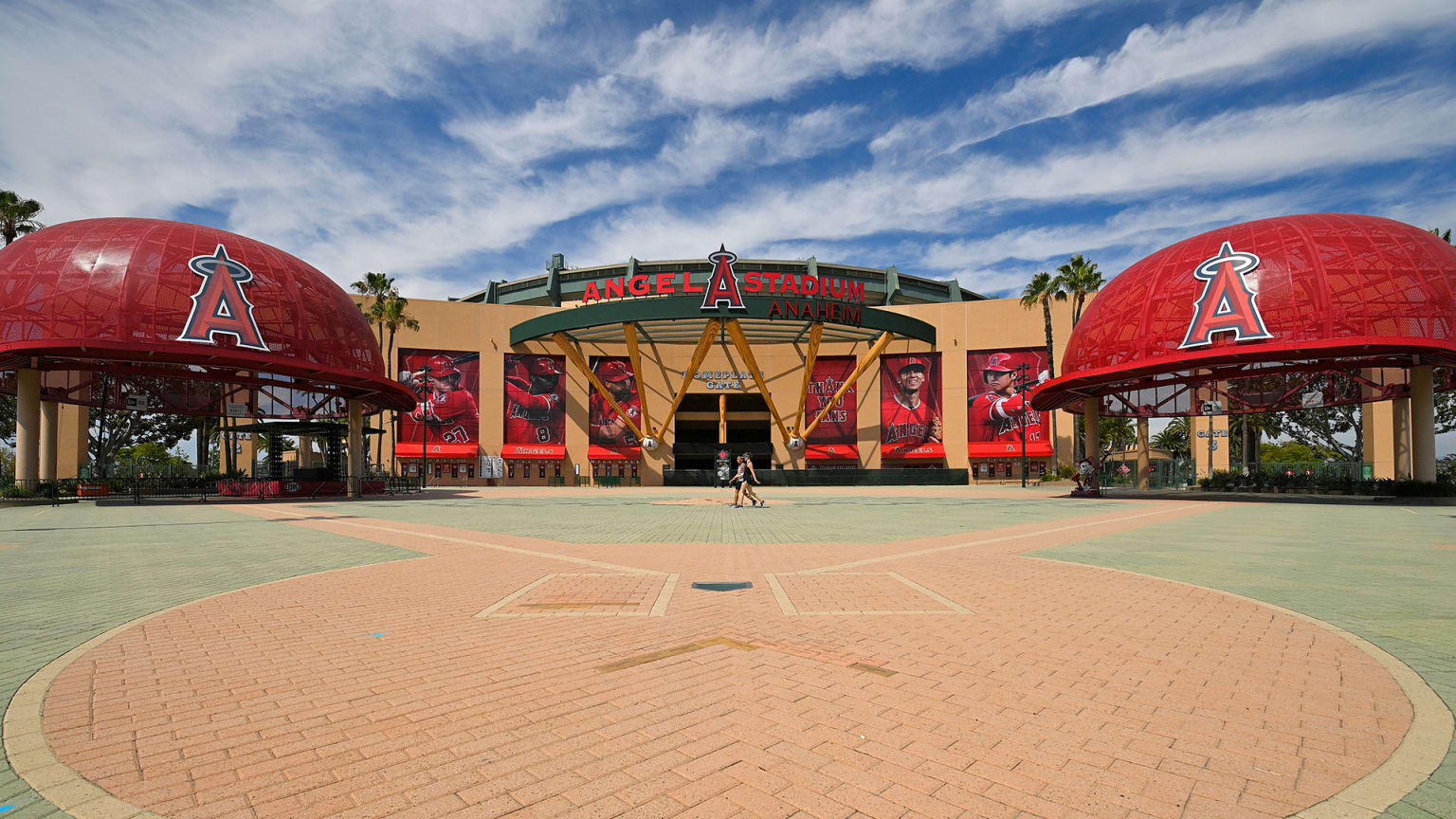
ANAHEIM, CA — The Dodgers headed down the freeway this weekend for MLB’s “Rivalry Weekend,” which means it is time for the semi-annual Southern California family reunion. Big Brother from Los Angeles visits Little Brother in Anaheim, everyone pretends the traffic is normal, and the Angels continue the grand tradition of playing in Orange County while answering to “Los Angeles.” The Dodgers and Angels are meeting at Angel Stadium this weekend, then play again at Dodger Stadium from June 5-7.
The Freeway Series has always carried a strange charm. It is not Dodgers-Giants. It is not Yankees-Mets. It has less hatred and more awkwardness, like two cousins forced to share a picnic table while one of them keeps reminding everyone he technically lives near Hollywood.
The Angels’ name story, though, is one of the great Southern California identity adventures. The franchise actually began as the Los Angeles Angels in 1961, when Gene Autry’s expansion club joined the American League. They played their first season at old Wrigley Field in South Los Angeles, then spent four seasons as tenants at Dodger Stadium. That part is real. The Dodgers and the Angels were once roommates. The Angels were once a Los Angeles team in a real way. At the time, the name made sense. Back when Lyndon Johnson was president.
Then came Anaheim
The Angels moved to Anaheim Stadium in 1966, and before that move, the team changed its name to the California Angels. That name made sense at the time. The club was trying to claim a wider identity, and for decades, “California Angels” had a certain clean, sunny feel to it. It sounded like orange groves, freeway exits, Nolan Ryan fastballs, and a team trying to represent more than one city. In the way that the Minnesota Twins can be claimed by both Minneapolis AND St. Paul and the Texas Rangers can belong to Dallas AND Fort Worth.
Then Disney got involved.
In the late 1990s, the Angels became the Anaheim Angels, a name tied to the city and the stadium renovation deal. Anaheim wanted its name attached to the team. That was understandable. The city had the ballpark, the parking lots, the local tax dollars, and the Big A sitting right there off the freeway. In 2002, the Anaheim Angels won the World Series under that name, which remains the cleanest and least confusing chapter in the whole saga. The team was in Anaheim. The team was called Anaheim. The hats still had the halo. Everybody could follow along.
Arte Moreno Enters the Picture
Then Arte Moreno bought the club in 2003, and the Angels’ identity entered its most Angels phase.
Moreno wanted the marketing muscle of Los Angeles. From a business point of view, it was easy to understand. Los Angeles is the second-largest media market in the country, and “Los Angeles” travels a lot better nationally than “Anaheim.” The problem, of course, is that the Angels still played in Anaheim. Their stadium was in Anaheim. Their fans parked in Anaheim. Their pregame meals, traffic jams, and postgame exits all happened in Anaheim.
So in 2005, the club became the Los Angeles Angels of Anaheim, one of the funniest official names in modern sports. It had the energy of someone trying to sneak into the VIP section while also showing their actual driver’s license at the door. The name included “Anaheim” because the stadium lease required the team name to include Anaheim. It added “Los Angeles” because Moreno wanted the broader market. Legally, it was clever. Emotionally, it was weird. Comedically, it was perfect.
Lawsuits and Final Changes
Anaheim sued, arguing the name change violated the spirit of the agreement. The Angels won. In 2006, a jury ruled in favor of the team, finding the new name was consistent with the lease language. The city eventually dropped the legal fight in 2009.
And then, after years of “Los Angeles Angels of Anaheim,” the club finally dropped the “of Anaheim” part before the 2016 season. That left the modern name: Los Angeles Angels. Simple. Clean. Marketable. Also, geographically and linguistically hilarious. Anybody who knows even a little Spanish knows that Los Angeles already means “The Angels” so if you translat the whole thing into English, the Los Angeles Angels becomes “the the Angels Angels.”
Dodgers Fans Know What Time it Is
For Dodgers fans (and anyone with a map, for that matter), this is where the teasing comes in. The Dodgers play in Los Angeles. Their stadium sits in Los Angeles. Their history is tied to Los Angeles. Their identity is Los Angeles in blue script, from Vin Scully to Sandy Koufax to Fernando Valenzuela to Clayton Kershaw to Shohei Ohtani.
The Angels, meanwhile, have spent more than half a century in Anaheim while periodically glancing north and saying, “Actually, we are Los Angeles too.” A bit like that annoying roommate you had in college who grew up in Bakersfield, but tells out-of-towners that they “grew up in LA.”
Bless their hearts.
That is part of what makes this rivalry weekend fun. The Angels are not some villainous empire. They are the neighbor with a nice house, a giant red cap outside, a World Series trophy from 2002, and a mailing address that keeps getting a little creative. They have had great players. Mike Trout built a Hall of Fame career there. Shohei Ohtani became a global two-way phenomenon there before crossing the family room and joining the Dodgers. The Angels matter. They have history. They have fans who care deeply.
They also play in Anaheim.
That little contradiction will always make Dodgers fans grin. It is baseball’s version of Orange County borrowing Los Angeles’ leather jacket for the weekend. The Angels can call themselves Los Angeles. The league can call them Los Angeles. The scoreboard can call them Los Angeles. But when the Dodgers pull into Angel Stadium this weekend, everyone in Southern California knows where they are.
Anaheim.
A perfectly fine place, by the way. Disneyland is there. The Ducks are there. The Angels are there. Los Angeles is up the freeway, wearing blue.
More Dodgers Coverage:
Have you subscribed to the Bleed Los Podcast YouTube channel? Be sure to ring the notification bell to watch player interviews, participate in shows & promotions, and stay up to date on all Dodgers news and rumors!
A lifelong baseball fan, Webb has been going to Dodger games since he moved to Los Angeles in 1987. His favorite memory was attending the insane Game 3 of the World Series in 2025 and hugging random Dodgers fans after Freddie’s walkoff homer. He has been writing for Dodgersbeat since 2020.
Related