
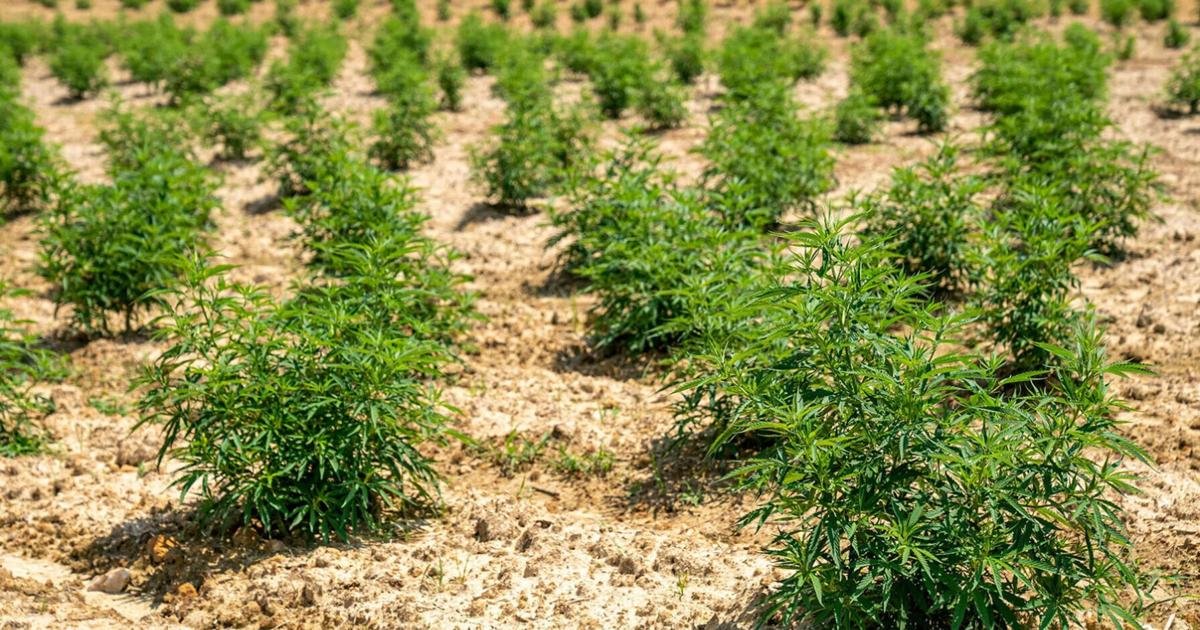
The strongest deterrent to unlicensed cannabis farms isn’t bans — it’s licensed farmers.
This is one of the primary findings of a study conducted through UC Berkeley’s Cannabis Research Center, which sought to understand the evolution of cannabis farming in California since its legalization.
Christopher Dillis, a researcher with the Department of Environmental Science, Policy, and Management who worked on the study, estimated that licenses to grow can cost farmers anywhere between $50,000 to more than $100,000. This pays for county permits, water board permits, Department of Fish and Wildlife permits and more — what Dillis calls “death by 1,000 paper cuts.”
A licensed farm is required to have properly engineered roads to avoid runoff, irrigation systems that are up to code and proper water storage. Longtime unlicensed farms are often positioned to avoid detection in areas that are difficult to get up to code. Dillis said if farms choose to get licensed, it might take a year or two because of slow-moving state bureaucracy.
Meanwhile, along the state’s central coast, large licensed cannabis farms have popped up, likely backed by venture capital. Because cannabis is not legal federally, Dillis said these farms utilize vertical integration — running the farms, as well as distribution and retail.
Dillis said licensed farms routinely give the state “anonymous tips” about their unlicensed neighbors. Cannabis fines for an unlicensed farm’s first violation in Humboldt County and Sonoma County can be as high as $10,000, as high as $30,000 per day in Los Angeles County.
“That was sort of the fear all along when legalization happened,” Dillis said. “These small farmers are like … ‘we’ve seen this happen in every industry ever.’ This is just … the inevitability of capitalism.”
When California originally began the process of legalization, Dillis said the state hoped to give smaller farmers a head start by only offering licenses to farms under a certain size, then allowing licenses for large farms in 2023.
However, legislators wrote in a loophole: Growers could stack licenses, allowing them to split up a large farm and license it as several small or medium farms, eliminating the head start for real small farmers.
The study also examined the environmental impacts of cannabis cultivation.
Cannabis farms got a bad reputation for their use of public and national forest land in the early ’90s, according to Dillis. But by 1996, many of the farms had shifted to private land due to the legalization of medical marijuana use.
“Cannabis got a bad reputation as this crop that is inherently a threat to the environment when it’s not. It’s really just where it was grown and how it was grown,” Dillis said. “It supports entire communities, these people that have been part of the war on drugs and all the things that come along with that.”