
Jason Cotting loves going on bike rides around his suburban Salt Lake City neighborhood. In the past decade, though, he’d noticed something new: more and more California license plates on cars he passed.

He’d heard rumors that more Californians were moving to Utah, so he checked the U.S. Census to see if what he felt was happening was true. Sure enough, the number of people moving to Utah from California each year was increasing, a number that would eventually peak in 2021. That made Cotting nervous, so he decided to create some stickers that said “Don’t California my Utah” — a sentiment that doesn’t actually originate with him but made his point perfectly — to express his concern. He distributed them to friends, who told them he should sell them, which led Cotting to build out a website and eventually create an Etsy shop.
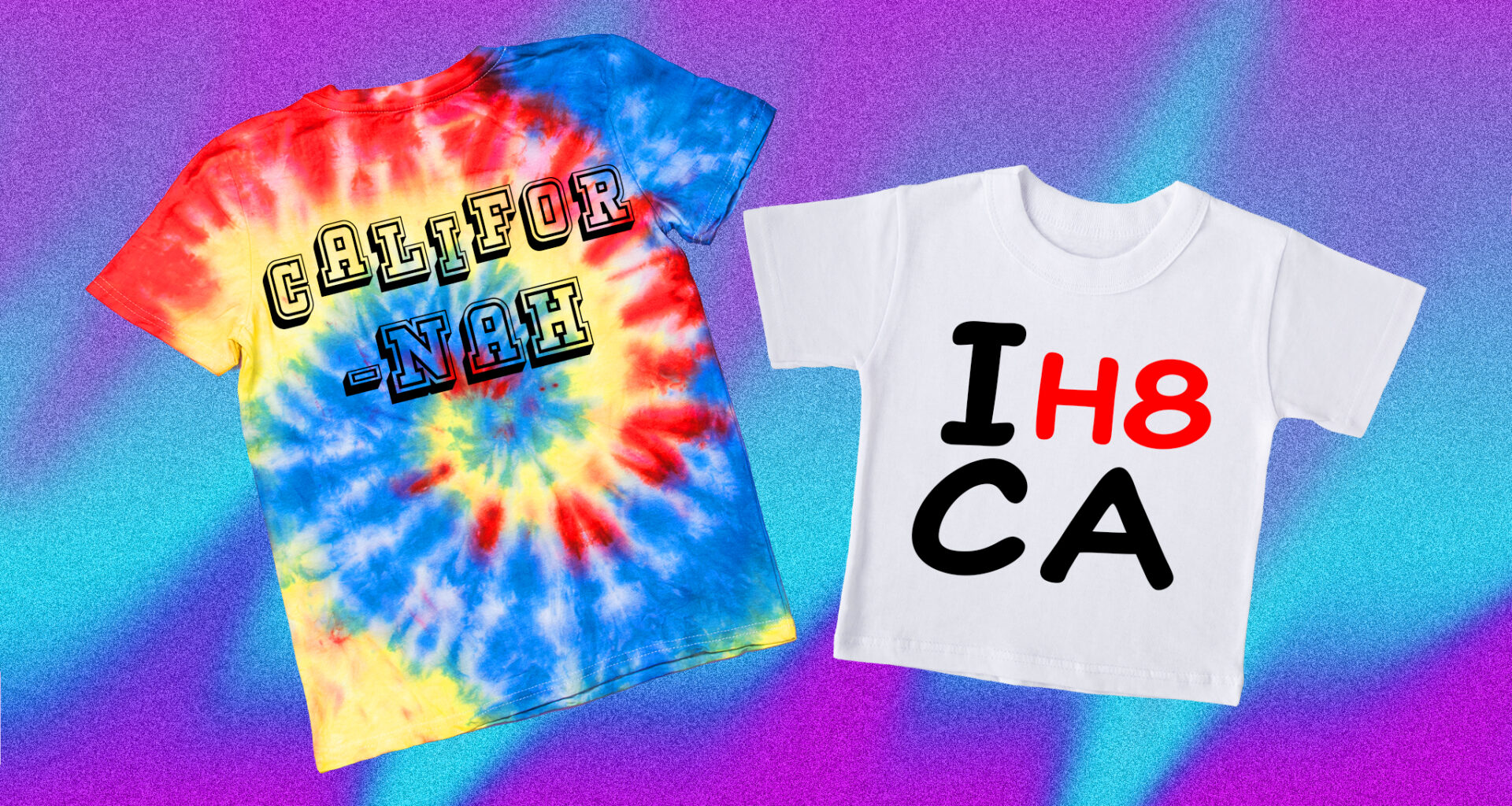
Cotting is one of several Etsy businesses selling anti-California merchandise and is a small part of a much larger ecosystem of sellers who market these products on individual websites or other online marketplaces, such as eBay, Redbubble and Zazzle. For some, like Cotting, the products are a way to share their frustration at the Californians moving out of state. For others, they’re just a way to boost sales by leveraging a trending topic. No matter the reason, they’re all capitalizing on the way the word “California” has grown to mean much more than just the place.
Article continues below this ad
A sign reads, “Leaving California.”
MCCAIG/Getty Images/iStockphoto
‘Being anti-California’
Cotting describes himself as conservative, and while he’s quick to point out he’s not a member of the Church of Jesus Christ of Latter-day Saints, he moved to Utah in 2009 because he liked its values and, ultimately, thought it would be a good place to raise kids. Of the influx of residents from the Golden State, he said, “I’m not a big fan of the politics of California, and my concern was that as more people moved from California, they would bring their political ideas and votes with them and in the process change Utah in a way that I don’t want it to become.”
After his stickers started to sell, he decided to check the Census again, to see where else Californians were relocating. He made stickers for those states, too, and today, his top-selling stickers are for Tennessee and Montana, respectively. “I know I’m not gonna stop people from moving here, that’s not my intent. I’m basically just expressing my opinion,” he said.
Article continues below this ad
Sticker sales aren’t enough to make running the business his main job, though; he said he views it more as a hobby. Etsy takes a big portion of his profits, and as shipping costs have risen every year, it’s been difficult to make enough money even to justify operating the shop. He tried advertising on social media, but it wasn’t worth the cost, he said, especially when most people only bought one sticker at a time. When he tried to get local stores to sell his stickers, most of them told him they were afraid of offending customers, he told SFGATE.
Cotting said he had a small spike in sales leading up to the 2024 election, and also once when a political talk show mentioned the “Don’t California my [insert state]” saying. He thinks the phrase resonates with a lot of people in more conservative areas, especially those that value personal freedoms like himself. He cited California’s recent legislation that outlawed the sale of new gas-powered cars by 2035 as an example of overstepping those bounds.
Article continues below this ad
“I never thought about being anti-California until, I don’t know, in the last 10 years, at some point,” Cotting said.
Capitalizing on conflict
The sentiment may feel new, but it’s been around for decades. Bumper stickers bemoaning Californians moving in have been around since at least the 1980s, as soon as even a flicker of a state exodus came on the media’s radar. The heightened polarization of the country and the political rhetoric could be partly to blame for the revitalization of California animosity, demographer Hans Johnson previously told SFGATE, but it’s also easier than ever to create anything online in seconds. For many creators, that means mocking up designs and setting them up to print on demand, capitalizing on any given moment, no matter how flash in the pan.
Fashion Open Studio, an online store that sells everything from T-shirts to yard signs to pickleball kits, includes various California merchandise, both celebrating and hating on the state. A white mug with the slogan “I Love Waking Up And Remembering I Don’t Live In California,” written above the shape of the state of Idaho (or Georgia, or Texas, etc)., for example, “performed relatively well in the past, although demand has cooled somewhat recently,” Jacob Owen, a customer service consultant at the company, told SFGATE via email.
Article continues below this ad
A screenshot of a page on Etsy.com. The sticker reads, “Don’t California My Montana.”
Screenshot via Etsy
“We basically try to spot interesting, entertaining, or trending ideas and translate them into product concepts. We do not take a political position or aim to support or oppose any particular viewpoint,” Owen wrote.
The site is constantly updating its product catalog, meaning any viral sound bite can become a product almost instantaneously, and “sales can shift alongside news cycles, elections, internet trends, tech backlash, and other cultural moments,” Owen continued.
There are plenty of sites that operate like this, in addition to marketplaces like Etsy. TeePublic, an online marketplace where independent artists can sell their designs, wouldn’t directly respond to SFGATE’s request for more information about how anti-California merchandise performs on its site, but the company’s automated support assistant (read: artificial intelligence chatbot) said, “We welcome a wide range of designs from independent artists, including those that playfully reference state rivalries. However, any design that crosses the line into hate speech or is intended to harm or incite violence against a group of people isn’t allowed on TeePublic.”
Article continues below this ad
‘I do not hate our state’
Merchandise celebrating the place you live or poking fun at state rivalries is nothing new. But the “Make America Great Again” hat ushered in an era of merchandise focused on proclaiming political allegiance, launching a whole new way to capitalize on a rapidly polarizing country. The Trump family sells everything from candles to coins to teddy bears. While Owen called the anti-California products “not yet a major category” for Fashion Open Studio, the Trump campaign made $80,000 per day in 2016 from “Make America Great Again” hat sales, according to a memoir by Jared Kushner. The hats are, ironically, stitched together in Southern California by largely immigrant Latino workers — the same community that President Donald Trump’s Immigration and Customs Enforcement initiatives threaten in the state.
Attendees are seen during Politicon 2018 at the Los Angeles Convention Center in Los Angeles on Oct. 21, 2018.
Chelsea Guglielmino/Getty Images
Moreover, the Trump organization seeming wants all that money for itself and has gone so far as to sue small sellers making dupes of its merchandise.
Article continues below this ad
Frank Ryan, the owner of Beachin, an apparel store in Orange County’s Seal Beach, sells lots of pro-Trump merchandise, in addition to other conservative, Republican-leaning goods. He’s been selling anti-Gavin Newsom merchandise since 2022 — shirts that say “FK Newsom” or hats that say “Newsom sucks,” for example — and they can sell out pretty quickly, depending on what’s going on with state politics.
He told SFGATE he’s “pro California” but “anti-California policies” and that when he drives out of state, he usually says he’s from Orange County instead of saying California, “so they know I’m normal.”
“It’s annoying,” he said, that everyone associates California with liberal policies, especially when he believes most people in the state don’t actually vote for the liberal policies.

Stay informed, and entertained.
By signing up, you agree to our Terms Of Use and acknowledge that your information will be used as described in our Privacy Policy.
“I hate what has happened to our state. I do not hate our state,” Ryan said.
Article continues below this ad
Cotting, the sticker seller, said he doesn’t hate California either — he just doesn’t want Utah to change. He writes a note to each purchaser to send with every order, thanking his customers for caring about their state. He knows how they feel.
“If someone is going to move here from California, I’d rather them be here as a refugee, not an evangelist,” Cotting said.