
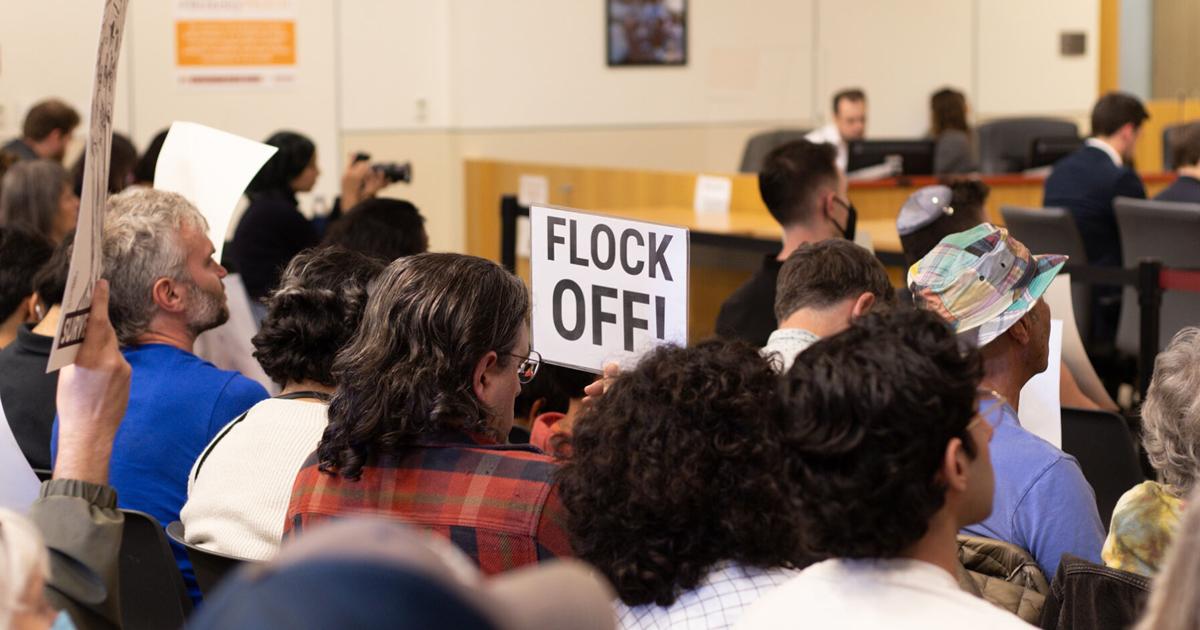
After a special meeting May 7, the Berkeley City Council referred the city manager to submit proposed surveillance technology expansions to a competitive bidding process, which would allow the city to consider other vendors.
According to a May 4 memo from the Police Accountability Board, the city entered into Flock Safety’s current contract without a competitive procurement process, which is a formal process to identify and procure proposals from multiple vendors for goods or services.
“The BPD has failed residents of Berkeley by exclusively pursuing a contract with Flock without a competitive procurement process,” said PAB chair Joshua Cayetano during public comment at the meeting.
According to Cayetano, about 40% of the city’s contracts were not competitively bid, despite the fact that a competitive bidding process is the default rule.
The city’s current deal with Flock has allegedly grown incrementally over several years without documented competitive procurement at any stage, according to the PAB memo.
“I was and remain broadly supportive of opening up the city to potential vendors through a competitive procurement process,” said District 4 Councilmember Igor Tregub in an email. “Such a process will ensure that the city is in the best possible position to enhance the safety of our downtown and Berkeley as a whole while upholding our values as a sanctuary city.”
According to a city audit report from February, Berkeley spent tens of millions on noncompetitive contracts when competition was likely possible, including two noncompetitive recycling contracts totaling nearly $85 million.
PAB claims by using noncompetitive contracts, the city risks overpaying for services; not getting the best quality of service; having fewer opportunities for new and small businesses; and creating more opportunities for bribery or corruption between staff, officials and contractors.
“A competitive (request for proposal) process would allow us to define our needs clearly, compare multiple vendors and consider different system designs,” Tregub said during the meeting. “Furthermore, diversifying our vendors would create resiliency in our public safety technologies.”
At its May 7 special meeting, the City Council renewed an automated license plate readers, or ALPRs, contract with Flock. However, in an 8-1 vote, the council rejected a proposed expanded Flock system of fixed cameras, community video systems, first responder drones and criminal investigations software.
The contract of the originally proposed expansion could have totaled $2 million, while the 12-month extension of ALPRs is a $200,000 contract.
“Now BPD is trying to claim that Flock is the best out there, that nobody else has a comparable product, that this is what’s best for Berkeley,” Cayetano said. “But they cannot back that up without a competitive process, and that is something Berkeleyans deserve.”