
When a 23-weeks pregnant Santa Clara County woman woke up to find her water had broken, she was concerned.
When she arrived at the Valley Medical Center’s emergency room, she learned her son needed to be delivered immediately and would spend months in the hospital’s neo-natal intensive care unit. Thanks to Medi-Cal, her labor, delivery and her son’s NICU stay, were covered.
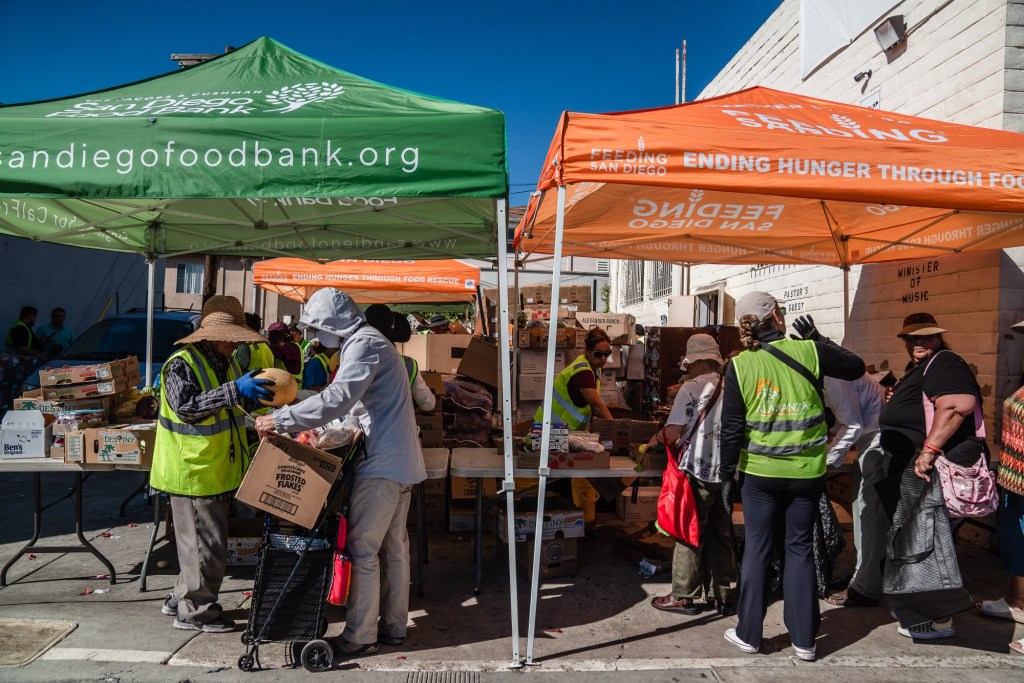
In San Diego County, an individual experiencing homelessness hadn’t had a nutritious meal in weeks. They qualified for CalFresh but had no phone, internet, or way to enroll.
Fortunately, a county social worker learned about their plight. Knowing they lacked the means to complete required online trainings, the social worker helped them access the tools to enroll.
These stories — and millions more in counties across the state — form the strands of California’s safety net. But this work could evaporate if the governor and state lawmakers don’t act in this year’s state budget. So far, the administration’s response has fallen short of what this moment requires.
When Californians lose health or nutrition benefits, counties — not the state — catch them. Under last year’s sweeping federal legislation known as H.R. 1, those cracks become chasms, putting nearly 1.5 million Californians at risk of losing Medi-Cal and more than 600,000 of losing food benefits.
Counties will try to catch those left behind by failing federal programs. But that requires scaling up our eligibility workforce — making state investment essential to preventing people from losing benefits.
Still, we won’t “catch” everyone, and the number of people who are disenrolled will swamp our capacity to serve them.
Prior to the Affordable Care Act, counties received state funding to provide healthcare for our “indigent” populations — those who didn’t qualify for any form of health insurance. Because the number of “indigent” residents plummeted after 2013, that funding no longer exists.
In addition, funding must be identified to prevent public hospitals from closing. These hospitals serve large Medi-Cal populations, so when reimbursements dry up, the revenues that keep them open do too.
Counties simply don’t have the funds to cover health care and food assistance costs. We’ll have no choice but to gut other programs and services, particularly the public safety and justice departments that rely almost entirely on county discretionary dollars.
And to be clear, funding health care and nutrition assistance is explicitly the domain of the state and federal governments. Counties provide services based on these funding streams. It’s not tenable for California, the world’s fourth largest economy, to step back when Washington, D.C., has turned its back.
We know this is a monumental challenge. We see residents every day who are terrified about losing health care or food support. We try to reassure them that although the federal government is seemingly abandoning them, in California we are doing everything we can to mitigate those harms.
Counties across the state have been pondering this crisis and devising solutions that can be accomplished in partnership with our state leaders — because this crisis is unquestionably our shared responsibility to solve. And big crises need big investments, specifically $1.9 billion in the upcoming budget, growing to $4.5 billion the following year.
But the governor’s newly released spending plan would fund just 5% of the counties’ budget request in the upcoming state budget — and well under 1% in the following fiscal year. That level of funding falls far short of what counties need to protect California’s safety net.
Ignoring this crisis will drive higher costs elsewhere and hurt the state’s economy. It will overcrowd emergency rooms, exacerbate homelessness, and slow down sheriff and fire department response times.
California prides itself on leading the way, and we can’t stop now. Our 39 million residents are counting on us to have their backs. So we’re asking our state’s leaders to partner with us to meet this moment — as a beacon for the rest of the nation.
Montgomery Steppe is a San Diego County supervisor representing District 4. Ellenberg is a Santa Clara County supervisor and president of the California State Association of Counties.