
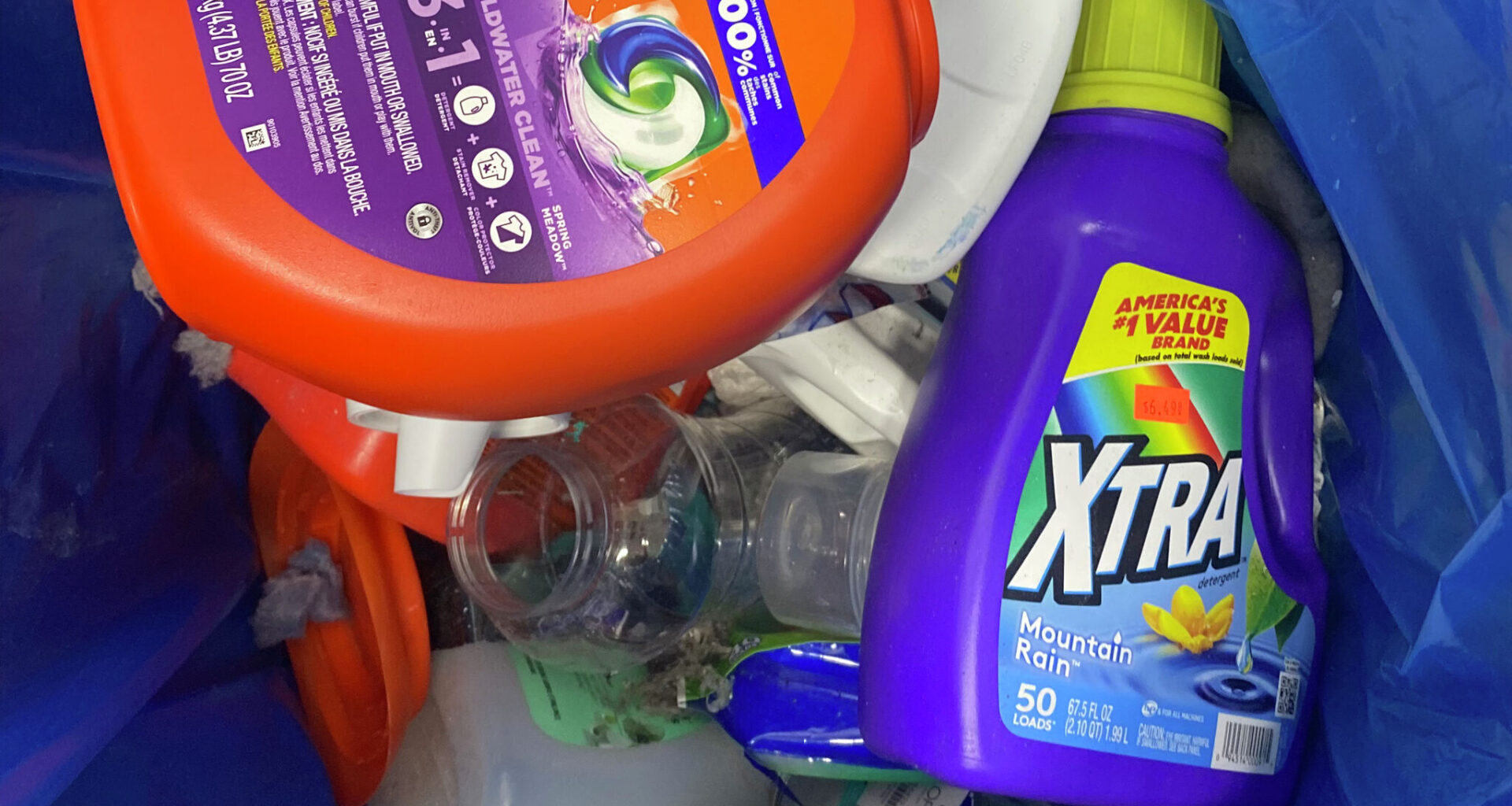
Laundry detergent jugs are generally Type 2 plastics and work well for recycling.
UCG/UCG/Universal Images Group via G
Executives with a South Bay waste management company have some tips to help residents improve when it comes to recycling.
At a joint session of the Saratoga City Council this month, Rob Hilton, executive director of West Valley Recycles, noted that not all plastics that have numbers actually get recycled, even if the company technically accepts them in blue bins.
Types 1 and 2 are “what gets consistently recycled,” he said, adding: “everything else is a real question mark.”
Article continues below this ad
In general, clear, rigid plastics are usually a safe bet, said Andy Buck, Bay Area outreach manager for the company. Type 1 plastics include water bottles, and Type 2 include milk jugs.
Flimsy Type 5 items like single-use surgical gloves or chip bags should go in the landfill bin, the executives said. Unlike other recyclers — including Recology, which serves San Francisco — West Valley Recycles accepts Type 4 plastic bags, provided that they are bagged in another bag to prevent them clogging machinery.
San Francisco Chronicle Logo
Make us a Preferred Source to get more of our news when you search.
Add Preferred Source
West Valley Recycles serves the Santa Clara County communities of Campbell, Los Gatos, Monte Sereno and Saratoga.
Rigid plastic items should go in the landfill if they’re small enough to jam machinery. Anything shorter than two-inches tall, Buck said, generally won’t make it through the recycling process. On the other end of the spectrum, bulky items like basketball hoops, laundry machines and computers should be picked up through the recycler’s on-call collection service.
Article continues below this ad
Mixed-material items like toothbrushes, floss cases, razors and textiles and other multi-layer plastics should also go in the trash: “All that’s gonna be landfill,” Buck explained.
Other items — like soiled napkins, paper towels, paper plates and greasy pizza boxes — are commonly recycled, but should actually go in the compost, where they’ll break down more easily, Buck said.
Across the Bay Area, each jurisdiction has slightly different recycling guidelines, which can make it challenging for residents. But there are many commonalities — Recology, for example, also bans plastic bits and bobs like single-use utensils, straws and the pull-tabs on milk jugs.
California has set loftier recycling goals than perhaps any other state in the country. But the confusion can lead to wishful recycling — or “wish-cycling” — where residents put items in their recycling or compost bins in the hopes that they’ll eventually be sorted into the correct stream. This kind of recycling — however well-intentioned — is technically fineable in egregious cases.
“For the first time, we are now required to have citations and notice of violations processes and fines, ultimately, for customers who aren’t recycling or composting appropriately,” Hilton said. “It’s a state law that we’ve had to implement at the local level.”
Article continues below this ad
West Valley Recycles has been “very successful” at avoiding enforcement, Hilton said: in the last four years, the authority hasn’t written a single citation. Instead, it’s focused on educational efforts around recycling correctly.
San Francisco has taken a similar approach, leaving “oops tags” on recycling bins contaminated with trash. In the city, repeat offenders in large buildings can face fines of up to $1,000 a day, according to the San Francisco Environment Department.
In recent years, California has enacted a flurry of laws around its recycling goals. The state will require companies to remove “chasing arrows” symbols or other recycling claims from their packaging by October unless they meet certain recyclability criteria. Another recent ordinance gives plastic producers a 2032 deadline to ensure all their packaging is recyclable or compostable.