
The Impact of CalCCA
Today, CCAs are a formidable component of the California energy market, serving 15 million customers— more than one-third of the state’s population— and playing a dominant role in clean energy procurement. As of November 2025, they have secured more than 21,000 megawatts (MW) of new-build clean energy capacity through long-term power purchase agreements (PPAs) and committed more than $48.4 billion in investments to build and operate clean energy resources.
“The impact of CalCCA over the last 10 years has really been helping to mature CCAs both at the regulatory environment and the legislative space, but more importantly, building those relationships and partnerships with stakeholders and developers,” said Robert Shaw, CEO of Central Coast Community Energy and current CalCCA president. “It’s really enabling CCAs to have the impact of bringing on lots of new projects, steel-in-ground, that are going to continue serving California well into the future.”
Shaw also highlighted the leading role CalCCA now plays in advancing groundbreaking legislation, saying, “And you pair that with CalCCA’s involvement in bringing something like Pathways forward, that is probably the most meaningful piece of legislation that we’ll see in the renewable space out of California for years to come.”
The Pathways Initiative (Pathways) was, according to Vaughan, “essentially about regionalization of the Western electricity markets into a single independent energy market.” Shepherded by CalCCA’s chief policy officer and general counsel, Evelyn Kahl, along with other energy professionals, Pathways developed into the Regional Organization for Western Energy. Vaughan explained that the motivation for regionalization was to “deliver on reliability, decarbonization, and specifically affordability.”
Affordability is the name of the game and a central rationale for the initiative. “Studies show that over a billion dollars can be achieved for our customers through optimization of a single energy market across the West,” Vaughan said.
While some CalCCA efforts, like Pathways, have sprung up in recent years, other battles have been long fought, such as over the Power Charge Indifference Amount (PCIA). The PCIA is a fee charged by investor-owned utilities (IOUs) in California to all customers, including those who receive generation service from a CCA.
Early fights over the PCIA began in the 2010s and centered on calculation methodology. While such regulatory concerns eventually faded into the background, recent volatility in the PCIA has renewed political focus on the adjustment. “I mean, we’ve been talking about PCIA since the beginning. That kind of calmed down, and now it’s back,” said Hale.
CalCCA continues fighting for fair treatment for CCA customers in PCIA proceedings. Current efforts include sponsoring AB 1761, which aims to bring transparency to the PCIA calculation to ensure CCA customers are not unfairly charged.
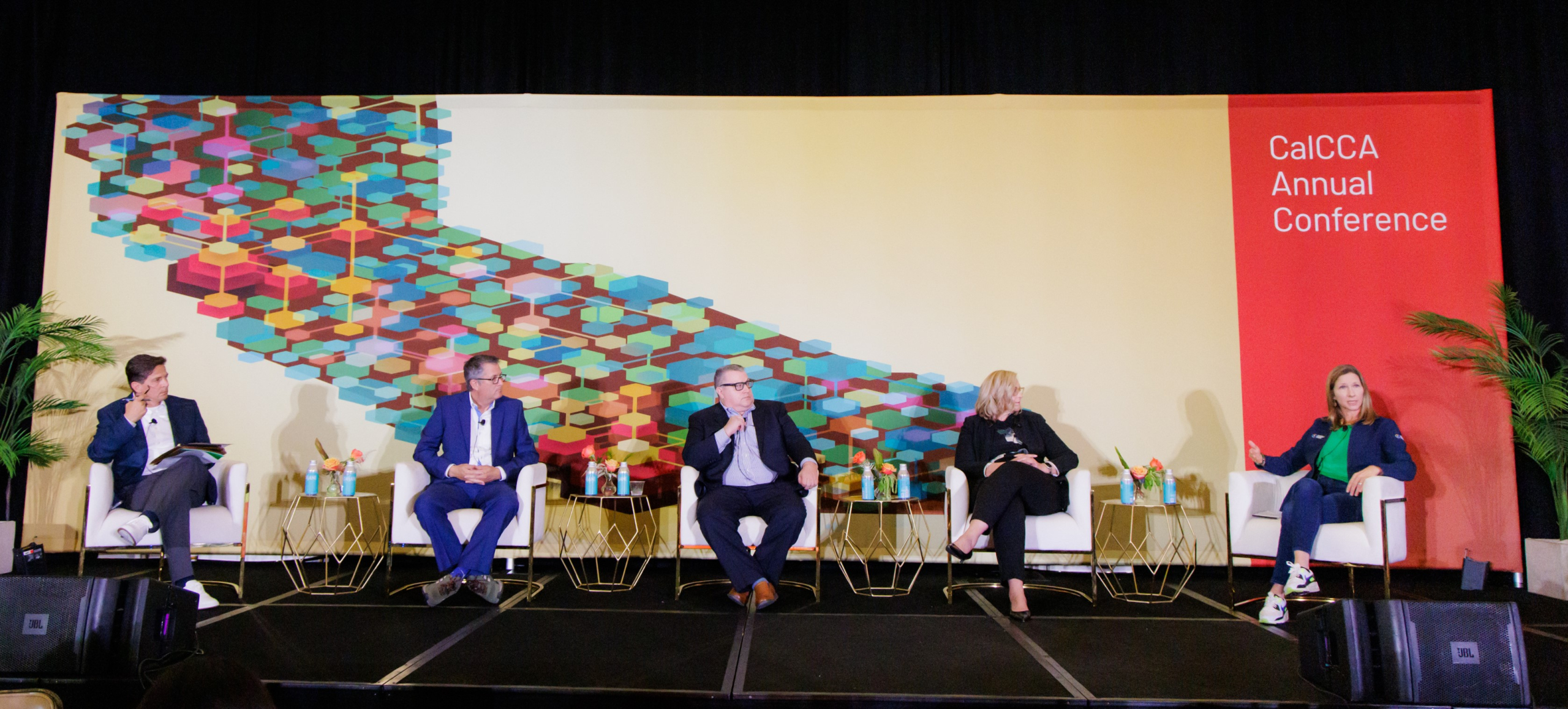
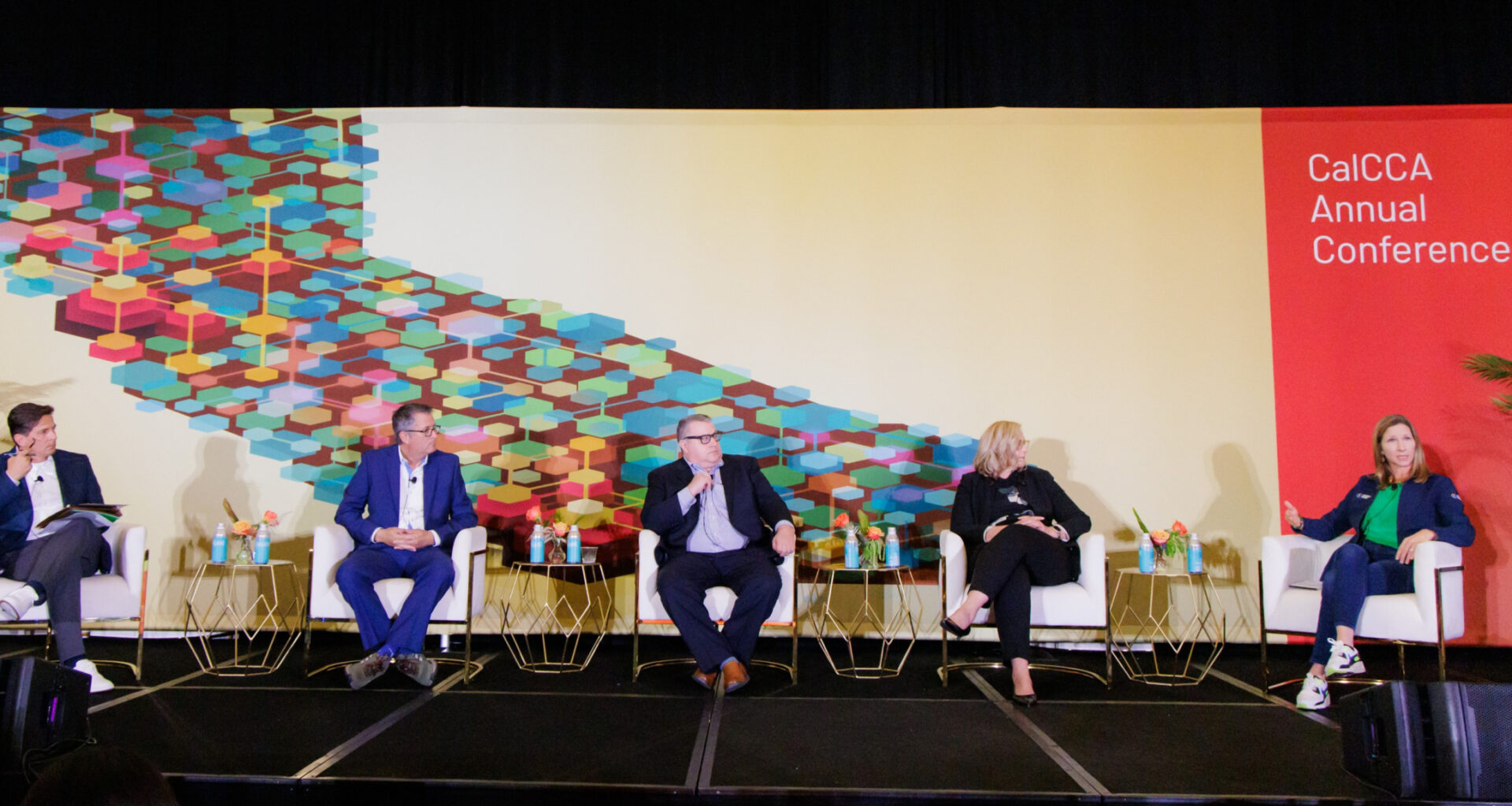
CalCCA board members speaking at the CalCCA 2025 Annual Conference. From left to right: Robert Shaw/Central Coast Community Energy, Ted Bardacke/Clean Power Alliance, Don Eckert/Pioneer Community Energy, Lori Mitchell/San José Clean Energy, Karin Burns/San Diego Community Power.
With some fights won, and others ongoing, CalCCA is proud of its first decade of development and work. The CalCCA team has grown to 20 strong, while greatly increasing its reach and influence. Just last year, CalCCA was involved in 66 proceedings, submitted nearly 3,500 pages of filings, and tracked over 120 bills.
“Through bold leadership and informed advocacy, the association has become the unified and respected voice of CCAs in California, one that is looked to as a thought leader in the state’s most critical energy policy discussions,” Vaughan said.
CalCCA will celebrate its anniversary May 12-14 with its members, partners, and the entire California energy community at the 2026 Annual Conference in Sacramento, and is looking forward to the next 10 years and beyond. CCAs and CalCCA will likely continue to grow, provide even more support for their constituents and customers, and work further towards a clean, affordable, and reliable energy future.