
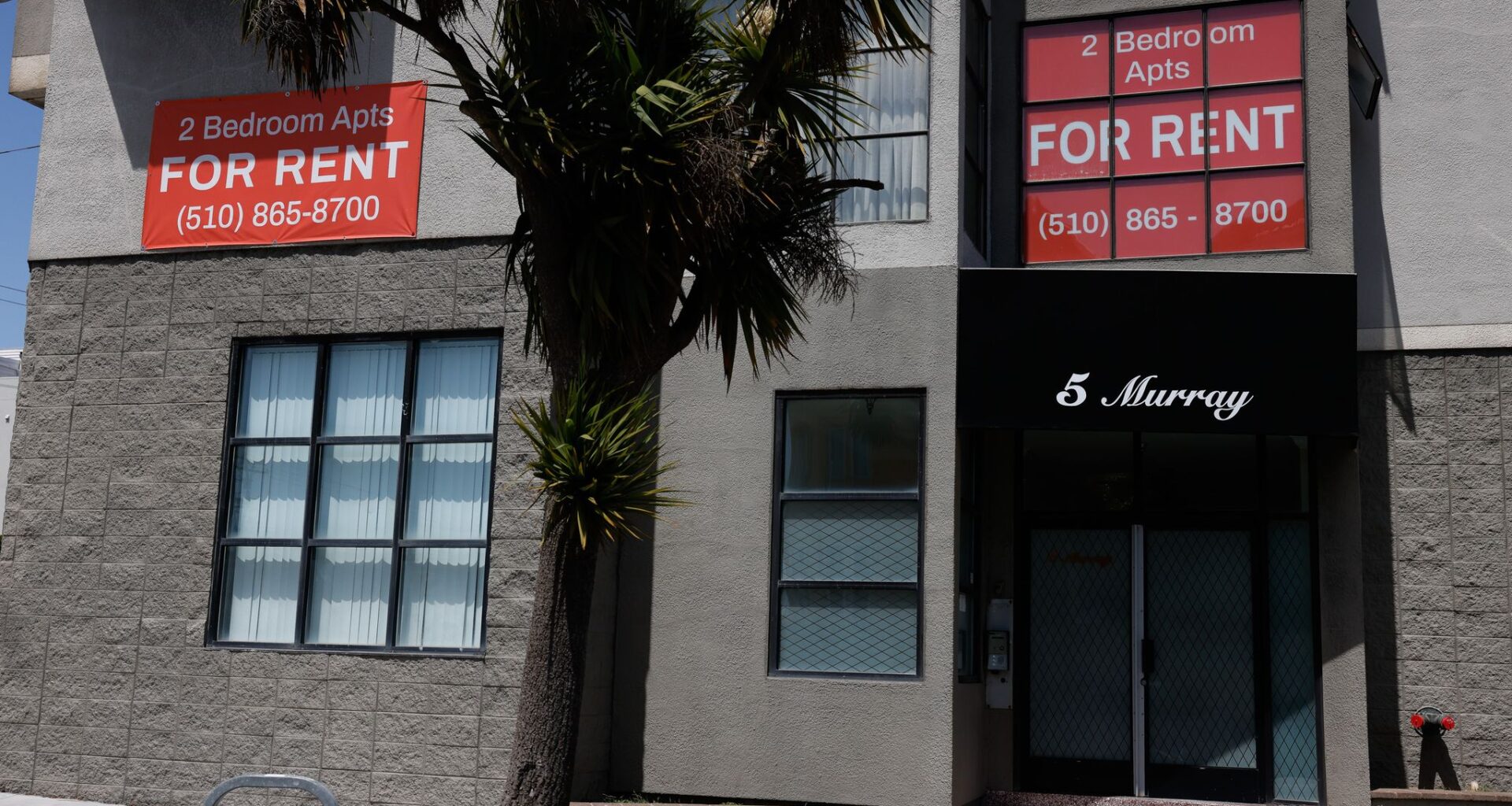
Renting in San Francisco this year is all horror stories. Prospective renters are met with dozens of people crowding open houses, many with already completed leasing applications in hand, apartments that are leased within a couple of days, and, worst of all, people offering to pay the landlord even more than the listed rent.
Compared with April of last year, rents have spiked nearly 15% on average, according to data from ApartmentList. That data takes into account all rents paid — not just those on active listings — using Census data alongside its own model for calculating price changes.
What’s going on at the neighborhood level is more difficult to decipher, as many neighborhoods do not have a high enough number of properties on ApartmentList for the company to accurately measure changes. But for ZIP codes that are available, largely in high density areas on the city’s east side, the increases are nearly all in the double digits.
The 94107 ZIP code, which encompasses parts of SoMa as well as Potrero Hill and Dogpatch, had the largest year-over-year increase, with estimated median rents jumping 26% to $5,556 in April this year.
Rents are also soaring in the 94115 neighborhood, which includes parts of Pac Heights, Japantown, Anza Vista and the Western Addition. There, estimated median rent is up 24% since last April, bringing it to $3,955. The “East Cut” portion of SoMa and Mission Bay, 94105 and 94158, are also up by more than 20%, with estimated median rents surpassing $5,500 in both areas. The surges have brought median rents in each of the neighborhoods nearly 15% higher than they were in 2019.
Even in struggling neighborhoods like the Tenderloin and mid-Market, rents are surging. In West SoMa (94103) rents are up 17%, according to the data, and in the Tenderloin (94102) rents are up 9% compared to last year. Nearby Union Square and Nob Hill (94108) and Russian Hill and Polk Gulch (94109) are also up considerably, with 18% and 11% rises, respectively.
In each of those areas, however, rents are just now starting to reach their 2019 levels, Rob Warnock, the lead economic researcher at ApartmentList, pointed out.
Warnock said the soaring rents are the “expected outcome of low supply and high demand,” noting that the city has added relatively few units in recent years.
“Having underbuilt for years, the SF rental market was primed to skyrocket as soon as demand returned to the city,” he said. With a limited number of available places and lots of competition for them, “landlords can push rent increases to the extreme.”
Still, one area remains an outlier: 94132, which includes the city’s largest apartment complex, Parkmerced, saw its estimated median rent decline 9% compared to last year, a trend that’s been ongoing for the last few months after a management change and continued challenges at the apartment complex, as well as declining enrollment.