
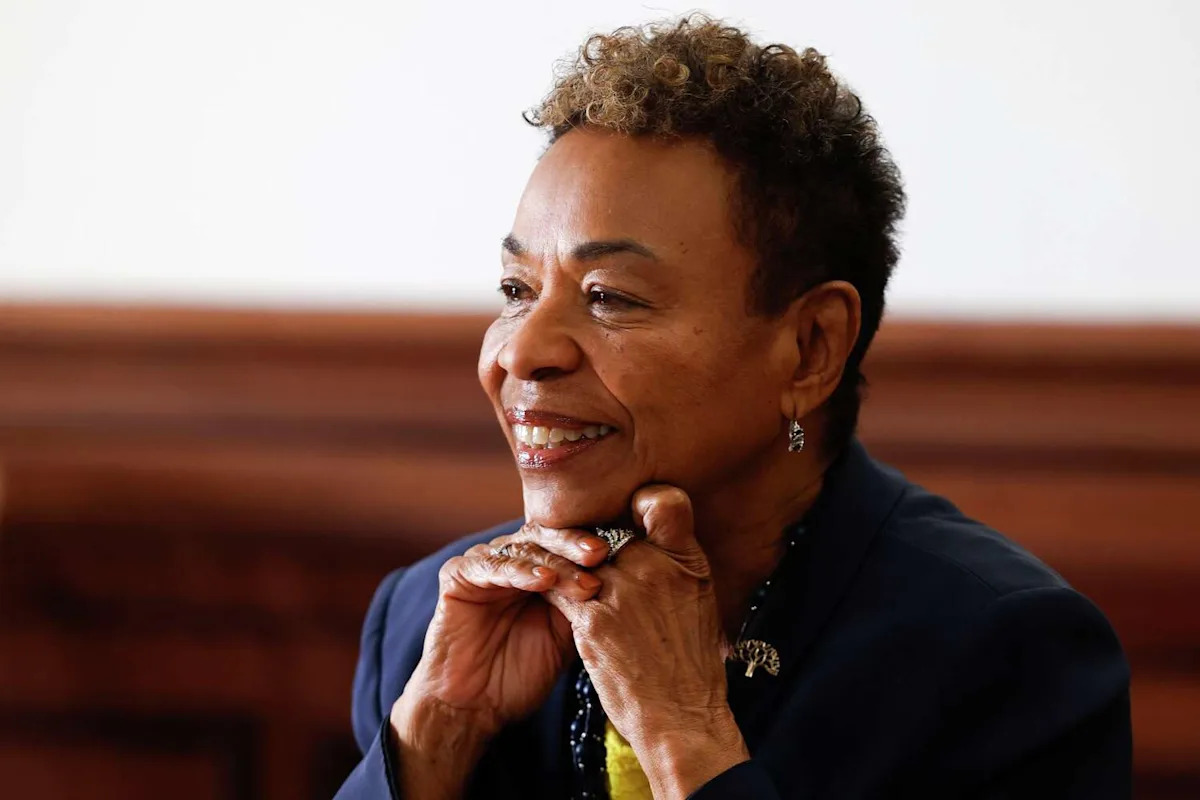
Oakland Mayor Barbara Lee said on the first anniversary of her taking office that she plans to run for a full four-year term in November, casting her reelection bid as a chance to extend what she described as a period of more stable leadership after years of political turbulence.
“I’ve got more work to do,” Lee told reporters on Tuesday.
She plans to formally announce her campaign following the June primary election.
Oakland voters elected the longtime congresswoman last year as a steady hand after the recall of former Mayor Sheng Thao, who was later indicted on federal bribery charges. Lee entered office with broad political support, winning endorsements from nearly every City Council member, the Oakland Chamber of Commerce, labor unions and several former mayors.
She stepped into a city in disarray following years of pandemic turmoil. Crime was already starting to fall, but Oakland was having trouble shaking its negative reputation. Downtown Oakland’s recovery was progressing slower than in San Francisco. Businesses were closing across the city. Another professional sports team had just left. Budget deficits threatened basic services.
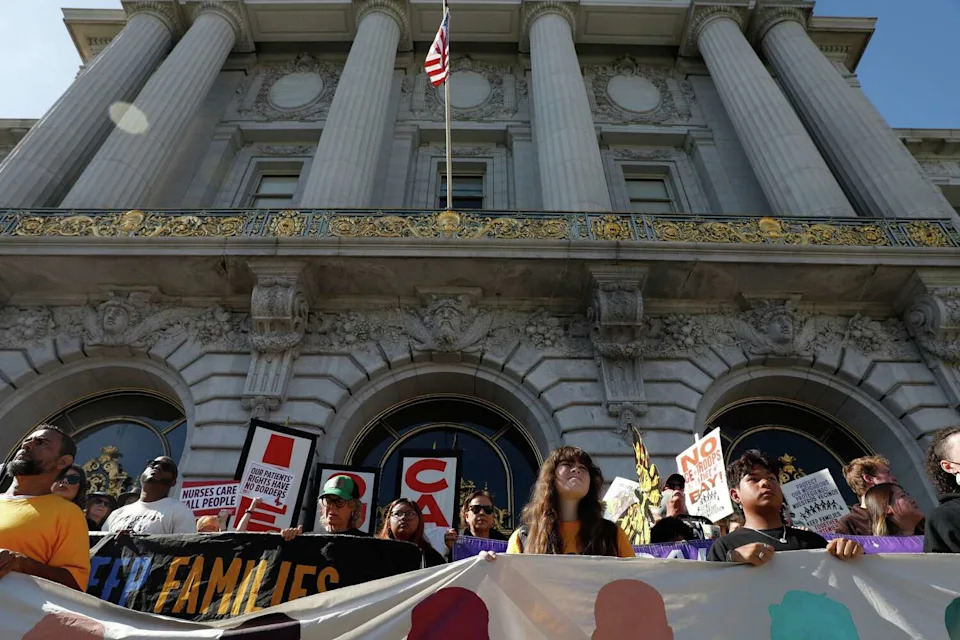
Demonstrators rally at City Hall as people protest against potential federal deployment in San Francisco on Thursday, October 23, 2025, in San Francisco. (Lea Suzuki/S.F. Chronicle)
One year later, many of those problems remain. But Lee pointed to some signs of progress: Crime continues to drop, and Oakland last year saw its lowest level of homicides in 57 years. City events – like a homecoming for Alysa Liu and a Super Bowl watch party at the newly re-opened Henry J. Kaiser Center for the Arts – have brought thousands of people back into downtown. And she also secured a commitment of $900,000 from Kaiser Permanente and PG&E, both headquartered in Oakland, to reinstate a police cadet program.
The city also made inroads with financial markets. In December, Oakland announced a sale of $334 million in bonds that will fund street paving, public facilities and affordable housing.
The sale came three years after voters had authorized the bonds, as concerns about Oakland’s finances had increased its borrowing costs. Credit rating agencies had downgraded the city amid a persistent structural deficit, rising pension costs and the city’s reliance on one-time revenues, including money tied to the proposed sale of the Oakland Coliseum.
Lee said she focused on providing stability “without shaking things all the way up,” so that business, philanthropic organizations and investors would restore their trust in the city.
Lee has also been a stabilizing force with the City Council. Though the progressive mayor is not always ideologically aligned with the council’s more moderate members, she has avoided publicly weighing in on council disputes and has positioned herself instead as a behind-the-scenes negotiator.
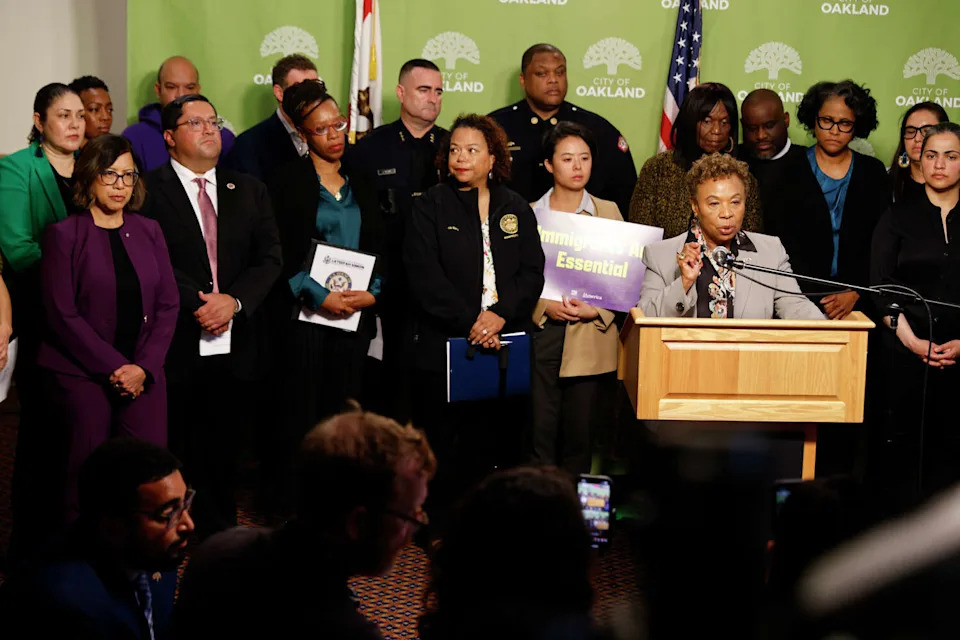
Mayor Barbara Lee during a news conference at Oakland City Hall. (Santiago Mejia/S.F. Chronicle)
“Some people want me to always condemn certain policies publicly, and I don’t think that’s very useful as mayor,” she said. “I try to work with everybody, even if I disagree.”
Lee, for example, was quiet when Council Member Ken Houston proposed a new encampment abatement policy last summer that would have allowed Oakland to clear encampments even if the city couldn’t offer shelter, reversing a previous policy. Lee worked in the background alongside Houston, and when the policy eventually passed in April, it had been significantly narrowed.
Few want to be seen going against a mayor who’s as widely respected as Lee, said Jason Overman, an Oakland-based political consultant and lobbyist.
“It felt like members of this City Council trampled over themselves to endorse her. They showed her that they wanted to be on her team, because she’s a leader,” Overman said. “The perception of strength carries a lot of weight in politics.”
Lee also said that she tries to avoid breaking ties on council. “People see that as interfering, as chaotic, as causing more division,” Lee said. “I know how Wall Street and the markets look at that too.”
“Residents deserve debate and different points of view… but they don’t deserve a mayor that is going to constantly fight against them,” she said.
Still, some say what’s important is not whether the council and Lee are cooperating, but whether they’re producing outcomes.
“Barbara Lee has helped lower the political temperature at City Hall. But Oaklanders are not giving City Hall a standing ovation because councilmembers are getting along,” said Trishala Vinnakota, who served as campaign manager for Lee’s opponent in last April’s election, Loren Taylor. “What matters to them is whether their families can walk their neighborhoods safely, whether the streets are clean and whether hitting a pothole will blow out a tire.”
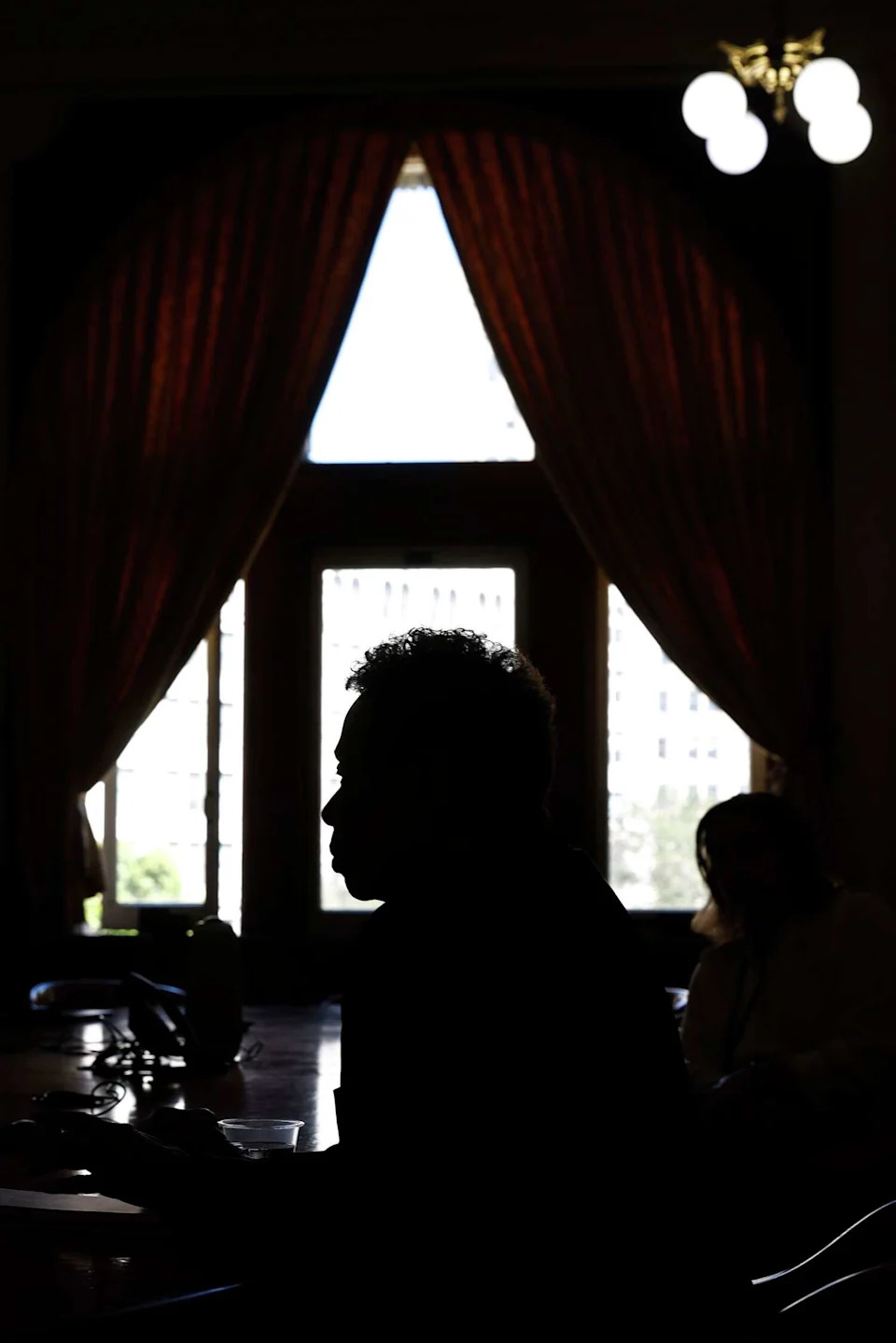
Oakland Mayor Barbara Lee speaks to the media ahead of her 365th day in office at Oakland City Hall in Oakland, Calif. Tuesday, May 19, 2026. (Jessica Christian/S.F. Chronicle)
Asked whether it was harder to get things done in Congress or in Oakland, Lee laughed.
“It’s a different kind of hard here,” Lee said. “This is hard work, but you can see the results of your work quicker here in Oakland.”
Lee recalled working with former President George W. Bush to pass a law called the President’s Emergency Plan for AIDS Relief, which increased funding to fight AIDS and Malaria around the world.
“If I can do it with George Bush,” she said, “I hope I can do it here.”
Subscribe
There’s more to San Francisco with the Chronicle. Subscribe today for just 25¢.
This article originally published at Barbara Lee says she’ll run again for Oakland mayor, hopes to continue era of ‘stability’.