
Los Angeles Trade-Tech College was electric on the October 2021 morning when Karen Bass kicked off her first mayoral campaign. More than 600 supporters, many holding aloft homemade signs, roared for the six-term congresswoman who the previous year made the shortlist to be Joe Biden’s running mate. A phalanx of L.A.’s political elite flanked Bass on stage, and when one speaker asked attendees to pull out their phones to make a campaign contribution, $20,000 materialized within 15 minutes. For Los Angeles, I dubbed the event “Bassapalooza.”
When Bass returned to the same room on Dec. 13, 2025, to launch her re-election bid, things were more subdued. After a brutal year of fires, ICE raids and a $1 billion city budget deficit, there were cheers, but fewer signs and some empty seats. Labor, business and political leaders sung the mayor’s praises, but the energy in the room wasn’t close to that of four years before. If you had watched Bass take L.A. by storm, the drop-off was clear.
Six months later, Los Angeles’ 43rd mayor is facing the kind of re-election battle royale incumbents almost never endure. Vote-by-mail ballots arrived in homes earlier this month, and as the June 2 primary nears, four principal challengers — Councilmember Nithya Raman, reality TV personality and Palisades Fire victim Spencer Pratt, businessman/ philanthropist Adam Miller and progressive housing advocate Rev. Rae Huang — have been lambasting Bass not only for the aforementioned crises, but also crumbling city infrastructure, the issue du jour of affordability and more. Bass parries the thrusts by citing drops in homelessness and violent crime, but the 2026 election arrives at a troubled time not just for the mayor, but the entire region. April’s UCLA Luskin Quality of Life Index found that county residents are less satisfied than at any time in the survey’s 11-year history. It included a mayoral poll that had Bass in first place, but with a dismal 25%. A stunning 40% of respondents were undecided.
“The context here really matters. In many ways, this moment feels similar to the 1990s. It’s an anti-incumbent environment,” says Miguel Santana, a longtime civic leader who is president and CEO of philanthropic organization the California Community Foundation, which partnered on the UCLA study.
“There’s additional anxiety about what’s ahead — the political climate, the midterms, the presidential election,” Santana continues. “It cuts across income levels — this is a moment of broad, shared unease.”
The challenges ahead, including preparing for the 2028 Summer Olympics, create an environment that could portend the first toppling of an incumbent L.A. mayor since Antonio Villaraigosa felled Jim Hahn in 2005. But whereas Villaraigosa was a well-known councilmember and former State Assembly speaker who had previously run for mayor, the 2026 lineup is no murderer’s row. While each of the four challengers claims a base, none boasts widespread name recognition, deep political experience or a scary war chest. If the mayor is weak, the field — which also includes nine lesser candidates — is weaker.
“This is the one scenario that could allow Karen Bass to survive a re-election,” says John Thomas, a GOP campaign strategist and managing director of the government affairs firm Nestpoint. Referring to spring polls that showed Bass with unfavorable ratings above 50%, he adds, “It’s coming together in such a way that even though she is completely upside down in her numbers, with existential threats to her incumbency, everything else has essentially lined up perfectly.”
He sums it up: “Any other incumbent in any other time would not survive.”
Scroll to continue reading
The viewpoint — a weakened mayor who may skate by — is one shared by many. For this story, I spoke with more than a dozen political and City Hall insiders, consultants, academics and former elected officials. The prevailing sentiment is that Bass leads the field, but is unlikely to secure a majority of the vote, and if no one surpasses 50%, the top two finishers move on to the November general election.
That turns the race into something easily overlooked but crucially important — a battle to do no worse than second place, because if you finish third, it’s game over. So while this election is about issues, performance, platforms and experience, it’s ultimately a math problem — no one will sniff 50%, so the candidates instead must build blocs and inspire supporters to actually vote. Experts think that given the large field, someone will make the runoff with 20% to 25%.
The uncertain landscape is comparable to the California governor’s race, which also lacks a runaway candidate who excites the populace. Just as the absence of figures such as Vice President Kamala Harris and Sen. Alex Padilla dulled that field, the L.A. contest is missing some big names. Millennial County Supervisor Lindsey Horvath flirted with a bid before saying no. Austin Beutner, a civic leader and former LAUSD Superintendent, entered the race, but pulled out after the tragic January death of his daughter.
More consequential is Rick Caruso, the billionaire mall developer who spent $109 million losing to Bass in 2022. Incessantly critical of the city’s handling of the Palisades Fire, Caruso waffled on whether he’d try again, or perhaps run for governor, before saying no to both options in January. But as long as he was on the fence, the specter of another deep-pocketed campaign kept some potential candidates from entering. Pratt, Miller and Raman all launched bids this year, with Raman filing papers on the last day possible, Feb. 7. It’s a short runway for a complex, expensive task.
“It is really hard to fly and build the plane at the same time given the stress of running a citywide race like the mayor’s race,” says Democratic strategist Michael Trujillo. He adds that, ideally, “You want to use 2025 to spend the least amount of money and raise the most, so you walk into 2026 with a healthy campaign war chest.”
The net result is a downright weird election packed with uncertainty. I’ve spoken with experts who are sure Bass gets a second term, and people confident that she’ll lose in any runoff. There’s ample disagreement on who makes the top two.
Dr. Raphael J. Sonenshein, a political expert who is executive director of the John Randolph Haynes and Dora Haynes Foundation, says, “The mayor is in a tough political spot, but you certainly can’t say she can’t be re-elected. No outcome is the favored outcome right now.”
Here’s a breakdown of the major candidates, how they reach the runoff and what could kneecap their campaign.
Mayor Karen Bass
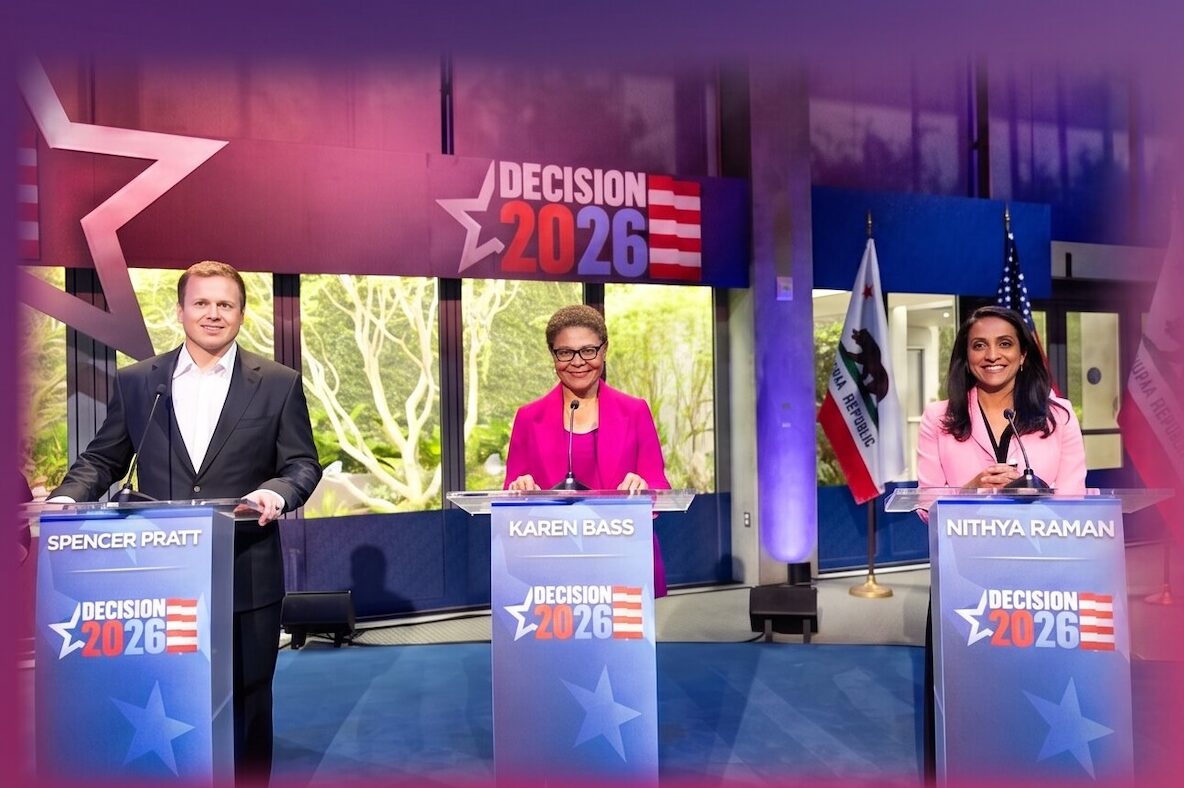
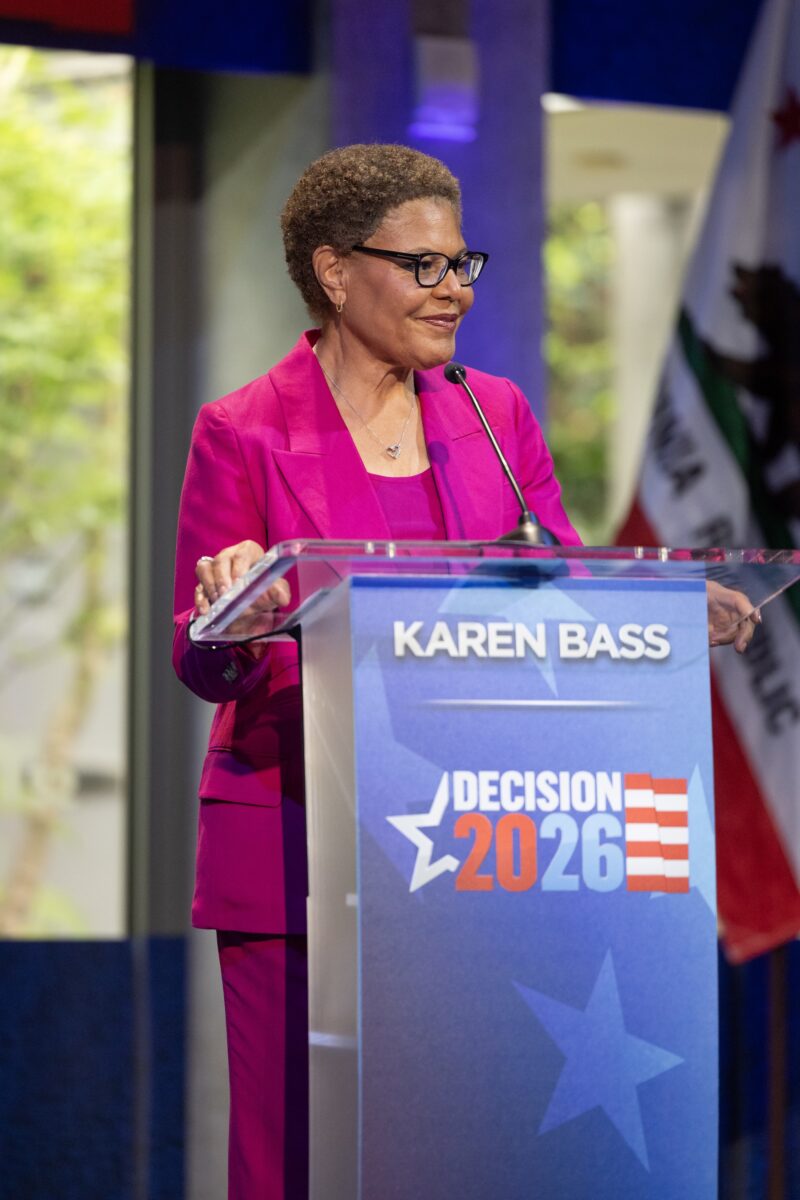 Credit: NBC4 and TELEMUNDO 52 California Gubernatorial and Los Angeles Mayoral Debates. MAY 6, 2026, at the Skirball Cultural Center. Photographer: Jon Rou/LMU
“Homelessness was going up year after year, and under my watch is the first time we’ve had a decrease in street homelessness. While it went up in the country 18%, it came down in Los Angeles 17.5%.” — Karen Bass at a May 6 Mayoral Debate
What’s her story?
The avalanche of criticism engulfing Bass makes it easy to forget how excited Los Angeles was to inaugurate its first African American woman mayor in December 2022. It was a crowning moment for the onetime physician assistant who started the South L.A. social justice nonprofit the Community Coalition, later served as Speaker of the State Assembly and then was elected to Congress.
It’s also easy to forget the high marks the mayor earned in year one, as “Lock Arms” became a mantra and she set a singular focus on addressing homelessness, including her Inside Safe initiative to move residents of eyesore tent encampments into hotels or motels.
The Jan. 7, 2025 Palisades Fire, which destroyed more than 6,800 structures and killed 12, changed everything — and not only because Bass had made an ill-timed trip to Ghana. Although she was back in L.A. on Jan. 8, she faced withering criticism for an empty city reservoir, LAFD deployment patterns and uninspired leadership. More heat came after she canned Fire Chief Kristin Crowley, though Crowley had gone on TV to blast Bass over the department’s budget.
That was the start of a whipsaw year that saw Bass and the City Council strain to plug a $1 billion budget deficit, in part by reducing services, followed by the horror show of ICE and Border Patrol Agents rampaging across Los Angeles.
Why she makes the runoff
The 25% support in the UCLA Luskin poll is lousy for an incumbent, but Zev Yaroslavsky, who conducted the Quality of Life survey, notes that she was well ahead of Pratt’s 11% and Raman’s 9%. Yaroslavsky, a former city councilmember and county supervisor who now is director of the Los Angeles Initiative at the UCLA Luskin School of Public Affairs, points to the undecided voters and adds, “She has a possibility of getting some of that 40%. There’s no reason to believe she’ll be shut out of that.”
Bass has ample achievements with which to woo voters: The 230 murders in L.A. in 2025 was the lowest figure in decades, and homelessness has fallen for two consecutive years, with a 17.5% drop in street homelessness since she took office. She has the endorsement of a raft of powerhouse unions, including the L.A. County Federation of Labor, and most leading business organizations. The L.A. County Democratic party backs her, as does Planned Parenthood, Sen. Adam Schiff and civil rights icon Dolores Huerta.
Bass’ biggest chip may be emerging as the face of the resistance when the immigration raids started, and her racing to MacArthur Park last June when federal troops showed up is highlighted in her first TV commercial. “Her leadership on the ICE raids was second to none,” says Yaroslavsky.
Democratic political strategist Dave Jacobson says that Bass’ role throughout the raids hits an electoral sweet spot.
“It’s a no-fucking-brainer. Any Democrat campaigning in Los Angeles — or anywhere in America — ought to campaign on fighting back against Donald Trump and ICE,” Jacobson says. “Poll after poll shows that’s what voters want.”
How it goes wrong
The fallout from the fires is inescapable, and it’s hard to forget that airport ambush interview where Bass looked lost. A fall L.A. Times report asserting Bass watered down an LAFD after-action report also burns (Bass strenuously denies doing so).
Some longtime Bass supporters have (quietly) grown frustrated with her performance, and criticism extends beyond the fires, with people blaming her for the copious homeless encampments that remain, and infrastructure problems such as busted sidewalks and darkened streetlights.
Then there’s money. While Bass’ $2.26 million in cash on hand as of April 18 (according to City Ethics Commission disclosures) exceeded all other candidates, her fundraising is relatively weak for an incumbent mayor.
Councilmember Nithya Raman
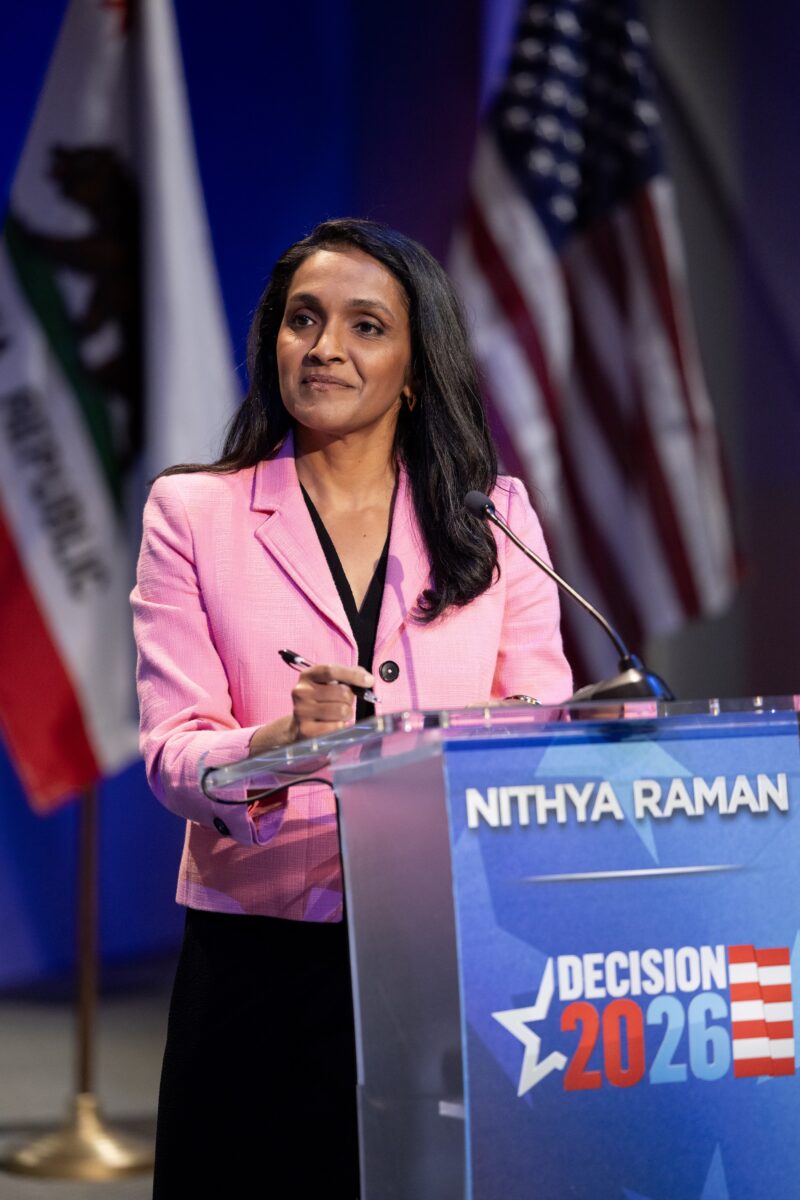 Credit: NBC4 and TELEMUNDO 52 California Gubernatorial and Los Angeles Mayoral Debates. MAY 6, 2026, at the Skirball Cultural Center. Photographer: Jon Rou/LMU
“In order to actually do something different in politics, we have to do something unusual: We have to be honest.” — Nithya Raman at an April 20 Press Conference
What’s her story?
On the afternoon of April 20, Raman, wearing a bright pink blazer and standing in a sunny West Adams pocket park, was slamming Bass’ just-released city spending plan. “This is a status quo budget that asks Angelenos to accept less as a new normal, and to pay more if we want things fixed,” Raman declared.
It was a striking take for the former Bass ally; when Raman ran for a second council term in 2024, Bass helped secure vital endorsements, and Raman barely avoided a runoff. Last November, the L.A. Times reported, Raman called Bass L.A.’s “most progressive mayor” ever. It’s partly why, after Raman’s last-minute entry, some pegged her as a backstabber.
Then again, Raman has rarely followed a predictable or party line. In her 2020 challenge of District 4 Councilmember David Ryu, Raman secured the backing of the L.A. chapter of the Democratic Socialists of America. She marshaled a “volunteer army” that, she told me for a Los Angeles story that October, knocked on 83,000 doors in the district. The progressive former urban planner became the first person to unseat a council incumbent in 17 years.
There’s a tendency to compare Raman to Zohran Mamdani, the democratic socialist mayor of New York City, but that’s not quite right. While Raman hews to the left of Bass, she’s moved toward the center on some issues; she advocates not just for more affordable housing but also more market-rate units, and her proposals to streamline permitting have won applause from some developers. Raman, once an advocate to “defund the police,” recently called for maintaining the LAPD’s current number of officers.
Why she makes the runoff
Raman, who was born in India and earned degrees from Harvard and MIT, is telegenic, likable and smart; she could appeal to people disappointed in Bass but seeking an alternative with political experience. She played a lead role on the council in enacting renter protections, and as a mayoral candidate has detailed plans to reduce homelessness and boost film production (her husband, Vali Chandrasekaran, is a prominent TV producer and writer). She cuts a good video.
Raman signed on with elections mastermind Jeff Millman, who helped get Eric Garcetti elected mayor. She raised $531,000 in her first two months on the campaign trail and had received nearly $1.1 million in city matching funds by May 10. She needs more to reach L.A.’s 2.2 million registered voters, but it’s a base on which to build.
How it goes wrong
Views on Raman within City Hall are mixed — nine of her council colleagues endorsed Bass, and Raman’s five-and-a-half years in politics is skimpy for a mayoral candidate. A number of her Silver Lake-to-Encino constituents complain that homelessness in District 4 is still widespread (Raman says she has made progress). Some feel she doesn’t do enough to clear encampments.
In addition to the tight timeline between announcement and election day, there’s baggage, with foes sharing a 2024 video where Raman sounded like she was blaming Toyota for the wave of catalytic converter thefts. The police union could spend seven figures on ads opposing her.
Additionally, her lane is narrow. While Raman peels votes from Bass, hardcore DSA types may opt for Huang. Observers think Raman has the best chance of defeating Bass in a runoff, but also that Huang could prevent her from getting there.
Spencer Pratt
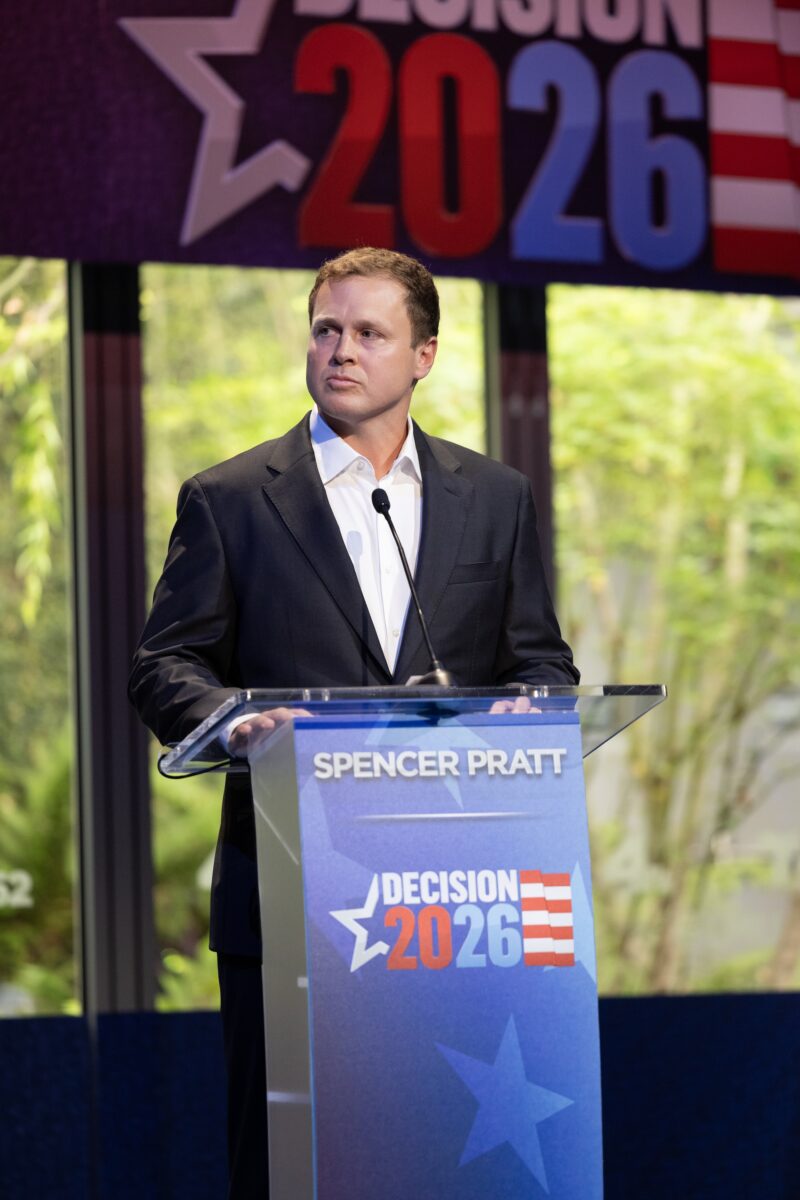 Credit: NBC4 and TELEMUNDO 52 California Gubernatorial and Los Angeles Mayoral Debates. MAY 6, 2026, at the Skirball Cultural Center. Photographer: Jon Rou/LMU
“They burned my house down. They burned my mom’s house down. They put me in the game.” — Spencer Pratt on The Joe Rogan Experience Podcast on April 15
What’s his story?
Pratt is a talented communicator and the race’s biggest surprise. Since announcing his candidacy at a Jan. 7 “They Let Us Burn” rally in the Palisades, he has transformed himself from an easily dismissed vanity candidate trying to goose sales of his new book, The Guy You Loved to Hate: Confessions from a Reality TV Villain, to a bombastic but legit contender who many experts think is dueling with Raman for a spot in the runoff .
If you knew Pratt before the campaign, it was probably for his heel role on the MTV reality series The Hills (2006-2010). He and co-star Heidi Montag married and had kids, and Pratt hawked crystal pendants — at least until the Palisades Fire. Afterward, Pratt seethed at local and state leaders, charging that preventative steps were missed; last September, he met in Washington with U.S. senators investigating the blaze. His criticism is relentless. “They burned my house down. They burned my mom’s house down,” he fumed on Joe Rogan’s podcast, The Joe Rogan Experience, on April 15. “They put me in the game.”
Pratt often comes off like a talk radio flamethrower, forever calling the mayor Karen “Basura” (Spanish for “trash”) and denigrating homeless addicts as “zombies.” But after decades in front of the camera, he knows how to rev up an audience. His campaign has expanded beyond fire outrage and employs a GOP bent as he decries a city bureaucracy he says is bedeviled by corruption.
Why he makes the runoff
Pratt is a Republican, and while Los Angeles is exceedingly blue, Donald Trump earned 26% of the city vote in November 2024. Although local elections are nonpartisan, this provides Pratt a pool of voters to target, and he’s doing so aggressively and effectively, with endorsements from Rogan and another popular podcaster, Adam Carolla. Pratt’s social media is a mix of heart-felt, furious and hilarious, and he earned raves for a 30-second spot that showed Bass and Raman’s homes before flipping to the silver trailer on the lot where Pratt’s house once stood. The ending slogan, “A New Golden Age for Los Angeles,” sounds like a cousin of “Make America Great Again.”
The $538,000 in contributions Pratt raised from Jan. 1 to April 18 bested every other candidate, showing fundraising prowess. Then there’s an unlikely potential boost: In May, a pro-Bass independent group began airing an ad that, three times in 30 seconds, references “Republican Spencer Pratt.” While critical, the belief is this could drive more Republicans his way on election day, pushing him into the runoff over Raman. It’s the tactic Adam Schiff employed in the 2024 U.S. Senate primary when he elevated hapless Republican Steve Garvey over Katie Porter. Observers believe Bass would prefer to face Pratt in round two — no observer thinks Pratt ultimately becomes mayor.
How it goes wrong
That 26% Trump vote is enticing, but turnout will be lower in a midterm primary election. Additionally, Trump’s popularity has tumbled, and Latino men who voted Republican in 2024 might not choose an L.A. MAGA type in the ICE raids era. Pratt’s lack of political experience could dissuade some change-seeking moderates, who may find another choice in Miller.
Additionally, despite outraising the other candidates, Pratt’s $315,000 in cash on hand as of April 18 is not enough for a sustained citywide campaign.
Rev. Rae Huang
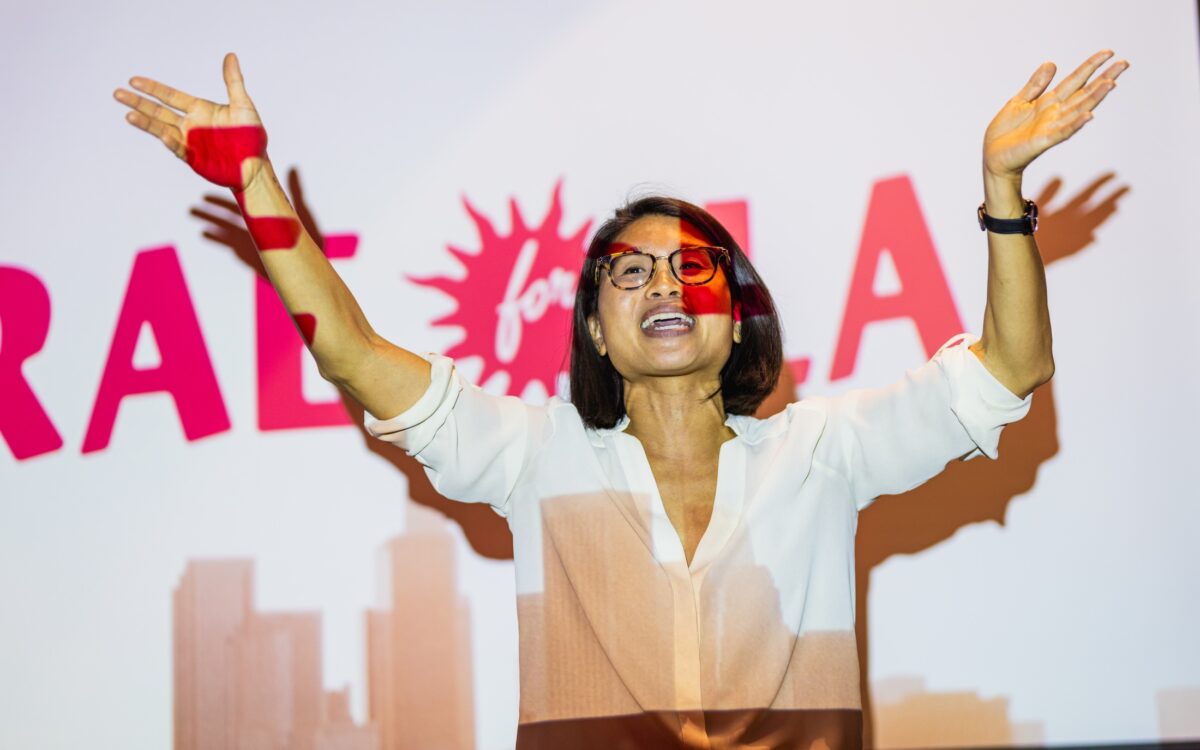 Reverend Rae Huang speaks to supporters at a launch party in Arts District Brewery following her mayoral campaign launch in Los Angeles, CA, on November 16, 2025. Photo by J.W. Hendricks/NurPhoto via AP.
“I’m running to make Los Angeles affordable and healthy, to lower our rent and deliver housing for all, to create an economy for the people, not the billionaires” — Rev. Rae Huang in her Launch Video on her website
What’s her story?
Unless the absolutely stunning occurs, the far-left Presbyterian minister and housing advocate won’t make the runoff (she was 3% in the Luskin poll). Still, she could impact the race, potentially spoiling the run of other candidates, primarily Raman.
The daughter of immigrants who, according to her website, “came to the United States with two suitcases,” Huang is deputy director of Housing NOW! California, an advocacy group that rails against “corporate landlords” and works to “combat the displacement crisis.” She’s a member of the Democratic Socialists of America with a platform calling for progressive staples such as free buses, social housing and a $30 per hour minimum wage for any business in the city with more than 50 employees. She wants to cut LAPD spending and fire Police Chief Jim McDonnell.
The single mother of two lives in Sawtelle and has never held elected office.
Why she makes the runoff
Could the unexpected occur? Huang has excellent, engaging social media, and is adept at the lively video. She’s also probably the most fun candidate in the race. She has called for a city Office of Nightlife, and her campaign events have included a Survivor watch party with a past winner and a “Raevolution” night with local bands at hip Highland Park spot the Lodge Room.
There’s an audience for her leftist track — in 2022, Gina Viola, who had similar policies, entered late and still finished with 7%. Huang has been campaigning since November and has a network of grassroots supporters.
How it goes wrong
Mayoral voters usually want some applicable experience, but nothing on Huang’s resume suggests she could lead a city with a $15 billion budget and more than 30,000 employees. Additionally, despite her socialist bona fides, the DSA-LA did not endorse in the mayor’s race, so Huang won’t benefit from their robust ground game. Also, Huang’s fundraising is anemic — on April 18 she had pulled in just $273,000 (including $65,000 in personal loans) and had a meager $22,154 in cash. She may get matching funds, but is unlikely to have the money for a prolonged ad campaign, and many older voters won’t follow her on Instagram.
Huang will appeal to the most zealous socialist voters, and if she claims the 7% that Viola earned, or does better, she may siphon crucial ballots from Raman. But if and to what degree this occurs remains something only voters will determine.
Adam Miller
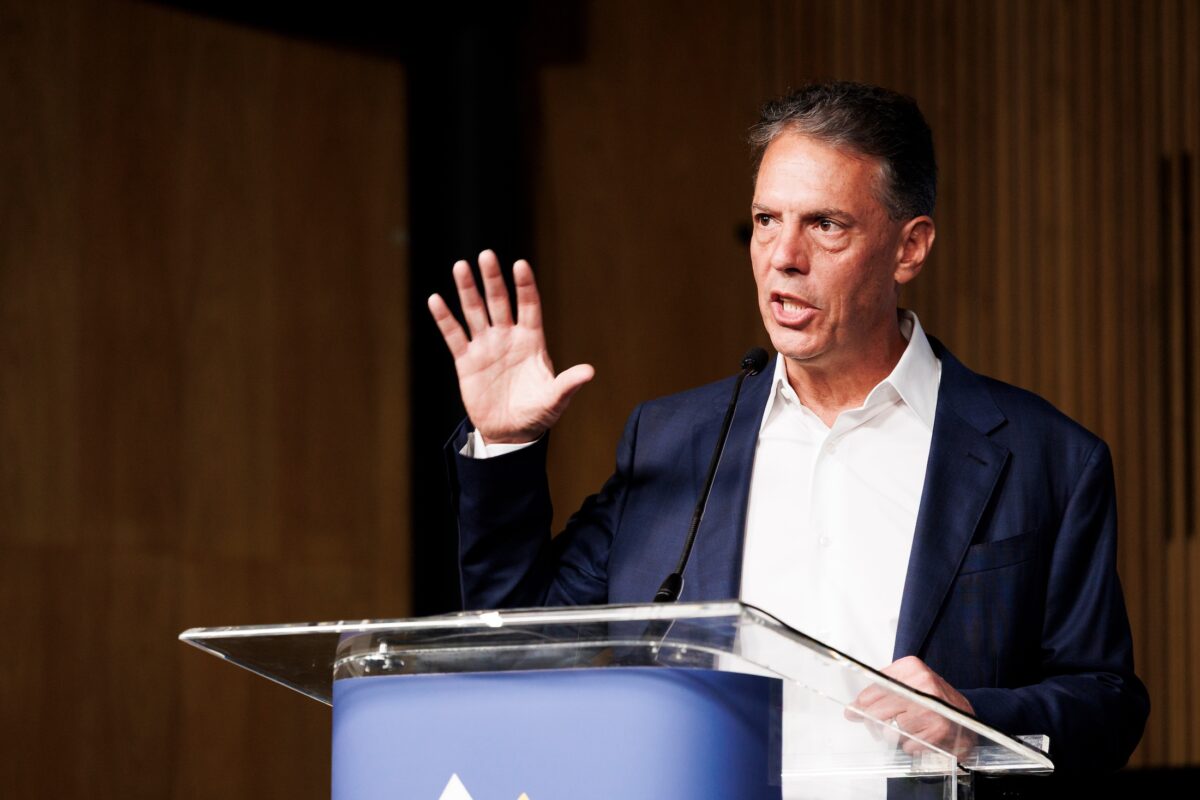 Adam Miller, nonprofit executive and entrepreneur, participates in the first mayoral debate of the 2026 election in Los Angeles, Calif., on March 23. The event was Housing Action Coalition and Streets For All and had Nithya Raman, Rae Huang, and Adam Miller participate, but current LA mayor, Karen Bass, and Spencer Pratt chose not to attend. Photo by Caylo Seals/Sipa USA. Sipa via AP Images.
“Los Angeles is not short on compassion, resources or talent. What we’re short on is effective leadership. — Adam Miller in his launch video on his website
What’s his story?
Miller is the most curious candidate in the race — a wealthy entrepreneur who in ads declares, “I built the largest education company in the world,” but who was barely known before launching his run. A campaign theme is that “L.A. is broken,” but even many close political observers had never heard of him seeking to fix things.
Miller is a New Jersey native who, as he tells it, came to Los Angeles for grad school, and at 29, started Cornerstone OnDemand, an education technology company that grew to more than 3,000 employees and was taken private in 2021 in a $5.2 billion transaction. He left the company and with his wife, co-founded Better Angels, which addresses homelessness through steps including delivering resources to those on the streets and seeking to prevent people from losing housing in the first place. He also served as chairman of Team Rubicon, a nonprofit disaster response organization that utilizes military veterans.
Why he makes the runoff
Money! City Ethics Commission disclosures reveal that Miller had loaned his campaign $2.5 million by mid-April, and in a race where no candidate is hauling in cash, he could dig deeper into his wallet and launch a TV ad blitz. Additionally, he’s the only person occupying the “successful businessman” lane, and that path earned Caruso 45% in the 2022 runoff. Miller is also working with well-regarded campaign strategist Bill Burton, and by late April, was posting videos touting his “7×7” plan offering (perhaps too-lofty) goals such as reducing street homelessness by 60% and hiring 1,400 police officers over four years.
How it goes wrong
Like Raman, Miller entered the race in February, and it’s hard to win over a city of 4 million in such a short period — especially when the UCLA Luskin poll had him at just 3% support. Additionally, some observers raised eyebrows at Miller’s early spending, questioning if the $1.67 million he dropped by April 18 was making him a factor. Then there’s the other side of wealth — some voters will dismiss an affluent self-funding candidate as trying to buy an office, particularly if that person was a political unknown.