
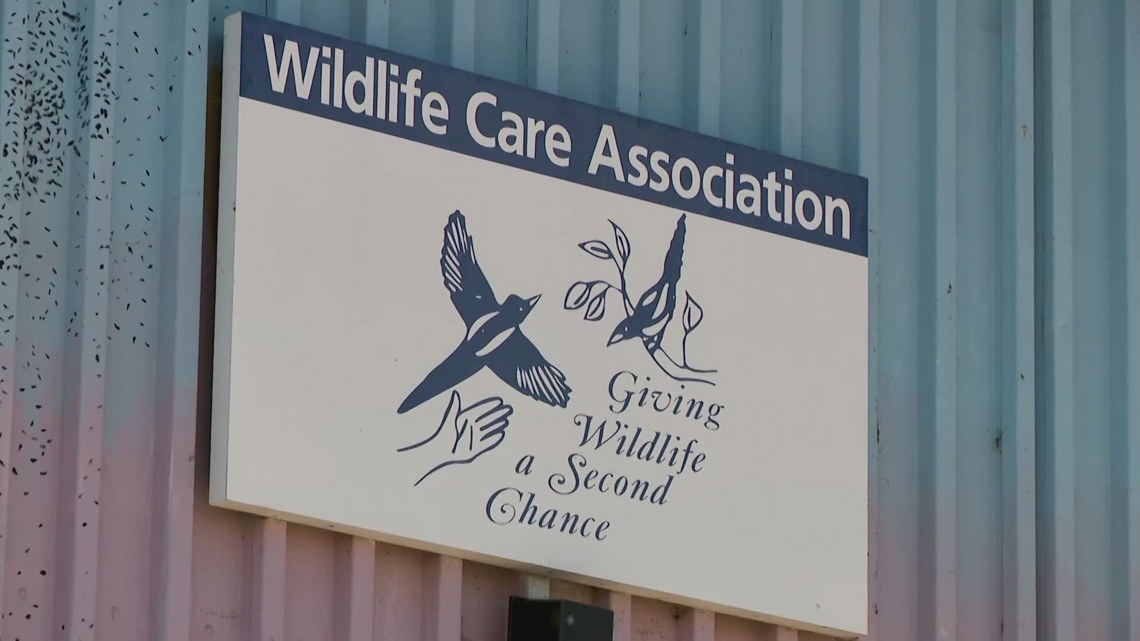
At Wildlife Care Association, led by passionate director Sandra Foreman, staff and volunteers work tirelessly to rescue and rehabilitate animals.
SACRAMENTO, Calif — At Wildlife Care Association in Sacramento, staff and volunteers work around the clock to rescue, rehabilitate and release injured and orphaned wildlife back into the wild.
Leading those efforts is Director Sandra Foreman, whom staff describes as the driving force behind one of California’s busiest wildlife rescue centers.
“Our mission is to rescue, rehabilitate and release wildlife,” Foreman said.
Inside the center, new patients arrive daily. On the day of the visit, staff showed stacks of boxes filled with injured and orphaned animals that had been dropped off that morning alone.
“We don’t name them. These are wild animals and they belong to the state of California and so we refer to them by their patient numbers,” Foreman said.
Foreman said her love for animals started early in life.
“Ever since I was little, I’ve always had quite a variety of pets. I’ve always loved animals from a very young age,” she said.
That passion led to years of experience through zoos, internships and wildlife rescue work. Today, Foreman oversees operations, medical care and the steady flow of animals entering the facility.
“I still wash dishes to this day. I still clean animals’ pens to this day,” Foreman said.
Some days, the center takes in as many as 80 new patients, many of them baby animals brought in during the spring season, including squirrels that have fallen from nests, hatchling birds that need frequent feedings and skunks separated too soon from their mothers.
Among them are young animals that require constant care. “This guy’s about six weeks,” Foreman said while caring for a young squirrel. She also pointed to hatchling birds in care, saying, “These are hatchling California scrub jays. They get fed every 30 minutes,” she said.
Foreman said the organization handles the highest volume of wildlife patients in the state.
“We receive the most patients and so we do have the highest volume of animals coming in and out of this facility,” she said.
Staff said donations directly support food, medical supplies and hands-on care for the animals. Foreman said the costs add up quickly.
“I know that one of the bags of food to make this food just one small is 55 dollars a bag and one tub of formula for our mammals is like 265 dollars for a 20-pound tub,” Foreman said.
Much of the work at the center is supported by volunteers like Rachel Nickel, who praised Foreman’s leadership and compassion.
“Seeing her handle animals that come through the door … that are in trauma that are injured… there’s a lot of emotion that comes with that, right? The individual in the community that cared enough to bring it in … and the way she has honored them and that door in that moment to thank them for coming and bringing this animal to us and then there’s this crisis situation that doesn’t feel like a crisis,” Nickel said.
Nickel said Foreman has created a place where both animals and volunteers are supported.
“I would thank her for having an opportunity… for running a place that allows people to have a place to go,” Nickel said.
Foreman said wildlife rehabilitation plays an important role in maintaining healthy ecosystems.
“Having wildlife be reestablished back into our ecosystems is incredibly important if we want to continue living with healthy ecosystems. All of their habitat loss is due to humans, and the more we push them out, the more animals come our way,” Foreman said.
Foreman also encouraged people who encounter wild animals to pause, observe and contact a wildlife center before intervening.
WATCH MORE: West Park High staff honored for saving student’s life
ABC10: Watch, Download, Read












1
/
12