
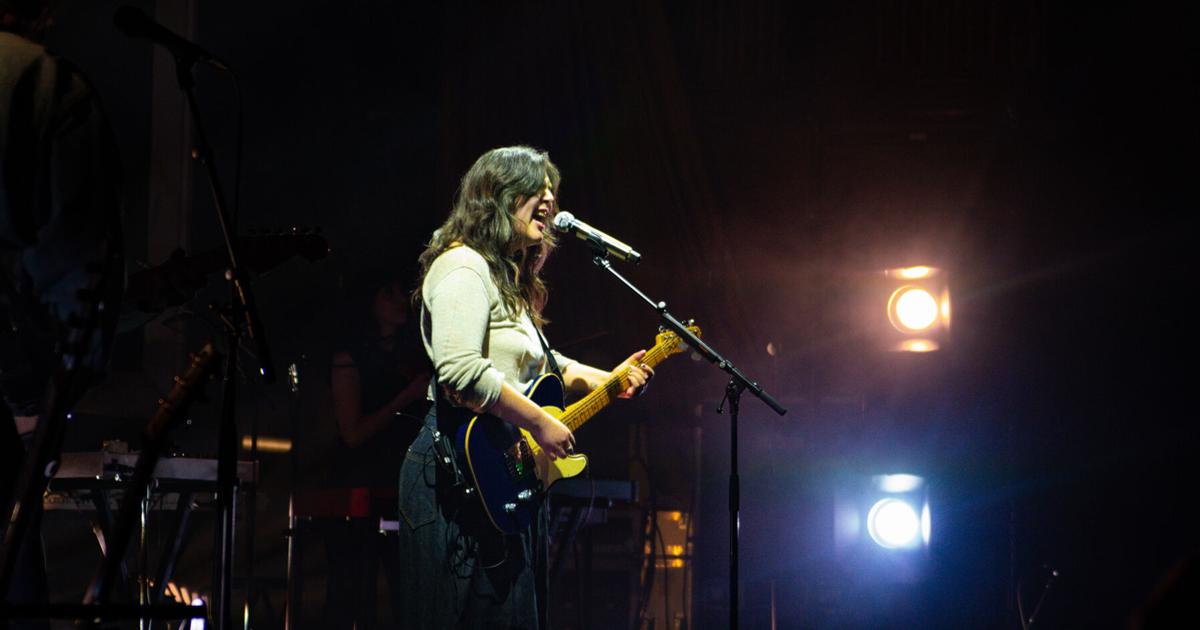
On the evening of Monday at San Francisco’s The Castro Theatre, indie enthusiasts of all ages arrived with hearts ready to bleed for Lucy Dacus’ first of two shows at the venue, a continuation of her tour for her 2025 release Forever Is a Feeling. Inside, under red and purple lights, the sold-out crowd stood misty-eyed, drinking in the fierce tenderness of the glow, their shirts proclaiming, “Lucy Dacus is for Lovers.”
The fans’ lofty self-characterization hinted at their expectations for the night. Poised for passion, they wanted music they could gush to, sentimentality expressed in the most grandiose of terms. In the 90 minutes to follow, the drama of Dacus’ performance — replete with props, dynamic stage movement and crowd interactions — certainly did the trick for the devotees present. However, while Dacus’ stage presence was diligent, it only questionably made up for the stagnancy of her sound, predictable and monotonously mid-tempo. Dacus’ blend of mild-mannered confessionalism and saccharine quasi-rock ultimately fell limp by the concert’s halfway point.
Starting the night strong, Dacus and her five-piece accompanying band took the stage triumphantly with “Hot & Heavy,” a solid pop track that established the sonic balance for the more uptempo songs to come. As the band set into a forceful, chugging rhythm, Dacus’ fluid voice dripped like a sweet glaze over the drum-heavy power-pop arrangement. Approached with more raucous intention in the concert setting than on the record, the aspirational edginess of the percussive instrumentation struck an interesting contrast with the cute disaffection of Dacus’ vocals. Dualistic contrast of this nature is a signature of Dacus’ sound, similarly cropping up in dynamic pivots from subdued pre-choruses into ardent refrains. Although rapturous the first time around, these “ramp-ups” quickly became stale and mechanical, featured on the majority of the tracks in the beginning third of the setlist.
All the same, the show’s anthemic moments proved the most redeeming, with the entertaining stage theatrics breathing life into Dacus’ somewhat plodding routine. During songs such as “Nonbeliever” and “I Don’t Wanna Be Funny Anymore,” Dacus and her band lurched and bounced vigorously, trading solos and switching places on stage. This energy remained for album standout “Partner in Crime,” which was performed with charming histrionics: Dacus fell to her knees in front of her guitarist, singing directly to the audience while splayed out on the floor. While these physical embellishments were carefully choreographed, the band nevertheless incorporated them with a gusto that lent an exciting sincerity to the experience, providing an effective distraction from the repetitive content of the songs.
As the show reached a slower pace, Dacus played a run of heartfelt snoozes from her newest record. Songs such as “Big Deal” and “Best Guess” suffered from tepid synth arrangements, mundane melodies and unambitious violin showcases. Although the lull marked a conspicuous decline in quality, Dacus wore a wry smile throughout that reflected an affirmed confidence: The audience was still entranced and itching for any demonstration of personality that might bridge the parasocial gap between themselves and Dacus.
Dutifully delivering, she addressed the crowd conversationally as she sang, toted around a stuffed animal extended from the audience, and asked rallying questions such as, “Who’s in love with their best friend?” Later in the performance, she summoned a blue velvet couch from backstage for a series of ballads. Seated, Dacus leaned into the increasingly intimate atmosphere further, singing her lyrics of emotional revelation and quotidian observation as though they were confidential, meant only for those 1,400 present in the room.
Of course, all of these dramatic gestures fulfilled their purpose. Judging from the crowd of Dacus’ acolytes, screaming hysterically to the last notes of the fan-favorite closer “Night Shift,” one might be tempted to suggest that they were unnecessary — that regardless of how Dacus behaved onstage, the audience’s reaction was predetermined. While this may be true, for the less devoted, Dacus’ charisma and love of spectacle saved the night, rendering a would-be boring set into a pleasant and lightly stirring experience.