
The Sacramento Mountains checkerspot butterfly, one of New Mexico’s rarest butterflies, faces growing extinction risk after the death of the last known captive caterpillar, according to conservation experts.The Sacramento Mountains checkerspot butterfly, scientifically known as Euphydryas anicia cloudcrofti, is found only in the Sacramento Mountains of southern New Mexico near Cloudcroft. Because the butterfly lives nowhere else, scientists say its decline is especially alarming.”It only lives there. It lives nowhere else,” said Quin Bain, a species survival specialist of invertebrates with the New Mexico BioPark Society.The last known captive Sacramento Mountains checkerspot caterpillar was born in 2022 and raised at the ABQ BioPark’s Bugarium. Bain said the caterpillar lived about three-and-a-half years, far longer than expected.Still, researchers knew survival through the winter was unlikely.”Everyone on the recovery team was very aware that there was a high likelihood this caterpillar would not survive winter,” Bain said.Bain said the caterpillar stopped eating late last summer and likely did not build enough fat reserves to survive diapause, the dormant overwintering stage that helps many insects survive cold temperatures.The Sacramento Mountains checkerspot butterfly was added to the federal endangered species list in 2023, although scientists had raised concerns about its decline since the 1990s. Bain said earlier that federal protection could have improved the chances of successful conservation by allowing intervention while the wild population was larger and genetically more diverse.Even after the death of the captive caterpillar, researchers say the Sacramento Mountains checkerspot butterfly may still exist in the wild. Survey teams are continuing to search meadows in the mountains, including areas that have not been fully surveyed.Bain said the possible loss of this butterfly may also signal larger problems in mountain habitats across New Mexico and the Southwest, including climate change, reduced snowpack, habitat stress and changes to native plants.”This is a canary in the coal mine situation,” Bain said. “This is not the only butterfly that is declining and is threatened by things like climate change.”This butterfly depends on New Mexico penstemon, or Penstemon neomexicanus, as its host plant during the caterpillar stage. As an adult, it also needs nectar sources, healthy mountain meadows and seasonal conditions that support its life cycle.Scientists say those same mountain habitats support other butterflies, moths, bees and wildlife, making the Sacramento Mountains checkerspot butterfly an important warning sign for broader biodiversity loss in New Mexico.Bain said people can help butterfly conservation efforts by protecting wild spaces, reducing pesticide use, planting nectar sources, and participating in community science projects that document butterflies and other pollinators.”I don’t believe that this species is extinct at this point in time,” Bain said. “But this butterfly exists at very high threat of extinction.”
OTERO COUNTY, N.M. —
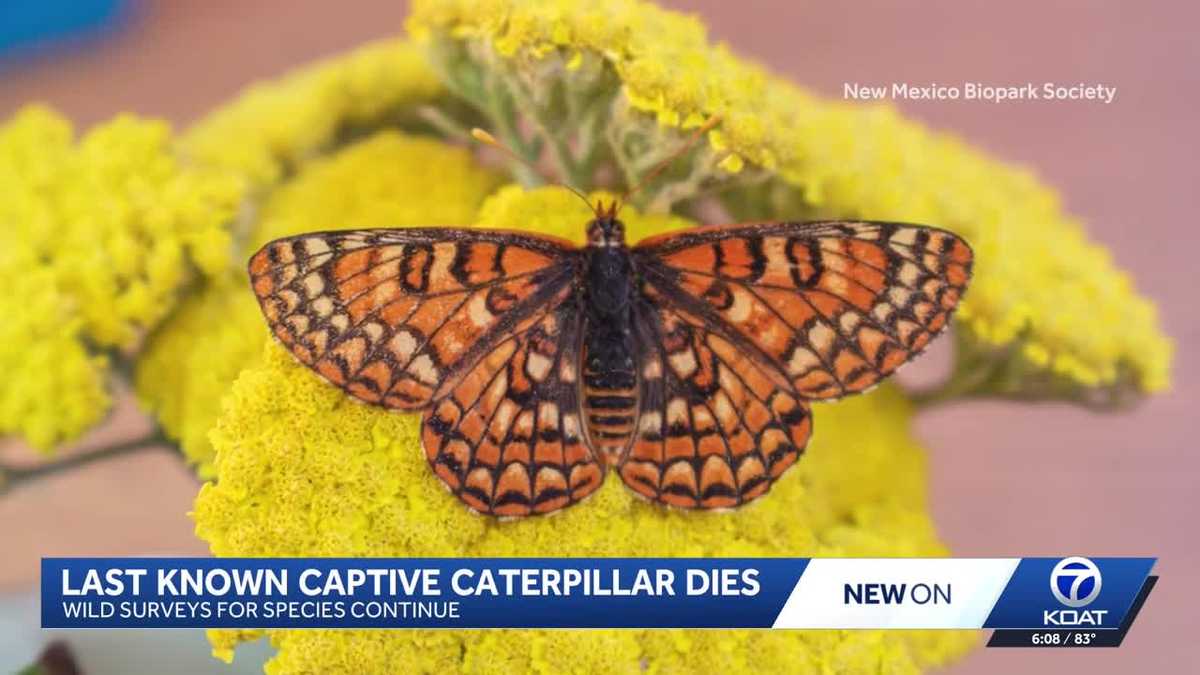
The Sacramento Mountains checkerspot butterfly, one of New Mexico’s rarest butterflies, faces growing extinction risk after the death of the last known captive caterpillar, according to conservation experts.
The Sacramento Mountains checkerspot butterfly, scientifically known as Euphydryas anicia cloudcrofti, is found only in the Sacramento Mountains of southern New Mexico near Cloudcroft. Because the butterfly lives nowhere else, scientists say its decline is especially alarming.
“It only lives there. It lives nowhere else,” said Quin Bain, a species survival specialist of invertebrates with the New Mexico BioPark Society.
The last known captive Sacramento Mountains checkerspot caterpillar was born in 2022 and raised at the ABQ BioPark’s Bugarium. Bain said the caterpillar lived about three-and-a-half years, far longer than expected.
Still, researchers knew survival through the winter was unlikely.
“Everyone on the recovery team was very aware that there was a high likelihood this caterpillar would not survive winter,” Bain said.
Bain said the caterpillar stopped eating late last summer and likely did not build enough fat reserves to survive diapause, the dormant overwintering stage that helps many insects survive cold temperatures.
The Sacramento Mountains checkerspot butterfly was added to the federal endangered species list in 2023, although scientists had raised concerns about its decline since the 1990s. Bain said earlier that federal protection could have improved the chances of successful conservation by allowing intervention while the wild population was larger and genetically more diverse.
Even after the death of the captive caterpillar, researchers say the Sacramento Mountains checkerspot butterfly may still exist in the wild. Survey teams are continuing to search meadows in the mountains, including areas that have not been fully surveyed.
Bain said the possible loss of this butterfly may also signal larger problems in mountain habitats across New Mexico and the Southwest, including climate change, reduced snowpack, habitat stress and changes to native plants.
“This is a canary in the coal mine situation,” Bain said. “This is not the only butterfly that is declining and is threatened by things like climate change.”
This butterfly depends on New Mexico penstemon, or Penstemon neomexicanus, as its host plant during the caterpillar stage. As an adult, it also needs nectar sources, healthy mountain meadows and seasonal conditions that support its life cycle.
Scientists say those same mountain habitats support other butterflies, moths, bees and wildlife, making the Sacramento Mountains checkerspot butterfly an important warning sign for broader biodiversity loss in New Mexico.
Bain said people can help butterfly conservation efforts by protecting wild spaces, reducing pesticide use, planting nectar sources, and participating in community science projects that document butterflies and other pollinators.
“I don’t believe that this species is extinct at this point in time,” Bain said. “But this butterfly exists at very high threat of extinction.”