
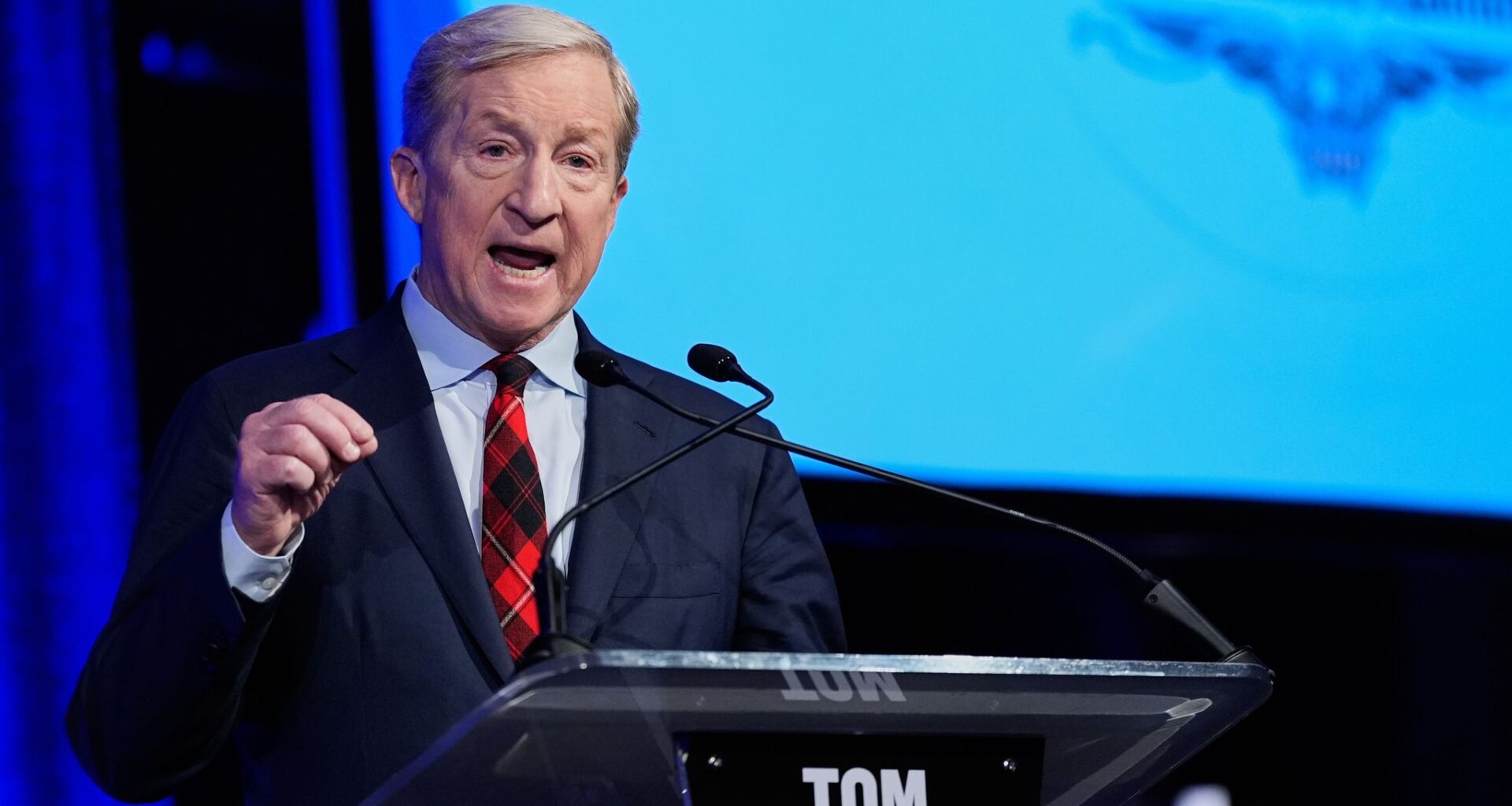
Tom Steyer speaks during a California gubernatorial debate in San Francisco on May 14, 2026.
Godofredo A. Vásquez/Associated Press
Last month, Carly Nelson, a Tampa, Florida-based influencer and social media consultant, made an unusual departure from her typical stream of fashion photos and motivational quotes by weighing in on California politics.
“They don’t want young people paying attention to this California governor race,” she posted in a May 11 video under a new account with no followers, in which she described herself as a “yapper from so-cal.” “Because when people actually pay attention they start asking, ‘Why are corporations funding every candidate? ’ Except one: Tom Steyer.”
There was no mention that Steyer’s campaign had spent $380 for the ad through an independent consulting company.
Article continues below this ad
New campaign filings show that between April 19 and May 16, Steyer’s campaign paid at least $122,000 to social media influencers and content creator platforms. The actual figure is likely higher since campaign finance data does not always clearly show how money is spent — the Chronicle only included payments that went to named influencers on Instagram, X or TikTok.
The campaign also paid more than $2.6 million during the same month-long period to the digital strategy consulting firm Group Project. Some of that contributed to the $122,000 for social media posts, though much of the company’s reported third-party payments were for unspecified “online communications.”
San Francisco Chronicle Logo
Make us a Preferred Source to get more of our news when you search.
Add Preferred Source
Steyer, a former hedge fund manager, has pumped more than $194 million of his own money into his campaign, the most a California candidate has ever spent self-funding their race.
Steyer’s recruitment of social media personalities has come under scrutiny as complaints stack up against the campaign for having not ensured that influencers disclose on their posts that they were paid. Steyer has fought back, launching his own attacks against rival candidate Xavier Becerra.
Article continues below this ad
The fight over paid influencers illustrates how important online content creators have become in political campaigns, blurring the lines between organic support for candidates versus paid promotions.
In 2023, California passed a law requiring social media influencers to disclose when they are paid to post a political ad. The law puts the onus on the influencer to post the disclaimer — but also requires campaign committees to give influencers they hire notice that it’s required.
The accusations against Steyer kicked off this week when content creators Kaitlyn Hennesy and Beatrice Gomberg, both supporters of Becerra, filed a complaint with the California Fair Political Practices Commission after they noticed a number of influencers posting videos promoting Steyer, without disclosing they had been paid.
Steyer’s campaign fired back with its own FPPC complaint against Becerra’s campaign and influencers who they allege didn’t make proper disclosures. It alleges that influencer Jay Gonzalez made dozens of pro-Becerra posts throughout April and May after he was hired by the Becerra campaign as a social media strategist, and that he later added disclaimers. The complaint alleges that another creator, Maggie Reed, was paid to post four pro-Becerra videos on Instagram.
On Thursday, Steyer’s campaign escalated things further, alleging that numerous fake social media accounts on X and Facebook coordinated to amplify Becerra and attack Steyer.
Article continues below this ad
Reed on Thursday filed her own FPPC complaint against Steyer’s campaign, saying that it had paid her $5,000 in March to attend a meet-and-greet lunch, and that her contract had also required her to keep the payment confidential. Steyer’s campaign has said that Reed was paid to attend the event but not required to post about it.
Steyer has stood by his campaign’s payments to influencers. “In 2026, creators are a central part of how people communicate, learn, organize, and understand the world around them,” Steyer wrote in a May 19 Substack post. “Every dollar spent by this campaign is publicly disclosed and available for anyone to see.”
In an interview, Hennesy and Gomberg called Steyer’s FPPC complaint “retributive.”
“He’s trying to not take responsibility and instead is throwing other people under the bus,” Gomberg said.
It’s not unusual for campaigns or their supporters to file dueling FPCC complaints, which are often not resolved until after an election has taken place. Anyone can file a complaint with the FPCC, and there’s no standard that evidence be included in complaints alleging wrongdoing.
Article continues below this ad
Becerra spokesperson Jonathan Underland said the campaign has not paid influencers for content, but does engage influencers similarly to the ways in which it handles traditional and print media. The campaign may offer them the chance to do interviews, or hand out the campaign’s talking points, he said.
“We find ourselves in a media ecology where many influencers have made politics their brand,” said Martin Johannes Riedl, an assistant professor of journalism at the University of Tennessee. “They may not get paid for it, but … this is how they get an audience. Their economic model runs on politics.”
These influencers — both paid and unpaid — have become an enormous part of campaigns, Riedl said. While California requires influencers to disclose if they are paid, federal election laws do not.
Through a digital media publisher, Steyer’s campaign gave $50,000 to the creators of “Foos Gone Wild” for “online communications” on Instagram and TikTok, campaign finance records show. The TikTok account, which has 1.1 million followers, posted a 3-minute video earlier this month in which Steyer walks through Los Angeles with a man in a hockey mask and talks about ICE and his regrets over investing in private prisons. The two then grab lunch at a Boyle Heights taco truck. Steyer wears a T-shirt in the video that says “Deport All Racists,” but frequently holds a microphone blocking the first two words, leaving only “Racists” visible.
Steyer’s campaign, through one of its media consultants, directed another $25,000 to influencer Thomas Marcus, whose most recent posts on Instagram under the pseudonym “Quentin Quarantino” have focused on Palestinian rights and alleged human rights violations by the Israeli government. The campaign also paid $25,000 to The Shaderoom LLC, a media company that “covers entertainment, music, world news, politics, style, and more through an unbiased, unfiltered, and unapologetic Black lens.”
Article continues below this ad
Both run social media accounts that have supported Steyer’s bid for governor and criticized Becerra. At least one post by “Quentin Quarantino” was edited to include a note saying it was “paid by Steyer for Gov but I mean every bit of it!”
Steyer’s campaign appears to have paid other Florida-based influencers besides Gordon. An account with the name @isabel.speakss on TikTok was created this month, and has posted 50 times about the governor’s race, with the most popular post getting 1,600 views. The account appears to be run by Jade Johnson, who also makes money by posting Amazon product reviews.
Gordon is among the influencers who have added disclaimers to their posts since the FPPC complaints were filed.
In a post Thursday night, Gordon turned to the camera. “Yes, this is an ad,” she said. “Because apparently wanting affordable healthcare is political now.”