
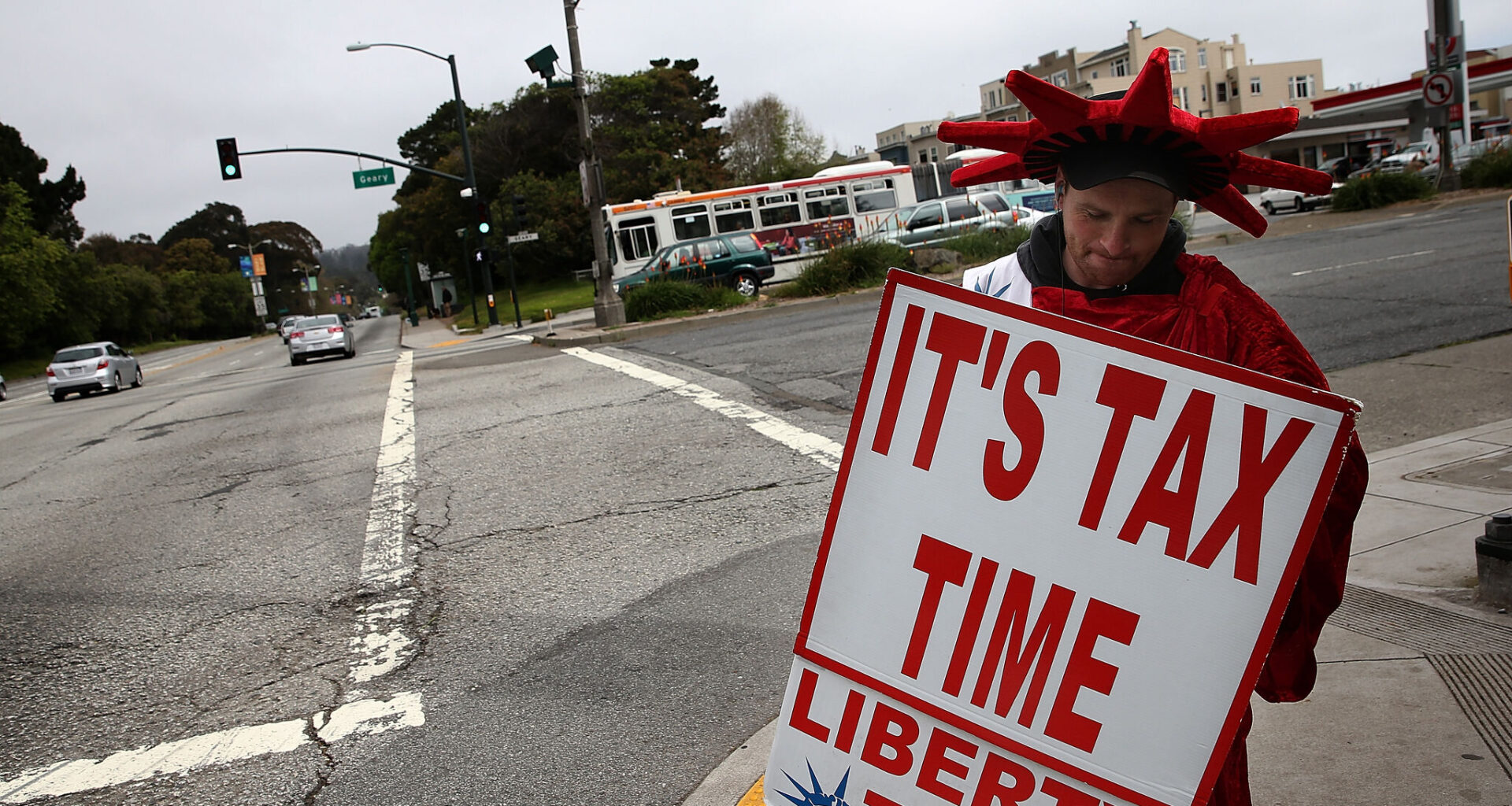
Californians reported mixed experiences filing taxes this year in the wake of the Republicans’ sweeping 2025 tax and spending package.
Justin Sullivan/Getty Images
Last summer, President Donald Trump pitched the One Big Beautiful Bill Act as “the largest tax cut in American history” that would spur a “blue-collar boom.”
Changes touted by the tax bill’s Republican sponsors included new permanent cuts that primarily benefit high earners — including a higher cap on state and local tax deductions, or SALT — as well as deductions for people such as seniors, tipped workers and some car buyers that will expire after the last year of Trump’s term.
But when the Chronicle surveyed readers and tax pros in California about what they saw on their tax returns this year in the wake of the legislation, they didn’t seem all that impressed.
Article continues below this ad
“The refund was pretty much the same as every year for the past 20 years,” a senior in San Francisco wrote.
“I made less money this year but paid more in taxes percentage wise,” a reader in Mount Shasta said.
San Francisco Chronicle Logo
Make us a Preferred Source to get more of our news when you search.
Add Preferred Source
“Paying more than ever,” said a reader in Lafayette. A reader in Half Moon Bay echoed that: “I paid more than usual.”
Tax preparers we spoke to said these comments were typical of what they heard from clients: No massive windfalls, but a mixed bag of outcomes that ranged from modest refund bumps to a slightly larger bill. For most, the “blue-collar boom” was barely a whisper.
Article continues below this ad
The OBBBA extended existing cuts that otherwise would have expired, which could account for why some people wouldn’t have noticed much of a change this year, said Yishai Kabaker, a certified public accountant and tax partner at accounting firm Gursey Schneider.
“Most taxpayers did not feel a dramatic difference,” he said in an email.
He highlighted a couple of changes people might have paid more attention to: Upper middle-class California homeowners probably benefited from the changes to SALT deductions, and the enhanced bonus depreciation could have motivated business owners to make more capital expenditures.
• Read: New SALT cap means savings for California homeowners. Here’s how much
• Read: Filing your taxes? Here’s what’s different for Californians this year
Article continues below this ad
“I think a slightly bigger change will be felt in 2026 when the charitable deduction limitation and the overall itemized deduction kicks in,” he said.
Karla Dennis, a federally licensed tax practitioner and CEO of tax strategy agency KDA Inc., said most of her clients are high earners who were pleased with the expanded SALT deduction and bonus depreciation changes.
The tax bill also cut tax credits for Affordable Care Act-compliant healthcare plans. A reader in Berkeley who volunteered as a tax preparer for AARP said they saw firsthand what impact that had.
“I did the return of one low-income woman who was hit with a $3,000 tax bill,” because of the changes to subsidies, the reader said, calling it “beyond cruel.”
The “senior deduction” gave people 65 and older a new $6,000 deduction, though it was subject to phaseouts at higher income levels. Richard Pon, a certified public accountant and certified financial planner in San Francisco, said some of his clients were ineligible because of their incomes, which also impacted their eligibility for the enhanced SALT deduction.
Article continues below this ad
Some people were happy with their returns.
“I got a bigger than expected refund,” said a reader in Campbell — almost double from the previous year.
“I owed almost a thousand dollars less this year,” said a reader in San Francisco.
One reader noted that while the OBBBA changed income taxes, it didn’t change tax withholdings on paychecks, which meant the benefits would come all at once at tax time instead of via slightly larger (and perhaps less noticeable) paychecks throughout the year. The center-right nonpartisan Tax Foundation came to the same conclusion: “Instead of gradually receiving the benefit of the tax cuts through higher take-home pay during the year, most taxpayers will receive it all at once when they file their returns.”
Another reader described being able to get a tax break due to the previous president’s policies.
Article continues below this ad
“Our substantial benefit was because of the Biden tax breaks since we took advantage of the 30% deduction for converting our home to solar and electric HVAC in 2025 — before the break expired in 2026,” a reader in Napa said. “There was a small refund this year.”
• Read: Here’s how much tariffs are costing Californians, according to experts
• Read: Bay Area housing prices aren’t going to crash. This is what will happen instead
What the numbers say about the big-picture impact
Both the Tax Foundation and the Institute for Taxation and Economic Policy, a progressive nonpartisan think tank, analyzed what the dollar-amount impact would be as a result of Trump’s taxation policies.
The Tax Foundation found that the OBBBA would lead to a national average $611 tax cut.
“Middle and upper-middle income groups will see the largest share of filers with a tax cut,” co-authors Garrett Watson and Erica York wrote in their analysis. “Lower-income filers with little to no tax liability do not benefit, while the very highest-income taxpayers are ineligible to benefit from most of the new tax cuts due to income limits.”
Watson also analyzed the difference between the average amount taxpayers would pay this year compared with a scenario where the 2017 Tax Cuts and Jobs Act provisions had been allowed to expire and the OBBBA didn’t exist. In that analysis, the average U.S. taxpayer would have been on track for a $2,300 tax cut in 2026. For Californians, it would have worked out to an average tax cut of $4,296.
That analysis found the most concentrated impacts in resort mountain towns and the least impact in rural areas. Watson said that’s probably because there are more high earners in those mountain towns reaping more benefits from the new tax code, while lower-income rural people benefit less.
The tax omnibus wasn’t the only factor impacting people’s bottom lines this year. Tariffs have driven up the price of goods across the board, including groceries. In another study from the Tax Foundation, the authors wrote that those tariffs “threaten to offset much of the GDP growth from the tax cuts, while falling short of paying for them.”
The Institute for Taxation and Economic Policy looked at the overall impact of Trump policies including the OBBBA and tariffs on tax outcomes for the middle 60% of earners — so, leaving out people who are in the bottom 20% and top 20%.
“When added together, all these tax changes result in a tax increase for most Americans,” the study found. It concluded that the average Californian in that middle 60% of earners would pay $990 more in taxes for the 2025 tax year.