
For The Union-Tribune
A trio of sea lions frolicked in front of us as we snorkeled on the coast of the Galapagos Islands. A sea turtle glided by a few meters from us, unfazed by our presence. A school of orange and silver parrotfish swam below us, shimmering in the clear water.
This is part of the magic of the Galapagos Islands, which were made famous by Charles Darwin some 190 years ago when he visited and used his observations about its species — some of them found nowhere else on earth — to develop his theory of evolution. The wildlife is more curious than scared by our presence because a lack of significant predators has left many of them fearless.
In the course of my family’s travels to this archipelago about 600 miles off the coast of Ecuador, we swam alongside blacktip reef sharks, shared bike paths with Galapagos tortoises and walked gingerly around sea lions napping on the sidewalk. It was up to us visitors to follow the national park rules and stay at least 6 feet away from the animals.
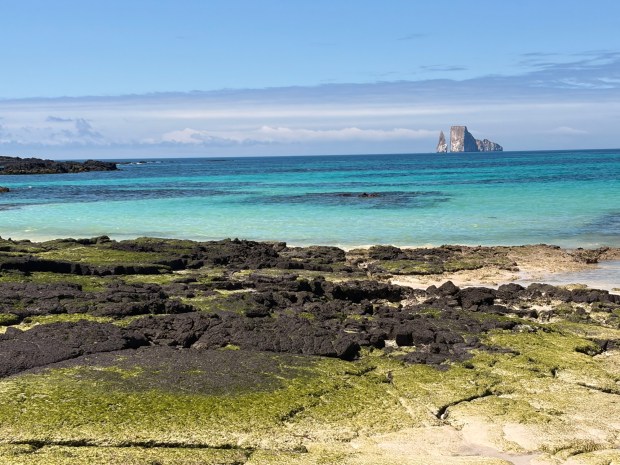 Kicker Rock, named because it resembles a boot, is one of the best places to snorkel and dive in the Galapagos. Between the volcanic formations there is an underwater channel where hammerhead sharks, rays and turtles roam. (Eleanor Yang Su)
A leader in ecotourism
The Galapagos National Park and Marine Reserve encompass — and protect — about 97 percent of the land on the islands and 51,000 square miles of surrounding ocean.
“The Galapagos Islands are a leading standard for how ecotourism should be done,” said Chloe King, a Cambridge University doctoral student who has spent several years researching the intersection of conservation and tourism on the islands. There is a strict approval process for boats that cruise the islands, and limits on the maximum number of passengers allowed per tour. Visitors to the park must enter with certified naturalist guides.
“But with that being said,” King added, “there are a lot of impacts and challenges caused by the dramatic rise in tourism in the past two decades.”
Visits to the Galapagos have risen about 260 percent in 20 years, King said, which has drawn heavily on the islands’ limited water, electrical supply and waste management system. The impact of “unsustainable human activity,” climate change and overfishing could create irreversible problems for the Galapagos, according to a report by the Charles Darwin Foundation published last year.
Increasingly, the question being raised is how visitors to the Galapagos can minimize their environmental impact.
After our snorkel around the volcanic towers of Kicker Rock (day trip, from $166 per person with Galapagos Deep), we climbed back aboard the catamaran. Our guide, native Galapagueno Oswaldo Quiroz, lifted a champagne-filled glass for a toast. He noted the important role visitors play, by coming to this paradise and learning to love and care for it, just like the locals.
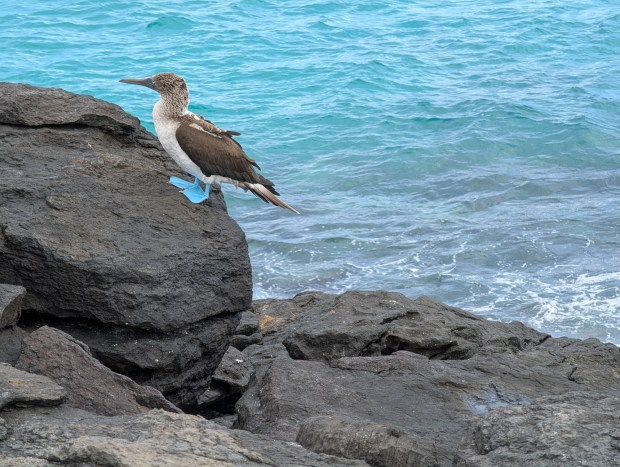 The blue-footed booby is best known for its bright blue webbed feet. Males use their vibrantly colored feet in an elaborate courtship dance to attract females. (Andrew Su)
A wide variety of rare creatures
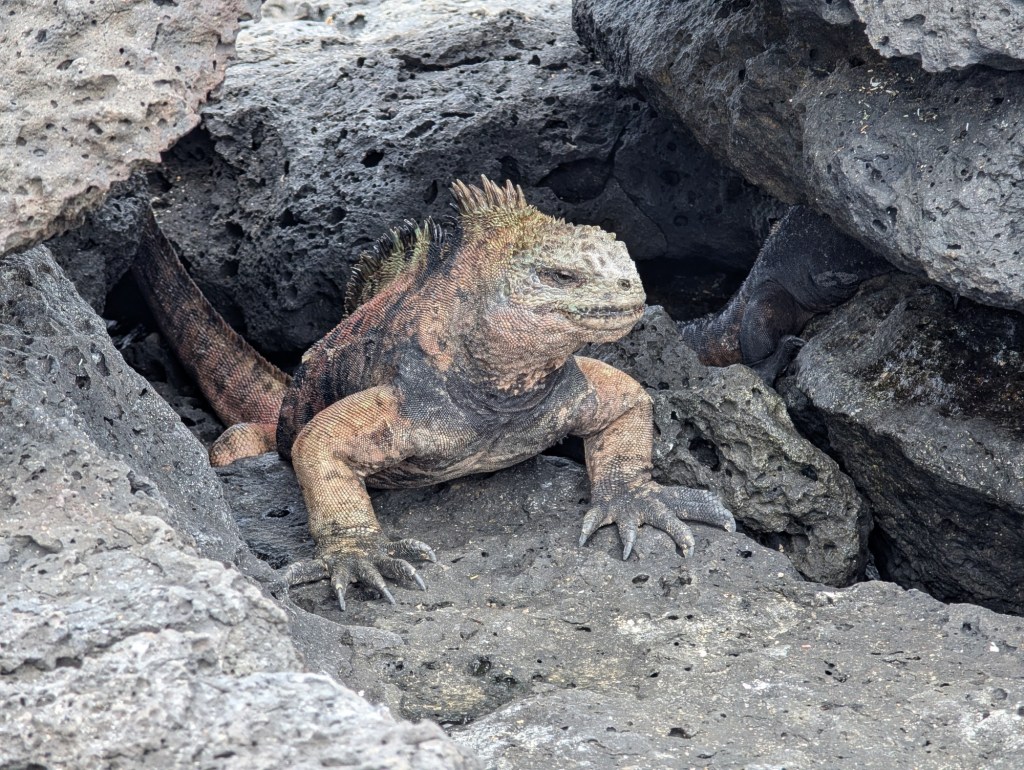
On the boat ride back to San Cristobal Island, we spotted a 4-foot-long marine iguana as it zipped through the water near the pier. Its long tail undulated along the surface like a serpent. The marine iguana is the only lizard in the world that has evolved to forage in the ocean. Like so many of the other creatures on the islands, it is endemic, meaning it is native and lives only in this region.
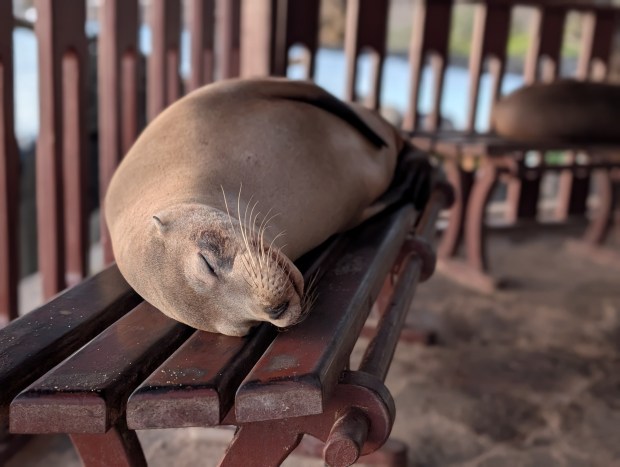 The sea lion population on San Cristobal Island is one of the largest in the archipelago. Sea lions are considered an apex predator and help control the number of fish, squid and crustaceans. (Andrew Su)
San Cristobal Island is a haven for sea lions. The pinnipeds nap on wooden benches in town, rest on the patios of restaurants and roam as they please. We walked from the port along the beach and observed colonies of sea lions barking and resting on the volcanic rocks.
After a 15-minute walk, we arrived at the San Cristobal Interpretation Center, which tells the history of the archipelago of about 20 islands. It explains how the oldest Galapagos Islands were formed by volcanoes about 5 million years ago, roughly 600 miles west of mainland Ecuador. The interpretation center is free and worth a visit, especially because behind it, there are paved paths that snake up a hill and provide expansive coastal views.
San Cristobal’s main town, Puerto Baquerizo Moreno, has only 7,200 residents but offers plenty of dining options. We followed the recommendation of the friendly host of our guesthouse (Casa Mabell, from $140/night for a three-bedroom apartment) and headed to Midori Sushi Pub, an oceanfront restaurant where we found bright sushi rolls made from fresh-caught seafood. The entrees ranged in price from $15 to $25-plus U.S. dollars, which is the national currency in Ecuador.
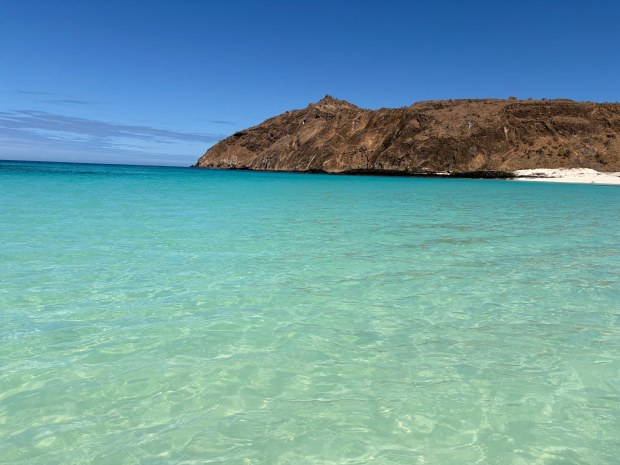 The beach at Wizard Hill features white sand that is as fine as powdered sugar. The turquoise blue waters are clear enough to spot schools of blue and yellow parrotfish. (Eleanor Yang Su)
A lighter travel footprint
Much of the work of minimizing the environmental impact of a visit to the Galapagos takes place before setting foot on the islands. The single most important step, according to the Galapagos Conservation Trust, is to book tours, accommodations and meals with licensed businesses because they must follow stringent government rules for safety, environmental compliance and taxation. An online directory lists licensed tour companies, restaurants, hotels and hostels, organized by island: Visit bit.ly/GalapagosTourDirectory.
Another tip is to learn about the islands’ history to understand the reasons for the national park rules, King said. On a visit to a tortoise breeding center in the San Cristobal Highlands we saw up close how the Galapagos National Park Directorate and other groups are working to restore the population of tortoises. Over the centuries, the tortoise population went from over 200,000 to an estimated 15,000 because of poachers and invasive species of rats, goats and pigs, which ate their food sources and eggs. These days, Galapagos tortoise numbers have rebounded to an estimated 40,000 with the help of breeding centers, habitat restoration projects and the elimination of some invasive species.
At the center, we walked along a path past several 500-pound tortoises as they relaxed in pools of mud. In a protected area, baby tortoises smaller than our hands crawled about, munching native plant leaves.
Another sustainable travel tip is to pick up plastic that washes ashore on the beaches. Just up the road from the tortoise center lies Puerto Chino, a beach with almost pure white sand. The waters were turquoise, like the blue-footed booby we saw resting on a nearby hill. The birds, with their bright blue feet, derive their name because early sailors thought they were bobo, Spanish for “stupid.” They are actually intelligent fishers, diving at close to 60 miles per hour for sardines and anchovies that provide the minerals for their blue coloring.
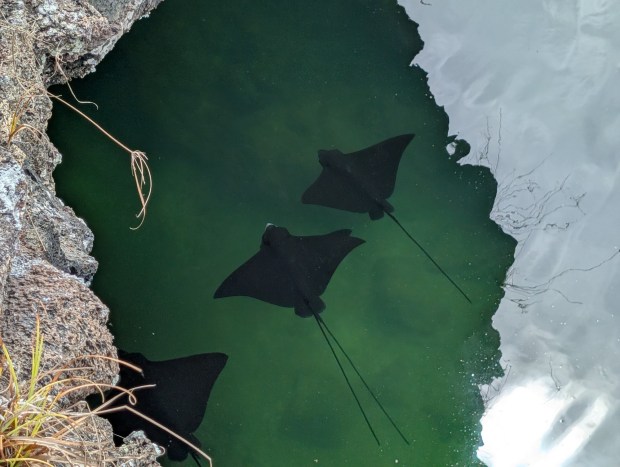 Rays gliding under the volanic tunnels on Isabela Island. (Andrew Su)
Active volcanoes and lava tunnels
After a few days exploring San Cristobal, we headed to Isabela Island. The travel time involves taking two ferries, each about 2.5 hours long, or a 40-minute plane ride.
We met guide Claudia Hodari and rode horses through a heavy fog up the Sierra Negra Volcano (from $140 per person with Galloping Galapagos). Sierra Negra is an active shield volcano, so its summit is a raised plateau. From the top, we could see across the 6-mile diameter of the caldera, a massive space of black and gray volcanic rock. Green locusts flew from branch to branch. The air was filled with the high-pitched calls of Galapagos mockingbirds and finches.

The top of Sierra Negra Volcano is oftentimes covered in fog. To the right is a glimpse of the 6-mile wide crater. (Andrew Su)

Sunset from the lookout point at Frigate Hill on San Cristobal Island. (Andrew Su)
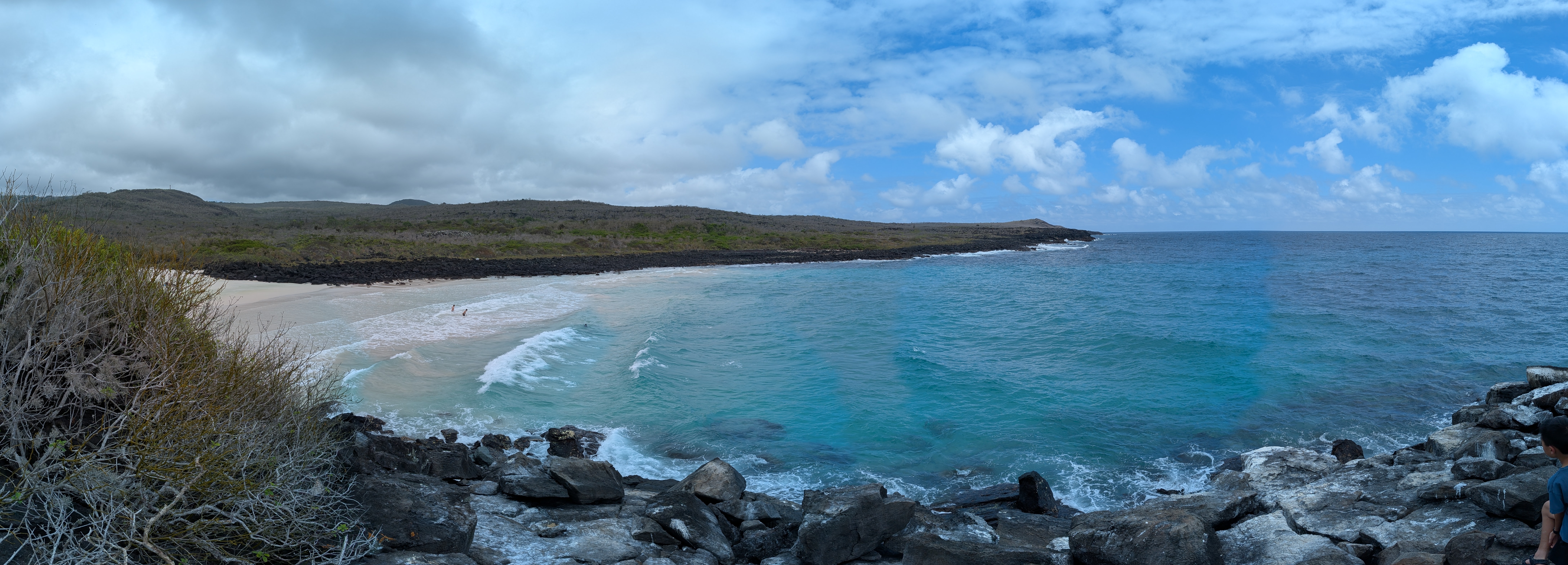
Puerto Chino Beach on San Cristobal Island is known for its clear water, white sand and sightings of blue-footed boobies, marine iguanas and sea lions. (Andrew Su)
Show Caption
1 of 3
The top of Sierra Negra Volcano is oftentimes covered in fog. To the right is a glimpse of the 6-mile wide crater. (Andrew Su)
We headed back to the 2,000-resident town of Puerto Villamil for dinner. We found a casual outdoor market with several stalls serving laidback Ecuadorian food. Most restaurants around the tourist center advertise their menu del dia (daily special), consisting of grilled seafood or meat, fried plantain cakes, rice, beans, salad and juice — all for about $6. The food is not fancy, but it’s filling and satisfying, even for my teenage son. Few restaurants and tour companies took credit cards, so we made sure to carry cash. Some of the longest lines we encountered were for ATMs.
The next morning, we hopped on a speedboat to snorkel around Los Tuneles (from $180 per person for a half-day tour with Volcanic Paradise Galapagos). The tunnels formed millions of years ago when lava flowing into the cold ocean created a sprawling landscape of Dr. Seuss-like arches and bridges.
The blue-footed booby is best known for its bright blue webbed feet. Males use their vibrantly colored feet in an elaborate courtship dance to attract females. (Andrew Su)
The tunnels provide nesting areas for the native birds, and we were lucky to see a blue-footed booby mother with its baby. Looking over the edge of the black volcanic bridges, we spotted three eagle rays gliding through the water.
Our guide, Alexis Flores, talked about how the changing climate has confused some animals. He has seen blue-footed boobies mate earlier than usual. As the waters have warmed, he fears there would be less food for the babies. In years past, he saw Galapagos penguins at Los Tuneles, but he hadn’t seen any in recent months. One way visitors could help, he said, is to participate in citizen science projects to help researchers track local species.
We returned to the boat and headed to a secluded area to snorkel. We plunged into the water, where blacktip reef sharks cruised around us unperturbed. The guide beckoned us to a shallow area where a dark brown seahorse floated in the water, its tail wrapped tightly around a root.
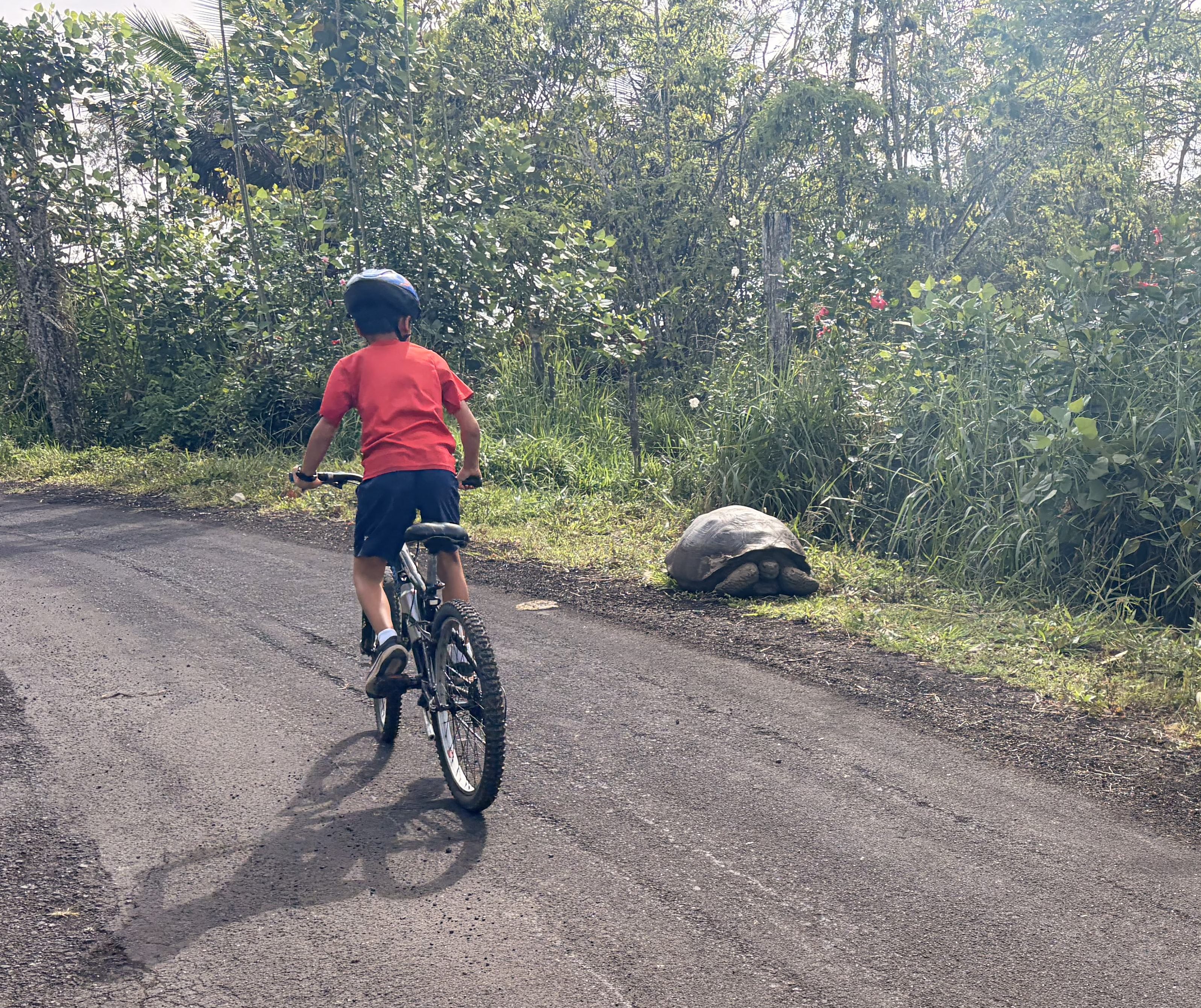
On our bike rides around the islands, we passed many Galapagos tortoises on the side of the road and even along the highway. (Eleanor Yang Su)
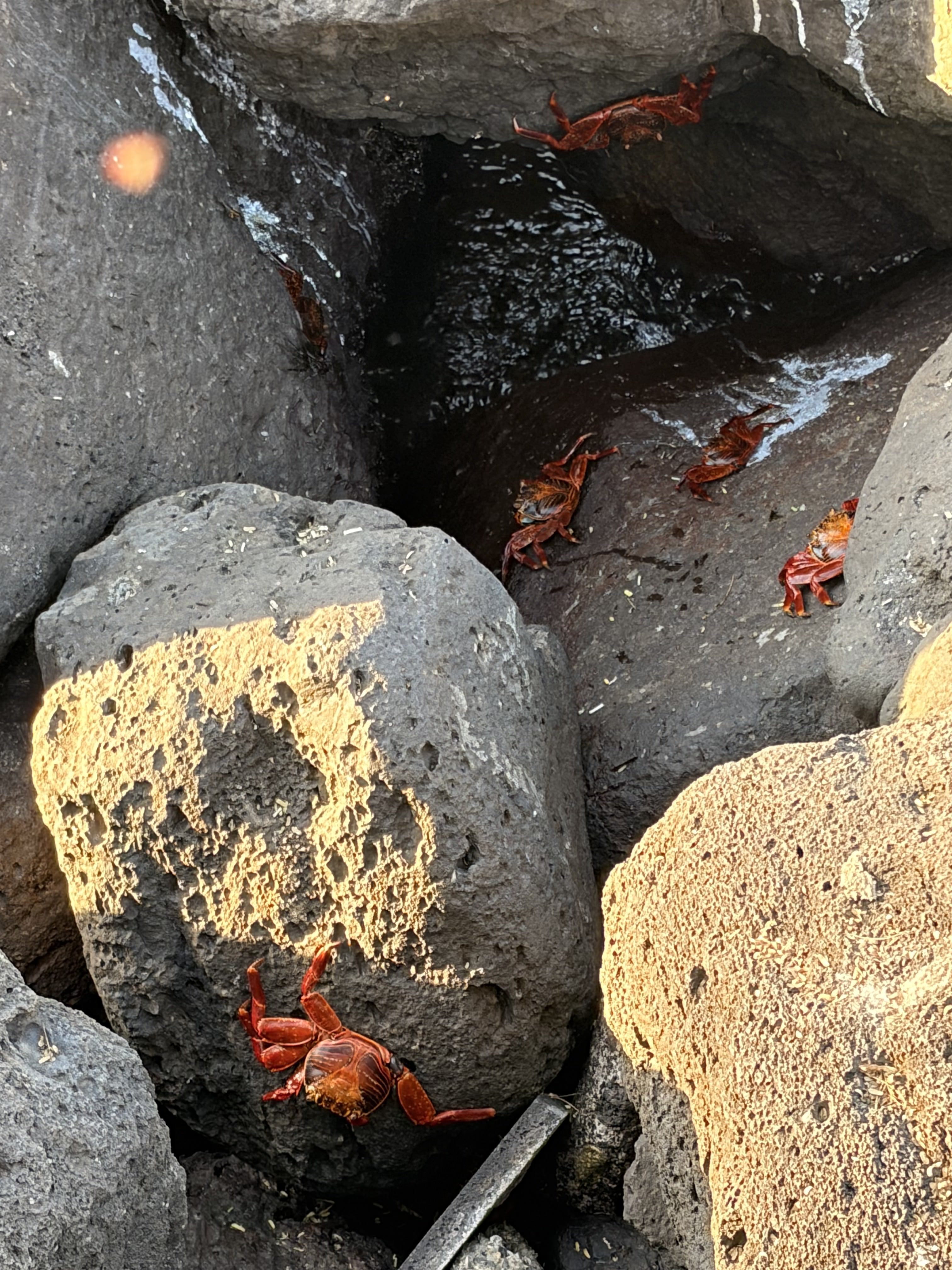
Sally Lightfoot crabs are found all over the Galapagos. They are thought to have been named after a Caribbean dancer because of their agility and ability to leap from rock to rock. (Eleanor Yang Su)
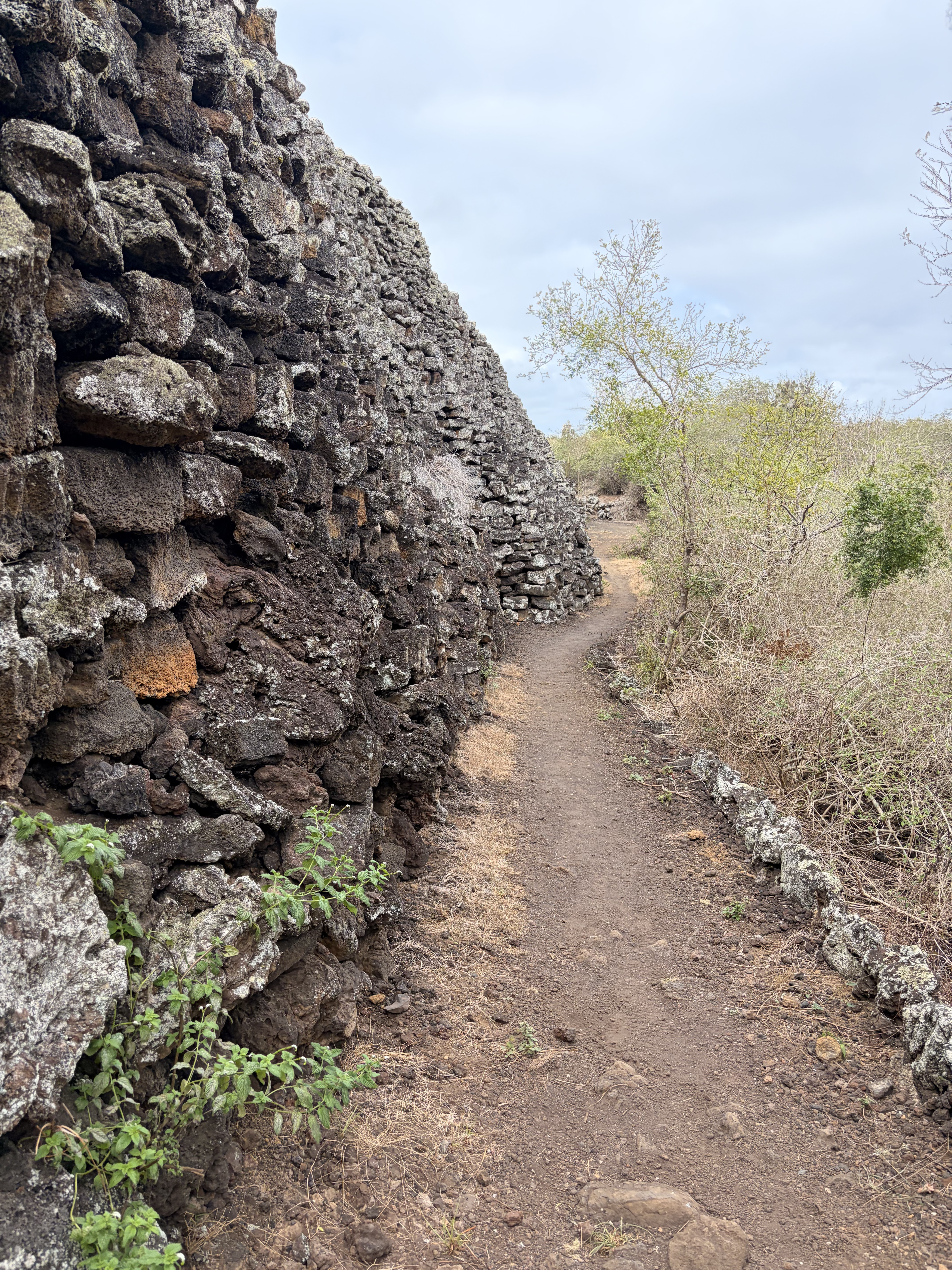
The Wall of Tears was built by prisoners stationed on Isabela Island in the 1940s and ’50s. The volcanic rocks are stacked 24 feet high and about 300 feet long. (Eleanor Yang Su)
Show Caption
1 of 3
On our bike rides around the islands, we passed many Galapagos tortoises on the side of the road and even along the highway. (Eleanor Yang Su)
Expand
A bike ride around the wetlands
The next morning, we rented mountain bikes from Galapagos Bike & Surf (from $20/person/day) to explore the Humadales (Wetlands). It’s about an 11-mile ride each way from town and passes picturesque beaches, a short lava tunnel and a lagoon filled with mangroves. Along the path we cycled past several Galapagos tortoises resting under a canopy of trees. We stopped at beaches where nimble, bright-red Sally Lightfoot crabs scuttled across rocks.
At the end of the trail lies the Wall of Tears, an elaborate stack of volcanic rocks more than 300 feet long built by prisoners in the 1940s and 1950s. The penal colony was closed in 1959, but many prisoners suffered while building the wall because of intense heat and lack of rest or water. The wall remains as a somber reminder of the island’s past.
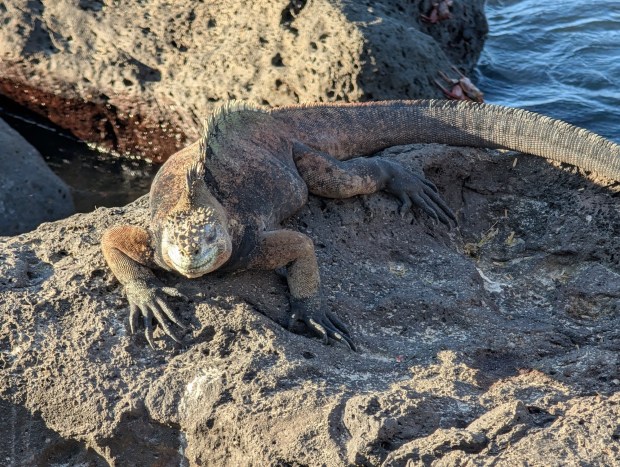 The marine iguana is the only lizard in the world that can forage in the sea, where it feeds mostly on algae. (Andrew Su)
After three days on Isabela, we headed to Santa Cruz, the island with the largest town and most tourist vibe. We ambled through the town of Puerto Ayora past a fishing pier. In the mornings and evenings, the small market is filled with fishermen as they unload their catches under the watchful eyes of sea lions and brown pelicans that hover nearby, ready to snatch scraps.
Our days on the island followed a comfortable pattern: We biked, hiked or snorkeled in the mornings and meandered through markets, souvenir shops and ice cream stands in the hot afternoons.
On our last day, we went on a bay tour that included snorkeling in the protected coastal area of Punta Estrada (from $65 per person with Perfect Destiny). Shortly after we dropped in the water, hundreds of silver diminutive fish swam inches from our faces, their bulging black eyes staring as we floated next to them. Bluechin parrotfish the size of dinner plates glided by so close, I tried to freeze in place to avoid touching them. Their turquoise and pink scales dazzled as they darted past. Every direction we looked, there were more fish. It was the perfect way to end our trip.
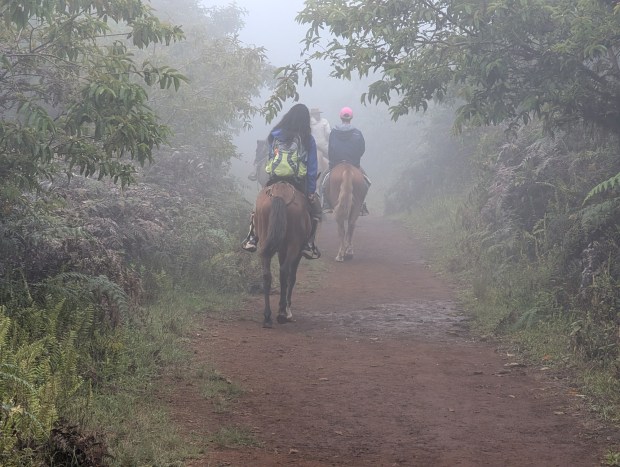 The path up Sierra Negra Volcano starts with lush trees and ferns. At the summit, the landscape shifts to cacti and volcanic rock. (Andrew Su)
If you go: Galapagos travel tours and tips
Tours:
• Kicker Rock on San Cristobal Island: galapagosdeep.com (For those who don’t get seasick, another popular option that includes even more time at sea and snorkeling is the 360 Tour.)
• Horseback riding up the Sierra Negra volcano: Galloping Galapagos, iguanaville.com/galloping-galapagos
• Snorkeling in Los Tuneles on Isabela Island: Volcanic Paradise Galapagos, volcanicparadisegalapagos.com/site
• Biking on Santa Cruz Island: Galapagos Frontier. galapagosfrontierec.com
• Half-day bay experience around Santa Cruz Island: Perfect Destiny, perfectdestiny.ec
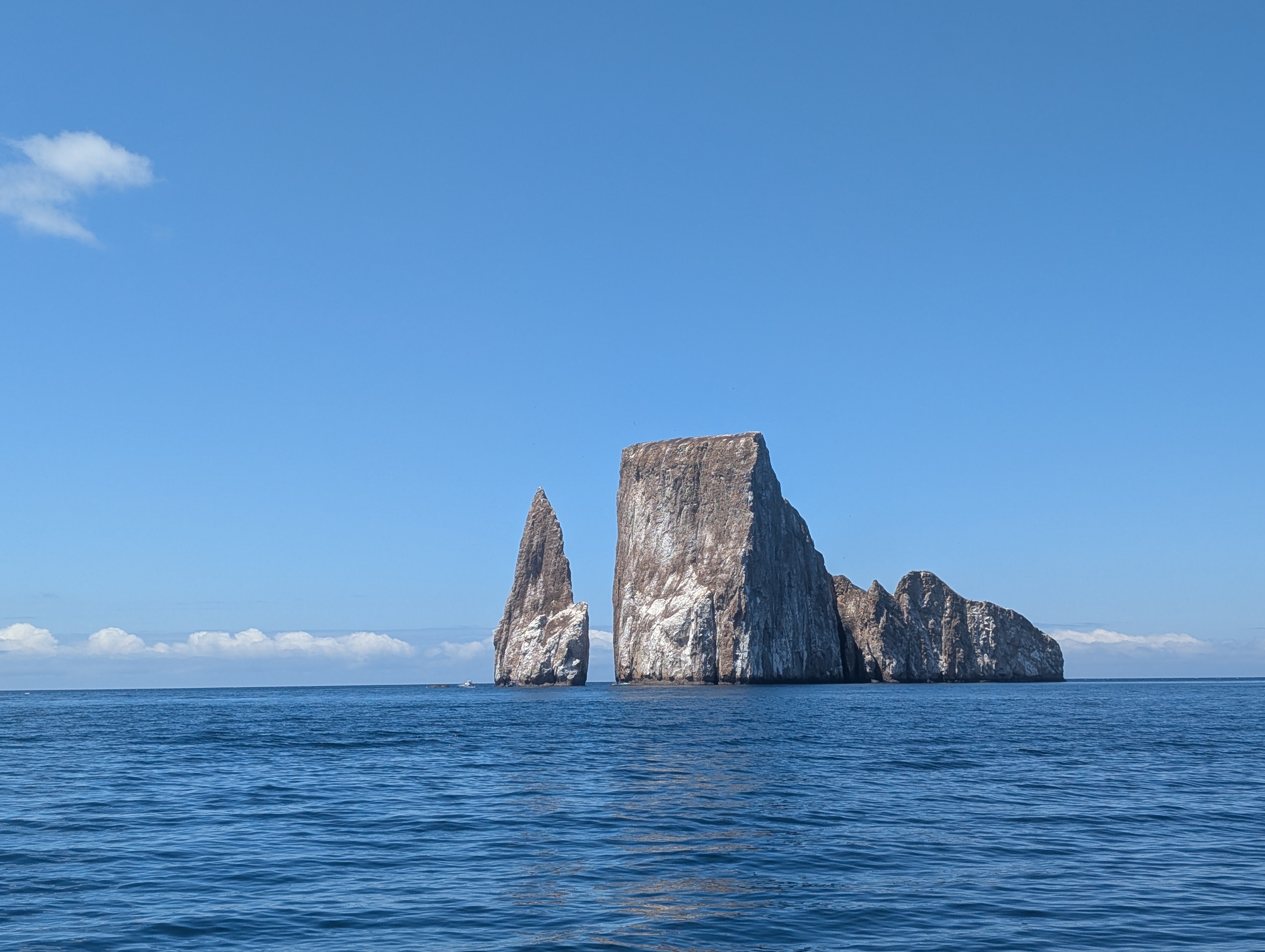
The towering volcanic pillars of Kicker Rock were formed two million years ago. They rise 500 feet above the water’s surface. (Andrew Su)
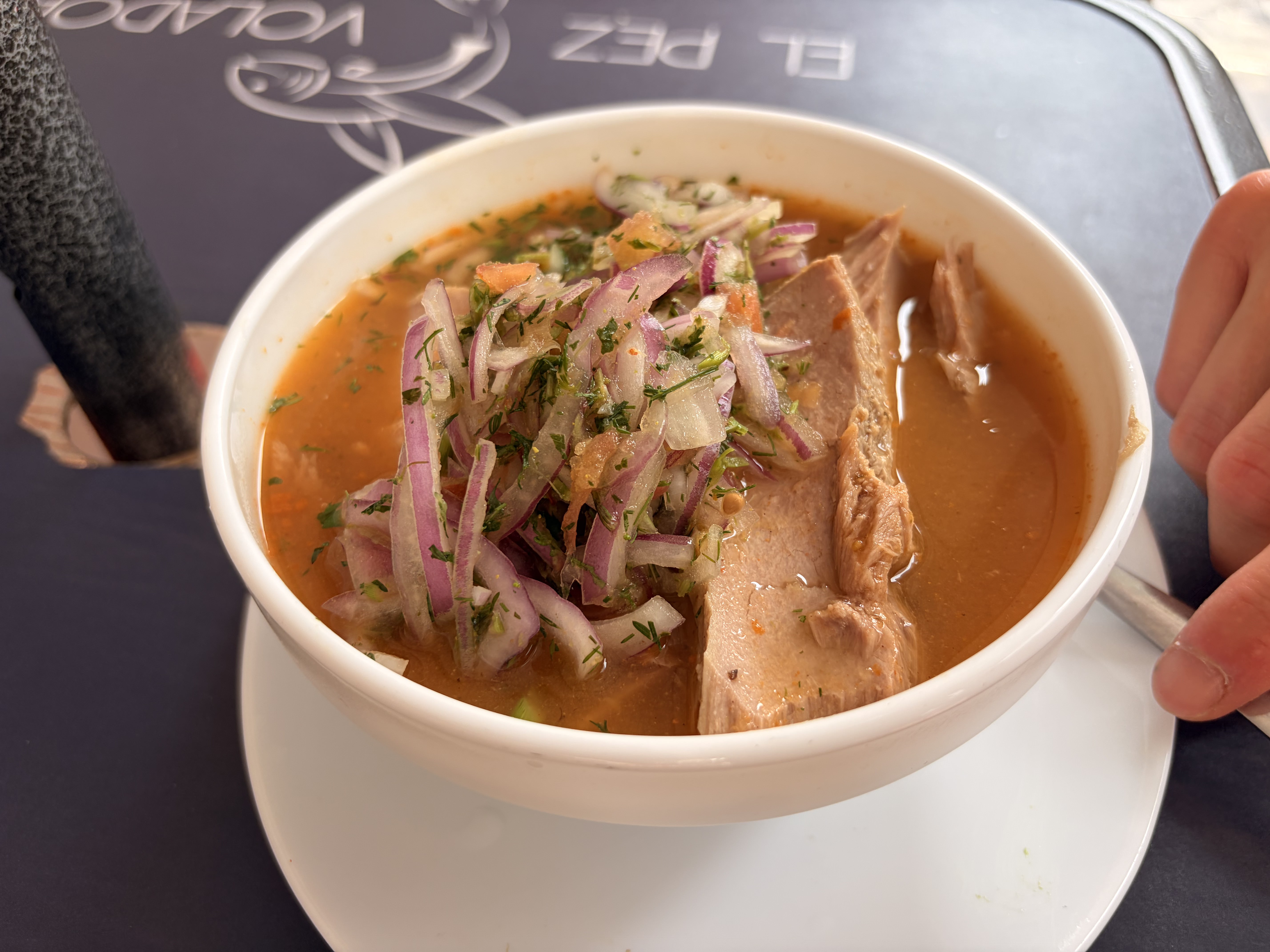
Encebollado, a hearty stew made from tuna, yucca and pickled red onions, is a traditional Ecuadorian soup. (Eleanor Yang Su)
Show Caption
1 of 2
The towering volcanic pillars of Kicker Rock were formed two million years ago. They rise 500 feet above the water’s surface. (Andrew Su)
Good to know:
• Flights: The two airports in the Galapagos are on Santa Cruz Island and San Cristobal Island. They are serviced by Avianca (avianca.com) and Latam (latamairlines.com).
• Currency: U.S. dollar
• Cash: Many local eateries and tour companies do not take credit cards. Make sure to bring enough cash. The ATMs oftentimes have daily limits and sometimes run out of cash in the course of a day.
• Climate: December to May is the wet and warm season, when the waters are generally calmer and clearer for snorkeling and diving.
• Time zone: 1 hour ahead of San Diego
• Water: It’s not safe to drink the tap water, but most hotels and guesthouses provide free drinking water.
• Water bottles: Bring a reuseable water bottle. The Ecuadorian government has restricted single-use plastics on the islands for environmental reasons.