
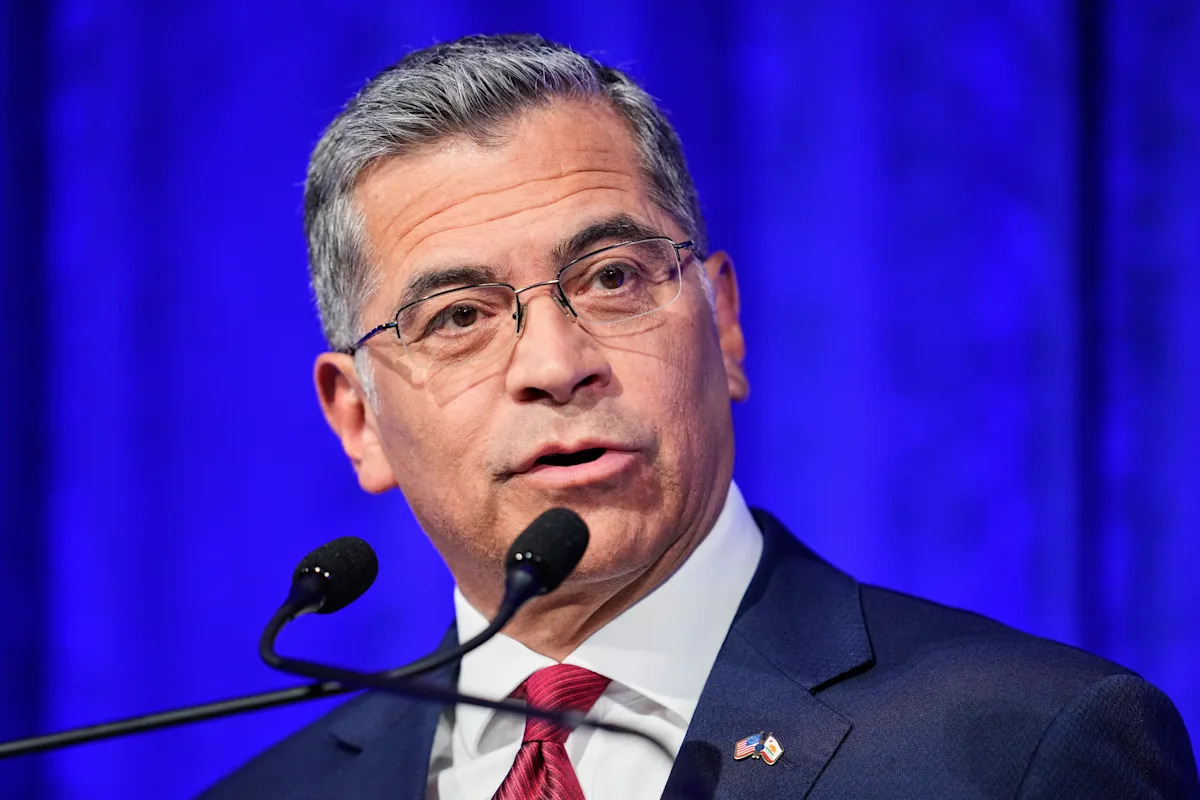
With just days to go before voters head to the polls, California gubernatorial candidate Xavier Becerra said he would scrap the current high-speed rail plan to make sure the project is finished on time.
The publicly-funded bullet train project, which promises to allow passengers to travel from Los Angeles to San Francisco at speeds of up to 220 miles per hour, has been marred by long delays, funding shortfalls and rising costs. Initially backed by voters in 2008 and expected to be completed in 2020, the project is still far from the finish line, according to the latest official updates.
Completion is now estimated for early 2038, depending on whether Governor Gavin Newsom’s successor would continue to support the initiative.
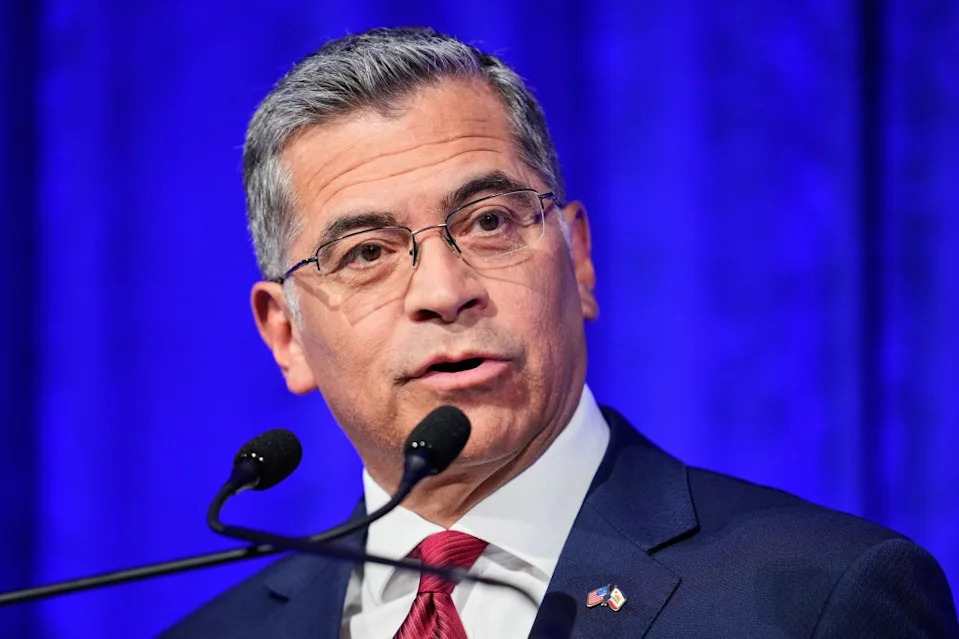
Xavier Becerra speaks during a California gubernatorial debate hosted by CBS Bay Area and the San Francisco Examiner in San Francisco, on May 14, 2026.
Becerra, a Democrat who previously served as the secretary of health and human services under President Joe Biden, attorney general of California and U.S. representative, seems determined to meet this deadline.
“I’m going to scrap the current configuration, and I’m going to make sure we finish,” Becerra told a crowd of voters in Fresno on Saturday afternoon, as reported by Fox 26 News. “But we’ve got to do it on budget and on time.”
He did not provide any further details on how exactly he would change the current plans to make sure the project is completed by the announced deadline. Newsweek contacted Becerra’s campaign for comment by email on Monday morning.
Why Has the High-Speed Rail Project Been Delayed for So Long?
More than 17 years ago Californians narrowly voted to support Proposition 1A, a ballot measure backing the use of nearly $10 billion in general obligation bonds, including $9 billion for the planning and construction, of an 800-mile high-speed rail system connecting San Francisco to Los Angeles.
Over the years, however, the project has started to feel doomed, as costs have more than doubled since the 2008 estimates, work has been slow and the deadline for completion has been pushed back by over a decade.
Funding has been a challenge from the start, as the initial amount of $10 billion approved through Proposition 1A was immediately considered to be a gross understatement of the money actually needed for the ambitious project. An estimate made in 2006 stated that the high-speed rail system would have cost about $45 billion—and that was before inflation.
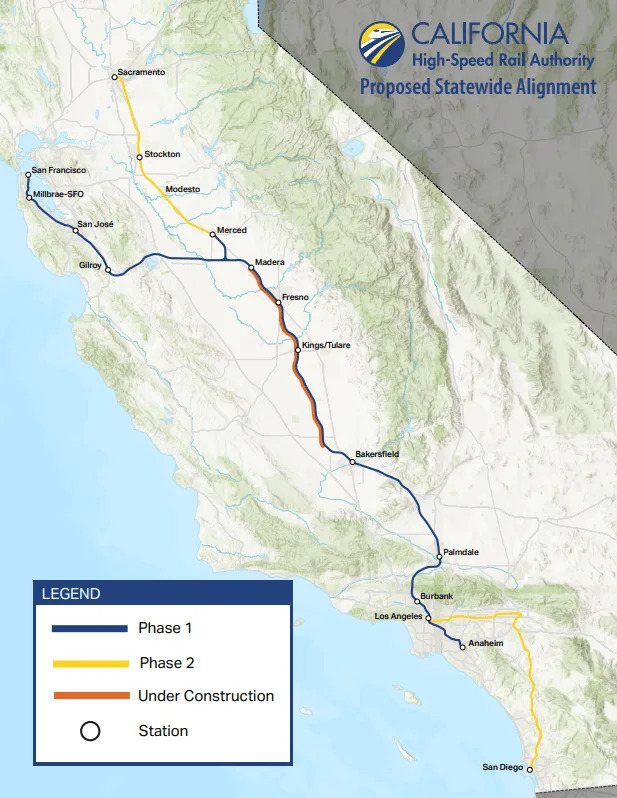
A map depicting the California High-Speed Rail corridor
The project chugged along with the support of the Obama administration, only to receive a particularly painful blow after Donald Trump canceled nearly $1 billion in federal funds for the rail project in 2019 after clashing with Newsom.
Joe Biden restored funding for the project when he came into office, providing another $3.1 billion from the Infrastructure Investment and Jobs Act, but at that point the initiative was facing a shortfall of at least $7 billion needed to build an initial 171-mile segment between Merced and Bakersfield.
Having been told that there was no way to make up for that shortfall and finish the project by 2033, considering no track had even been laid yet, Trump announced the cancellation of $4 billion in federal grants for the project in July 2025 and cut another $175 million in August 2025.
California sued the Trump administration over the cancellations, but dropped legal action in December, saying “the federal government is not a reliable, constructive, or trustworthy partner in advancing high-speed rail in California.”
Part of the reason why the project has become so expensive is its planned trajectory through California’s agricultural heartland, which necessarily forces the state to navigate its own complex, strict environmental restrictions and oversight rules.
As of the High-Speed Rail Authority’s budget summary for fiscal year 2024 and 2025, more than $765 million was spent on environmental reviews alone during that same time frame.
A series of sweeping reforms passed by California lawmakers last summer, weakening requirements under the California Environmental Quality Act (CEQA), were praised by Newsom as being able to help the state “cut red tape and deliver on California’s vision of high-speed rail without compromising environmental protections,” as gubernatorial spokesperson Daniel Villaseñor told Grist.
Now, 463 miles of the 494-mile system have cleared the environmental review process and are “construction ready,” according to the High-Speed Rail Authority.
What Are California’s Gubernatorial Candidates Saying About It?
A large group of Democrats, including Becerra, and two Republicans will take part in the California nonpartisan “jungle” primary on June 2. Most of the latest polls show Republican Steve Hilton ahead of the other hopefuls with a net margin of +7 (Echolon Insights), +3 (Global Strategy Group) or a more modest +1 (Evitarus), while a May poll by Emerson College gives Becerra ahead with a +1 margin.
When it comes to the high-speed rail project, candidates largely split along party lines.
Antonio Villaraigosa said he would not cancel the project and instead expand transit. Katie Porter, despite skepticism and criticism of the project, said she wants to “get it done for Californians.”
Republican candidates have been much more strongly opposed to the project. Chad Bianco called it “a train to nowhere,” while Tony Strickland described it as a “mismanaged failure.” Despite widespread criticism of the project and growing doubts over whether the bullet train will ever be seen flashing across the state, nearly two-thirds of Californians (62 percent) said they would have continued bankrolling the initiative even without federal funding last year, according to a POLITICO-Citrin Center-Possibility Lab poll.
Related Articles