
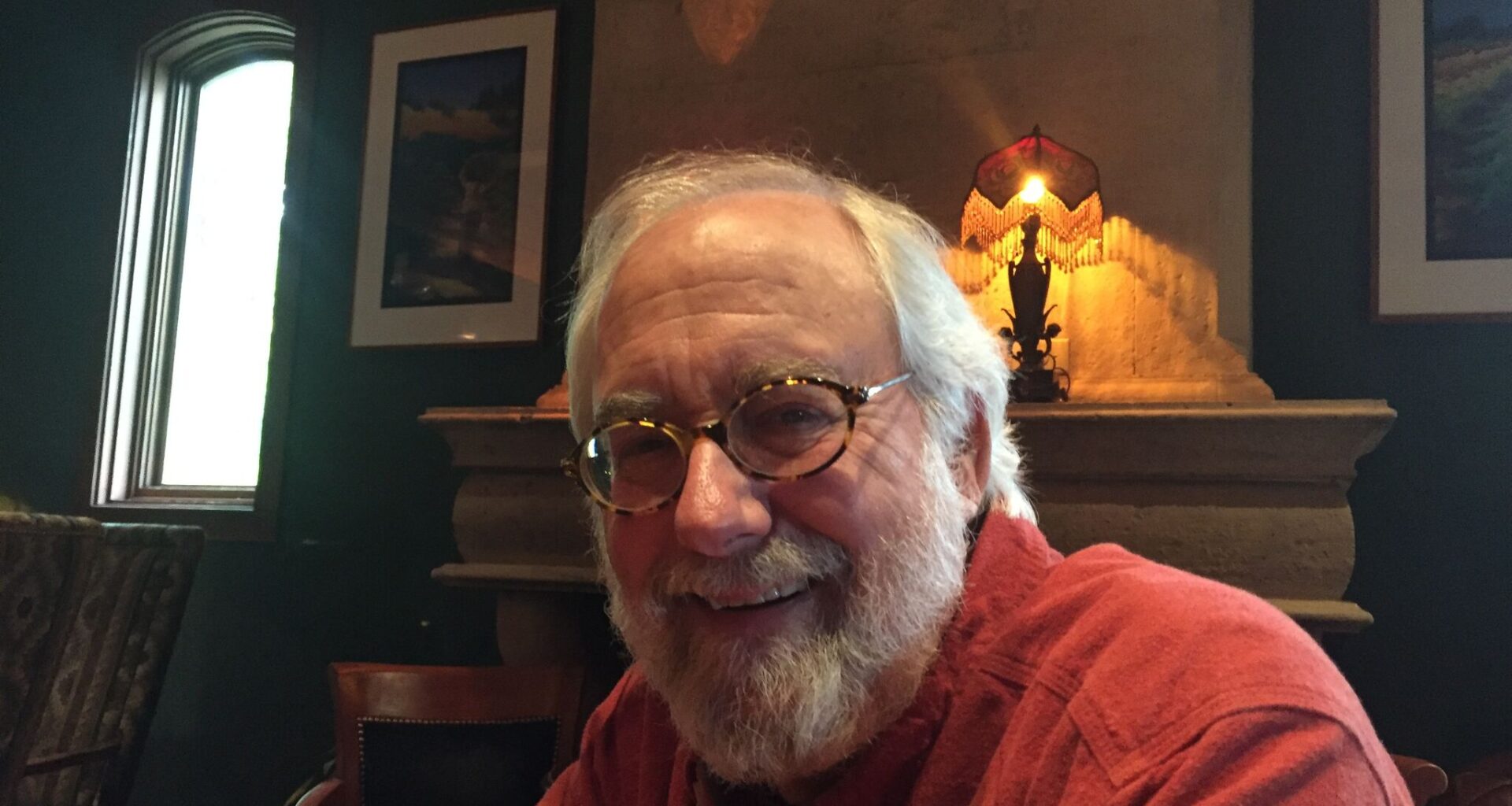
William Carlsen was the author of Jungle of Stone (2016), a widely acclaimed book about John L. Stephens and Frederick Catherwood, two explorers who recorded Mayan ruins.
Courtesy Kathleen O’Shea
William Carlsen was a longtime San Francisco Chronicle reporter and finalist for a 1999 Pulitzer Prize.
Courtesy Kathleen O’Shea
William Carlsen, a former longtime reporter for the San Francisco Chronicle who was a Pulitzer Prize finalist for coverage of how hypodermic needle reuse and accidental pricks could spread disease, died on May 23 in Philadelphia. He was 81.
The cause was complications following a stroke, according to his wife, Kathleen O’Shea.
Over 30 years as a reporter for the New York Times and the San Francisco Chronicle, Carlsen’s coverage included the assassinations of San Francisco Mayor George Moscone and Supervisor Harvey Milk and the 1985 Mexico City earthquake. He produced investigative reports on fraud in Silicon Valley, the breakdown of capital punishment in California and the contamination of California’s water supplies.
Article continues below this ad
After a friend told him about a 19th-century book on Maya ruins, Carlsen decided to journey 1,500 miles through Central American jungles, retracing the 1839 route of John L. Stephens and Frederick Catherwood, two explorers who recorded the ruins. His experience resulted in the acclaimed book Jungle of Stone, published in 2016 by William Morrow, an imprint of Harper Collins.
Carlsen and his colleague, Reynolds Holding, were finalists for the 1999 Pulitzer Prize for explanatory reporting for a series that focused on the health risks associated with the use of unsafe hypodermic needles abroad, as well as accidental needle sticks among American health care workers. His reporting spurred a new state law requiring retractable needles for nurses and doctors. Those reforms led to nationwide changes.
San Francisco Chronicle Logo
Make us a Preferred Source to get more of our news when you search.
Add Preferred Source
“Bill would get so excited about stories,” said Holding, recalling how Carlsen would rush over to his desk to point out a new finding in a stack of papers. “He was a kind, patient and generous man, but persistent.”
Carlsen was born in Chicago on Feb. 15, 1945. He was the middle of three children of a homemaker who also worked part time in the linen department at a department store and a father who handled loan financing at a car dealership. Carlsen got his start working for newspapers as a copy boy at the Chicago Tribune. Soon after graduating from high school in 1963, he signed up for the U.S. Army, and was subsequently sent to Germany for two years.
Article continues below this ad
After his return, he attended University of Southern California for a year before transferring to UC Berkeley, where he graduated with a master’s degree in journalism.
He joined the New York Times as a stringer when he was still a graduate student. After graduation, he joined the San Francisco Chronicle, where he spent over two decades and covered the trials of O.J. Simpson and Patty Hearst. He won the Pan American Health Organization’s top award for a series of stories on the origin of the AIDS epidemic.
“Bill was an extraordinary journalist — a tenacious, fearless, principled reporter,” said Ken Conner, who worked with Carlsen when he was the Chronicle’s city editor. “As a colleague, he was kind and generous, a privilege to work with.”
Carlsen also taught at the Graduate School of Journalism at UC Berkeley and at San Francisco State University.
Article continues below this ad
In addition to O’Shea, his wife of 40 years, he is survived by his stepdaughter Kathy Willetts; stepson Michael O’Shea; two twin granddaughters; and his younger brother, Rick.