
As California grapples with the high cost of living and tightening of the state’s oil and gas supply, all of the top eight candidates for governor have suggested they would reassess the state’s climate goals. The candidates acknowledged this in interviews on California Politics 360. The climate questions were posed to Democrats Xavier Becerra, Tom Steyer, Katie Porter, Matt Mahan, Antonio Villaraigosa, Tony Thurmond and Republicans Steve Hilton and Chad Bianco. California has an overall goal of significantly cutting the use of oil and gas and being carbon neutral by 2045. The specific goal has been driving the state’s ambitious, environmental-related policies for the last decade. While Republicans are prepared to toss the regulations, Democrats have questioned how realistic some of the goals are at this point as affordability remains a top concern for voters. Drivers in the state have been faced with some of the highest gas prices in the nation. Californians typically pay an extra $1.50 to $1.60 more per gallon of gas compared to the rest of the country, mostly because of the state’s environmental regulations and fees. Those numbers could increase as oil refineries shut down in the state. According to the American Petroleum institute, the state has lost seven refineries in the last decade, including the two that have shut down within the last six months. While California has tried to incentivize electric vehicle purchases and tried to ramp up its renewable energy infrastructure, the latest state data show about 90% of registered cars in the state still rely on gas. The environmental regulations and climate goals also impact utilities and businesses across the state, which are required take on costs that typically trickle down to the consumer. Each candidate was asked specifically if California should delay its climate goals. Not everyone said yes, but all suggested there would be a recalibration amid the affordability concerns. “When we have goals they have to be achievable,” said Xavier Becerra, the Democratic former U.S. Health and Human Services Secretary. When asked if carbon neutral by 2045 is achievable, Becerra said, “it’s looking harder and harder to get there.” “Regulation is killing everything in California,” said Chad Bianco, the Republican Sheriff of Riverside County who has said he would cut many state regulations to lower the cost of living. “First thing we’re going to do is a moratorium on regulations that raise the cost of gas and jeopardize the existence of any more refineries,” said Antonio Villaraigosa, the Democratic former mayor of Los Angeles. “I think it’s time for us to evaluate them,” said Tony Thurmond, the Democratic Superintendent of Public Instruction. “We need more energy and green energy is the path to getting there, but we don’t have the same partner in the White House,” said Katie Porter, the Democratic former Congresswoman. “That does mean we’re going to have to adjust our intermediate benchmarks, but I don’t think we ought to be moving backwards.” “We have to end the climate extremism on fossil fuels that have given us the highest gas prices in the country,” said Steve Hilton, the Republican former TV news commentator. Hilton has said he would halt the state’s current climate goals if elected governor. “I think oil and gas should be phased out naturally by investing in innovation and infrastructure,” said Matt Mahan, the Democratic mayor of San Jose. “But do it in a way that doesn’t punish working families because right now, we’re losing people.” Even the Democratic billionaire climate activist, Tom Steyer, acknowledged change may be needed. “We need to have more refining capacity for internal combustion engines for sure,” Steyer said. When asked if that would counter the state’s climate goals which he supports, Steyer replied, “We’re going to have to have that happen because there’s a base of people who need that, people aren’t going to scrap their car, which is a big capital expenditure for every family.”The state has a variety of benchmarks to reach carbon neutrality by 2045. California’s leaders set a goal of 1.2 million electric vehicle chargers by 2030 to support more EVs on the road. The latest state data shows there are 216,445. California leaders also set a goal of having 5 million zero emissions vehicles on the road by 2030. The latest state data shows there are 2.23 million registered ZEVs in the state. But one of the most aggressive goals in state law right now is one that bans the sale of new gas-powered cars by 2035. Most of the top Democratic candidates for governor signaled that likely will not happen if they are elected. “Seems like we’re not quite there yet, I love the goal,” said Thurmond. “We cannot meet that goal. We don’t even have the charging stations to do it.” “Would my dad be able to switch his pickup for an electric vehicle? Chances are no, not right now,” Becerra said. “Goals that are achievable, not goals that are pie in the sky. When these goals were first initiated, there was this belief that we could get there. Things have become very difficult.” “I don’t think we’re on a pathway to get to that deadline, but I don’t want to give up on the goal, I want to think about what is the reasonable extension and really talk with car dealers and consumers,” said Porter, who said her gas-powered minivan is on its last legs and has looked at other cars. “What does it cost to get it as a hybrid? What does it cost to get is as an electric vehicle? $8,000 or $10,000 more. That’s not money that I felt like I could or should spend,” she said.KCRA 3 Political Director Ashley Zavala reports in-depth coverage of top California politics and policy issues. She is also the host of “California Politics 360.” Get informed each Sunday at 8:30 a.m. on KCRA 3.
SACRAMENTO, Calif. —
As California grapples with the high cost of living and tightening of the state’s oil and gas supply, all of the top eight candidates for governor have suggested they would reassess the state’s climate goals.
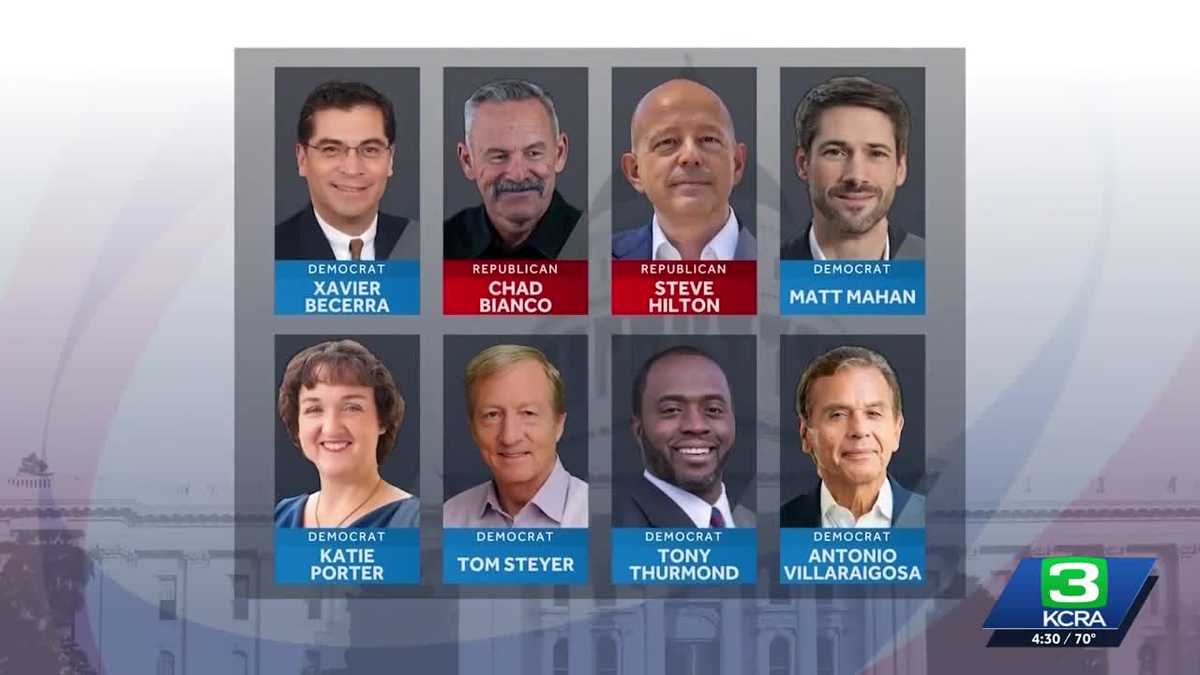
The candidates acknowledged this in interviews on California Politics 360. The climate questions were posed to Democrats Xavier Becerra, Tom Steyer, Katie Porter, Matt Mahan, Antonio Villaraigosa, Tony Thurmond and Republicans Steve Hilton and Chad Bianco.
California has an overall goal of significantly cutting the use of oil and gas and being carbon neutral by 2045. The specific goal has been driving the state’s ambitious, environmental-related policies for the last decade.
While Republicans are prepared to toss the regulations, Democrats have questioned how realistic some of the goals are at this point as affordability remains a top concern for voters.
Drivers in the state have been faced with some of the highest gas prices in the nation. Californians typically pay an extra $1.50 to $1.60 more per gallon of gas compared to the rest of the country, mostly because of the state’s environmental regulations and fees. Those numbers could increase as oil refineries shut down in the state. According to the American Petroleum institute, the state has lost seven refineries in the last decade, including the two that have shut down within the last six months.
While California has tried to incentivize electric vehicle purchases and tried to ramp up its renewable energy infrastructure, the latest state data show about 90% of registered cars in the state still rely on gas.
The environmental regulations and climate goals also impact utilities and businesses across the state, which are required take on costs that typically trickle down to the consumer.
Each candidate was asked specifically if California should delay its climate goals. Not everyone said yes, but all suggested there would be a recalibration amid the affordability concerns.
“When we have goals they have to be achievable,” said Xavier Becerra, the Democratic former U.S. Health and Human Services Secretary. When asked if carbon neutral by 2045 is achievable, Becerra said, “it’s looking harder and harder to get there.”
“Regulation is killing everything in California,” said Chad Bianco, the Republican Sheriff of Riverside County who has said he would cut many state regulations to lower the cost of living.
“First thing we’re going to do is a moratorium on regulations that raise the cost of gas and jeopardize the existence of any more refineries,” said Antonio Villaraigosa, the Democratic former mayor of Los Angeles.
“I think it’s time for us to evaluate them,” said Tony Thurmond, the Democratic Superintendent of Public Instruction.
“We need more energy and green energy is the path to getting there, but we don’t have the same partner in the White House,” said Katie Porter, the Democratic former Congresswoman. “That does mean we’re going to have to adjust our intermediate benchmarks, but I don’t think we ought to be moving backwards.”
“We have to end the climate extremism on fossil fuels that have given us the highest gas prices in the country,” said Steve Hilton, the Republican former TV news commentator. Hilton has said he would halt the state’s current climate goals if elected governor.
“I think oil and gas should be phased out naturally by investing in innovation and infrastructure,” said Matt Mahan, the Democratic mayor of San Jose. “But do it in a way that doesn’t punish working families because right now, we’re losing people.”
Even the Democratic billionaire climate activist, Tom Steyer, acknowledged change may be needed.
“We need to have more refining capacity for internal combustion engines for sure,” Steyer said. When asked if that would counter the state’s climate goals which he supports, Steyer replied, “We’re going to have to have that happen because there’s a base of people who need that, people aren’t going to scrap their car, which is a big capital expenditure for every family.”
The state has a variety of benchmarks to reach carbon neutrality by 2045. California’s leaders set a goal of 1.2 million electric vehicle chargers by 2030 to support more EVs on the road. The latest state data shows there are 216,445.
California leaders also set a goal of having 5 million zero emissions vehicles on the road by 2030. The latest state data shows there are 2.23 million registered ZEVs in the state.
But one of the most aggressive goals in state law right now is one that bans the sale of new gas-powered cars by 2035. Most of the top Democratic candidates for governor signaled that likely will not happen if they are elected.
“Seems like we’re not quite there yet, I love the goal,” said Thurmond. “We cannot meet that goal. We don’t even have the charging stations to do it.”
“Would my dad be able to switch his pickup for an electric vehicle? Chances are no, not right now,” Becerra said. “Goals that are achievable, not goals that are pie in the sky. When these goals were first initiated, there was this belief that we could get there. Things have become very difficult.”
“I don’t think we’re on a pathway to get to that deadline, but I don’t want to give up on the goal, I want to think about what is the reasonable extension and really talk with car dealers and consumers,” said Porter, who said her gas-powered minivan is on its last legs and has looked at other cars.
“What does it cost to get it as a hybrid? What does it cost to get is as an electric vehicle? $8,000 or $10,000 more. That’s not money that I felt like I could or should spend,” she said.
KCRA 3 Political Director Ashley Zavala reports in-depth coverage of top California politics and policy issues. She is also the host of “California Politics 360.” Get informed each Sunday at 8:30 a.m. on KCRA 3.