
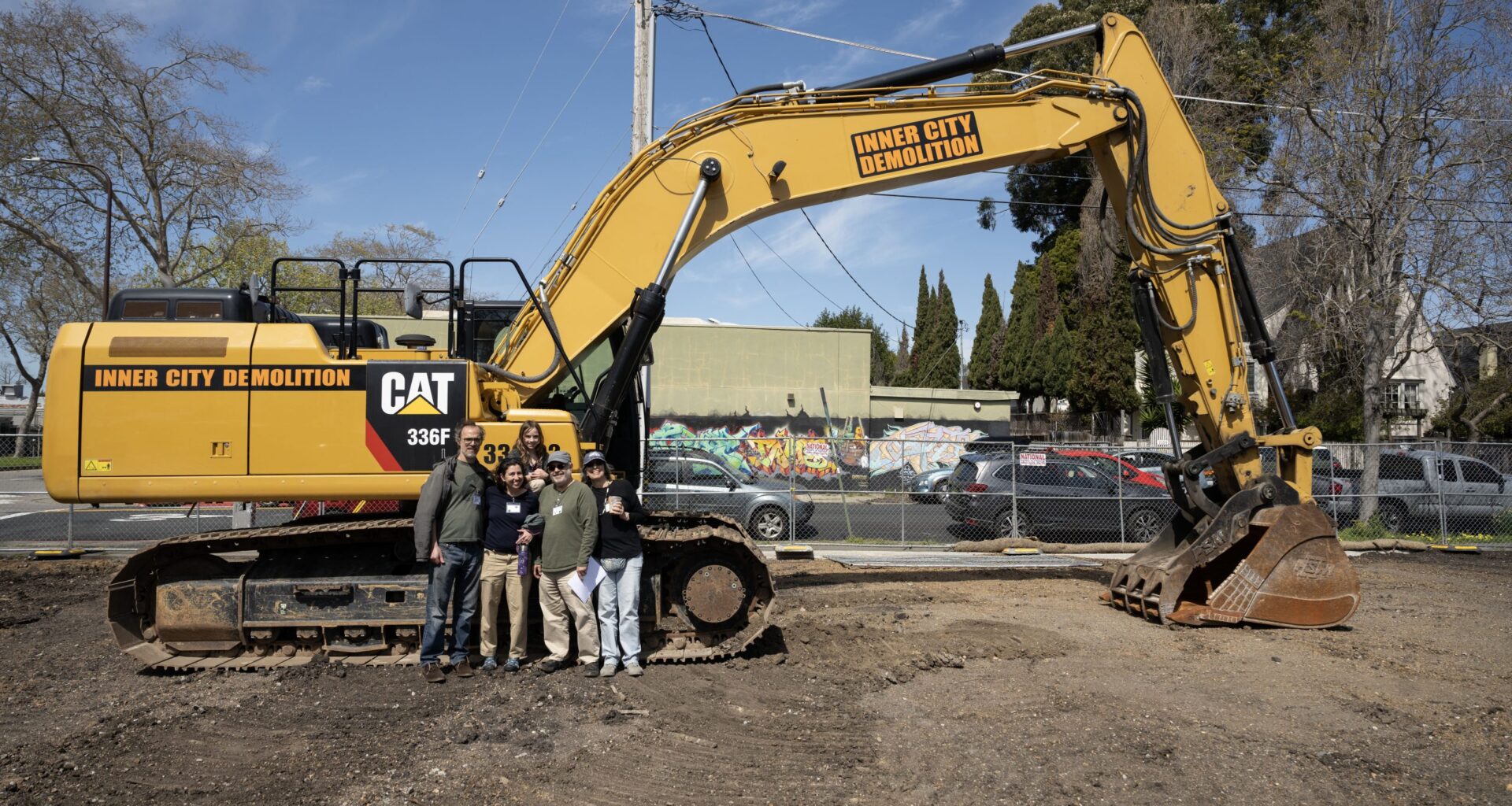
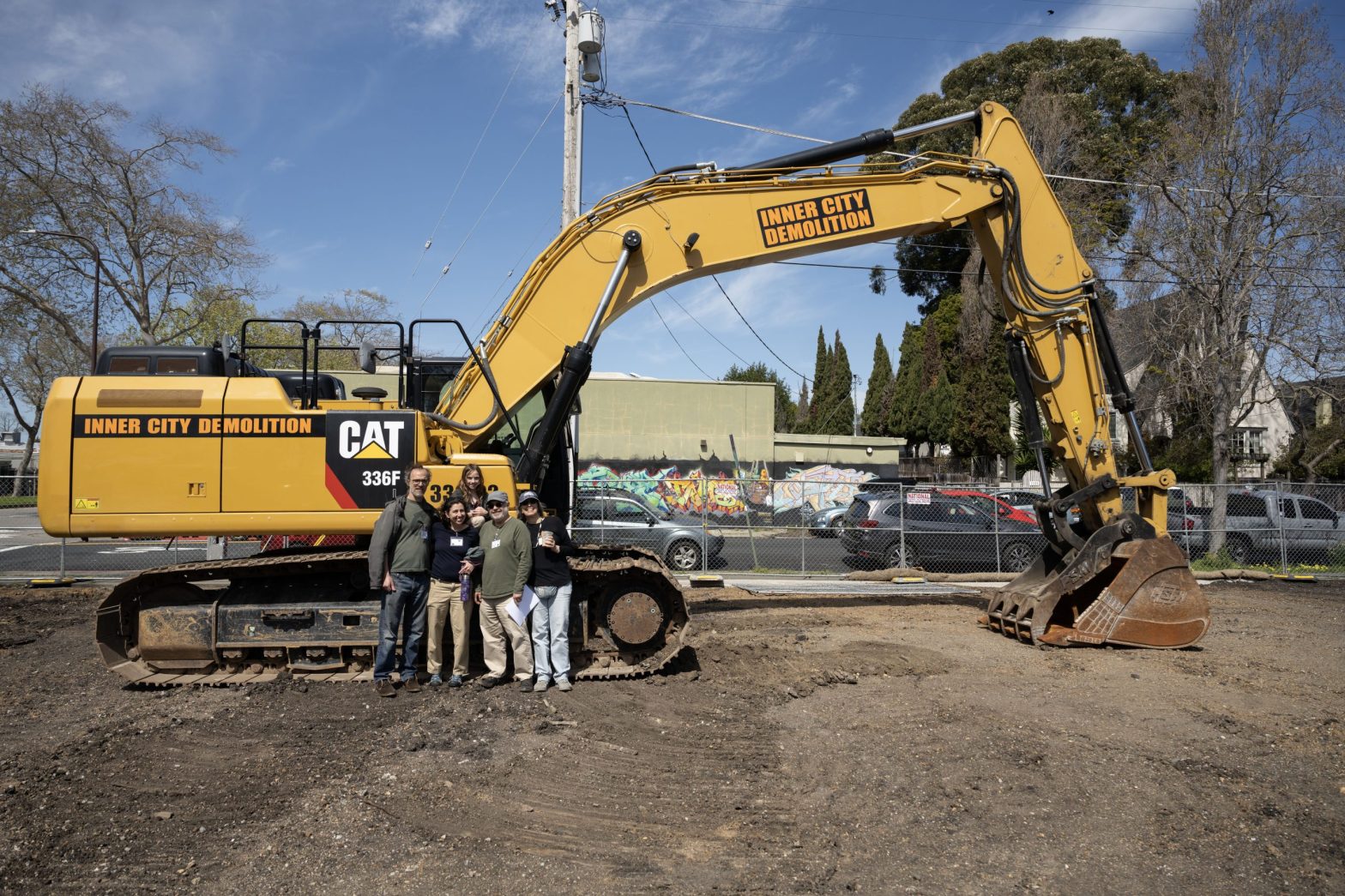
 Two families planning to move into Berkeley Moshav, 36-unit co-living condo rising in Poet’s Corner, pose by an excavator during a groundbreaking ceremony on March 23, 2025. Credit: Aaron Levy-Wolins/J. The Jewish News of California
Cohousing may be having its moment, fueled by major cultural shifts.
Millennials and Gen Zers who are being locked out of the real-estate market due to record-low affordability, high mortgage rates and a housing shortage, find that living with their besties or grandma and grandpa comes with the benefit of shared childcare. Single mothers are pooling their resources and forming “mommunes” and aging Boomers are downsizing and hoping to age in place within a vibrant community. All are drawn to the appeal of alternative co-living lifestyles, which are on the rise in Berkeley.
“The new American Dream is to live close to your friends and family and have a rich life of support and vibrancy that that brings,” said Phil Levin, a real estate developer who founded the Oakland-based Live Near Friends in 2023, which helps buyers and their friends and/or family members purchase properties where they can live together. In 2019 Levin and his wife, Kristen Berman, created Radish in North Oakland, which demonstrated how 20 friends and nine (soon to be 10) children could live in 10 homes.
“A generation of people wants to design social support into the way we live,” Levin said. “Living next door to a friend or family member is one of the best ways to do that.”
Co-living is a broad term that refers to a number of shared household models, which in Berkeley has historically been fueled by the informal sharing of shared houses and apartments by university students and several student coops. More formal arrangements are often called “intentional communities” and include Berkeley’s oldest cohousing community, Berkeley Cohousing, a condominium, with individually owned units and some shared spaces.
The city also boasts a handful of cooperatives, like Parker Street, which share costs and decision making, and also has a few shared spaces. Communes, the stuff of hippie dreams and the model for the Israeli kibbutz, where income, property and responsibilities are shared, are rare in the U.S.
Here is a non-comprehensive sampling of in-the-works projects that emphasize shared spaces and multi-generational living, with slight differences.
Five Berkeley projects on the horizon
Berkeley Moshav: Jewish cohousing in West Berkeley
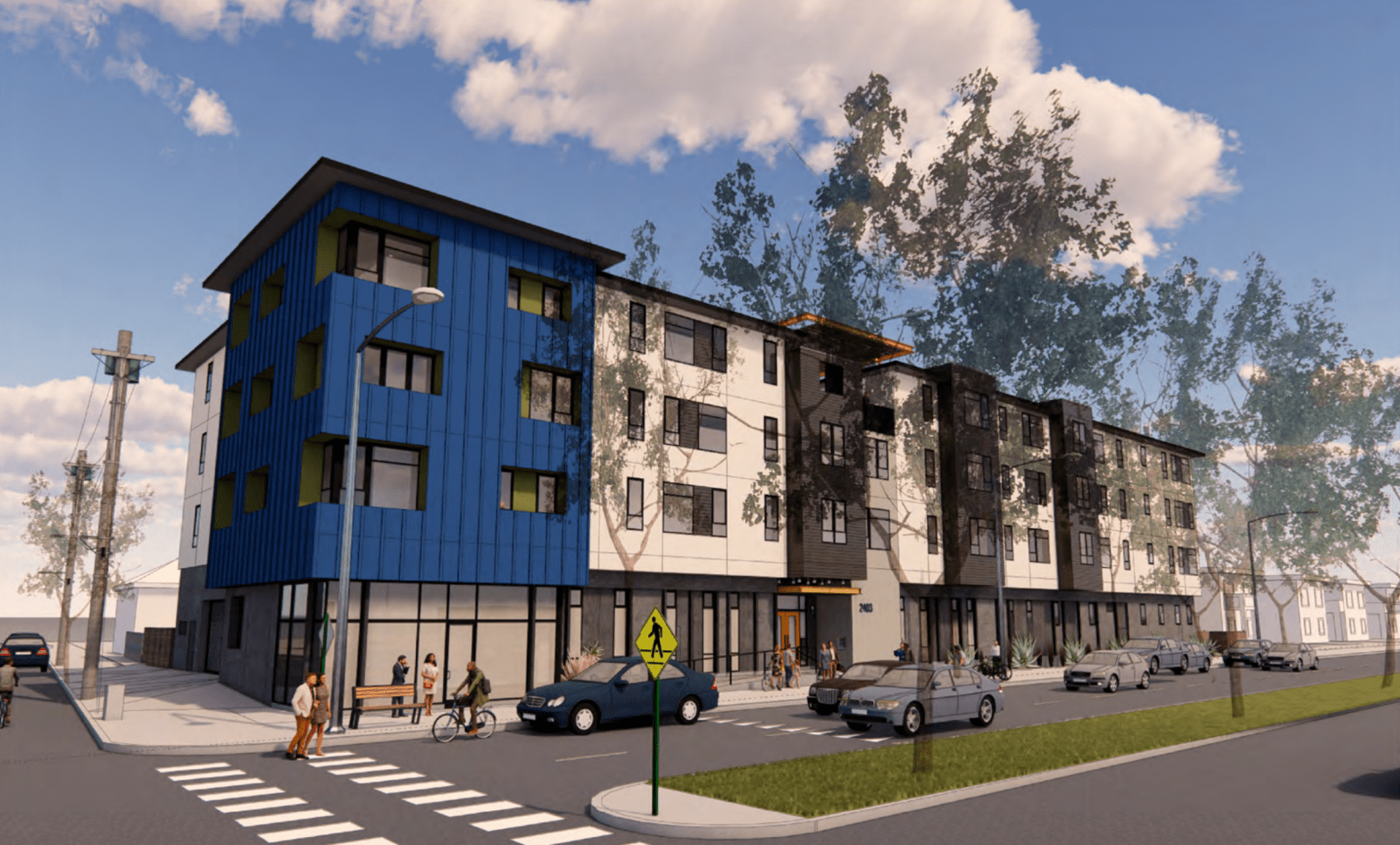 A building rendering for 2403-07 San Pablo Avenue, the site of future Berkeley Moshav co-housing. Credit: Studio KDA
This under-construction 36-unit condominium on San Pablo Avenue in the Poet’s Corner section of West Berkeley was slated to open by early 2027, but is ahead of schedule, according to a recent newsletter, with construction wrapping up in late October or early November, followed by closings and move-ins.
Whenever construction is completed, Yona Abrams will be moving out of a 900-square-foot unit in an Elmwood duplex and into a 1,100-square-foot three-bedroom in the Moshav with her husband and two children, ages 12 and almost 14. Abrams will be joined by her in-laws, who have also purchased a unit.
“I love the idea of being near my in-laws. They’re so helpful. It’s great for the kids, it’s great for them. It’s great for me,” Abrams said. “I love the idea of having a community around us.”
In Israel, “moshav” refers to a village with some similarities to a kibbutz, a commune.
Described as the “first intentionally designed urban Jewish cohousing community,” in the U.S., the Moshav will cater to Jewish living, offering an indoor dairy kitchen and a small outdoor meat kitchen that will be kosher, and residents will be able to celebrate Jewish holidays and Shabbat together if they wish. But the building is open to those of all backgrounds, religious or otherwise. Abrams has already met future neighbors who are not Jews, but likewise find the ideas of shared spaces and multi-generational neighbors appealing.
Under the cohousing model, the Moshav offers shared spaces: a gym, outdoor grill area, kitchen, meeting room and two guest suites for visitors that will be converted to a kids’ playroom and common work space when not in use. According to its website, Moshav units range from about $800,000 for a one bedroom to $1.7 million for three-plus bedrooms, the “plus” referring to a bonus room that can double as a bedroom.
“One of the main reasons we’re doing this is so our kids will feel part of a community. I’m hoping that they’ll do acts of kindness and be helpful and pick up trash and stuff, to feel a greater responsibility outside of just themselves and our family.” As to Albert herself: “I’m looking forward to borrowing ingredients.”
Frolic Community: Multi-family housing across the street from Moshav
At 2400 San Pablo Ave., the former home of the Ohmega Salvage, the Seattle-based Frolic Community, “a mission-driven developer” of cooperative housing communities that incorporates elements of cohousing, is doing a feasibility study on a plan to create a mixed-income housing development with some 30-50 units. The San Pablo location is one of several in Berkeley that Frolic is considering.
“The site is ideal, right at the transition between a residential neighborhood and a commercial node,” said Kalen McNamara, a spokeswoman. She said the site’s location on a major transit corridor and its proximity to nearby residences, restaurants, the UC Berkeley campus and the Berkeley Moshav made the site attractive.
Frolic’s model converts single-family properties into multi-family housing where residents own shares in the cooperative and share some amenities and spaces.
The site includes a former Victorian-era general store that does not appear in some preliminary plans, McNamara said. Frolic is considering density, parking spaces, building configuration and construction costs to determine whether the project is feasible.
Community members who are interested in working with Frolic are asked to reach out via its website.
In a recent newsletter, the Berkeley Moshav encouraged the possibility of having Frolic as a neighbor: Frolic will “provide homes at a more attainable price point than Moshav,” but “both are community-oriented and would complement each other.”
Gooseberry: A big house being turned into communal living
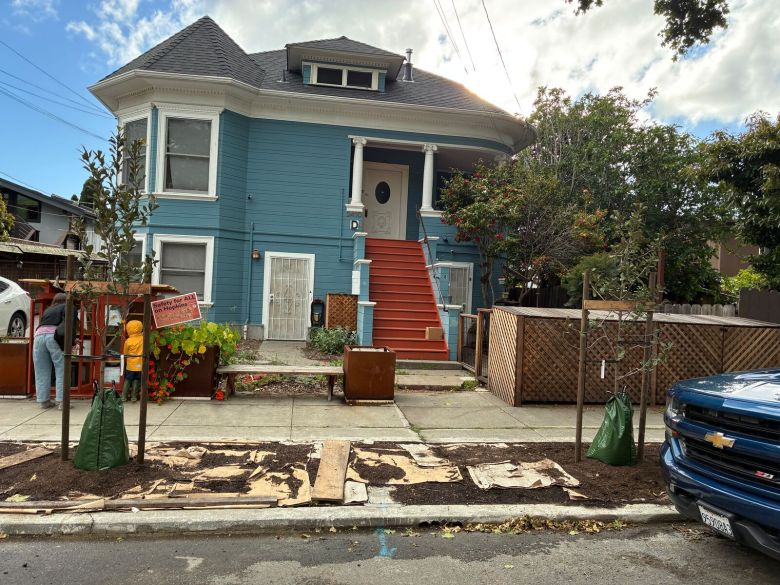 Gooseberry is a proposed cohousing community in West Berkeley that includes this circa 1900 house with four units. Common areas are planned in the backyard. Courtesy: Hilary Near
Hilary Near and her partner, Bill Huggins, bought this circa 1900 or so building in West Berkeley in August 2024, which they plan to turn into cohousing. The couple and their child live in one of the four-units in the 4,000-square-foot building. Two units have tenants and the third is vacant. Near envisions three units in the backyard to serve as a shared office, guest room and common house with a kitchen.
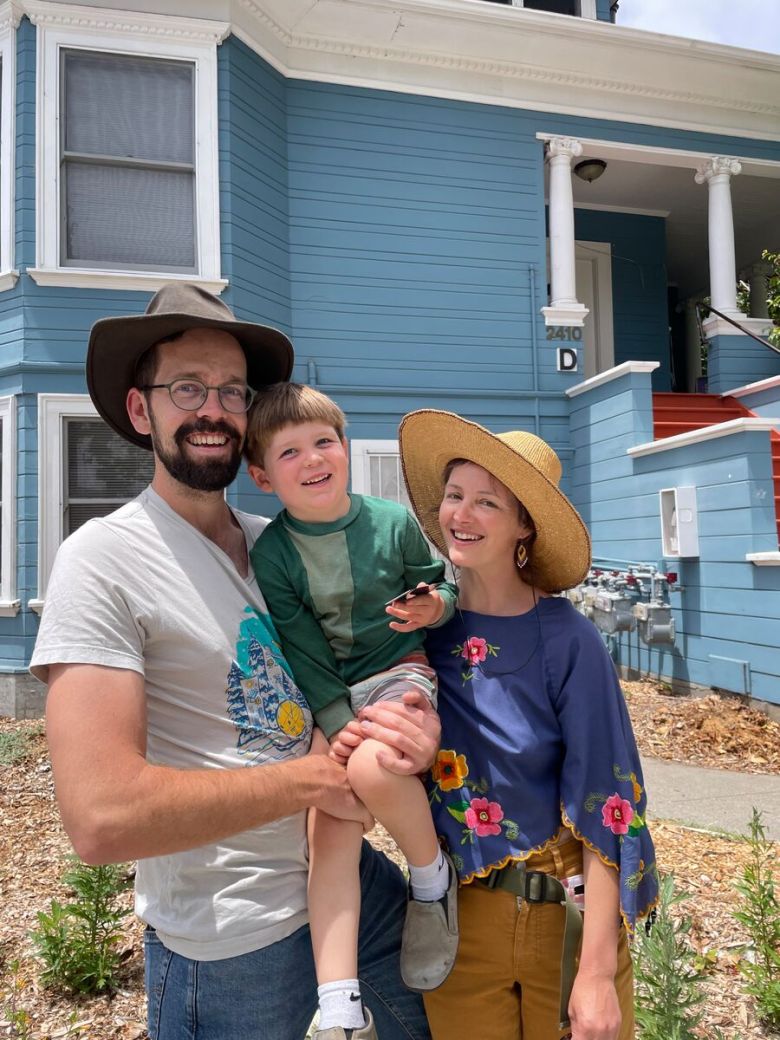 Gooseberry’s owners, Bill Huggins and Hilary Near, with their child, River Near Huggins. Courtesy: Hilary Near
“This will probably take some amount of ‘dating’ to find the right people,” Near said. The couple would also like their future neighbor to rent before becoming owners. “If they want to buy in, we’ll figure out a pathway. We haven’t figured out what the legal arrangement is.”
Each unit could be around $500,000, “which is really good for Berkeley,” Near said. “We don’t just have to live with people who make a lot of money.”
Near, who works in the refuse, recycling and zero waste industry, and Huggins, who works for Google, have been involved in at least four other coliving projects in the Bay Area. With another couple, they created The Village, a 20-bedroom coliving house near San Francisco’s Panhandle Park, in March 2022. They left that community to live in the Berkeley house, which is named after a massive shrub in the backyard.
In the Lorin District: Longtime co-living advocates invest in a ‘collective’ where their friends can be renters
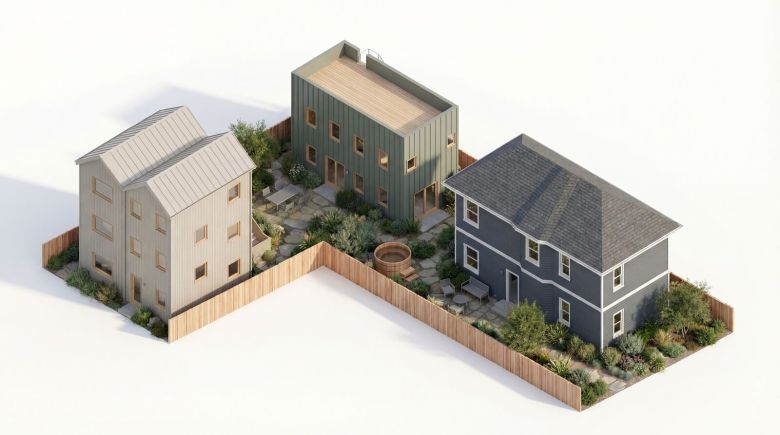 Type Five in Berkeley is building the Roundabout’s ADU and designing a duplex on an adjacent empty lot that will complete the community. Courtesy: Type Five
“Community living was very much in my blood,” said Misha Safyan, who with his partner Diana Danoff, are creating The Roundabout, a cohousing project that’s now in the approval process.
The couple are longtime advocates of coliving and have lived in several such communities, including Levin’s Radish in Oakland. After Safyan met Danoff in 2020, they bought a large house next door to Radish in 2021 so they could remain “deeply ingrained in that community.” The couple has two children.
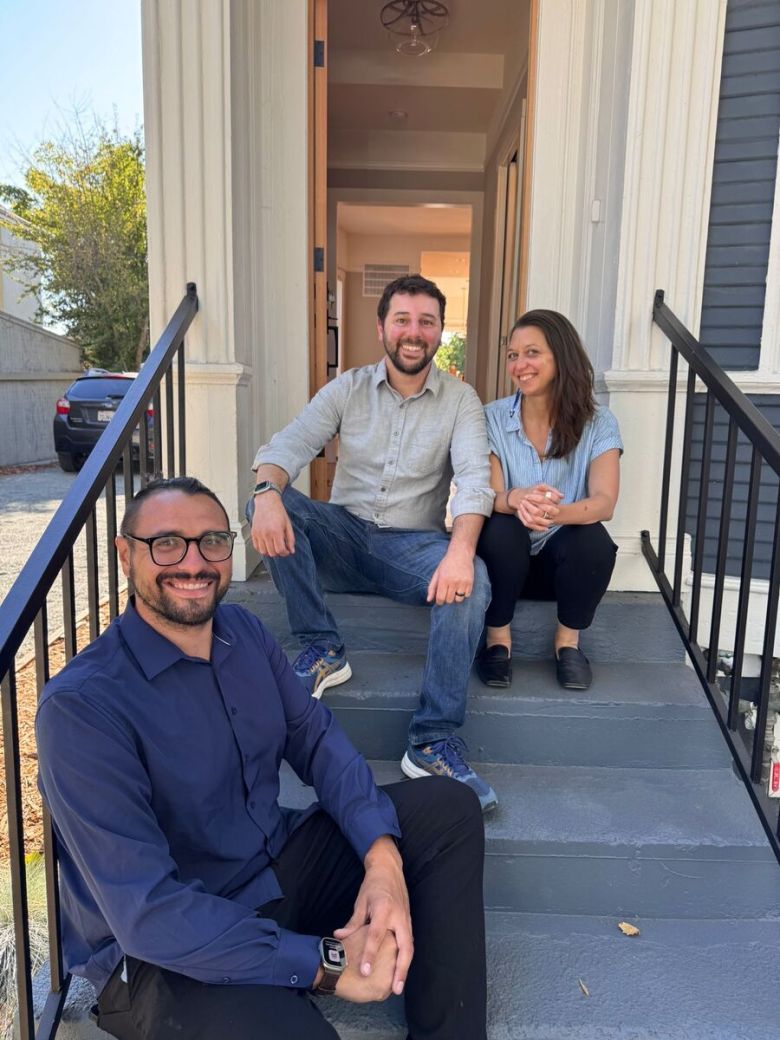 Roundabout owners Misha Safyan, his partner Diana Danoff and their LiveNearFriends broker Max Nelson, who helped the couple find a property ripe for cohousing. Courtesy: Misha Safyan
Now that the Radish is for sale, they decided to create their own compound. With the help of a broker from Levin’s Live Near Friends, they purchased a duplex containing three bedroom units — a rare find — for just shy of $2.3 million in September 2025. They are working with the Berkeley firm Type Five to build an ADU in the backyard that will house a shared kitchen, living room and dining room and two bedrooms upstairs.
After they purchased the property, the couple discovered an adjacent lot around the corner on Woolsey Street and bought it for $600,000. Plans are under way for Type Five to create a duplex there: a one bedroom and a three bedroom where Safyan and Danoff will eventually live.
Since the backyards of both lots are contiguous, forming an L, the couple plans to knock down the fence and create a compound. The yard will be fully shared, along with the living and dining spaces of the ADU. The plan is now in the approval process.
The project has benefitted from recently approved housing laws: the so-called middle-housing ordinance that allows more density in areas originally zoned for single-family use and the fast-tracking of building permits to encourage ADUs.
Safyan, an aerospace engineer, said he and his partner have taken the majority stake in “the collective” so they could rent units to friends who may not want to have children or are too young to have them.
“We’re not trying to profit from our friends. This is us putting money down so our friends can have this community living lifestyle and this was the simplest way to go about that,” Safyan said. “There’s a lot of upfront labor and cost, but it’s worth it to us. We plan to be here for a long time.”
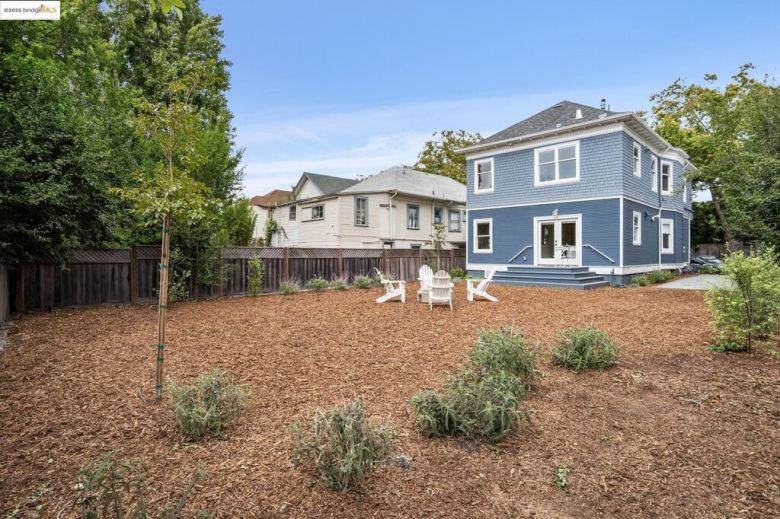 This house in the Lorin District will one day house an ADU in the backyard that will be part of the new cohousing community called the Roundabout. Courtesy: Misha Safyan
A maybe in Northwest Berkeley: Seven homes near James Kenney Park
A group of seven homes for sale in a single building across from James Kenney Park may be turned into cohousing. The owner has reached out to East Bay Cohousing to see if it had an interested group to buy the building at a discount. The owner has already taken some steps in converting the units to a condominium. East Bay Cohousing is hosting meetings this month to see if members want to pursue the offer. If there is interest, East Bay Cohousing will provide assistance and advice along the way.
We know that most readers don’t get to the end of the article. But you did! To support our in-depth, rock-solid reporting, please consider making a donation to our nonprofit newsroom today. We rely on our readers — particularly the ones who read the whole story!
“*” indicates required fields