
FRESNO COUNTY – The Fresno County Sheriff’s Office transferred 63 people into the custody of Immigration and Customs Enforcement in 2025, representing just under 10% of the total number of detainer/hold requests FSO received from ICE last year.
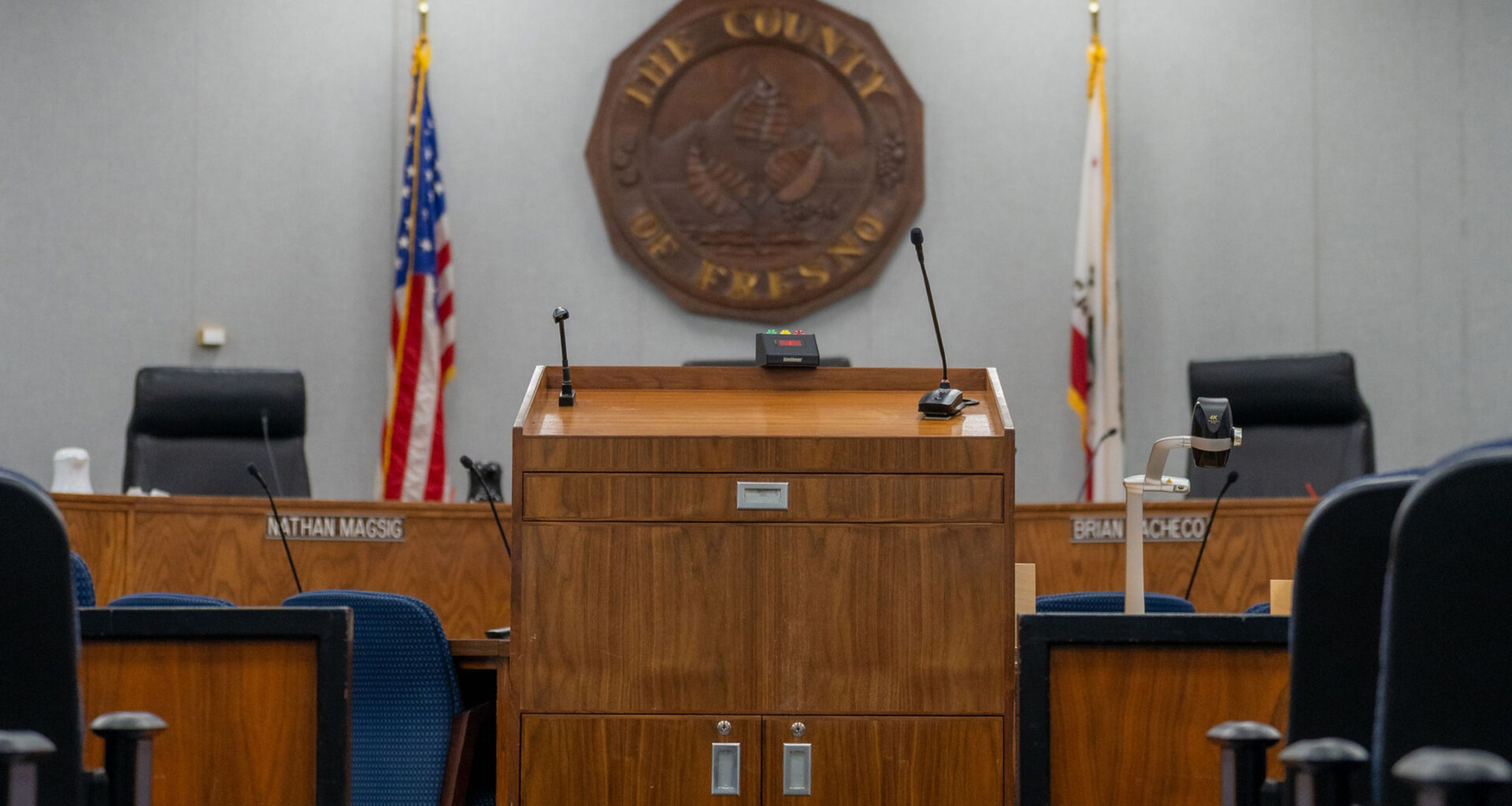
Fresno County Sheriff John Zanoni presented these numbers to the Fresno County Board of Supervisors during a public forum May 19. Zanoni reported that there were 27,164 total bookings into the Fresno County Jail in 2025 and FSO received 634 detainer/hold requests from ICE. Zero interviews between immigration agents and inmates were conducted in the jail, he said.
In his presentation, Zanoni said the individuals who were transferred “are all dangerous, violent and involved in felonious criminal activity.”
ICE access
The report was provided in accordance with a state law known as the Transparent Review of Unjust Transfers and Holds (TRUTH) Act. The law requires that law enforcement agencies hold at least one community forum a year if the agency allowed ICE access to an individual in the previous calendar year.
The board also discussed the California Values Act, better known as Senate Bill 54. This bill, signed into law by former Gov. Jerry Brown in 2017, restricts cooperation between state and local law enforcement agencies with ICE and limits state and local resources from being used to carry out deportations.
Of the 63 people transferred to ICE custody, four had been involved with sex crimes, 10 had been involved with drug or driving under the influence felonies, 13 had been involved in crimes against property and 36 had been involved in crimes against people.
Zanoni said the three most frequent violent offenses involved false imprisonment with the threat of violence, domestic violence and felony burglary charges.
According to past reports presented to the board of supervisors, there were 223 transfers to ICE in 2017. That number dropped to a total of three in 2018, when SB 54 went into effect.
FSO also transferred just one inmate to ICE in 2019, but that number jumped to 47 in 2020. The sheriff’s department reported 44 transfers in 2021, 18 in 2022, 39 in 2023 and 102 in 2024.
Residents urge against transfers
Following four members of the public who spoke against the sheriff’s office having any kind of contact or cooperation with ICE, Zanoni said his recommendation to the board of supervisors is to comply with SB 54 exactly as it is written “and continue to take care of those individuals that have committed … these very serious felony crimes.”
“That is the law, that is what we are going to comply with,” Zanoni said. “This is not about politics; it is about public safety, and that is my focus as sheriff. To focus on public safety and those individuals that are out there harming other people in our community and committing crimes against the residents of Fresno County.”
During public comment, residents said FSO should limit all voluntary cooperation with ICE. They highlighted how every interaction with ICE can increase the risk of family separation and heighten fear within Fresno County’s immigrant community.
Community organizer Jessica Flores provided public comment on behalf of Services, Immigrant Rights and Education Network (SIREN).
“Our community is frightened, families are afraid to report crimes, victims are afraid to come forward and witnesses are afraid to cooperate because they fear that any interaction with the criminal legal system could lead to a transfer or a deportation,” Flores said.
Flores said SIREN acknowledged that the number of ICE transfers had decreased and was relatively few, “but our goal should be zero transfers.”
“SB 54 is a law to limit enforcement, not an invitation to find justification for cooperation,” she said.
The board was not required to take any vote on the report. Supervisors Garry Bredefeld and Luis Chavez provided brief comments, with Bredefeld reiterating his support of immigration enforcement.
Chavez said he believes it is important to have a conversation about ICE access in the context of separating undocumented immigrants who are committing crimes from those who “have done nothing wrong but try to provide a living for their community.”
“I don’t think anybody here is advocating for not putting away people that do bad things,” Chavez said. “SB 54 was very clear in making sure that local law enforcements don’t participate in federal immigration duties — I think you’ve done a good job of doing that.”