
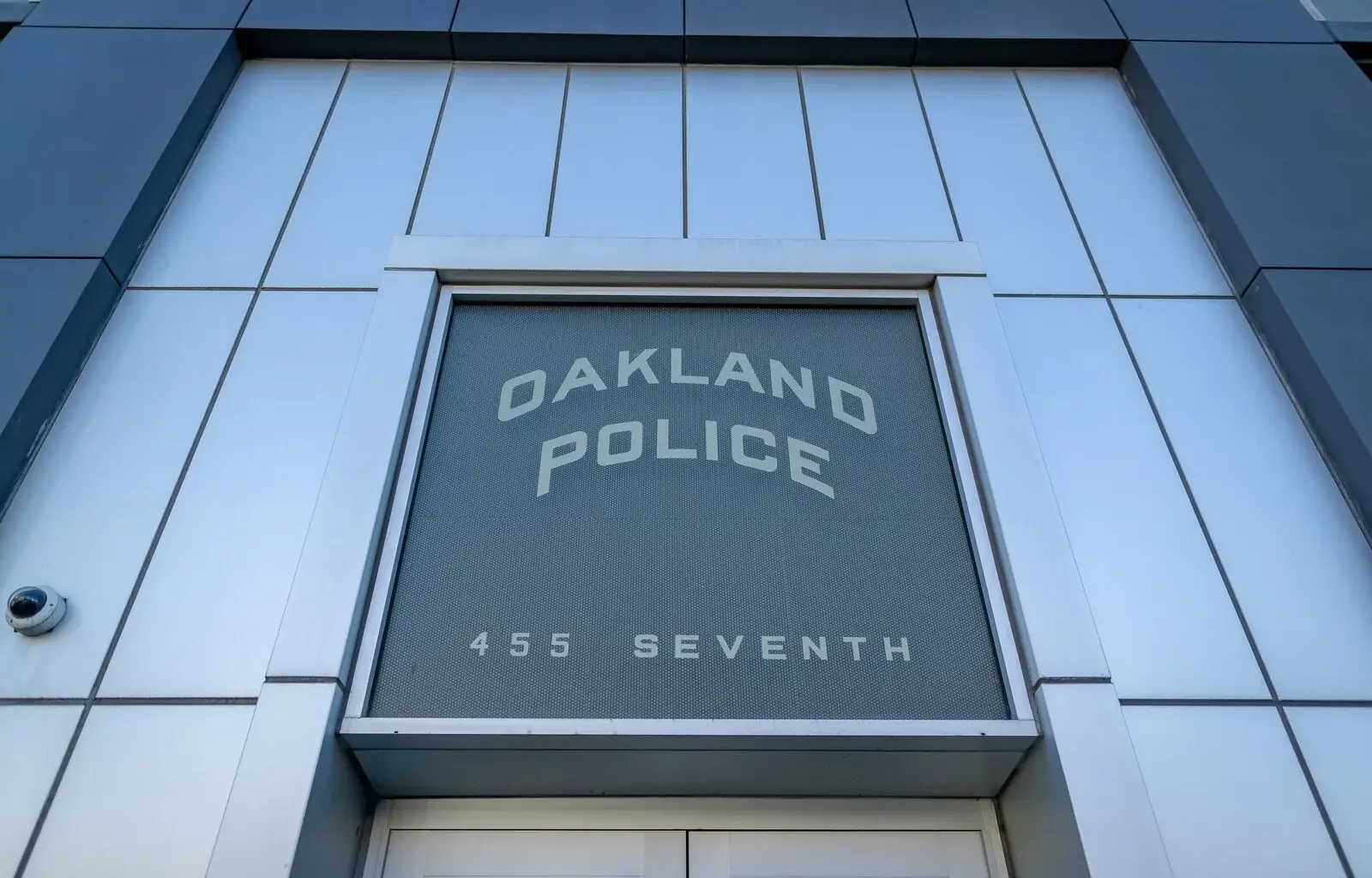
For the first time in the history of its federal court oversight, the Oakland Police Department has complied with all of its 51 mandated tasks, according to a report filed last week by Robert Warshaw, OPD’s federal monitor.
“We will continue to monitor the Department’s performance, and are hopeful that these findings will remain,” Warshaw wrote in his May 22 report to U.S. District Court Judge William Orrick.
City leaders will appear in court in San Francisco on Wednesday for a conference about OPD’s progress and whether the time is near for federal oversight to wrap up.
“We look forward to addressing the court on May 27 at the case management conference as we continue to build the momentum and forward progress on community trust and constitutional policing,” Mayor Barbara Lee said in a statement last week.
If OPD can sustain all of its 51 reforms, Orrick may finally sign off on what’s become the longest-running police reform effort in the country. Completing the NSA is a goal that has eluded five previous mayors and eight police chiefs.
Oakland agreed to place its police under court supervision in 2003 to settle allegations that a squad of West Oakland cops had rampaged through the neighborhood three years earlier, planting drugs on suspects, beating up people, killing dogs, and in one case, kidnapping and assaulting a man under a highway overpass.
The Negotiated Settlement Agreement laid out 51 tasks to address poor oversight and accountability, put an end to police brutality, prevent racial profiling, and professionalize OPD.
At first, OPD stumbled badly, ignoring the agreement’s requirements. And over the past two decades, the department was roiled by a series of additional scandals — illegal strip searches, perjured warrants, police riots, sexual exploitation of a minor, racial disparities in stops and searches, and inconsistent internal discipline — that prevented it from completing the reforms.
In 2022, the department was as close as it had ever gotten to ending federal oversight, but this progress was derailed by a string of police misconduct cases. External investigations revealed how OPD mishandled internal affairs cases while department leaders looked the other way.
Jim Chanin and John Burris, the two civil rights attorneys involved in OPD’s reform program, say they are happy with the progress but cautious about celebrating the end of oversight.
“There’s still an unfinished issue around consistency of discipline,” Burris told The Oaklandside in a phone interview Tuesday. Burris said he doesn’t plan on asking the court to end federal oversight of OPD at tomorrow’s court hearing.
At a January 27 court hearing, OPD presented officer discipline data from 2024 showing Black and Hispanic officers accused by their colleagues of misconduct were “sustained” — meaning an internal investigation found enough evidence to show the alleged wrongdoing occurred, and that it violated OPD’s policies — at higher rates than white officers.
“Inequities in the department’s disciplinary system call into question inequities in the delivery of police services to the community,” Orrick said at the hearing.
Independent reviewers who analyzed the data noted no disparities in disciplinary outcomes — such as suspension, resignation, retirement, or termination — based on race.
In April, OPD submitted preliminary officer discipline data for 2025 so the court could compare it with the previous year. That report shows that officers of all races were sustained at higher rates except for Black officers, whose rate stayed the same. As in 2024, the department did not find any racial disparities in disciplinary outcomes in 2025.
Burris said he needs more time to be convinced that OPD’s disciplinary system is fair to all officers, regardless of race, since the department’s analysis comparing 2024 and 2025 data won’t be completed until sometime this summer.
“This particular task cannot be fairly evaluated completely until the data has been analyzed,” he said, adding that “any statistical differences between African Americans and other ethnic groups” are worth monitoring.
Chanin said a related issue gives him pause. Data about internally generated police misconduct complaints shows that a majority of these cases are not sustained. This indicates that officers are reporting their colleagues for too many small transgressions that take up too much of internal affairs’ time and distract from investigating major cases like officer-involved shootings or police brutality. “It shows IA is being overwhelmed by frivolous complaints,” said Chanin.
He thinks this can be fixed by having the department deal with less serious complaints outside of the internal affairs process. Otherwise, it’s like the officers are “walking on glass. It’s not good for morale,” said Chanin.
Some police accountability activists have called on the city to strengthen the Police Commission, the civilian-run body overseeing OPD, so that it could take over as the primary overseer once the NSA is completed.
“Yes, we need to end the NSA, and it may well happen this year or next. But we also need to support and fully fund the civilian oversight bodies that will ensure constitutional policing is a permanent fixture in Oakland,” wrote Larry White, a member of the grassroots activist group Coalition for Police Accountability, in a blog post.
Burris said he supports the move, so long as commissioners “have a good understanding of” how constitutional policing works. Chanin agreed, saying it might also help to compensate the commissioners. Currently, they’re volunteers.
Other community members feel differently, saying OPD’s Internal Affairs Division is capable of investigating and overseeing officers accused of wrongdoing, independent of the Community Police Review Agency, the Police Commission’s investigative arm.
“The Police Commission and the CPRA have also failed to demonstrate the rigor in their operations that is currently expected of Oakland Police Department (OPD) Internal Affairs,” wrote resident Rajni Mandal in a post for Oakland Report, an online publication. Mandal, who has spoken favorably about OPD at numerous council and police commission meetings and organized a petition asking for the end of federal oversight, has mobilized community members to attend tomorrow’s court hearing in San Francisco.
Compared to past moments when OPD was close to completing federal oversight, including a push in 2015, Chanin said the department has one big advantage this time around. “Most of the officers want to do it now. It’s not because they have to,” he said.
“*” indicates required fields